TL;DR (Too Long; Didn’t Read)
- Manage Resources with the “N+1” Rule: Reduce territorial tension by providing one more of every essential (litter boxes, food bowls, beds) than the total number of cats to prevent guarding and “gatekeeping.”
- Prioritize Gradual Introductions: Avoid immediate physical contact between cats; instead, use scent-swapping and visual barriers combined with positive reinforcement to build a foundation of tolerance.
- Expand Vertical Space: Utilize cat trees, shelves, and perches to create individual territories and safe exit routes, allowing lower-ranking cats to navigate the home without feeling trapped.
- Monitor Stress and Use Calming Aids: Watch for subtle body language cues like ear-pinning or over-grooming, and utilize pheromone diffusers (e.g., Feliway) to lower anxiety and signal environmental security.
Table of Contents
Territorial Aggression: Multi-Cat Home Tips
Cats are naturally solitary hunters, and sharing their kingdom with a roommate isn’t always their first choice. Understanding cat behavior is the first step to ensuring your home stays more “cuddle puddle” and less “underground fight club.”
Understanding Cat Territory and Social Hierarchy
In the world of feline behavior, cat territory is everything. Unlike humans, who might share a pizza, territorial cats view space as a finite resource that must be defended to ensure survival.
A stable cat social hierarchy relies on predictable boundaries. When those boundaries are crossed, you will likely see aggressive cat behavior like hissing and swatting or the dreaded intense staring contest.
To reduce cat conflict, you must think like a cat. Provide plenty of vertical space using cat perches and cat condos. This allows lower ranking cats to navigate the room without feeling trapped on the floor.
The Art of Scent Swapping and Gradual Introduction
If you want to stop cat fights before they start, you have to follow the golden rule: never rush a first date. Introducing new cats requires a slow, scent based approach to prevent feline anxiety symptoms.
Start with scent swapping by rubbing a clean cloth on one cat and placing it near the other. Experts at the ASPCA and PetMD suggest this helps cats associate a stranger’s scent with a safe, calm environment.
Move toward a gradual transition process by allowing cats to see each other through a cracked door or a baby gate. Use a licking mat with some tasty treats to create a positive association during these brief visual meetings.
Managing Cat Resource Guarding and Essential Supplies
Cat resource guarding is a major trigger for territorial aggression. If there is only one bowl of kibble, your cats will treat it like the last life raft on the Titanic.
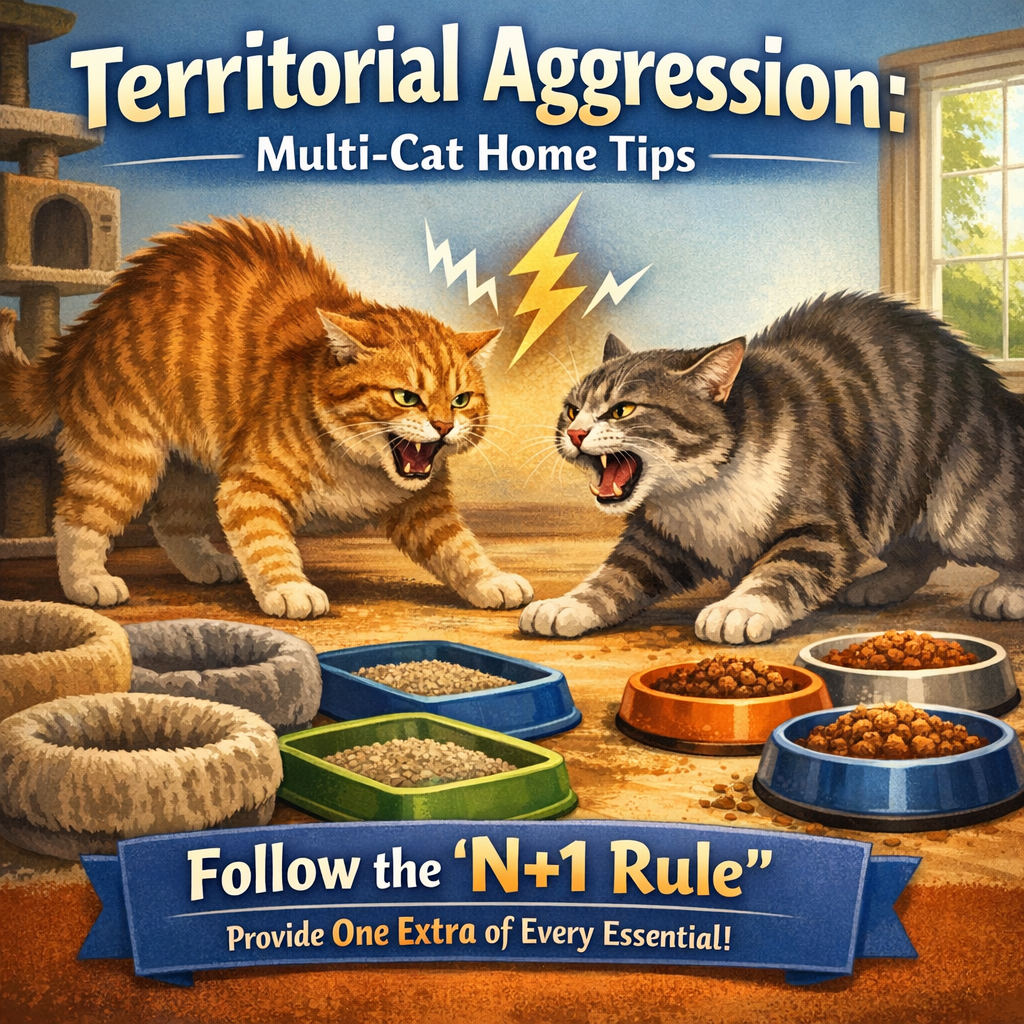
The pros at Chewy and Neater Pets recommend the “N+1” rule for a healthy multi-cat household. This means you should have one more of every resource than you have cats, especially when it comes to the litter box ratio.
Place cat food bowls and water stations on neutral ground in different rooms. This prevents one cat from “gatekeeping” the kitchen and ensures every kitty feels secure while they eat and hydrate.
Recognizing Cat Body Language and Stress Signs
Before a full blown brawl breaks out, your cats are usually screaming for help with their bodies. Learning to read cat body language is your best defense against rising cat stress.
Watch for dilated pupils, flattened ears, and a twitching tail. These are clear cat aggression indicators that suggest it is time to intervene with a distraction, like a toy or a soft noise, before things escalate.
If you notice signs of litter box aversion, excessive grooming, or hiding, your cat might be suffering from chronic stress. In these cases, a behavioral consultation can help identify the specific environmental triggers causing the friction.
Using Pheromones and Positive Reinforcement Training
Sometimes, even the best environmental enrichment for cats needs a little high tech help. Pheromone calming diffusers, such as Feliway, mimic natural feline scents to signal that the area is safe and secure.
Placing these diffusers in common areas helps create a relaxed atmosphere, making it easier to implement positive reinforcement training. Reward your cats with treats and praise whenever they share a space without hissing.
Mental stimulation for pets is also key. A bored cat is often a grumpy cat, so use interactive play to burn off excess energy that might otherwise be directed at a housemate.
Creating a Cat Safe Space for Every Resident
Every cat deserves a designated cat safe space where they can retreat when the social pressure becomes too much. This is a vital part of multi-cat household management.
Ensure these zones include comfortable bedding, scratching surfaces for marking, and easy access to an exit. When a cat feels they have a way out, they are much less likely to resort to aggressive cat behavior.
By respecting their need for individuality and providing ample resources, you can transform a house of rivals into a home of feline friends. Just remember, patience is your greatest tool in the journey toward inter-cat conflict resolution.
The Importance of Individual Territories
Every cat in your multi-cat household needs to feel like the CEO of their own tiny real estate empire to reduce cat conflict. In the feline world, a secure cat is a happy cat, and a happy cat is much less likely to engage in a midnight wrestling match over a cardboard box.
Providing each cat with their own safe space is a top priority for effective multi-cat household management. It gives them a vital retreat for some much-needed alone time when the social hierarchy feels a bit too high-stakes.
You should set up individual zones, hideaways, and cat condos to foster a peaceful environment where no one feels cornered. This environmental enrichment for cats ensures that even the shyest member of the pride has a sanctuary to call their own.
Experts from ASPCA and PetMD emphasize that vertical space is just as important as floor space for feline territorial behavior. Adding cat perches or shelves allows cats to observe their kingdom from above, which significantly lowers feline anxiety symptoms.
A good rule of thumb is to allocate one more resource than the total number of cats in the house. This strategy helps prevent cat resource guarding, ensuring that no single cat can “gatekeep” the goods.
If you have three cats, you need four safe zones to prevent territorial disputes from bubbling over. This extra “neutral zone” acts as a buffer, keeping the peace and making sure everyone has a place to nap without starting a feline turf war.
Providing Multiple Resources: Litter Boxes, Food, and Scratching Posts
To truly stop cat fights before they start, you must address the competition for essentials. Experts at Chewy and Neater Pets suggest that resource guarding in pets often stems from a perceived scarcity of the basics.
The golden litter box ratio is the “N plus one” rule: one box for every cat, plus an extra. This prevents litter box aversion and stops territorial marking, which is often a cat’s way of screaming “this is mine” to their roommates.
Separate your cat food bowls and water stations so they are not all clustered in one spot. Placing them on neutral ground or in different rooms prevents one dominant cat from bullying others away from their dinner.
Don’t forget the importance of accessible scratching surfaces. Scratching is a natural way for territorial cats to deposit scent from their paws, so providing plenty of posts or a licking mat satisfies their need to mark territory without ruining your sofa.
By spreading out these high-value items, you reduce the need for hissing and swatting over who gets to use the “good” scratcher. It turns your home from a competitive arena into a relaxed sanctuary where resources are plentiful.
Expert Insight
“For cats to be happy in a smaller environment, it needs to be extremely rich in resources; if a cat feels in competition for essential items, it is unlikely they will be 100% satisfied, so we must apply the ‘N+1’ rule to create an environment of abundance.” (Feline Behavior Specialist)
Gradual Introduction and Scent Sharing
Never just toss two cats into a room and hope for the best. That is a guaranteed recipe for a feline feud and a very stressed-out human. When introducing new cats, the goal is to bypass the claws and go straight for the nose.
Scent-based introduction methods significantly decrease cat aggression by letting your pets get to know each other without the physical threat. Since cats use smell to identify “friend vs. foe,” scent swapping is your secret weapon for a peaceful multi-cat household.
Start the scent swapping introduction by exchanging blankets, beds, or toys between the cats. This allows the resident cat and the newcomer to investigate each other’s unique pheromones safely. You can even use a soft cloth to rub one cat’s cheeks and place it in the other cat’s safe space.
Once they stop hissing at the blankets, progress to limited face-to-face meetings through a cracked door or a sturdy baby gate. Keep these initial interactions short to minimize cat stress and prevent feline territorial behavior from peaking too early.
This gradual reintroduction process allows both cats to build a foundation of tolerance. It is much easier to prevent a fight now than to fix a broken relationship later. Think of it as a first date where they stay on opposite sides of the restaurant.
Positive reinforcement training is essential during these brief sightings. Offer high-value treats or a licking mat smeared with wet food while they are in each other’s presence. This teaches them to associate the “intruder” with delicious rewards rather than a threat to their kingdom.
If you notice intense cat body language like pinning ears back or a puffed-up tail, go back a step. Patience is key when managing cat social hierarchy. Organizations like the ASPCA and PetMD emphasize that rushing this stage is the leading cause of long-term inter-cat conflict resolution issues.
To help soothe the transition, consider using pheromone calming diffusers like Feliway in common areas. These products mimic natural feline messages of security, reducing feline anxiety symptoms and making the scent-sharing phase much smoother for everyone involved.
Recognizing and Managing Aggressive Behavior
To keep the peace in a multi-cat household, you need to become a pro at reading cat body language. Spotting trouble early is the best way to stop a fight before the fur starts flying.
Common cat aggression indicators include hissing and swatting, but keep an eye out for the “death stare.” This is when one cat blocks another’s path to a litter box or food bowl to assert dominance.
If you notice these aggressive cat behavior signs, use distraction techniques to break their focus. A loud clap, tossing a toy, or offering a licking mat can redirect their energy toward something positive.
Immediate separation is necessary if things escalate into a full blown cat fighting episode. However, you should never use physical punishment, as this only increases feline anxiety symptoms and destroys trust.
If one cat is constantly being bullied, it is not fair to let them live in fear. Intervention is a must to maintain a healthy social hierarchy and ensure every pet feels secure in their home.
Using Calming Products and Pheromones
When cat stress levels are high, sometimes a little environmental help is needed. Pheromone calming diffusers, such as those from Feliway, can be a total game changer for territorial cats.
These products mimic natural feline facial pheromones, sending a “safe and secure” signal to your pets. Placing these diffusers in common areas helps reduce cat conflict and creates a more relaxed atmosphere.
Many experts at the ASPCA and PetMD recommend using these tools during the gradual reintroduction process. They provide a layer of comfort that makes scent swapping and face to face meetings much smoother.
Providing Multiple Resources to Prevent Guarding
Resource guarding is a major trigger for cat aggression. To stop cat fights, you must ensure there is no reason for your pets to compete over the basics.
Follow the golden litter box ratio: you need one more box than the number of cats you own. This prevents litter box aversion and stops territorial marking in your favorite corners.
Set up separate food bowls and water stations on neutral ground. By spreading out resources like cat perches, cat condos, and scratching posts, you give each cat their own safe space to relax without feeling crowded.
Monitoring Stress and Feline Anxiety Symptoms
Feline behavior can be subtle, so monitoring for stress signs is vital. Look for excessive grooming, hiding, or unusual vocalization, as these often point to underlying tension.
If you notice spraying or a sudden change in cat territory habits, it might be time for a behavioral consultation. Organizations like Neater Pets and Chewy offer great resources for environmental enrichment to keep your cats engaged.
Always use positive reinforcement training to reward calm interactions. If stress persists, consult a vet to rule out physical illness, as pain can often manifest as aggressive behavior.
Providing Multiple Resources for Multi-Cat Household Management
Resource guarding is a major cause of cat stress and is a central pillar of any multi-cat household management plan. When your feline friends feel like the supply of kibble or prime napping spots is running low, their inner wildcat comes out to play, and not in the fun way.
To reduce cat conflict, you must master the litter box ratio. The golden rule is one box per cat, plus one extra. This prevents litter box aversion and stops a dominant cat from gatekeeping the bathroom, a move that is as rude in the cat world as it is in ours.
Setting up separate cat food bowls and water stations on neutral ground is equally vital. By spreading resources across different rooms, you ensure no single cat can control access to the “dinner table,” effectively neutralizing territorial aggression before it starts.
Environmental enrichment for cats should include plenty of scratching surfaces and cat condos. These allow for natural marking behaviors through scent glands in their paws, letting them claim their space without needing to resort to hissing and swatting.
When resources are abundant, the intensity of the cat social hierarchy naturally softens. If every kitty has a throne, nobody has to fight over who gets to be the king of the living room. It turns your home from a competitive arena into a relaxing feline sanctuary.
Essential Resource Checklist
| Resource Type |
Recommended Amount |
Best Placement |
| Litter Boxes |
Number of cats + 1 |
Different floors or quiet rooms |
| Cat Food Bowls |
One per cat |
Quiet, separate corners |
| Vertical Perches |
At least two per room |
Near windows or high walls |
| Scratching Posts |
Minimum one per cat |
Near sleeping areas and entrances |
Vertical Space and Perches
Feline territorial behavior is often about height. Providing vertical space and perches, such as cat trees or wall-mounted shelves, allows cats to observe their kingdom from a safe distance. This is a key strategy recommended by experts at PetMD and the ASPCA.
High vantage points act as a cat safe space where a more anxious pet can retreat. If a conflict is brewing on the ground, having an “escape route” upward can stop cat fights before they escalate. It is all about giving them options to avoid confrontation.
For those looking to maximize their feline’s comfort, products like licking mats or specialty items found on Chewy can provide mental stimulation for pets. These tools keep their minds busy and their bellies full, leaving less time for plotting territorial takeovers.
Using Pheromone Calming Diffusers
Sometimes, even with the best cat food bowls and plenty of toys, the vibes are just off. This is where pheromone calming diffusers, like Feliway, become a total game changer for managing feline anxiety symptoms.
These diffusers mimic the natural facial pheromones cats use to mark an area as safe and familiar. By placing them in common areas, you create a more relaxed atmosphere that encourages inter-cat conflict resolution and lowers general cat stress.
While diffusers work wonders, they should be part of a broader strategy that includes positive reinforcement training and perhaps a behavioral consultation if the aggressive cat behavior persists. Think of it as aromatherapy for your furry roommates.
Use of Calming Products and Pheromones
Sometimes, the vibes in your multi-cat household just need a little chemical help to stay chill. When feline territorial behavior starts to peak, Pheromone calming diffusers, such as those made by Feliway, can work wonders by mimicking natural feline happy scents.
Placing these diffusers in common areas helps create a more relaxed atmosphere during introductions or stressful periods. They are a staple in multi-cat household management because they signal to your pets that the area is safe, which is a key part of inter-cat conflict resolution.
While not a magic wand, these products are a great tool for environmental enrichment for cats who are prone to nerves. Many owners find that they help reduce aggressive cat behavior like hissing and swatting over time by lowering the overall feline anxiety symptoms in the home.
If you are currently in the middle of a gradual reintroduction process, pheromones can bridge the gap between scent swapping and face-to-face meetings. Brands like Chewy and Neater Pets often recommend these as part of a holistic approach to feline behavior.
By addressing the biological side of cat stress, you make it easier for your cats to focus on positive reinforcement training. Think of it as setting the stage for a peaceful Broadway show instead of a backyard brawl.
Recognizing and Managing Aggressive Behavior
To stop cat fights before they start, you need to become an expert in cat body language. Common cat aggression indicators include flattened ears, a twitching tail, and the dreaded intense staring that precedes a pounce.
If you notice these signs of aggression, use distraction techniques like a loud noise or tossing a toy to break their focus. Never use physical punishment, as this only increases cat stress and can lead to a total breakdown in your multi-cat household hierarchy.
When cat fighting escalates, immediate separation is necessary to prevent injury. Give each cat a safe space to decompress. According to resources like PetMD and the ASPCA, giving cats a “time out” in separate rooms helps reset their emotional state before you attempt any further cat introduction tips.
If the aggressive cat behavior persists or you notice issues like litter box aversion or excessive grooming, it might be time for a behavioral consultation. Consulting a vet is also wise to ensure that a medical issue isn’t causing the sudden spike in territorial cats’ lashing out.
Providing mental stimulation for pets through food puzzles or a licking mat can also redirect pent-up energy. A tired cat is usually a well-behaved cat, making it much easier to manage the social dynamics of your feline kingdom.
Monitoring and Recognizing Stress Signs
Stress in a multi-cat household doesn’t always look like a high-speed chase or a flurry of fur. Sometimes, feline anxiety symptoms are much more subtle, requiring you to be a bit of a kitty detective.
Common cat stress indicators include urine spraying, excessive grooming that leads to bald spots, or hiding for hours in the dark corners of your home. You might also notice unusual vocalization or a sudden change in their social hierarchy status.
Keep a close eye on cat body language, such as pinned ears or a flicking tail. Inter-cat conflict resolution starts with noticing the small stuff before it escalates into full-blown aggressive cat behavior.
If a cat stops using the litter box or stops eating, consult a vet to rule out physical illness first. Resources like PetMD or the ASPCA often note that medical issues can be mistaken for territorial cats acting out.
A professional behavioral consultation might be necessary if the tension doesn’t improve after a few weeks of consistent management. Experts can help you navigate complex feline behavior and fine-tune your approach to stop cat fights.
Remember that mental stimulation for pets is key. Providing vertical space and perches can give a stressed cat a safe space to observe the room without feeling threatened by their roommates.
“A cat’s home is their fortress, and even the smallest change can feel like a siege on their security.”
Frequently Asked Questions About Multi-Cat Household Management
How long does it take for cats to get along?
The timeline for introducing new cats varies wildly. It can take anywhere from a few weeks to several months for feline social hierarchy to stabilize.
While some cats become bonded pairs, others may only reach a level of mutual tolerance. According to PetMD, patience is vital as forcing a timeline can trigger cat aggression.
Individual personalities play a huge role. Some territorial cats need extra time to accept a roommate without resorting to hissing and swatting.
Should I let my cats “fight it out” to settle things?
Absolutely not. Letting cats fight it out is a recipe for permanent psychological damage and serious physical injury for your feline friends.
Aggressive cat behavior should be met with immediate distraction. Use a loud noise or a toy to break their focus, then separate them to a cat safe space.
Inter-cat conflict resolution requires a calm approach. Physical punishment only increases cat stress and makes the territorial aggression worse.
What is the best way to introduce a new kitten to an older cat?
A gradual reintroduction process is the gold standard. Start with scent swapping by exchanging blankets or using a licking mat to associate scents with food.
Keep the newcomer in a separate room for the first week to establish individual territories. This prevents immediate resource guarding in pets.
Use positive reinforcement training by offering high-value treats from Chewy when they interact peacefully through a baby gate or screen door.
Can pheromone diffusers really stop cat fights?
Pheromone calming diffusers like Feliway are excellent tools for reducing general anxiety. They mimic natural feline facial pheromones to create a relaxed atmosphere.
While they help reduce cat conflict, they are not a magic wand. They work best when paired with environmental enrichment for cats and proper introduction tips.
Place diffusers in common areas where territorial disputes frequently occur. This helps lower feline anxiety symptoms and encourages a peaceful sanctuary.
How can I prevent resource guarding in a multi-cat home?
The best way to stop cat fights over territory is to follow the golden litter box ratio: one box per cat, plus one extra.
Provide multiple cat food bowls and water stations on neutral ground. This ensures no single cat can block access to essential life support.
Boost your vertical space with cat perches and cat condos. Increasing the available territory allows cats to observe each other from a safe distance.
When should I seek professional help for cat aggression?
If you notice persistent feline territorial behavior or signs of litter box aversion, it may be time for a behavioral consultation.
Organizations like the ASPCA recommend seeing a vet first to rule out medical issues. Pain or illness can often manifest as sudden aggressive behavior.
A specialist can help you design a custom plan for reintroducing cats if the initial attempts lead to constant hiding or spraying.