TL;DR (Too Long; Didn’t Read)
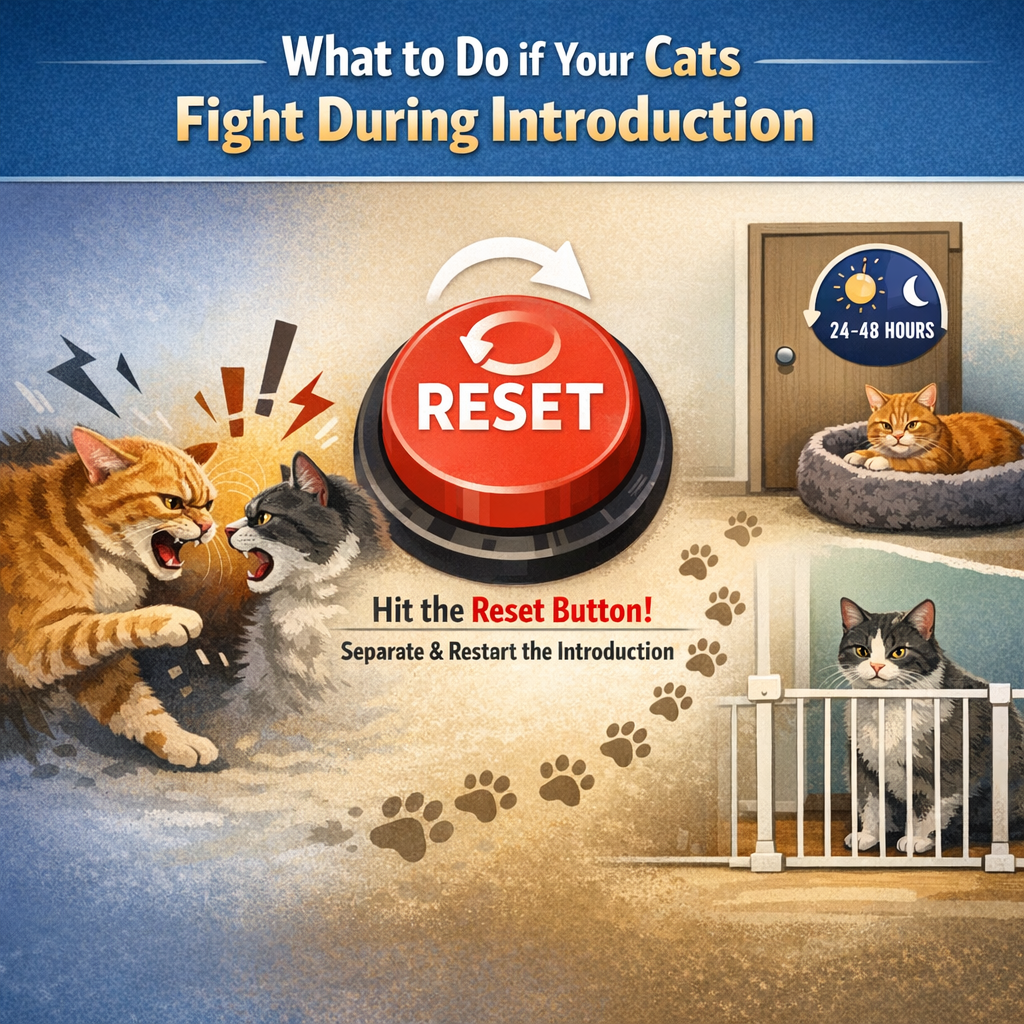
- Hit the Reset Button: If cats fight, immediately separate them for 24–48 hours and return to an earlier stage of the introduction process to lower stress hormones and “reset” the environment.
- Prioritize Safety & Separation: Use physical barriers like pet gates and utilize “scent swapping” or “site swapping” to build familiarity without the risk of physical confrontation.
- Focus on Positive Association: Encourage shared play with toys rather than feeding them near each other, as food can trigger territorial guarding and resource competition.
- Use Calming Aids: Supplement the process with pheromone diffusers, calming supplements, or veterinary-prescribed aids to reduce anxiety and help cats reach a state of peaceful neutrality.
Table of Contents
What to Do if Your Cats Fight During Introduction
You brought home a new feline friend. You imagined cuddles and synchronized grooming. Instead, you have fur flying and sounds that resemble a horror movie soundtrack.
Do not panic. This is a common hurdle in the world of multi-cat households. Even the most social cats can turn into territorial tiny tigers when a stranger enters their turf.
In short: Take a deep breath. We are going to fix this together by slowing down the cat introduction process and resetting the vibes.
Slow Down the Introduction Process
The biggest mistake owners make is rushing the timeline. A successful cat introduction often takes weeks or even months to reach a peaceful baseline. Research shows that rushing the process increases resident cat aggression and leads to long term feline aggression.
You must prioritize developing positive associations over speed. If you see cat pouncing or hear hissing, it is a sign that the social pressure is too high. Slowing down allows their nervous systems to regulate and prevents a permanent rift in the multi-cat household. Consider temporary separation and slow, positive reintroduction using scent swapping techniques to facilitate this process.
Use Barriers and Separation for Safety
Physical separation is your best friend when cats are fighting. Many owners suggest keeping cats apart twenty four seven in the beginning. Use a cat stair gate or a sturdy pet gate to allow for visual exchange without the risk of a physical brawl.
By using pet gates and dividers, you enable the cats to see each other during supervised interaction while maintaining a safe zone. This physical barrier reduces cat anxiety by giving each feline a sense of security in their own territory while they acclimate to the presence of another.
Reversing Steps When Fights Occur
If a fight breaks out, you must go backward. Many experts, including those who follow the Jackson Galaxy method, advise returning to a previous, calmer stage of the slow introduction steps. This reset helps clear the negative energy and prevents resident cat aggression from escalating.
Going backward is not a failure: it is a strategic retreat. Patience is key here. By resetting the environment, you give the cats a chance to forget the conflict and start fresh with a clean slate, which is essential for long term cat behavior success.
Avoid Feeding Near Each Other
While some guides suggest feeding on opposite sides of a door, many experts now recommend against feeding cats near each other. Cats are solitary hunters by nature, and sharing a feeding space can be perceived as a direct threat to their resources.
The American Association of Feline Practitioners supports separate feeding to reduce environmental stress. Instead of stair gate feeding, focus on keeping their bowls in entirely different rooms. This prevents territorial cats from feeling the need to guard their food, reducing the chance of a sudden cat pouncing incident.
Encourage Play Instead of Food Exchange
If you want to build a bond, swap the snacks for toys. Playing with mutual toys, such as a feather wand under a door or at a safe distance, is a highly effective way to foster positive interactions. Play therapy creates a shared positive experience without the competition associated with food.
Behaviorists report that engage in gentle, interactive play is one of the best ways to stop cat fights before they start. It redirects aggressive cat behavior into a healthy outlet. Using a cat training harness for controlled outdoor play or using physical barriers during indoor play can help bridge the gap safely.
Utilize Pheromones and Calming Aids
Sometimes, nature needs a little help from science. Pheromone diffusers are a staple for managing cat anxiety in a tense multi-cat household. These devices mimic the natural facial pheromones that cats use to mark an area as safe and familiar.
For more severe cases of feline aggression, consult a cat behaviorist or a veterinarian about medical support. Options like CBD oil for cats or a prescription for gabapentin for cats can help lower the stress threshold. These tools, combined with scent swapping and site swapping, create a much smoother path to reconciliation.
Immediate Steps After a Cat Fight
If a fight breaks out, your first priority is safety. Never reach into the middle of cat pouncing and fighting with your bare hands. You will get scratched or bitten by a cat experiencing redirected aggression.
Use a physical barrier like a piece of cardboard, a large cushion, or even a cat training harness to separate them. You can also make a loud noise to startle them apart. Once they are separated, get them into different rooms immediately.
Give them time to cool down. This can take hours. Do not try to soothe an aggressive cat right away, as they may redirect their anger toward you. Just give them space and let the feline aggression simmer down naturally.
Expert Insight
“Separate feeding areas prevent food-related aggression and allow each cat to eat in peace, as even subtle disruptions or ‘food stealing’ can lead to stress, over-eating, and long-term behavioral tension in multi-pet homes.” , Pam Johnson-Bennett, Cat Behavior Expert
Scent Swapping and Site Swapping
Cats live in a world of smell. Before they ever meet face to face, they should know each other’s unique scent. This process, known as scent swapping, is a pillar of the Jackson Galaxy method for a peaceful multi-cat household.
Take a clean sock or a small towel and rub it gently on one cat’s cheeks. Place this item in the other cat’s area. If they sniff it and walk away calmly, reward them with a high value treat to build a positive association with that signature scent.
Next, try site swapping to manage territorial aggression. Let the new cat explore the living room while the resident cat hangs out in the new cat’s base camp. This allows them to immerse themselves in each other’s territory without the stress of a physical confrontation.
Tools to Help Calm the Chaos
Sometimes, nature needs a little nudge. When your resident cat aggression is hitting a peak, there are several products designed to lower feline anxiety during a rocky cat introduction.
| Tool |
Purpose |
Effectiveness |
| Pheromone Diffusers |
Mimics natural calming scents |
High for general anxiety |
| CBD Oil for Cats |
Reduces stress and physical tension |
Moderate to High |
| Cat Training Harness |
Allows for controlled movement |
High for supervised meets |
| Gabapentin |
Prescription medication for severe fear |
Very High (Consult Vet) |
Recognizing the Signs of Progress
How do you know if your hard work is paying off? Look for small victories in your multi-cat household. A cat pouncing on a toy instead of the other cat is a win. A slow blink across the room is a huge win for feline social structure.
Success looks like neutrality. You are not necessarily looking for them to cuddle in a pile immediately. You are looking for them to coexist in the same space without aggressive cat behavior or tension.
Frequently Asked Questions About Cat Introductions
Navigating the choppy waters of a multi-cat household can feel like being a referee in a tiny, furry boxing ring. You want peace, but your territorial cats have other ideas.
How long should I separate my cats after a fight?
You should separate them for at least 24 to 48 hours. This is not just a “time out” for bad behavior; it is a physiological necessity for feline health.
When cats fight, their bodies are flooded with stress hormones like cortisol and adrenaline. It takes a significant amount of time for these levels to return to normal.
Can two cats who hate each other ever get along?
Yes, cat behavior success is possible even after a rocky start. While they might never be “best friends” who share a nap on a sunny rug, most can reach a state of neutrality.
Should I punish my cat for hissing or pouncing?
Absolutely not. Never punish a cat for hissing, growling, or cat pouncing. These are vital forms of communication used to signal discomfort or boundaries.
Is it okay to let them “fight it out” to settle things?
This is a dangerous myth. Cats do not have a social structure that allows them to “settle it” through physical combat. Fights only lead to injuries and trauma.