





The ‘Leave It’ Command: Stop Dog-Cat Chasing
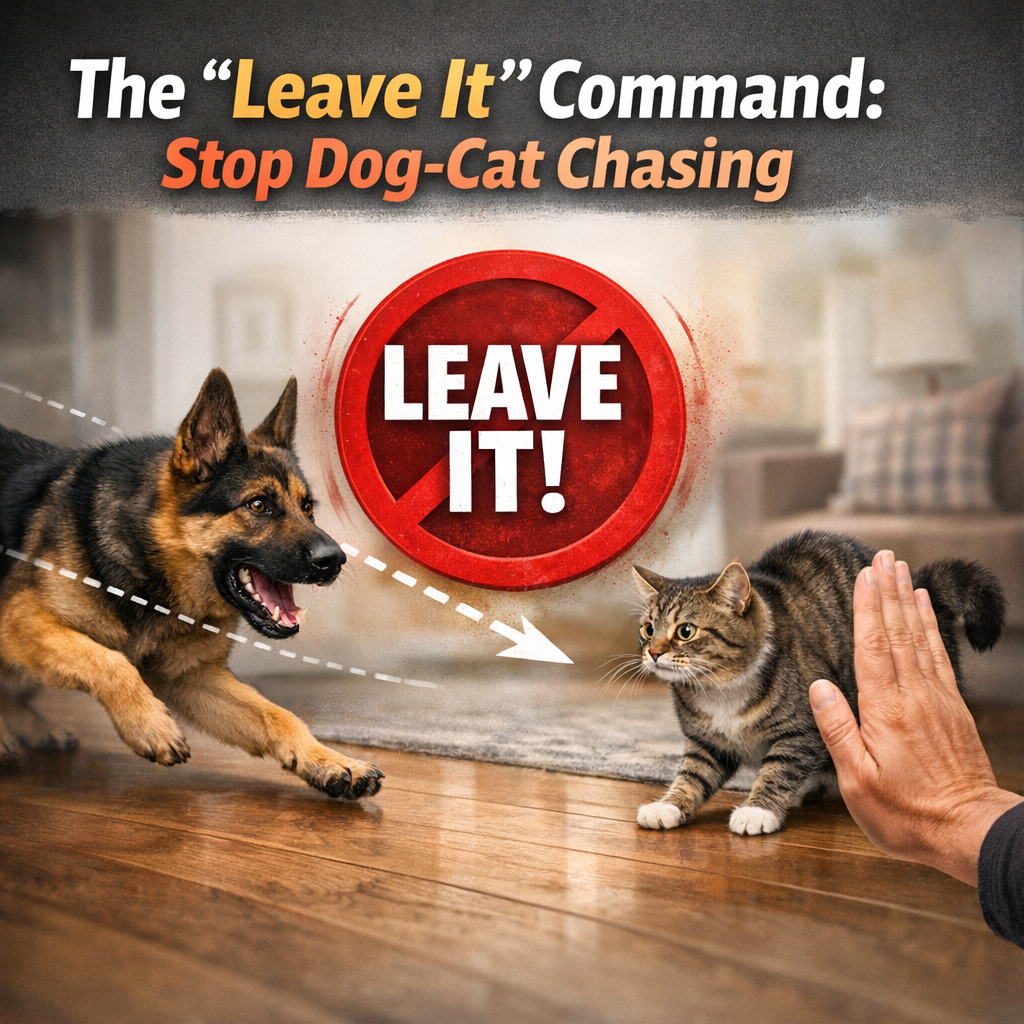
- The “Leave It” command is a critical safety tool that establishes mental boundaries and redirects a dog’s natural prey drive away from cats and other distractions.
- Effective training uses positive reinforcement and high-value treats (like steak or chicken) to make ignoring the trigger more rewarding than the chase itself.
- Physical management, such as leash control and baby gates, is essential during the learning phase to prevent the self-rewarding adrenaline rush of a successful chase.
- For high-prey-drive dogs, specialized techniques like the “Look at That” game help build impulse control by rewarding the dog for calmly acknowledging the cat and checking back with the owner.
Table of Contents
- Stop Your Dog From Chasing Cats With Leave It
- The Proper Use and Importance of the Leave It Command
- Step by Step Training for the Leave It Command
- Using High Value Treats for Food Motivated Dogs
- Leash Control and Physical Management
- Handling High Prey Drive and Difficult Situations
- Preventing Reinforcement of Chasing Behavior
- Reward Based Training vs. Corrections
- Behavioral Management When Leave It Fails
- The Importance of the Leave It Command
- Step by Step Training for Leave It
- The Training Steps for the Leave It Command
- Using High Value Treats and Positive Reinforcement
- Leash Control and Physical Management
- Handling High Prey Drive and Challenging Situations
- Preventing Reinforcement of Chasing Behavior
- Behavioral Management When Leave It Fails
- The Power of High Value Treats and Positive Reinforcement
- Leash Control and Physical Management
- Handling High Prey Drive and Difficult Situations
- Impulse Control for Dogs and Trigger Management
- Behavioral Management When Leave It Fails
- Preventing Reinforcement of Chasing Behavior
- Preventing Reinforcement of Chasing Behavior
- Rewarding Calm Behavior and Impulse Control
- Training Steps for Leave It Command Success
- Behavioral Management When Leave It Fails
- Choosing the Right Dog Training Tips for Your Home
- The Power of Clicker Training and Marker Words
- Using the Look at That Game for Impulse Control
- High Value Treats and Food Motivated Dogs
- When the Leave It Command Fails
- Corrective vs Reward Based Training for Lasting Peace
- Handling High Prey Drive and Difficult Situations
- What to Do When the Leave It Command Fails
- Preventing Reinforcement of Chasing Behavior
- Training Steps for Leave It Command Success
- What to Do When Leave It Fails
- Frequently Asked Questions About the Leave It Command
Stop Your Dog From Chasing Cats With Leave It
Does your living room feel like a scene from a cartoon? If your dog thinks the family cat is a fuzzy toy to be chased, you are not alone. It is a common struggle for many pet parents, but your home does not have to be a battlefield.
Chasing is a natural instinct, especially for a lab terrier mix or other high prey drive breeds. However, it can be stressful for your feline and dangerous for your pup. The leave it command is your best tool to restore peace and keep everyone safe. Understanding how to handle territorial aggression is also key to ensuring a harmonious environment.
Training takes patience, but with the right steps, you can turn a chaotic chase into a calm coexistence. Let us dive into how you can master this essential skill using positive reinforcement and proven dog behavior modification techniques.
The Proper Use and Importance of the Leave It Command
The leave it command is more than just a trick; it is a vital safety measure. Experts at Happy Hounds Dog Training emphasize that this command prevents dogs from engaging with dangerous items or animals, such as cats and squirrels.
By mastering this, you ensure your dog remains under control even when their instincts scream at them to run. Research and community discussions suggest that a solid leave it command significantly reduces the risk of predatory accidents in multi-pet households.
This command creates a mental boundary. It teaches your dog that ignoring a tempting trigger is more rewarding than the chase itself. Whether you are managing leash reactivity or indoor harmony, this is the foundation of a well behaved pet.
Step by Step Training for the Leave It Command
Successful training starts in a low distraction environment. Begin by holding a low value treat in a closed fist and presenting it to your dog. When they stop sniffing or pawing at your hand, use a marker word like yes or a clicker to signal success, then reward them with a high value treat from your other hand.
Progress by placing treats on the floor while covering them with your hand. Once your dog consistently looks away, you can start standing up or moving the treats further away. This builds the impulse control for dogs necessary to handle moving targets like a cat.
Finally, move the training outdoors to practice distraction training. Gradually increasing the complexity of the environment ensures your dog can generalize the command. Consistency is key to moving from a controlled room to a busy backyard.
Using High Value Treats for Food Motivated Dogs
When you are competing with a running cat, a standard kibble bit won’t cut it. You need high value treats like ham, steak, or freeze dried liver to grab your dog’s attention. These rewards make the choice to ignore the cat much easier for food motivated dogs.
In the initial stages of leave it training, the reward must be significantly more exciting than the distraction. If you drop a tempting item, rewarding the dog for choosing you over the item reinforces the behavior rapidly. This creates a strong positive association with obeying your instructions.
As your dog improves, you can vary the rewards, but always keep the good stuff handy for high stimulus situations. High value rewards are the engine that drives focus and engagement during difficult sessions.
Leash Control and Physical Management
Management is just as important as training. Keeping your dog on a leash during the early stages of cat socialization prevents the reinforcement of chasing behavior. If a dog successfully chases a cat, they receive a natural shot of adrenaline that makes them want to do it again.
Using a leash allows for immediate redirection without the need for harsh physical corrections. It gives you the ability to guide your dog away from the cat before they reach a state of total arousal. This physical boundary keeps the cat feeling safe while the dog learns boundaries.
For those following the Look at That game or techniques from Leslie McDevitt in her Control Unleashed book, the leash acts as a safety net. It ensures that even if your dog has a lapse in focus, no one gets hurt during the learning process.
Handling High Prey Drive and Difficult Situations
Some dogs, particularly those with a high prey drive, may struggle to respond to leave it when a cat is in full sprint. In these high stimulus moments, the dog’s predatory brain takes over, making traditional commands less effective.
In these cases, you must work on building a stronger relationship and implementing dog engagement games. Redirecting dog attention through a watch command or a touch cue can help break the hyper focus on the feline. It is about offering an alternative behavior that is more satisfying than the chase.
If your dog is a lab terrier mix or another breed known for chasing, you might need to spend extra time on desensitization. Slow, controlled exposure is the only way to lower their arousal levels over time.
Preventing Reinforcement of Chasing Behavior
Dogs chase because it is fun and rewarding. To stop the habit, you must remove the opportunity for them to find joy in the chase. This means managing dog triggers by using baby gates or crates when you cannot actively supervise their interactions.
By reinforcing calm behavior and rewarding the dog for simply looking at the cat and then looking back at you, you accelerate the learning process. This technique, often called the Look at That game, turns the cat into a cue to check in with the owner.
Every time you prevent a chase, you are winning. Preventing the self rewarding nature of the behavior is the fastest way to see permanent dog behavior modification.
Reward Based Training vs. Corrections
Modern dog training tips favor positive reinforcement and redirection for training over corrective measures. If your dog fails to leave it, it usually means the distraction is too high or the reward is too low. Instead of a correction, you should back up to a previous training step where the dog was successful.
Corrective measures can often backfire, causing the dog to associate the cat with pain or fear, which can lead to aggression. By using marker words and clicker training, you create a clear communication loop that the dog understands and enjoys.
Focusing on rewarding the absence of a bad behavior is always more effective than punishing the presence of one. This approach builds trust and ensures your dog wants to work with you, even when the cat is nearby.
Behavioral Management When Leave It Fails
If your dog consistently ignores the leave it command, it is time to reassess your strategy. You may need to reduce the distance between the dog and the trigger or find even higher value treats to regain their focus. Online community forums often suggest returning to basic puppy focus training.
Do not be afraid to use a leash indoors to re-establish control. If the dog is too overstimulated to listen, they are not in a state where they can learn. Calm them down in a separate room and try again later at a lower intensity level.
Consistent trigger management and counter conditioning are the long term solutions. By staying patient and avoiding frustration, you can eventually achieve a peaceful home where the dog and cat can lounge together without a single chase.
The Importance of the Leave It Command
The leave it command is more than just a party trick. It is a vital safety cue that tells your dog to ignore a specific distraction, whether it is the family cat, a piece of dropped chocolate, or a squirrel darting across the street.
Expert trainers at Happy Hounds Dog Training emphasize that this command is essential for preventing dangerous situations. Studies and expert observations suggest that a solid leave it significantly reduces chasing behaviors in the home, turning a chaotic living room back into a zen den.
When unpredictable situations arise, having a verbal way to protect your pup is priceless. It ensures your dog remains focused on you rather than their prey drive. Mastering this command builds a stronger bond, establishing you as the leader they look to for guidance in high stimulus environments.
Proper Use and Importance of the Leave It Command
Competitors and behavioral experts agree that the leave it command is the ultimate safety net. It is not just about stopping a chase; it is about preventing your dog from ingesting toxins or running into traffic. By teaching your dog to disengage from a trigger, you are providing them with essential impulse control.
In a home with cats, this command creates a psychological boundary. Instead of viewing the cat as a moving toy, your dog learns that ignoring the feline leads to better rewards from you. This shift in focus is what keeps the peace when the cat decide to sprint across the floor at three in the morning.
Training Steps for Leave It Command
Successful dog training tips always start with a low distraction environment. Begin by holding a treat in a closed fist. When your dog stops sniffing or pawing at your hand, use your marker words or a clicker and reward them with a different, high value treat from your other hand.
Progress by placing objects on the floor while your dog is on a leash for better control. Gradually increase the difficulty by practicing outdoors where distractions like squirrels or other dogs exist. Consistency is key: you want to build distance and complexity slowly to ensure your dog understands the cue every single time.
Use of High-Value Treats in Leave It Training
If you want your dog to ignore a cat, you need to offer something better than a cat. This is where food motivation comes into play. Trainers recommend using high value treats like ham, steak, or boiled chicken to reinforce the leave it command, especially during the initial stages of distraction training.
For food motivated dogs, dropping a tempting item and rewarding them for ignoring it creates a powerful positive reinforcement loop. By consistently pairing the act of turning away from a trigger with a delicious reward, you make the choice to listen much easier for your pup.
Leash Control and Physical Management
During the learning phase, dog leash manners are your best friend. Keeping your dog on a leash during training prevents them from successfully completing a chase, which would otherwise reinforce the bad behavior. Physical management ensures you have the ability to provide immediate redirection.
Using a leash allows you to manage dog triggers safely. If your lab terrier mix lunges, the leash prevents the reward of the chase. This control is vital for puppy focus training and reactive dog training, as it keeps both the dog and the cat out of harm’s way while the brain is still learning.
Handling High Prey Drive and Difficult Situations
Some dogs have a high prey drive that makes a simple leave it feel impossible in the heat of the moment. In these high stimulus situations, you may need to look into the Look at That technique popularized by Leslie McDevitt in her Control Unleashed book. This game helps with dog behavior modification by rewarding the dog for simply looking at the trigger and then looking back at you.
For breeds like a lab terrier mix, building a stronger relationship through dog engagement games is necessary. If the dog is too overstimulated to listen, you must increase the distance from the trigger. This targeted socialization and counter conditioning help the dog remain calm even when their instincts are screaming to chase.
Preventing Reinforcement of Chasing Behavior
Dogs chase because it is fun, plain and simple. Every time your dog successfully chases the cat, they receive a massive internal reward. To stop this, you must prevent the reinforcement of chasing behavior by using management tools like baby gates or leashes until their impulse control is rock solid.
By rewarding calm behavior and using redirecting dog attention techniques, you accelerate the learning process. The goal is to make not chasing more rewarding than the chase itself. This is why marker words and clicker training are so effective; they tell the dog exactly when they have made the right choice.
Corrective vs. Reward-Based Training in Challenging Situations
While some might reach for corrective measures, modern positive reinforcement is the gold standard. If your dog repeatedly disobeys, it usually means the distraction is too high or the reward is too low. Rather than applying harsh corrections, back up to a previous training step where the dog was successful.
Returning to basics ensures the dog truly understands the command before you progress to more difficult scenarios. This approach focuses on building confidence rather than fear, leading to more reliable results in the long run.
Behavioral Management When Leave It Fails
If the leave it command fails, do not panic. Behavioral redirection is a process, not an overnight miracle. When your dog consistently ignores you, it is a sign to reduce distractions and re-establish control through leash work and basic dog recall training.
Managing dog triggers often requires a multi-faceted approach, including self soothing behaviors and desensitization. If you find yourself struggling, searching for professional help or watching expert demos can provide the extra guidance needed to restore a peaceful, cat-friendly home.
Step by Step Training for Leave It
Training your dog requires a structured, multi-step process. You want to start in a low-distraction environment, like your hallway, where the cat is safely tucked away in another room.
Begin by holding a treat in a closed fist. When your dog sniffs or paws at it, simply wait. The moment they pull back or look away, use your marker words like Yes! or a clicker and reward them with high value treats from your other hand.
Once they understand the concept, progress to placing the object on the floor under your hand. Gradually increase the difficulty by standing up or using more tempting items like a piece of ham or steak to boost food motivation.
The Training Steps for the Leave It Command
To master the leave it command, consistency is your best friend. Start by dropping a tempting item and rewarding your pup for ignoring it, which helps build vital impulse control and focus and engagement.
Expert trainers at Happy Hounds Dog Training suggest that you should gradually increase the distance between your dog and the distraction. This ensures the command sticks even when the stakes are much higher.
The next phase involves moving outdoors for distraction training. Whether you are dealing with a lab terrier mix or a tiny puppy, practicing in the yard helps generalize the behavior before you hit the busy sidewalk.
Using High Value Treats and Positive Reinforcement
Positive reinforcement is the secret sauce for success. Competitors and experts alike recommend using high value treats like chicken or cheese to reinforce the leave it command, especially during the initial stages.
By rewarding calm behavior, you are teaching your dog that ignoring the cat is more profitable than the chase. This method is far more effective than corrective measures, which can often cause confusion or fear.
If your dog is highly food motivated, they will quickly learn that Leave It means a better snack is coming from you. This creates a strong behavioral redirection that keeps their eyes on you and off the feline.
Leash Control and Physical Management
During the learning phase, leash control is essential for managing dog triggers. Keeping your dog on a leash prevents them from successfully chasing the cat, which stops the behavior from being self-reinforcing.
Using a leash allows for immediate redirection if your dog attempts to lunge or grab an object. This physical management ensures safety for both pets while you work on dog leash manners and impulse control.
If your dog becomes too reactive, simply increase the distance from the trigger. This management strategy prevents the dog from reaching a state of over-arousal where they can no longer listen to your cues.
Handling High Prey Drive and Challenging Situations
Some dogs, especially those with a high prey drive, may struggle with the leave it command in high-stimulus situations. If your dog is obsessed with chasing squirrels or the cat, you may need to incorporate techniques from Leslie McDevitt.
In her book Control Unleashed, McDevitt outlines the look at that game, which helps dogs process triggers without reacting. This is a game-changer for leash reactivity and building a stronger relationship between you and your pup.
For difficult cases, focus on dog engagement games and recall training. If the leave it command fails in a heated moment, having a bulletproof recall can be the ultimate safety net to prevent a feline confrontation.
Preventing Reinforcement of Chasing Behavior
Dogs chase because it is fun and rewarding. To stop cat chasing, you must prevent the dog from ever getting the prize of the chase. Every time they successfully chase, the habit becomes more deeply ingrained.
By using a leash and rewarding calm behavior, you accelerate the learning process. You are essentially teaching your dog that staying chill is the only way to get those delicious treats and praise.
If you find your dog repeatedly failing, do not use harsh corrections. Instead, back up your training to an easier level. Go back to a quiet room and re-establish the basics before trying again near the cat.
Behavioral Management When Leave It Fails
If your dog consistently ignores the command, it is a sign that the distraction is too high or the reward is too low. Behavioral redirection is key here; don’t just keep shouting the command if it isn’t working.
Socializing dogs and managing dog triggers takes time. If you hit a wall, check out resources online where owners of reactive dogs share tips on trigger management and desensitization.
Remember that patience is vital. Build complexity slowly so your dog never feels like they are failing the test.
The Power of High Value Treats and Positive Reinforcement
If you are using boring dry kibble, your dog might decide the cat is much more interesting. To compete with a moving target, you need high value treats that make you the most exciting person in the room.
Professional trainers at Happy Hounds Dog Training recommend using items like ham, steak, or hot dog chunks. These are essential during the initial stages of training when you are competing with a high prey drive.
Food motivation is a powerful tool for your pup. If your dog knows that the leave it command leads to a jackpot of roast chicken, they will be much more likely to choose you over the chase.
Mastering Distraction Training and Impulse Control
Effective distraction training involves teaching your dog that looking at you is far more rewarding than looking at the cat. You want to turn this into a fun dog engagement game rather than a chore.
Start by dropping a tempting item and rewarding the dog for ignoring it. This builds the impulse control for dogs that is necessary to stop a chase before it even begins.
Using marker words or clicker training helps your dog identify the exact moment they made the right choice. A well timed Yes! tells them that ignoring the feline was a winning move.
Managing Dog Triggers and Behavioral Redirection
When you are dealing with a reactive dog training scenario, trigger management is your best friend. Keeping your dog on a leash during the early phases prevents them from reinforcing the chasing behavior.
Dogs chase because it is inherently rewarding. By using leash control and physical management, you ensure they cannot practice the bad habit while you work on behavioral redirection.
If your dog is a lab terrier mix or another breed with high energy, they may need extra focus and engagement. Techniques like the Look at That game by Leslie McDevitt are great for redirecting dog attention.
Rewarding Calm Behavior and Consistency
The goal is to move toward rewarding calm behavior whenever the cat enters the room. Consistency is the secret sauce that makes the leave it command stick in real world situations.
If your dog fails or ignores you, do not resort to harsh corrections. Simply back up to an easier training step, reduce the distractions, and try again to ensure they understand the expectations.
A focused dog is a happy dog, and a happy cat makes for a peaceful home.
Leash Control and Physical Management
Management is just as vital as training because you cannot expect a dog to listen if they are already mid-sprint across the kitchen. Think of leash control as the seatbelt for your dog training journey.
Keeping your pup on a leash during the training phase is highly suggested to prevent the chase from happening in the first place. This gives you immediate physical control and prevents the dog from being reinforced by the thrill of the hunt.
A leash allows for instant behavioral redirection if your dog attempts to fixate on the cat. It acts as a safety net while your pup is still learning the ropes and practicing impulse control for dogs.
Never use the leash to jerk or choke your pet. It is a tool for guidance and prevention, not punishment. Use it to lead them away to a quiet area if they become too fixated on their feline housemate.
Preventing Reinforcement of Chasing Behavior
Dogs chase because it is inherently rewarding. Every time your dog successfully lunges at the cat, they get a massive dopamine hit that makes the behavior harder to break later on.
Using a leash during triggers ensures you are managing dog triggers effectively. By stopping the movement before it starts, you ensure the dog is not getting reinforced for chasing, which significantly accelerates the learning process.
If your dog is a lab terrier mix or another breed with a high prey drive, physical management is even more critical. These dogs often need extra help staying grounded when their instincts tell them to bolt.
By rewarding calm behavior while the dog is safely tethered, you teach them that peace and quiet lead to high value treats. This shift in focus is the secret sauce to long term harmony in a multi-pet household.
Behavioral Management When Leave It Fails
Even the best trained dogs have off days. If your pup consistently ignores the leave it command, it is a sign that the distraction is too high or you are moving too fast through the training steps.
Professional trainers like Leslie McDevitt often suggest backing up your training if the dog fails. This might mean increasing the distance between the dog and the cat or returning to a low distraction environment.
Rather than applying harsh corrections, re-establish control with leash work. If the dog is too overstimulated to listen, simply remove them from the room to allow for some self soothing behaviors and a mental reset.
Consistency is key. If you find yourself struggling, look up resources from Happy Hounds Dog Training or search for tutorials to see visual examples of redirecting dog attention.
Handling High Prey Drive and Difficult Situations
Some situations are tougher than others. A dog with a high prey drive might respond perfectly to the leave it command in the living room but lose their mind when they see a squirrel outside.
In high stimulus situations, the leave it command might not be enough on its own. You may need to incorporate techniques like the look at that game to change the dog’s emotional response to the trigger.
Building a stronger relationship through dog engagement games can help your dog choose you over the distraction. When your dog views you as the most exciting thing around, they are much more likely to check in with you.
For those dealing with extreme cases, the book Control Unleashed by Leslie McDevitt is a goldmine. It provides deep insights into managing reactive dog training and improving puppy focus training in a way that feels like a game rather than a chore.
Handling High Prey Drive and Difficult Situations
Some dogs, like a high energy lab terrier mix or specialized hunting breeds, come pre-programmed with an incredibly high prey drive. For these furry athletes, a simple leave it command might not be enough to break their focus when a cat streaks across the room.
If your dog is chasing cats with intense, vibrating focus, you need to level up your strategy. High prey drive means the chase itself is the reward, so you must make focusing on you even more rewarding than the hunt.
Building a stronger relationship through dog engagement games helps shift their focus from the cat to you. When you become the source of all the fun, your dog is much more likely to check in before launching a feline pursuit.
Impulse Control for Dogs and Trigger Management
Teaching alternative behaviors, such as a rock solid sit or a watch me, gives your dog a productive way to channel their energy. This is a core part of building impulse control for dogs who struggle with sudden movement.
Renowned trainer Leslie McDevitt, author of the Control Unleashed book, often discusses trigger management and patterns to help a reactive dog stay calm. Her techniques help dogs process the sight of a cat without hitting a state of total arousal.
Using the look at that game allows your dog to acknowledge the cat and then immediately look back to you for a reward. This behavioral redirection turns a potential chase into a moment of focus and engagement.
Behavioral Management When Leave It Fails
If your dog consistently ignores your commands during training, it is a sign that the environment is too distracting. Competitors in the dog training world, like Happy Hounds Dog Training, suggest backing up a few steps rather than applying harsh corrections.
When leave it fails, go back to basics with leash pulling solutions and high value treats like ham or steak. You want to ensure your dog understands the marker words and the value of the reward before trying again in the presence of a cat.
Remember, the goal is rewarding calm behavior until it becomes a habit.
Preventing Reinforcement of Chasing Behavior
Dogs chase because the adrenaline rush is naturally reinforcing. Every time your dog successfully chases the cat, they are learning that the behavior is fun and worth repeating, which makes your job harder.
Using a leash during triggers prevents the dog from getting that reinforcement. By physically stopping the chase before it starts, you allow the dog to choose a different action, such as eye contact or a sit, which you can then reward heavily.
This management phase is crucial for dog behavior modification. It keeps the peace in your home while you work on desensitization and counter conditioning, ensuring that your cat feels safe and your dog stays focused on their training goals.
Preventing Reinforcement of Chasing Behavior
Dogs chase because it is an absolute blast. In the canine world, sprinting after a bolting cat is a self reinforcing behavior that delivers a natural high. The more your dog practices the chase, the more they want to do it, making it a difficult habit to break without a solid plan.
To stop this cycle, you must prevent your dog from ever feeling the win of the chase. Using leash control and physical management ensures that your pup cannot self reward by catching or cornering the cat. This level of trigger management is essential for successful dog behavior modification.
By removing the opportunity for the chase, you accelerate the learning process significantly. If your dog is on a leash, you can easily redirecting dog attention back to you before they reach a state of intense, vibrating focus. This prevents the brain from locking into a predatory drive.
Rewarding Calm Behavior and Impulse Control
Reinforcing calm or focusing behaviors is the secret sauce to a peaceful home. Every time your dog looks at the cat and then chooses to look back at you, they should be rewarded handsomely. This is a core part of the look at that technique popularized by experts like Leslie McDevitt.
Using marker words or clicker training helps your dog identify the exact moment they made the right choice. When they choose focus over the feline, deliver high value treats like boiled chicken or steak. This builds a strong foundation for impulse control for dogs in high stimulus environments.
If the cat runs and your dog stays still, that is a massive victory for your training journey. Celebrate these moments with the best treats in your bag. Consistent positive reinforcement turns a reactive dog into a focused partner who looks to you for guidance rather than chasing every tail that flickers.
Training Steps for Leave It Command Success
The leave it command is your most versatile tool for stopping cat chasing. Start your puppy focus training in a low distraction room using food motivation. Place a boring kibble on the floor, cover it with your hand, and wait for your dog to stop sniffing. The moment they pull back, use your marker word and reward them with a better treat.
As they improve, progress to placing tempting items within reach and eventually moving the training outdoors. You can find excellent visual guides from Happy Hounds Dog Training to see these steps in action. Mastering this in the house is the only way to ensure it works when a squirrel appears.
Remember that for a lab terrier mix or other high energy breeds, distraction training must be gradual. If your dog consistently ignores the command, you may need to back up to a previous step. This ensures the dog understands the expectation before you increase the difficulty or add the cat back into the equation.
Behavioral Management When Leave It Fails
Even with the best dog training tips, there will be days when your dog’s prey drive feels untouchable. If the leave it command fails during a high stakes moment, do not resort to harsh corrections. Instead, use your leash to calmly create distance between the dog and the cat.
When a dog is over threshold, they are no longer in a learning state. At this point, you should focus on behavioral redirection and finding a quiet space where they can practice self soothing behaviors. If the chase happens, it means the environment was too challenging, and you need to adjust your strategy.
Consistency is key to restoring peace. By pairing the leave it command with dog engagement games and rewarding calm behavior, you teach your dog that ignoring the cat is far more lucrative than the chase. Over time, your dog will learn that staying cool is the fastest way to earn those premium snacks.
Choosing the Right Dog Training Tips for Your Home
Restoring peace between your pets requires more than just a stern voice. You need a toolkit of proven dog training tips to turn your living room from a racetrack into a relaxing lounge.
Every dog is an individual, from a focused lab terrier mix to a spirited puppy. Finding the right approach depends on your dog’s personality and their level of food motivation.
Positive reinforcement is the gold standard for building trust. By rewarding calm behavior with high value treats, you teach your dog that ignoring the cat is more profitable than the chase.
| Method | Focus | Best For |
|---|---|---|
| Positive Reinforcement | Rewarding good choices | Building trust and long term habits |
| Clicker Training | Precise timing with a marker | Teaching complex new behaviors quickly |
| Management | Leashes and baby gates | Preventing bad habits during the learning phase |
| Redirection | Switching focus to a toy | High energy dogs with play based drives |
The Power of Clicker Training and Marker Words
Precision is everything when stopping cat chasing. Clicker training allows you to mark the exact millisecond your dog chooses to look away from the cat and back at you.
If you do not have a clicker, using consistent marker words like Yes! works just as well. This clear communication builds puppy focus training and strengthens your dog recall training over time.
Socializing dogs to coexist with felines takes patience. By using these markers, you are not just stopping a chase; you are engaging in dog behavior modification that sticks for life.
Using the Look at That Game for Impulse Control
One of the most effective tools for reactive dog training is the Look at That game. This technique, popularized by experts like Leslie McDevitt, helps with managing dog triggers safely.
Instead of your dog fixating on the cat, they learn to look at the trigger and then immediately look back at you for a reward. This builds incredible impulse control for dogs who struggle with movement.
This method is a core part of the Control Unleashed book philosophy. It transforms the cat from a toy to be chased into a cue to check in with the owner for a tasty snack.
High Value Treats and Food Motivated Dogs
When you are competing with a running cat, a boring dry biscuit will not cut it. You need high value treats like chicken, cheese, or steak to win your dog’s attention.
Food motivated dogs will quickly learn that the leave it command results in a jackpot reward. This distraction training is essential for shifting their brain out of hunting mode and back into earning mode.
Always keep your treats handy. Whether you are working on dog engagement games or practicing dog leash manners, being ready to reward the right choice is the key to success.
When the Leave It Command Fails
Even the best trained dogs have off days. If your dog ignores the leave it command, do not resort to harsh corrections. Instead, use behavioral redirection to reset the energy.
If they are too overstimulated to listen, increase the distance between them and the cat. This is where physical management, like a leash or a gate, becomes your best friend.
Remember, consistency is more important than perfection. If you find yourself struggling, go back to the basics of leash pulling solutions and focus and engagement. Every small win brings you closer to a peaceful, chase-free home.
Corrective vs Reward Based Training for Lasting Peace
While some older methods suggest harsh corrections, most modern experts, including those from Happy Hounds Dog Training, advise against them. Using a stern voice or physical force can lead to fear or increased leash reactivity.
Rewarding calm behavior is the most effective way to build a dog that wants to listen. When you focus on positive reinforcement, you create a dog that looks to you for guidance rather than one that is simply afraid of getting in trouble.
This approach creates a much happier household for both your dog and your cat. If you find yourself needing corrective measures, it is usually a sign that the training environment needs to be simplified to help your pup succeed.
Handling High Prey Drive and Difficult Situations
Dogs with a high prey drive may not always respond to the leave it command in high stimulus situations. If your dog is a lab terrier mix or another breed prone to chasing, they might find the movement of a cat or squirrel too tempting to ignore.
In these challenging moments, experts like Leslie McDevitt suggest using the look at that game. This technique helps with reactive dog training by teaching your dog to look at the trigger and then immediately look back at you for a reward.
By using marker words or clicker training, you can catch the exact moment your dog chooses to disengage. This builds impulse control for dogs and turns a potential chase into a moment of focus and engagement.
What to Do When the Leave It Command Fails
If your dog repeatedly disobeys, it usually means the distraction is too high for their current skill level. Online trainers emphasize that you cannot out-shout a dog’s natural instincts.
The best move is to return to previous training steps. Behavioral management when leave it fails involves reducing the distance between your dog and the cat or moving back to a low distraction environment to rebuild their confidence.
Backing up your training ensures the dog truly understands the command before you progress. You might need to increase your food motivation by using higher value treats to compete with the excitement of the chase.
Preventing Reinforcement of Chasing Behavior
It is important to remember that dogs chase because it is inherently rewarding. Every time they successfully bolt after the cat, the behavior is reinforced, making it harder to stop the next time.
To break this cycle, use leash control and physical management. Keeping your dog on a leash indoors during the early stages of training prevents them from self rewarding through a chase and allows for immediate redirection.
By managing dog triggers and preventing the chase from happening, you accelerate the learning process. This consistent management, combined with rewarding calm behavior, eventually teaches your dog that staying relaxed is more profitable than running.
Training Steps for Leave It Command Success
Start your distraction training in a quiet room with no pets around. Place a low value item on the floor and cover it with your hand, saying the leave it command. When your dog stops sniffing or pawing at your hand, use a marker word and offer high value treats from your other hand.
Progress to placing objects within reach while your dog is on a leash. Gradually increase the difficulty by dropping tempting items or practicing near the cat’s favorite lounging spots. Consistency is key to mastering dog behavior modification.
Once your dog is reliable indoors, move to outdoor dog recall training and practicing leash manners. Building a stronger relationship through dog engagement games ensures that your pup chooses you over the neighborhood squirrels or the family feline every time.
What to Do When Leave It Fails
Even the most fashionable pups have off days where their impulse control vanishes. If your dog consistently ignores the leave it command, do not panic. It simply means your strategy needs a quick makeover to better manage those high prey drive moments.
When things go south, the best move is backing up the training. Reduce the distractions in your environment and swap your standard kibble for high value treats like ham or steak. Increasing the reward makes you much more interesting than the cat.
Check your marker words and timing. Are you being clear, or is your dog confused? Online tutorials for distraction training can provide fresh techniques from experts like Leslie McDevitt to help sharpen your dog engagement games.
Behavioral Management When Leave It Fails
If your dog is hyper focused on the cat, you must re-establish control with leash work immediately. Using a leash provides physical management that prevents the dog from being reinforced by the thrill of the chase. This keeps everyone safe while you reset.
Instead of using harsh corrections, which can lead to leash reactivity or fear, calmly remove your dog from the room. Behavioral redirection is about moving to a distance where your dog can succeed again. This is a core principle in the Control Unleashed book for managing dog triggers.
Patience is your best accessory. If your dog is overstimulated, they cannot learn. End the session, let them settle into some self soothing behaviors like sniffing or resting, and try again later when the house is calm and relaxed.
Handling High Prey Drive and Difficult Situations
Some breeds, like a spirited lab terrier mix, may find stopping cat chasing nearly impossible when their instincts kick in. In these high stimulus situations, the leave it command might not be enough on its own. You may need to incorporate the look at that game to change their emotional response.
The look at that technique teaches the dog to look at the trigger and then look back at you for a reward. This builds focus and engagement even when the cat is nearby.
Remember that chasing is naturally rewarding for dogs. By preventing the chase through leash control and rewarding calm behavior, you stop the cycle of reinforcement. Consistently practicing these dog training tips will eventually lead to a peaceful home where the cat is no longer a moving target.
Corrective vs. Reward-Based Training in Challenging Situations
Modern experts at Happy Hounds Dog Training emphasize that positive reinforcement is the most effective way to handle disobedience. If your dog ignores a command, it is usually because the distraction is too high or the reward is too low. It is rarely about defiance.
Avoid the temptation to use a stern voice or physical force. These methods often backfire, creating a reactive dog rather than a focused one. Instead, return to a previous training step where your dog was successful, such as basic puppy focus training in a quiet room.
Using clicker training can help improve your timing when marking the exact moment your dog chooses to look away from the cat. This clear communication tells your dog exactly what behavior earned them that delicious piece of steak, making future success much more likely.
Frequently Asked Questions About the Leave It Command
Mastering the leave it command is a journey that requires patience. To help you navigate this transition from chaos to calm, we have rounded up the most common questions pet parents ask when trying to stop the great living room safari.
How long does it take to train leave it?
Most dogs can grasp the basic concept of the leave it command within a few days of focused sessions. However, achieving total impulse control for dogs when a cat zooms past is a different story. Expect to spend several weeks on distraction training before your pup consistently chooses you over the chase.
Consistency is your best friend here. Short, five minute sessions held multiple times a day are far more effective than one long marathon. If you stay diligent with your dog engagement games, you will see that reactive dog training starts to pay off in real world scenarios.
Can I use this for leash pulling solutions?
Absolutely. The leave it command is a cornerstone of dog leash manners. It serves as one of the most effective leash pulling solutions because it teaches your dog to ignore environmental triggers like squirrels or discarded snacks on the sidewalk.
By using positive reinforcement, you can redirecting dog attention back to you during walks. This prevents the lunging and pulling that happens when a dog is hyper focused on something they want to investigate. It turns a stressful walk into a coordinated stroll.
What if my dog is not food motivated?
While many pups are highly food motivated dogs, some prefer a different paycheck. If high value treats like ham or steak do not grab their attention, try using a favorite squeaky toy or intense physical affection as a reward.
The key is to find what your dog values most. Some breeds, like a high energy lab terrier mix, might find a quick game of tug more rewarding than a biscuit. As long as the reward outweighs the temptation of the cat, the training will stick.
Should I use clicker training for this?
Clicker training is highly recommended by experts like Leslie McDevitt because it provides a precise marker. This clear communication marks the exact moment your dog makes the right choice to look away from the distraction.
Using a clicker helps in managing dog triggers because it cuts through the noise. It tells your dog exactly why they are being rewarded, which speeds up the learning process for complex behaviors like stopping cat chasing or mastering the look at that game.
What are the best training steps for leave it command success?
Start your puppy focus training in a quiet room with zero distractions. Place a low value item on the floor, cover it with your hand, and say the command. The moment they stop sniffing or pawing at your hand, use your marker words and give them high value treats from your other hand.
Gradually progress by uncovering the item, then dropping it from a height. Once they are pros indoors, move to distraction training outside. Remember to keep the dog on a leash during these phases to maintain control and prevent the dog from successfully reinforcing their own chasing behavior.
How do I handle high prey drive in difficult situations?
For dogs with a naturally high prey drive, the leave it command might fail during high stimulus moments. In these cases, refer to resources like the Control Unleashed book for advanced impulse control techniques. You may need to increase the distance between your dog and the cat to find their under threshold zone.
If your dog consistently ignores you, do not resort to harsh corrections. Instead, back up the training to an easier level. Use physical management like baby gates or a leash to ensure the cat remains safe while you work on building a stronger foundation of rewarding calm behavior.
Socializing dogs to coexist with feline friends takes time. By pairing the leave it command with dog recall training and plenty of positive reinforcement, you can create a peaceful home.
References









Disclaimer
The information provided on this website, including articles, blogs, and tips, is designed solely for general informational and educational purposes. It is important to understand that this content is not intended to serve as veterinary advice, diagnosis, or treatment. For any questions or concerns regarding your pet’s medical condition, always consult directly with a qualified veterinarian to ensure the best care and guidance for your furry friend.
Bella Gatti US Shop