TL;DR (Too Long; Didn’t Read)
- Spaying is highly effective: Surgical sterilization removes the hormonal drive to mark territory, stopping the behavior in the vast majority of female cats within a few weeks.
- Behavioral vs. Medical: If spraying continues, it is often triggered by environmental stress, territorial insecurity, or medical issues like urinary tract infections and bladder crystals rather than hormones.
- Rare Complications: In some cases, “Ovarian Remnant Syndrome” (residual tissue left after surgery) can cause a spayed cat to continue acting as if she is in heat.
- Solutions: Managing persistent spraying requires a multi-pronged approach, including veterinary checkups, using enzymatic cleaners for odors, and utilizing pheromone diffusers (like Feliway) to reduce anxiety.
Table of Contents
Does Spaying a Female Cat Stop Spraying?
You might think urine marking is a problem reserved for tomcats. Many pet parents are surprised to find their female feline backing up to a wall with a quivering tail. It is a messy habit that can turn a cozy home into a pungent puzzle.
The short answer is: yes, spaying is critical for reproductive health. However, it is not always a magic fix. Understanding why your girl is marking territory is the first step to reclaiming your furniture and your sanity.
In short:
Spaying removes the hormonal drive to find a mate, which is a leading cause of spraying. That said, behavioral triggers and medical issues can keep the habit alive long after the surgery is over.
How Effective is Surgical Sterilization in Stopping Female Cat Spraying?
Surgical sterilization is highly effective at reducing or eliminating spraying behaviors in most female cats. By removing the ovaries and uterus, the procedure eliminates the surge of hormones that tells a cat to advertise her availability to males.
While most owners see a massive improvement, it is important to realize that spraying after spaying can still happen. If your cat is not yet spayed or neutered, prepare for the first signs of mating behaviors. If the behavior was deeply ingrained before the surgery, it might take a few weeks for the hormones to dissipate and the habit to fade.
In rare cases, a condition known as ovarian remnant syndrome can occur. This happens if a small piece of estrous tissue or ovarian tissue is accidentally left behind during the procedure, causing the cat to still act as if she is in heat.
The Truth About Female Cat Spraying and Territorial Marking
Many cat owners believe the myth that only male cats spray. In reality, female cat spraying is a common way for girls to communicate. They use urine marking to claim their space or signal their reproductive status to the neighborhood.
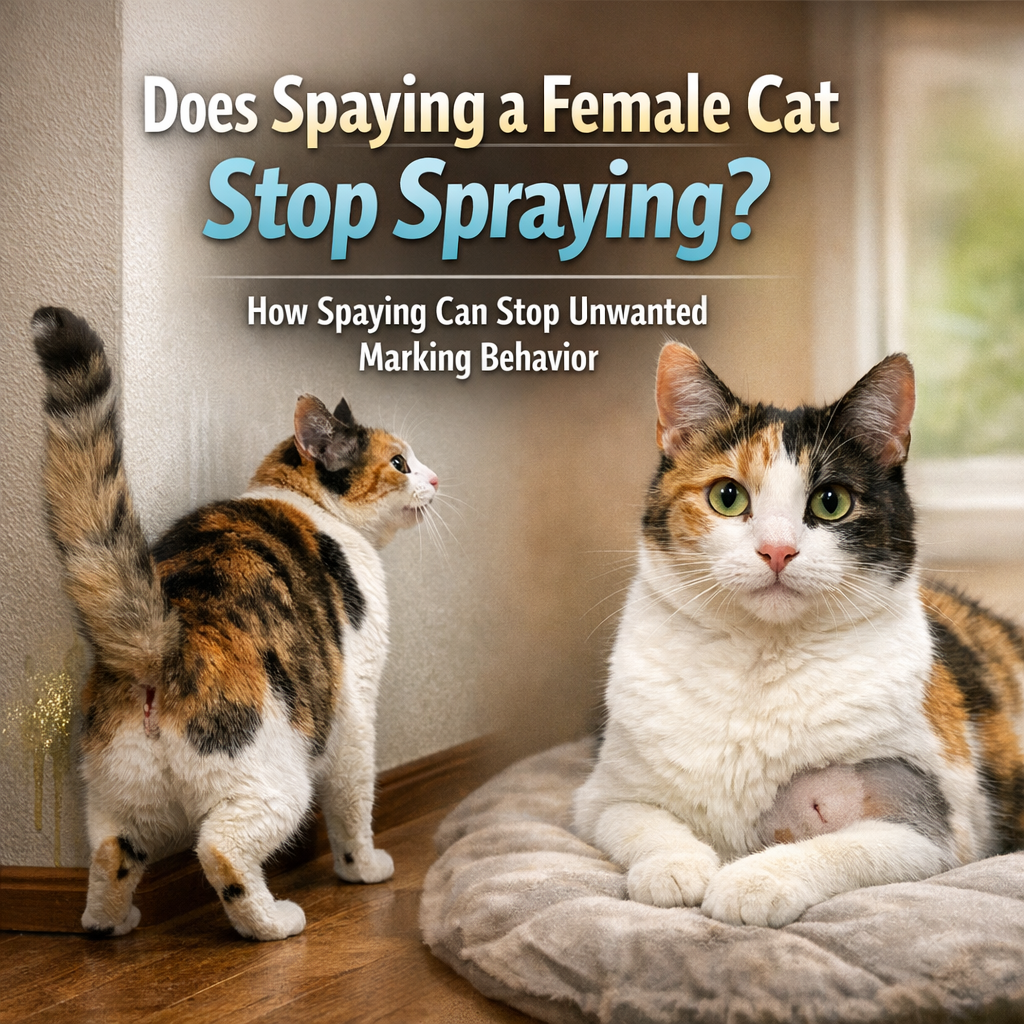
When a female cat sprays, she is usually standing up, tail high and twitching, aiming at vertical surfaces like walls or the back of your favorite sofa. This is different from normal urination, which is usually done in a squatting position on a flat surface.
Territorial marking is often triggered by environmental changes. If your cat feels her “throne” is under threat by a new pet or a stray cat outside the window, she may use urine to fortify her boundaries. Understanding how she communicates through feline pheromones can help you address these behaviors effectively.
Timing of Behavior Changes and Post-Spay Expectations
Expectations for behavior changes should be realistic. Most feline behavioral issues related to hormones will begin to subside within a few weeks after the surgery is completed.
During this time, the body is adjusting to a new chemical balance. If you still see your cat backing up to walls a month later, it may be time to investigate other cat spraying causes that are not related to her heat cycle.
If the spraying continues for several months, it is less likely to be hormonal. At this stage, you are likely dealing with a learned behavior or a lingering environmental stressor that needs your attention.
Health Issues and Feline Medical Issues That Mimic Spraying
Before assuming your cat is just being a territorial diva, you must rule out serious cat health problems. Many feline medical issues can cause a cat to avoid the cat litter box or leak urine in odd places.
A urinary tract infection or feline interstitial cystitis can cause significant pain and urgency. If your cat is straining, crying while peeing, or if you notice blood in the urine, these are major red flags that require immediate veterinary care.
Bladder crystals are another common culprit. When a cat associates the litter box with the pain of a medical condition, they may start urinating elsewhere. Always consult a vet to ensure your cat is not suffering from an underlying physical ailment.
Addressing Cat Stress, Anxiety, and Territorial Insecurity
Cat anxiety is a powerful motivator for spraying. Even a spayed female cat may spray if she feels her world is upside down. Changes like moving house, new furniture, or a change in your work schedule can trigger cat stress.
Inter-cat conflict is a major source of tension. If you have multiple cats, feline aggression over resources like food bowls or the best sleeping spots can lead to territorial marking. Your cat is essentially writing “Private Property” in a way she knows you cannot ignore.
To help a stressed cat, many experts recommend using a Feliway diffuser. These devices release synthetic cat pheromones that mimic the natural “happy messages” cats leave when they rub their cheeks on things, helping to calm their nerves and reduce the urge to mark.
If your cat is an emotional support animal, her sensitivity to your own stress levels might also play a role. Providing a stable environment and plenty of vertical space can help her feel secure again.
While cat care costs can add up, investing in a vet visit and some environmental enrichment is much cheaper than replacing a carpet. If you find yourself searching online for answers, remember that every cat is an individual, and a mix of medical and behavioral approaches is usually the best path to a dry house.
Effectiveness of Spaying in Stopping Spraying
Spaying is highly effective at reducing or eliminating cat spraying behaviors in females. When a vet performs surgical sterilization, they remove the ovaries and usually the uterus. This procedure stops the production of hormones like estrogen that drive the urge to find a mate.
In most cases, an intact female sprays to let nearby males know she is available. Once those hormones are gone, the biological need to advertise her status vanishes. Statistics show that the vast majority of females stop this behavior shortly after their recovery from veterinary care.
However, if the behavior has become a deep-seated habit, it might take longer to fade. If your cat was spayed later in life, she might continue territorial marking out of routine rather than hormonal necessity. Behavioral changes typically manifest within a few weeks, but some feline behavioral issues require more time to resolve.
Can a Spayed Female Cat Still Spray?
Yes, a spayed female cat can still spray, which often leaves owners feeling like they are living in a pungent puzzle. While the surgery removes the primary hormonal trigger, it does not magically erase feline aggression or environmental stress. If your girl is still backing up to the sofa with a quivering tail, it is time to look deeper.
One rare medical cause is ovarian remnant syndrome. This occurs when a tiny piece of estrous tissue is accidentally left behind during surgery. This residual ovarian tissue can still produce hormones, causing your cat to go into heat and spray just like an unfixed feline.
Beyond surgical complications, cat stress is a major culprit. Things like inter-cat conflict or a new person in the house can trigger cat anxiety. When a cat feels insecure, they use their scent to create a “safety bubble,” leading to spraying after spaying despite the lack of ovaries.
Health Issues and Veterinary Care
Before assuming your cat is just being a diva, you must rule out feline medical issues. Many pet parents confuse a urinary tract infection or bladder crystals with behavioral spraying. If your cat is straining or you see blood in the urine, these are red flags for a serious cat health problem.
A visit to the vet is essential to differentiate between territorial marking and a painful medical condition. Your vet may recommend a urinalysis to check for feline cystitis or other issues. Seeking professional pet health advice early can prevent a small problem from turning into a chronic habit of avoiding the cat litter box.
If the issue is purely behavioral, your vet might suggest a Feliway diffuser. These devices mimic cat pheromones to create a sense of calm and security. Managing cat urine problems often requires a mix of medical checkups, environmental changes, and perhaps even designating your kitty as an emotional support animal to ensure they get the stability they need.
Female Cats Can Spray: Myth vs Reality
It is a common myth that only male cats spray. In reality, female cats are perfectly capable of urine marking. While they might not do it as frequently as intact males, they use it as a sophisticated form of communication.
When a female cat sprays, she is usually marking her territory or responding to a perceived threat. This can happen whether she is spayed or unspayed. The action involves backing up to a vertical surface, treading with her back feet, and releasing a small amount of pungent urine.
For unspayed females, this is often a “dating profile” left for local suitors. For spayed females, it is more like a “keep out” sign. If she feels her space is being invaded by a new pet or a stray cat outside the window, she may use spray to feel more secure.
Health Issues Related to Spraying Behavior
Before you blame your cat’s attitude, you must rule out feline medical issues. Many pet owners mistake a urinary tract infection or bladder crystals for behavioral spraying. These conditions cause pain and urgency, leading to inappropriate urination outside the cat litter box.
If you notice your cat straining or see blood in the urine, seek professional veterinary care immediately. Feline health problems like cystitis can mimic territorial marking, but they require medical treatment rather than behavioral training. A quick checkup ensures your girl isn’t suffering from a physical ailment.
Stress and Territorial Behavior as Causes
Cat stress is a leading trigger for female cat spraying. Felines are sensitive creatures, and even small changes can spark cat anxiety. A new baby, a move, or even a loud construction project next door can turn your calm kitty into a frantic decorator.
Inter-cat conflict is another major factor. If there is feline aggression in a multi-cat household, a spayed female cat may spray to establish her boundaries. This territorial marking acts as a buffer, helping her feel like she has a safe “no-go zone” that belongs only to her.
Role of Residual Ovarian Tissue in Post-Spay Spraying
Sometimes, spraying after spaying happens because of a rare condition called ovarian remnant syndrome. This occurs if a tiny piece of estrous tissue or ovarian tissue is accidentally left behind during surgical sterilization. That small piece of tissue can still produce hormones.
If your girl acts like she is in heat or continues territorial marking, your vet might need to check for these remnants. While the spay procedure is usually a permanent fix, residual hormones can keep those “dating profile” instincts alive long after the surgery is over.
Using Pheromones and Environmental Aids
To curb cat urine problems, you need to lower the tension in your home. A Feliway diffuser is a popular tool that releases synthetic cat pheromones. These scents mimic the “happy markers” cats rub on furniture with their cheeks, signaling that the area is safe.
Using these calming aids can reduce the need for territorial marking. Whether you are dealing with a new pet or neighborhood strays, creating a soothing environment helps manage feline behavioral issues. It is a simple way to provide emotional support for your furry friend while protecting your walls.
Timing of Behavior Changes Post Spay
Do not expect the spraying to stop the second you bring her home from the clinic. Hormones take time to leave the body. You will typically see a significant decrease in marking behavior within a few weeks after the procedure.
For most cats, the habit disappears entirely within one to two months. If the spraying continues beyond this window, it is time to look at other factors. It could be that the behavior has transitioned from a hormonal reaction to a response to cat stress.
If you notice her still exhibiting heat-like symptoms, such as excessive vocalization or treading, consult your vet. They may need to check for residual estrous tissue or ovarian remnant syndrome that could be keeping her cycle active.
Addressing Behavioral vs. Medical Causes
Distinguishing between a medical emergency and a sassy attitude is key for any pet parent. If your cat is spraying on vertical surfaces, it is likely territorial. If she is peeing on the rug, it might be a urinary issue.
Many owners find that emotional support animal status or extra enrichment helps calm a nervous sprayer. While cat care costs can add up, investing in a vet checkup and pheromone diffusers is cheaper than replacing your sofa.
Health Issues Related to Spraying Behavior
Before you assume your queen is just being a moody diva, you must rule out serious medical problems. What looks like stubborn territorial marking might actually be a desperate cry for help. Physical discomfort is a leading cause of cat litter box aversion.
A urinary tract infection or painful bladder stones can cause a cat to urinate in small amounts on vertical or horizontal surfaces. Because it hurts to go, she may associate her litter box with that stinging sensation and try to find safe spots elsewhere in your home.
Watch for red flags that signal feline medical issues. If you notice blood in the urine, straining, or if she is crying while trying to go, she needs immediate veterinary care. A quick urinalysis can determine if she requires antibiotics or a specialized diet to manage crystals.
Stress and Territorial Behavior as Causes
Even a healthy, spayed female cat might spray if her world feels upside down. Cat anxiety is a major trigger for territorial marking because felines crave routine and a total sense of ownership over their environment.
Common stressors include moving to a new home, buying new furniture, or a change in the household human members. However, the most frequent cause for this feline behavior is inter-cat conflict within the home.
If your queen feels she has to compete for resources like food or affection, she will use urine to claim her zone. This territorial insecurity is her way of building a scent wall to feel protected from perceived threats.
Outdoor triggers are also powerful influencers of cat behavior. If a stray cat is hanging around your porch, your indoor cat might spray near the door or window to defend her castle against the intruder.
You can help lower her stress levels by using a Feliway diffuser. These calming cat pheromones mimic the natural messages queens use to feel safe, which can significantly reduce feline aggression and spraying after spaying.
Expert Insight
“Spraying is a deliberate communication tool rooted in instinct; whether triggered by stress, social conflict, or territorial threats, your cat is using scent to signal that they feel their environment is under siege.” (Veterinary Behavioral Consultant)
Comparing Spraying vs Inappropriate Urination
It is vital to know the difference between spraying and simply peeing outside the box. The causes and solutions for these two feline behavioral issues are often very different.
| Feature |
Urine Spraying |
Inappropriate Urination |
| Posture |
Standing, tail upright and quivering |
Squatting on a flat surface |
| Surface |
Vertical (walls, curtains, doors) |
Horizontal (carpets, laundry, beds) |
| Volume |
Small amount, very pungent |
Large puddle, normal urine smell |
| Primary Cause |
Communication or Cat Stress |
Medical issues or Cat litter box dislike |
Inappropriate urination usually points to a cat litter box problem or a physical ailment. If your cat is squatting on the floor, she might be telling you the box is too dirty. However, if she is standing tall with a vibrating tail, she is engaged in territorial marking.
How to Stop a Spayed Cat from Spraying
If surgery did not do the trick, you need a multi-pronged approach to handle these feline behavioral issues. First, clean any soiled areas with a high-quality enzymatic cleaner. Regular soap cannot break down the proteins in cat urine. If she can still smell her own territorial marking, she will return to that spot.
Next, evaluate your home layout and the cat litter box situation. The golden rule is one box per cat, plus one extra, placed in quiet areas where she feels safe from the chaos of the household.
Frequently Asked Questions
Can a female cat spray after being spayed?
Yes, it is possible for a spayed female cat to continue this habit. While surgical sterilization usually stops hormonal drives, some cats still feel the need for territorial marking due to environmental stress or feline aggression. In some cases, ovarian remnant syndrome allows hormonal cycles to continue.
How do I know if it is spraying or a medical issue?
The posture is the biggest giveaway. Spraying usually happens on vertical surfaces while the cat is standing with a quivering tail. If she is squatting on the floor, you are likely dealing with a cat litter box aversion or a health problem like a urinary tract infection.
Will a Feliway diffuser stop my cat from spraying?
A Feliway diffuser can be effective for a stressed kitty. These devices release synthetic cat pheromones that mimic natural calming signals. By creating a sense of security, these diffusers help reduce cat anxiety and inter-cat conflict.
Final Thoughts for Cat Parents
Dealing with a spraying female cat is exhausting, but do not give up on your feline friend. Whether she needs a trip for veterinary care, a more consistent routine, or just a few more calming aids, the problem is manageable. By addressing both the physical and emotional needs of your cat, you can stop the spray and get back to enjoying your clean home.