




Table of Contents
- Positive Reinforcement Training for Cats
- Introduction
- 1. Classic Positive Reinforcement Techniques
- 2. Clicker Training for Cats
- 3. Reinforcement Schedules and Timing
- 4. Target Training and Shaping Behaviors
- 5. Training in Everyday Environments
- 6. Addressing Behavioral Issues with Positive Reinforcement
- FAQ
- Conclusion
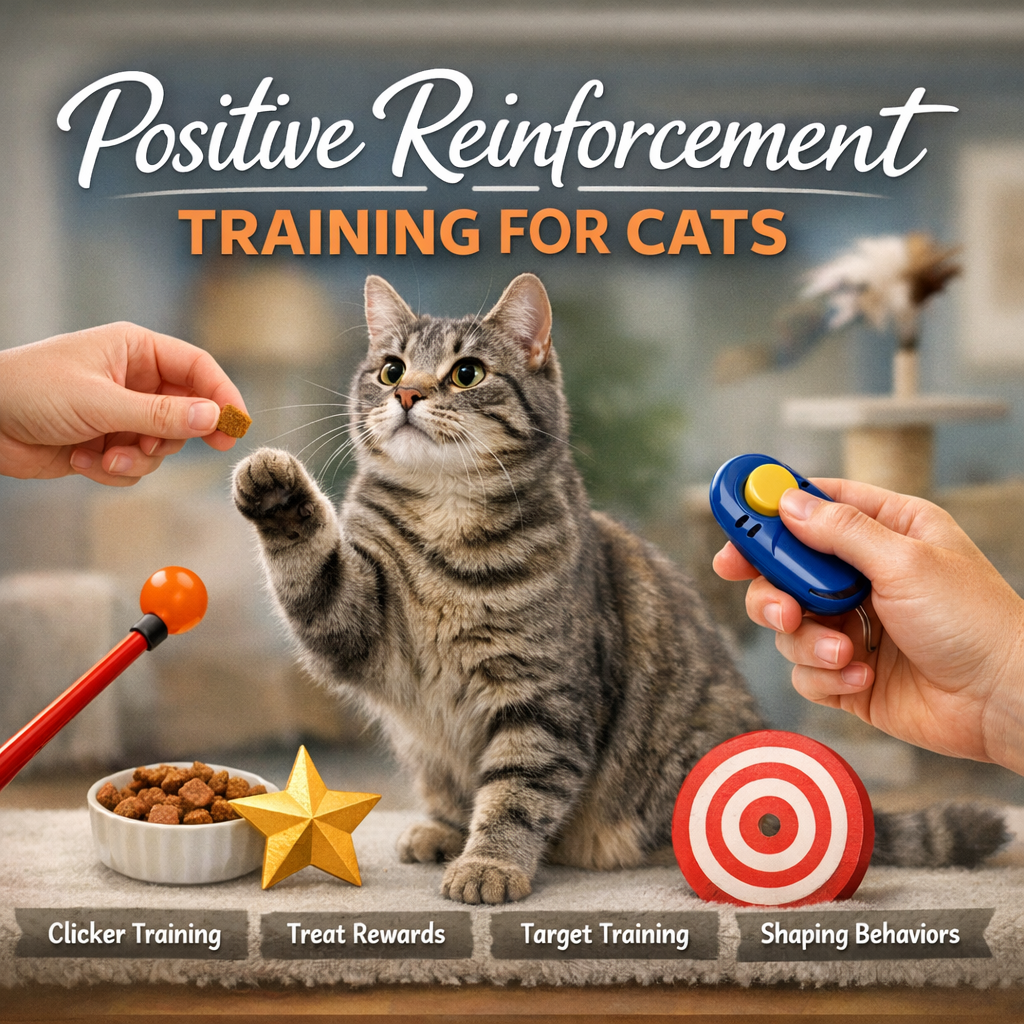
Positive Reinforcement Training for Cats
You know your cat is clever and curious. Positive reinforcement training uses rewards to shape desirable behavior, making learning a collaboration between you and your feline friend. This approach emphasizes affection, play, and tasty treats as motivators, rather than punishment.
Introduction
What is positive reinforcement in cat training?
Positive reinforcement involves rewarding your cat when it performs the desired behavior, increasing the likelihood that the behavior will recur. Rewards can be food, affection, or play, and the method fosters cooperation and trust between you and your cat.
Why this approach matters for cats and their humans
Rewards that are enticing and delivered promptly help cats learn efficiently. This approach strengthens the human cat bond, supports consistent behavior change, and reduces stress compared with punishment. Primary reinforcement often yields faster learning than delayed cues.
Overview of common methods and rewards
Rewards should align with what motivates your cat. Practical options include:
- Food treats or a spoonful of favorite cat food offered immediately after the behavior
- Affection and gentle petting timed with the cue
- Short, focused play sessions with a wand or toy as a post-behavior reward
Keep sessions brief, 2 to 5 minutes, and frequent. Use immediate rewards to reinforce each step, then gradually extend the behavior before rewarding. This approach suits daily routines, from litter box use to door etiquette, across different cats and environments.
1. Classic Positive Reinforcement Techniques
Food rewards: using tasty treats effectively
Food rewards drive motivation for many cats. Use small, low calorie treats to keep sessions concise and avoid overfeeding. Deliver the treat immediately after the desired behavior to create a clear link.
Rotate treats to prevent satiation and maintain interest. Reserve especially tempting options for harder tasks or moments that require extra focus.
keep a pocket or treat pouch for quick delivery. Track intake over a week to avoid excess calories, particularly if your cat weighs 10 pounds or more. Consider introducing a new flavor every 1-2 training sessions to maintain novelty.
Praise and petting as reinforcers
Affection can be a powerful motivator, especially for cats who enjoy social interaction. Pair calm petting or verbal praise with a successful response to reinforce the behavior.
Watch for your cat’s signals to prevent over stimulation during training. Maintain a steady, gentle touch and a consistent tone that suits your cat’s comfort preferences.
Tip: finish each training segment with a brief, predictable routine of light strokes and a soft voice to reinforce safety and warmth. If your cat pauses or wanders, pause briefly and resume after a moment to avoid frustration.
Play as a reward: interactive games
Playtime provides a dynamic reward that also strengthens your bond. Short, goal-directed games can supplement treats while teaching new skills.
Incorporate movement and simple puzzles to keep sessions mentally and physically engaging. Short, varied play bursts sustain curiosity and prevent boredom.
Example setup: a brief obstacle sequence followed by a quick chase with a wand or laser, then a small treat cue. This structure supports timing and consistency for skills like target touching or sit stays.
Expert Insight
“Timing is critical: deliver the reward immediately after the desired behavior to create a clear link, and use varied reinforcement (treats, praise, play) to sustain engagement and learning in cats.” , Applied Animal Behavior Specialist
2. Clicker Training for Cats
What is a clicker and how it works
A clicker is a compact device that makes a distinct sound when pressed. It marks the exact moment your cat performs the desired behavior. The sound is paired with a reward to build a clear association. This sharp signal speeds up learning by providing immediate feedback.
Use the click to bridge the gap between the action and the reward, especially for faster or remote behaviors. Over time, your cat learns that the click signals an upcoming treat, pet, or play session. In practice, you can pair the click with a brief hand cue for clearer communication.
Step-by-step beginner protocol
- Choose a primary reward your cat loves, such as a favorite treat or a small amount of tuna.
- Capture a simple behavior your cat already does, like glancing at you or responding to a name call.
- Click at the exact moment the behavior occurs, then immediately reward with the chosen treat and a brief pet.
- Repeat to strengthen the behavior, then gradually raise the criteria to more complex tasks like sitting on command or giving a paw.
- Fade the frequency of rewards as the behavior becomes consistent, while keeping occasional reinforcement to maintain interest.
Troubleshooting common issues
- Unclear signals: Ensure the click happens precisely when the behavior occurs and not before or after; practice in a quiet space to avoid confusion.
- Over-reliance on treats: Alternate rewards with affection or play to keep motivation broad and avoid a treat-only mindset.
- Stalling at a hurdle task: Break the target into smaller steps, reward every tiny progress, and shorten training sessions to maintain focus.
- Using the method with shy cats: Start with very high-value rewards and short sessions near the cat’s safe zone to build trust.
3. Reinforcement Schedules and Timing
When to reward: immediacy and consistency
Reward the moment your cat performs the desired behavior. Immediate feedback reinforces the action and speeds learning. Maintain a steady cadence to build reliable responses, even on busy days.
- Keep sessions short and frequent to sustain momentum.
- Reward initial successes consistently, then gradually thin the schedule as behavior becomes reliable.
- Avoid delays that blur which action earned the reward.
Varying rewards to maintain interest
Varied rewards prevent boredom and sustain motivation. Pair treats with affection or play to match the moment and your cat’s mood.
- Switch reward types across sessions to keep your cat attentive.
- Reserve favorites for harder tasks or new tricks to sustain engagement.
- Include gentle petting or short play bursts as alternatives to food.
Transitioning from primary to secondary reinforcers
Move from tangible rewards to signals that predict rewards. This builds a flexible, durable behavior plan and helps prevent reward fatigue. Use practical cues that fit your home routine.
- Introduce a bridging cue that precedes the reward, such as a brief click or a specific verbal cue.
- Follow the cue with a primary reward on select trials, then rely on the cue paired with a potential reward.
- Monitor interest levels and adjust the cue, timing, or reward ratio to re-engage your cat.
Expert Insight
“Reinforcement schedules shape not just whether a behavior occurs, but how it persists across changing rewards, with varied, bridging cues turning rewards into durable motivation.” , Industry Expert on Behavioral Conditioning
4. Target Training and Shaping Behaviors
Using a target stick or finger
A target gives your cat a clear cue for moving toward a specific spot. Start with a visible object at a comfortable distance and let your cat inspect it. Pair the target with a reward to reinforce contact or proximity.
Keep sessions concise and build reliability before increasing distance or complexity. The aim is a predictable response to the target that you can shape into a variety of tasks.
Shaping successive approximations
Shaping uses small, incremental steps toward a final behavior. Reward every tiny progression and gradually raise the criteria. This approach reduces frustration and builds confidence.
If your cat loses interest, switch to a shorter target distance or a higher-value treat. Track progress with a quick log to spot patterns and adjust pacing accordingly.
Examples: nose touch, settle on command
- Nose touch: present the target near the nose and reward when contact occurs. Increase precision over time to reinforce a deliberate touch. For Bella Gatti US Shop customers, try a lightweight wand with a resettable tip to minimize handling stress for sensitive cats.
- Settle on command: guide the cat to rest on a chosen spot using the target as a cue, then reward for lingering calmly. Use a familiar mat and a quiet environment to improve reliability.
5. Training in Everyday Environments
Applying training during daily routines
Integrate training into your cat’s regular day with clear cues. For example, a calm voice and a neutral gesture can prompt a quick sit before meals, reinforcing the reward link without disrupting mealtime.
Keep sessions brief and focused. Two short bursts after grooming can help maintain momentum without overtaxing either of you.
Managing distractions at home
Identify common triggers such as doorbells, visitors, or nearby pets, and plan training around them. Create a dedicated, quiet corner for practice and schedule sessions during naturally calmer moments.
- Limit competing stimuli during training moments to keep attention on the task.
- Use a fixed cue before introducing a new behavior to cue anticipation and reward.
- Gradually raise background activity as your cat grows more confident with the task.
Using cat-safe spaces and resources
Provide safe zones your cat associates with positive experiences. A consistent mat, perch, or scratching post can serve as reliable reward or practice stations.
- Ensure surfaces are stable and free from hazards to support confidence during sessions.
- Position rewards within easy reach to encourage regular participation.
- Rotate enrichment tools to maintain curiosity and prevent plateauing in behavior shaping.
6. Addressing Behavioral Issues with Positive Reinforcement
Reducing undesirable behaviors without punishment
Positive reinforcement reshapes behavior by rewarding the moments you want to see. Use consistent cues, immediate rewards, and clear boundaries to reduce unwanted actions without resorting to punishment. For example, celebrate a calm greeting with a treat and a name cue within seconds.
- Identify triggers for the behavior and interrupt calmly before it escalates. Note times, locations, and patterns in a short tracking log.
- Redirect attention to a preferred activity that yields a reward. Offer a favorite toy or activity immediately after the cue to strengthen the connection.
- Document progress with short, frequent training bursts to reinforce reliability. Keep sessions under five minutes, two to three times daily.
Replacing scratching or jumping with appropriate outlets
Offer suitable alternatives that channel energy and curiosity. A combination of scratching posts, vertical perches, and interactive play sessions helps redirect impulses into constructive routines. Install posts near furniture the cat tends to scratch and pair each outlet with a reward.
- Place scratching posts near furniture to encourage use where needed. Choose sturdy, tall posts with varied textures to maintain interest.
- Use play to provide a burst of movement before a potential trigger event. A 5 minute wand toy session can preempt jumping or sprinting.
- Reward desired outlets with treats or affection to strengthen the habit. Track improvements and gradually phase out prompts.
Enriching the environment to prevent problems
Environment enrichment reduces boredom and defuses potential issues. Rotate toys, create puzzle feeders, and schedule enrichment breaks tied to daily rhythms. Plan at least two enrichment activities per day based on your cat’s energy cycles.
- Introduce new textures, scents, and interactive toys to sustain curiosity. Rotate items weekly to maintain novelty.
- Schedule quiet time with gentle brushing or grooming as a reward-based activity. Use brushing as a bonding ritual rather than a chore.
- Provide safe spaces where your cat can retreat when overwhelmed. Include a high perch and a covered bed in a low-stimulus corner.
FAQ
Can you train cats with positive reinforcement?
Yes. Positive reinforcement increases the likelihood of desirable behaviors by pairing actions with rewards that matter to your cat, such as treats, affection, or play. Consistency and timely feedback are essential for success. This approach aligns with established feline behavior concepts and practical training methods used by Bella Gatti US Shop and industry professionals.
How long does training typically take?
Training timelines depend on the cat and the task. Short, frequent sessions tend to build steady progress. Simple tricks may take a few days to two weeks, while more complex tasks or new environments can require several weeks. Track progress with a brief log noting date, behavior, trigger, and reward to stay on track.
What rewards work best for most cats?
Most cats respond to a mix of rewards. Common options include treats, affection, and short play sessions. Escalate rewards as tasks become harder and vary them to maintain motivation. If your cat is highly food motivated, treats can be especially effective; for others, a quick play session or gentle petting may be more powerful. Bella Gatti US Shop recommends pairing rewards with clear cues to reinforce associations and prevent confusion during practice.
Conclusion
Key takeaways
Positive reinforcement builds trust and cooperation between you and your cat. Rewards aligned with the cat’s preferences strengthen desired behaviors without fear or stress. Consistency and timing are your strongest tools, shaping routines that feel natural to your feline companion.
- Choose rewards that genuinely motivate your cat, whether treats, affection, or play.
- Keep training goals realistic and break tasks into small, achievable steps.
- Pair cues with rewards to create predictable associations over time.
How to start your positive reinforcement journey
Begin with a single, easy task in a distraction-light setting. Use a clear cue, wait for the behavior, and deliver an immediate reward. Track progress in brief sessions across several days to build reliability.
- Set a simple objective, like a nose touch or a settle cue.
- Reserve a dedicated training space free from interruptions.
- Gradually increase difficulty only after consistent success.
Tips for long-term success
Maintain momentum by rotating rewards and varying tasks to prevent boredom. Document patterns that trigger success and adjust timetables to fit your daily routine. Keep sessions short, positive, and ending on a win.
- Regularly refresh enrichment to support ongoing learning.
- Monitor your cat’s comfort level and slow down if stress signs appear.
- Celebrate small victories to reinforce steady progress over time.
Foundational principles and best practices
Fundamentals of positive reinforcement for cats rest on immediate, consistent rewards that reinforce the desired behavior. Studies show primary reinforcement , such as tasty treats or direct affection , often yields faster learning than bridging stimuli or secondary reinforcers. This makes training more efficient and enjoyable for both you and your cat.
To identify motivators, observe what your cat naturally responds to. Food motivation is common, with many cats thriving on treats. But affection and play can work equally well for cats who are less food-driven. Training success often hinges on using the right mix of rewards tailored to your individual feline.
Timing, consistency, and avoiding pitfalls
Reinforcement must be immediate and consistent for effective learning. Delayed or inconsistent rewards can erode the association between behavior and reward. Positive reinforcement effectiveness rises with prompt, steady application, while inconsistent timing can stall progress.
Avoid positive punishment such as yelling or squirt bottles. This approach increases fear and stress, undermines trust, and harms the pet-human relationship. If a behavior needs correction, redirect with a reward-based alternative and adjust the environment to reduce triggers.
Practical strategies for common feline behaviors
Use reward-based methods to address scratching, clawing, urination, defecation, and climbing. Encourage appropriate outlets like a scratching post and safe climbing structures, and pair these with rewards to shape the behavior you want.
Clicker training can be a useful tool for signaling exactly when a desired action is performed, helping with timing and clear communication. If your cat responds to clicker training, weave it into sessions as a bridge to rewards and new tricks.
Remember to manage the environment for success. Positive reinforcement is most effective when combined with environmental management, such as providing enrichment and predictable routines that support your cat’s biologically evolved needs.
Keeping the approach enjoyable and sustainable
Rotate rewards and vary tasks to prevent boredom and maintain engagement. Track patterns that lead to success, and adjust your plans to fit your daily life. Short, upbeat sessions that end on a win help maintain motivation over the long term.
Regular enrichment and play sessions reinforce learning and support ongoing behavior shaping. Monitor your cat’s comfort, and slow down if signs of stress appear. Celebrate incremental progress, knowing that consistency yields lasting results over time.
For additional guidance and inspiration, you can explore reputable resources from Feline Behavior Solutions and Martina Braun, and check out related videos and articles on YouTube. This approach aligns with proven methods in the field of feline behavior and training, helping you build a positive reinforcement foundation that lasts.