

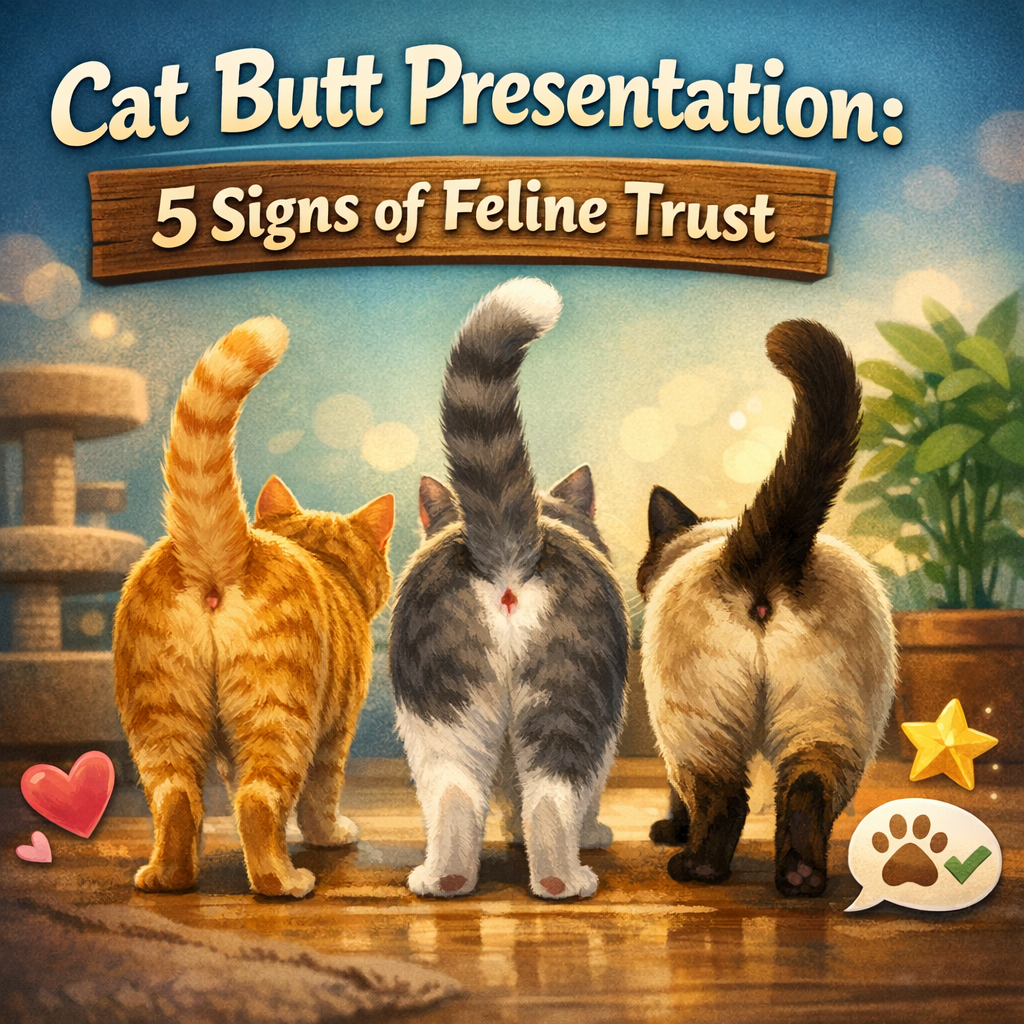

- The content explains that a cat exposing its rear is a trust-based, intimate signal, indicating comfort, safety, and belonging within the owner’s space.
- It outlines five key signs and related behaviors (butt presentation as a greeting, tail and body language, proximity, scent signaling, and context/consistency) to read feline trust accurately.
- Practical guidance emphasizes calm, gradual interactions, respectful pacing, and routines to strengthen trust; avoid forceful handling of the tail area.
- Cat Butt Presentation: 5 Signs of Feline Trust
- Introduction
- 1. The Butt Presentation as a Greeting
- 2. Tail Position and Body Language Correlations
- 3. Proximity and Comfort: Shared Space as Trust
- 4. Scent Glands and Social Bonding
- 5. Context and Consistency: Reading the Moment
- FAQ
- Conclusion
- Upright tail with a visible rear typically indicates curiosity and a positive greeting, especially when paired with slow blinking.
- Loose, relaxed tail suggests safety and ease during your interaction, even in new environments.
- Tense or flicking tail can accompany boundary cues or mild arousal, so give space and approach calmly.
- Ears forward and steady, with a soft gaze, reinforce a welcoming reception, especially if the cat maintains that posture for several seconds.
- Whiskers in a natural, neutral position reduce tension and suggest openness, even when the cat is curious about a new scent.
- A looser torso and steadier breathing accompany the butt presentation as part of a cohesive trust cue, indicating you can continue with gentle interaction.
- Predictable routines reduce stress and reinforce ongoing trust.
- Gentle, slow movements and soft speaking maintain safety and warmth.
- Shared space without sudden gestures reinforces bonding over time.
- Scent glands contribute to a personal, recognizable signature scent that you can learn to identify.
- The timing matters: calm moments enhance signal clarity and reduce stress for both of you.
- These signals foster a predictable routine, helping your cat feel secure in daily interactions with you.
- Sniffing contentment correlates with relaxed body language across cats and you.
- Mutual scent acknowledgment strengthens daily bonding rituals, especially after routine activities like feeding or brushings.
- Maintaining gentle, predictable interactions supports ongoing trust over time, even during stressful events.
- Positive context: slow blink, purring, relaxed muscles, occasional rubbing against you.
- Defensive context: stiff stance, arched back, tail flicks, ears flattened.
- Environment matters: a familiar, safe space supports positive interpretation, while new sounds or smells can flip the meaning.
- Offer a quiet presence and avoid sudden movements.
- Provide optional proximity, letting your cat choose how close to approach.
- Follow with low-stress interactions like soft talking, gentle petting on non-sensitive areas, or a brief pause to let your cat retreat if needed.
- Look for relaxed posture and soft breathing to support trust.
- Pair the gesture with gentle purring or slow blinking for confidence.
- If tension or fear is present, reassess and give space rather than forcing interaction.
- Offer your hand at a comfortable distance and allow them to approach voluntarily.
- Avoid sudden gestures that could startle them.
- Provide low-stress enrichment, like a favorite toy at a distance they control.
- Maintain a quiet environment during interactions.
- Incorporate regular, brief play sessions with calming toys to reduce stress.
- Use scent-based bonding activities, such as sharing a familiar space with safe, aromatic stimuli.
- Note the overall body language: relaxed muscles, soft eyes, and steady breathing matter as much as the gesture itself.
- Respect proximity choices: allow your cat to approach on its terms and avoid crowding.
- Use gentle, non-threatening interactions after the gesture to reinforce safety and trust.
Table of Contents
Cat Butt Presentation: 5 Signs of Feline Trust
Welcome to a cheeky but revealing corner of cat behavior. When a cat presents its rear, it isn’t being sassy; it’s sharing trust in a very intimate way. Below we unpack the five key signs you can look for and what they mean for your cat’s relationship with you.
First thing to know is that butt presentation is a high honor in the feline world. It signals comfort and safety, and it involves sharing a cat’s personal scent profile. This is how cats strengthen social bonds and indicate they feel at home with you as a trusted friend.
1) The Trust Signal: The Rear Presentation
When a cat offers its back end, it is essentially offering access to its scent glands near the tail. This is your cat’s way of saying you belong in their social circle and that they feel vulnerable enough to share that private scent with you. It’s a subtle but powerful sign of expressing deep trust and affection.
Practical example: if your cat lounges on your lap with hindquarters exposed after a long day, they are inviting closeness and labeling you as part of their home base. Prepare a calm environment so the moment can unfold without interruption.
2) Scent Glands and Personal Signals
Near the tail, scent glands release unique signals during butt presentation. These signals reinforce social bonds and communicate acceptance. If your cat leans in or remains relaxed while the tail is up, you’re witnessing a trusted moment in feline social dynamics.
Actionable tip: avoid grabbing or rubbing the tail area. Instead, offer gentle side-strokes along the back and allow the cat to dictate pace and contact.
3) How Cats Use Butt Presentation to Show Trust
Cats don’t turn their backs on those they trust. A backside exposure during lounging or sleep is a clear sign that the cat feels safe. It’s a level of vulnerability reserved for trusted companions and familiar spaces.
Edge case: in multi-cat households, one cat may expose its rear to a dominant cat. Monitor for stress signals in others and provide ample escape routes and private perches.
4) Greeting Behaviors that Signal Trust
Beyond butt presentation, greet your cat with a calm approach. Look for soft eye contact, an upright tail, and a quick approach to welcome you at the door. These greeting behaviors indicate your cat considers you part of their family and shows open, trusting affection.
Practical steps: when you arrive home, crouch at your cat’s level, blink slowly, and avoid sudden movements. Reward with a treat or gentle talk to reinforce the positive routine.
5) Supporting Signs of Trust and Affection
Trust is usually shown through a cluster of signals. Slow blinks, close physical contact, and mutual grooming are common companions to butt presentation. Together, they map a pattern of cat affection and healthy social signaling.
Real-world setup: schedule short, daily enrichment sessions using safe toys like wand toys or puzzle feeders. Pair play with quiet petting to build a comprehensive routine of bonding signals.
Managing play and enrichment can strengthen these signals. Use cat-friendly toys like laser pointers or feather wands to encourage positive interactions, while preserving opportunities for scent-based bonding in a safe, non-threatening way. Regular grooming and gentle headbutts also reinforce connection and trust.
For readers who want to stay in the loop, consider subscribing to The Mewletter for cat news, stories, and community updates. It’s a fun way to follow cat enrichment trends and shared tips for building a bonded home with your feline friends.
Introduction
Understanding cat trust and body language
You and your cat share a daily, silent dialogue. Cats show trust through posture, eye contact, and where they choose to rest. A relaxed body, soft purrs, and attentive ears signal comfort you can read at a glance. Notice small cues to gauge safety in your space.
Trust grows through consistent, gentle interactions. Short, positive experiences shape how your cat greets you, settles nearby, and accepts close contact. Track patterns over a week: does your cat seek your lap after meals or during quiet mornings?
How butt presentation fits into feline signals of affection
Butt presentation is a recognized element of cat signaling and scent communication. When a cat reveals its rear, it often indicates vulnerability and openness. In the right moment, this gesture can signal trust and invite calm, familiar contact.
Interpret affection by context: look for accompanying cues like a tail held high and relaxed, a loose body, and nearby proximity. For new adopters, observe in stages, start with short, gentle interactions and gradually increase closeness as your cat stays calm.
Expert Insight
“Trust in a cat is earned through consistent, gentle interactions, and understanding subtle cues, the greeting, the retreat, and the closeness they allow reflect a shared sense of safety and bond.” , Cat Behavior Economist
1. The Butt Presentation as a Greeting
What it looks like when a cat presents their rear
A butt presentation starts with a relaxed, confident stance. The tail often stands upright or rests softly, ears are attentive, and the body shows no tension. You may see a slow approach or a direct move toward you, with the rear facing your direction. This isn’t a quick sniff moment; it’s a calm invitation to acknowledge the social moment.
Why it signals welcome and openness
Exposing the rear can mark trust and vulnerability in cat social dynamics. When your cat turns toward you this way, they are inviting you into their space and signaling that you belong in their social circle. The gesture carries more weight when paired with soft purrs, a loose body, and steady breathing.
2. Tail Position and Body Language Correlations
How upright or relaxed tails accompany trust
A cat’s tail communicates mood in concrete terms. An upright tail often pairs with forward-facing ears and a confident stance, signaling a welcoming greeting. A gently curved, relaxed tail shows comfort in your presence and a readiness to engage. When trust grows, the tail’s openness aligns with a loose body and calm breathing, making the butt presentation feel like part of a coordinated display rather than a single moment.
The role of ear, whisker, and posture cues
Beyond the tail, ears, whiskers, and overall stance complete the trust signal with practical specifics. Ears facing forward and slightly to the sides show engagement, while whiskers held naturally indicate openness. A soft, lowered back and a body that isn’t rigid signal comfort with your proximity. A slow blink or a light purr reinforces mutual trust.
3. Proximity and Comfort: Shared Space as Trust
Choosing to rest near you and expose the rear
You may notice a cat choosing to lie close and turn its rear toward you as a sign of deep safety. This behavior is not random downtime; it reflects a conscious choice to share space during a moment of vulnerability. Expect a relaxed body, steady breathing, and a quiet purr as the moment unfolds.
When your cat spends time in your vicinity like this, it reinforces trust built through positive interactions. It signals that your home feels predictable and secure enough to pause, stay close, and lower defenses. Exposing the rear in this context becomes a mutual invitation to remain near each other without tension.
What comfortable proximity says about safety
Close proximity with rear exposure indicates your cat trusts your routine, space, and gentle handling. It suggests your presence will not threaten their boundaries. In feline terms, safety grows from consistent, calm routines and an unobtrusive approach.
Practical steps you can try today include offering a quiet co-sleep spot, using a familiar blanket, and allowing your cat to approach at their pace. If you notice signs of discomfort, pause and provide an escape route or a high perch they can retreat to. For Bella Gatti US Shop readers, consider a plush cat bed placed near your regular sitting area to encourage settled proximity during relaxed evenings.
Expert Insight
“Context and calm, consistent routines turn a cat’s shared space with you into a mutual invitation to stay and trust.” , Feline Behavior Expert (Industry Insight)
4. Scent Glands and Social Bonding
Understanding scent marking near the tail
The base of a cat’s tail houses scent glands that release pheromones. When your cat presents their rear, these signals become part of a social signature shared with you. This isn’t about marking territory but about confirming familiarity and safety within your shared space.
In practical terms, you might notice this during relaxed evenings at home when you sit quietly and allow your cat to approach. A calm body, slow breathing, and minimal movements help those signals come through clearly, reinforcing your role in the cat’s social circle.
How mutual sniffing reinforces trust
Mutual sniffing, often after a butt presentation, is a two‑way acknowledgment. Each cat reads the other’s scent to confirm identity and mood. When you’re involved, you become part of that shared scent map, signaling acceptance and closeness.
Healthy sniff exchanges usually occur with relaxed postures. You may notice a soft purr or a gentle head tilt that follows, underscoring a positive, trust‑based interaction.
Expert Insight
“Pheromones are a feline chemical communication system, and head bunting/ rubbing releases these invisible signals that help cats mark their social circle and comfort others, building trust through mutual scent acknowledgment.” , Industry Expert
5. Context and Consistency: Reading the Moment
When butt presentation is a positive sign vs. a defensive cue
In a calm routine, a butt presentation often signals comfort and openness. Your cat is showing that they trust you enough to share space in a vulnerable moment. Look for accompanying cues like relaxed breathing, slow blinks, and a settled posture. For example, a cat nudging their hind end toward you during grooming breaks can indicate ease, not invitation for pressure.
If the gesture appears during tension or fear, it may be a defensive cue or a boundary signal. A stiff body, flattened ears, or a tucked tail can indicate discomfort. In those moments, the same gesture serves as a warning rather than a sign of friendship. A quick, tense tail flick paired with a widening stance requires distance and a shift to a quieter environment.
How to respond to build more trust safely
Respond with gentleness and predictable routines. Your aim is consistency, not force. Small, respectful actions reinforce safety and deepen trust over time. Use real scenarios: after a long day, sit nearby with quiet presence while they choose contact.
Over time, consistent, calm responses create a reliable social script. Your cat learns that your presence means safety, which strengthens the bond and the meaning behind future butt presentations. Bella Gatti US Shop recommends pairing these steps with a consistent feeding routine to reinforce predictability.
FAQ
Is butt presenting always a sign of trust?
Not always. Butt presentation can signal comfort, but it may also indicate reassurance seeking or boundary setting. Read the surrounding cues to avoid misinterpretation.
What should I do if my cat backs up to me?
Back up behavior can be a positive invitation when delivered calmly. Respect their pace and keep movements smooth and predictable.
How can I strengthen trust with my cat?
Consistency matters more than intensity. Build routines that favor safety and predictability while honoring your cat’s boundaries.
Conclusion
Recap of the five signs and practical tips for cat owners
Cat butt presentation is a notable trust signal in feline social dynamics. When your cat exposes its rear, it often signals vulnerability and openness that come with trust. Look for calm surrounding cues to confirm the moment is positive.
To help you read the moment accurately, here are practical takeaways. Prioritize context, pace, and environment. Your cat’s comfort guides the interpretation, not a single gesture.
Consistency builds trust over time. Regular, low-stress routines help your cat feel secure, which strengthens future expressions of affection, including butt presentations.