





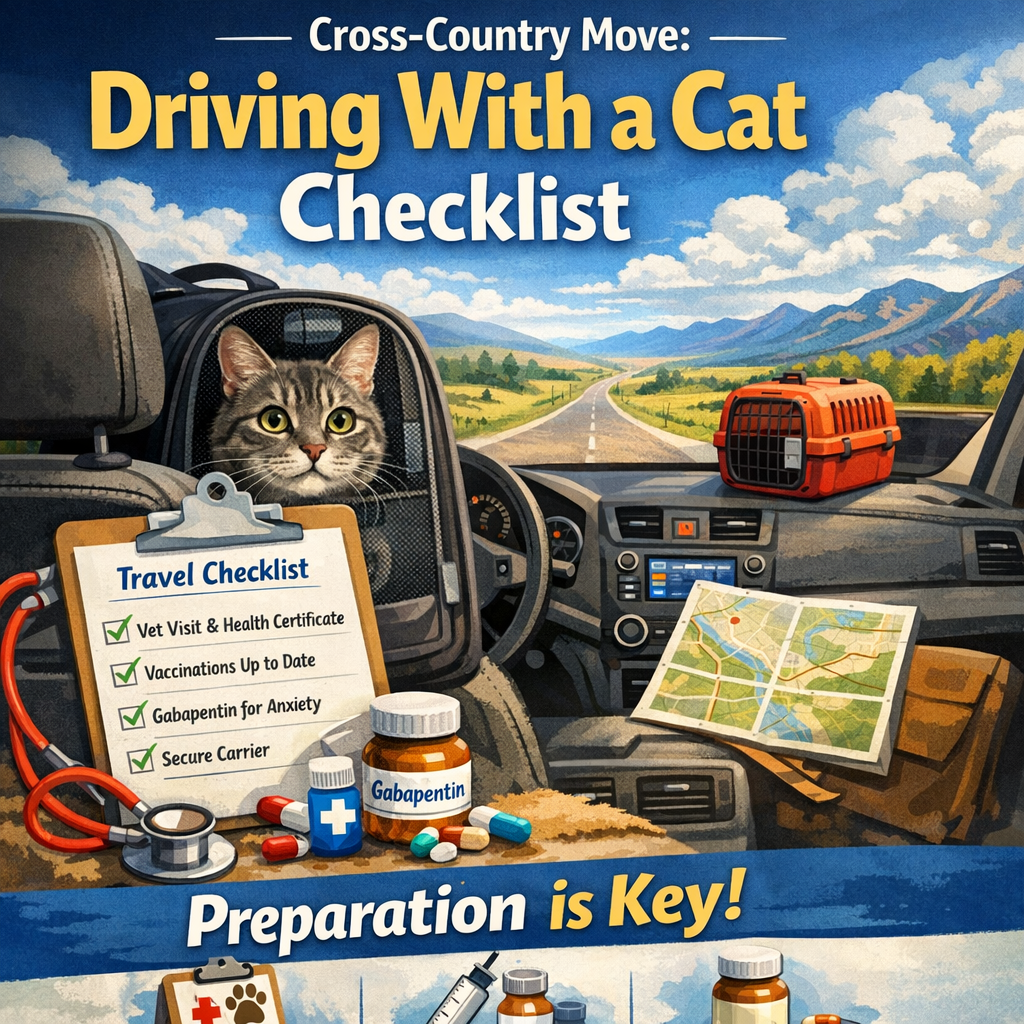
- Preparation is Key: Schedule a vet visit to secure health certificates, update vaccinations, and discuss anxiety medications like Gabapentin to manage travel stress.
- Safety and Training: Choose a sturdy, well-ventilated carrier and practice harness/leash training weeks in advance to prevent escapes during road trip pit stops.
- Travel Logistics: Whether driving or flying, maintain a consistent feeding schedule, plan for portable litter box solutions, and ensure your pet is always secured in a buckled carrier while the vehicle is moving.
- Post-Move Acclimation: Upon arrival, set up a “safe room” with familiar scents and toys to allow your cat to decompress before gradually exploring the rest of the new home.
Table of Contents
- Driving With a Cat: Your Cross-Country Move Checklist
- Deciding Your Transportation Method: Car vs. Plane
- The Essential Vet Visit and Health Certificates
- Anxiety Management and Medication
- Feline Leash Training and Harness Practice
- Proper Cat Carrier Selection and Setup
- In-Car Logistics: Breaks and Litter Box Solutions
- Adjusting to the New Environment Post-Move
- Deciding Your Transportation Method: Car vs. Plane
- The Essential Vet Visit and Health Certificates
- Medication and Feline Anxiety Management
- Feline Leash Training and Safety
- Proper Carrier Selection and Setup
- In-Car Travel: Breaks and Litter Box Setup
- Adjusting to the New Environment Post-Move
- Frequently Asked Questions About Cross-Country Pet Relocation
Driving With a Cat: Your Cross-Country Move Checklist
Cats are creatures of habit. They love their territory and their routine. A long distance move disrupts both, which can lead to a very stressed out kitty and a very long car ride for you.
Deciding Your Transportation Method: Car vs. Plane
The first step in cross country moving is deciding how your cat will travel. Your choice between driving or flying impacts everything from crate specifications to veterinary documentation.
If you choose to fly, you must understand specific airline pet policies. For example, JetBlue and other carriers have strict rules regarding in-cabin pet transport and carrier sizes.
Flying often requires a pet health certificate and can be faster, but driving allows you to keep a closer eye on your cat. Both methods require careful moving preparations to ensure pet safety.
The Essential Vet Visit and Health Certificates
Before you hit the road, schedule a veterinary travel consultation. All experts agree that a pre-move vet visit is non-negotiable.
Your vet will ensure cat vaccinations are up to date and provide a signed pet health certificate. This document is often required for flying and for staying in certain pet friendly hotels.
During this visit, discuss pet relocation stress. Your vet can confirm if your cat is healthy enough for the journey and update their microchip information with your new address.
Anxiety Management and Medication
Traveling with cats can be noisy. If your cat screams the song of their people at every red light, ask your vet about animal anxiety medication.
Many pet owners use prescribed medications like gabapentin to reduce stress during a long distance move. This can make a significant difference in keeping the cabin peaceful, especially when reducing cat anxiety.
In addition to medication, consider pheromone sprays. These mimic natural feline scents to help your cat feel more secure in their travel carrier or new environment.
Feline Leash Training and Harness Practice
Never let your cat out of the car without a leash. Feline leash training is a vital part of your cat moving guide to prevent a lost pet at a rest stop.
Start cat harness training weeks before the move. Practice walking in grassy areas or taking short car trips to get them used to the feeling of the gear.
A secure cat harness ensures that if your kitty gets spooked by a loud truck, they stay safely attached to you. It makes bathroom breaks much less heart-pounding.
Proper Cat Carrier Selection and Setup
Your cat carrier is your pet’s safe haven during the trip. Choose a sturdy, well-ventilated model that allows your cat to stand up and turn around comfortably.
For those traveling by plane, ensure the carrier is airline-approved. For car travel, the carrier should be secured with a seatbelt to prevent sliding during sudden stops.
Make the carrier a positive space by feeding treats like Fancy Feast inside it weeks before the move. Add familiar items, like a soft blanket, to provide comfort through scent.
In-Car Logistics: Breaks and Litter Box Solutions
When traveling by car, you need a plan for the “facilities.” Schedule frequent breaks to offer water and a chance to use the litter box.
Portable litter box solutions are a lifesaver. Some travelers use a small plastic tub with litter tucked under the back seat or inside a large wire kennel that holds both the cat and the box.
Keep your cat secured in their buckled crate while the car is moving. Only allow them out to stretch or use the box when the doors are shut and the vehicle is parked.
Adjusting to the New Environment Post-Move
Once you arrive at your destination, the work is not over. Your cat will need time to explore and settle into their new territory after the pet transport is finished.
Set up a “safe room” immediately with their litter box, food, water, and familiar toys. This helps reduce stress by giving them a small, controlled space to claim first.
Give your cat plenty of attention. Slowly introduce them to the rest of the house as they become more confident in their new home.
Deciding Your Transportation Method: Car vs. Plane
The first big question for your cross country moving adventure is how you and your feline will actually get there. You must choose between driving or flying based on your cat’s temperament and your specific moving logistics.
Driving allows you to keep your cat with you at all times. You can control the environment, the temperature, and the playlist. It is often the less expensive pet transport option, especially if you are already hauling a trailer full of furniture and your collection of nature t-shirts.
Flying is much faster, turning a multi-day ordeal into a few hours. However, it requires strict adherence to airline pet policies and specific crate specifications. For example, JetBlue and other carriers have very tight rules for in-cabin pet transport to ensure everyone stays safe at thirty thousand feet.
In short, driving is a marathon while flying is a sprint. Your choice affects everything from anxiety medication needs to the type of pet health certificate required before you leave Seattle or New York City.
The Case for a Road Trip With Pets
Traveling by car gives you the ultimate flexibility for pet safety. You can stop whenever you notice your cat getting restless and provide some much-needed attention. It is the preferred method for owners who want to monitor their cat care every mile of the way.
A long distance move by car does require more moving preparations. You will need to scout out pet friendly hotels in advance. It is suggested to book these early to avoid being stranded with a cranky kitty at midnight.
Driving also allows you to bring familiar items like a favorite scratching post or a bulk supply of Fancy Feast. These small comforts help with pet acclimation techniques, making the car feel like a mobile version of home rather than a scary moving van.
Flying With Cats: Speed vs. Stress
If you choose traveling by plane, efficiency is the name of the game. For a cross-country pet relocation, getting the journey over with quickly can sometimes be better for highly stressed animals. You just need to be a master of the details first.
Most experts recommend in-cabin pet transport whenever possible. This keeps your cat under the seat in front of you. You will need a specific travel carrier safety check to ensure your bag meets the airline’s dimensions for under-seat storage.
Be prepared for a veterinary travel consultation well before your flight. Airlines typically require a signed pet health certificate and proof of cat vaccinations. Without these documents, your cat might be grounded while you are cleared for takeoff.
The Essential Vet Visit and Health Certificates
You cannot skip the vet visit. Whether you are driving or flying, schedule a veterinary travel consultation at least one month before your cross country moving date.
Your vet will ensure your cat is up to date on all cat vaccinations. This is especially important if you are crossing state lines or staying in pet friendly hotels where proof of immunization is often required.
A signed pet health certificate is a legal requirement for interstate travel and airline pet policies. It proves your kitty is healthy and free of infectious diseases before you begin your long distance move.
If you are moving from Seattle to New York City, having these records in your glove box is vital for peace of mind. It is much better to have the paperwork and not need it than to be stuck at a state border or hotel lobby without it.
Managing Stress with Animal Anxiety Medication
During your veterinary travel consultation, discuss animal anxiety medication options. Many pet owners find that a prescribed dose of Gabapentin makes a significant difference in calming a stressed feline during travel.
If your cat is not the type to enjoy a road trip with pets, medication can prevent a chorus of meows from lasting the entire journey. Always do a trial run with any medication at home before the actual move day to monitor for side effects.
Keeping a calm cat is not just about comfort. It is a matter of pet safety. A panicked cat is more likely to bolt or cause a distraction while you are navigating through heavy traffic or stopping at pet friendly lodging.
Leash and Harness Training for Safe Pit Stops
Feline leash training is a game changer for a cross country move. You should start cat leash training months in advance to get your pet comfortable with the sensation of a cat harness.
Practicing in your backyard or quiet grassy areas helps your cat understand how to walk on a lead. This skill is crucial for safe bathroom breaks at rest stops where you do not want to risk an escape.
Combine your harness training with short car trips. This helps with pet acclimation techniques, teaching your cat that the car is a safe space and that adventures can actually be fun.
Medication and Feline Anxiety Management
Some cats handle the car like seasoned road warriors. Others act like the world is ending the moment you shift into drive. If your kitty falls into the latter category, do not panic.
During your veterinary travel consultation, talk to your vet about animal anxiety medication. Many experts recommend Gabapentin to help reduce stress during long stretches of travel.
Medication can make a significant difference in calming a terrified cat. It prevents them from shouting for eight hours straight while you are trying to navigate the highway. It is a vital part of your moving preparations.
Always do a trial run with any prescribed medication at home first. You want to see how your cat reacts to the dosage before you are halfway between Seattle and New York City.
Beyond prescriptions, consider using familiar items to reduce anxiety. Place a t-shirt that smells like you or a favorite blanket inside the travel carrier safety zone to provide a sense of security.
For cats that are particularly high-strung, pheromone sprays can also assist in pet acclimation techniques. These mimic natural calming signals and can be sprayed directly onto the bedding inside the cat carrier.
Managing cat behavior and stress response during travel requires patience. If your cat is still panting or showing extreme distress, you may need to pull over at one of your pet friendly hotels to let them decompress.
Remember that cross country moving is a marathon, not a sprint. Keeping your cat calm ensures a safer trip for everyone in the vehicle, allowing you to focus on the road instead of a feline meltdown.
Expert Insight
“Gabapentin is a safe and effective sedative for reducing travel-related stress in cats, however, because the dose depends on weight and individual health, it should be administered 1 to 2 hours before the trigger and monitored for side effects like drowsiness or unsteadiness.” : Veterinary Medical Specialist
Feline Leash Training and Safety
Never let your cat out of the car without a harness and leash. An anxious cat can bolt in a split second at a noisy rest stop between Seattle and New York City.
Feline leash training is a vital part of your moving preparations. Start this process weeks before the move to ensure your cat feels secure and comfortable.
Use a high quality cat harness that they cannot wiggle out of easily. A standard collar is not enough to prevent a daring escape during a long distance move.
Practice walking in quiet, grassy areas. This helps your cat associate the harness with positive experiences rather than just the stress of the road trip.
Even the calmest cats can panic in new environments. A secure harness acts as your primary pet safety tool.
If you plan on staying at pet friendly hotels, having a leash trained cat makes the transition from the car to the room much smoother.
Think of the harness as your best insurance policy against a lost pet during a cross country move. It keeps your kitty close while they stretch their legs.
Just like picking out a stylish Unisex Soft Cotton Tee for yourself, choosing the right fit for your cat matters for their comfort and security.
In short, feline leash training turns a chaotic rest stop break into a controlled and safe experience for everyone involved.
Proper Carrier Selection and Setup
Your cat carrier is your feline friend’s “safe room” for the duration of the cross country moving experience. It needs to be a familiar and positive space rather than a plastic prison of doom.
Choose a high quality cat carrier that is sturdy and well ventilated. It should be large enough for your cat to stand up, stretch, and turn around in comfortably without hitting the sides.
To help with pet acclimation techniques, leave the carrier open in your living room weeks before the move. Place treats, a sprinkle of catnip, or a favorite toy inside to entice them.
You want them to walk in voluntarily long before moving day arrives. This reduces the “carrier equals vet visit” association that most cats have, making the actual pet relocation much smoother.
If you are traveling by plane, ensure your carrier meets specific airline pet policies for in-cabin pet transport. Brands like JetBlue have strict size requirements that differ from driving with cats in a car.
For a long distance move by car, consider a hard sided travel carrier safety setup. You can buckle the seatbelt through the handle or frame to keep the carrier secure during sudden stops or sharp turns.
Inside the carrier, place a soft blanket or one of your old t-shirts. Having your scent nearby provides a sense of security while you are navigating the road from Seattle to New York City.
Pheromone sprays can also be used inside the carrier. These mimic natural feline scents to help with managing cat behavior and stress response during travel.
Remember that proper carrier selection is the foundation of your moving preparations. A comfortable cat is a quiet cat, which makes for a much better road trip with pets for everyone involved.
In-Car Travel: Breaks and Litter Box Setup
Long distance driving with cats requires a tactical strategy for what we like to call the “facilities.” You need a portable litter box solution that fits into your vehicle without turning your car into a giant air freshener of regret.
Many seasoned travelers suggest using a small plastic tub with a lid placed on the floorboard or under the back seat. Others prefer to offer the litter box during scheduled breaks every 3 to 4 hours to keep the cabin tidy.
Keep your feline friend secured in a buckled travel carrier while the car is moving. Safety first, always. A loose cat in a moving vehicle is a recipe for disaster, especially if they decide to explore the area under your brake pedal.
Managing the Road Trip Routine
When planning your moving logistics, remember that consistency is key. Even if you are traveling from Seattle to New York City, your cat still expects their usual Fancy Feast at the usual time. Stick to your feeding schedule as closely as possible to minimize digestive upsets.
During your road trip with pets, plan for frequent stops in quiet areas. Avoid busy rest stops where loud trucks might spook your kitty. If you have invested in feline leash training, these breaks are the perfect time for a high quality cat harness and a quick stretch in a grassy patch.
If your cat is particularly high-strung, your veterinary travel consultation might have resulted in a prescription for animal anxiety medication like gabapentin. Administer these doses exactly as timed by your vet to ensure the transition between pet friendly lodging and the car remains smooth.
Portable Litter Box Solutions and Sanitation
Portable litter box solutions range from disposable cardboard trays to collapsible silicone basins. Whichever you choose, use a familiar litter brand so the scent reminds them of home. This is not the time to experiment with new “ocean breeze” crystals.
Keep a small cleaning kit nearby. Include pet-safe wipes, extra waste bags, and a small handheld vacuum. If an accident happens in the cat carrier, you will want to handle it quickly to keep the scent of the car fresh for the long haul.
Table of Essential Supplies:
| Item | Purpose | Pro Tip |
|---|---|---|
| Travel Carrier | Safety and Security | Secure with a seatbelt or cargo straps. |
| Portable Litter Box | Potty Breaks | Use familiar litter brands for comfort. |
| Cat Harness | Escape Prevention | Keep it on the cat while inside the car. |
| Familiar Blanket | Comfort Scent | Do not wash it right before moving day. |
Safety and Comfort During Transport
Pet travel preparation involves more than just packing bags. Ensure your cat has access to fresh water during stops, but avoid leaving a heavy bowl in the crate while driving, as it will likely spill. A drip-bottle or a small travel bowl offered during breaks works best.
Always keep your pet health certification and vaccination records in the glove box. Whether you are staying at pet-friendly hotels or dealing with an unexpected vet visit, having your paperwork ready is a vital part of cross-country pet relocation.
Finally, monitor your cat for signs of heavy panting or extreme lethargy. These can be symptoms of heatstroke or severe stress. Keep the car temperature cool and ensure the travel carrier is well ventilated and away from direct sunlight streaming through the windows.
Adjusting to the New Environment Post-Move
The journey across the country does not end when you pull into the new driveway in Seattle or New York City. The post-move acclimation process is a critical phase of your cat care strategy to ensure your feline friend does not stay in a permanent state of hide and seek.
Your cross-country pet relocation efforts should culminate in the immediate setup of a safe room. Before the movers start clunking heavy furniture around, designate one quiet space as a home base. Fill this room with their portable litter box solutions, fresh water, and a bowl of Fancy Feast to provide a sense of normalcy amidst the chaos.
Pet acclimation techniques suggest that the “un-moving” process should be slow and steady. Keep your cat in their designated safe room for the first twenty-four to forty-eight hours. This allows them to decompress away from the towering stacks of moving boxes and the strange scents of a new zip code.
Once they seem confident and are eating regularly, you can begin the gradual house tour. Open the door and let them explore at their own pace. Some cats will act like they own the place within an hour, while others may require weeks of patience before they feel truly at home.
If you used animal anxiety medication like gabapentin during the drive, consult with your vet about tapering off the dosage once you arrive. Monitoring for signs of stress, such as hiding or changes in appetite, is vital during these first few days of your long distance move transition.
Keep familiar items like their favorite scratching post or a well-worn cat carrier in central areas. These objects carry the scent of your previous home and act as emotional anchors. Remember that moving with cats is a marathon, not a sprint, so let your pet set the pace for exploration.
“Patience is the most important tool in your moving kit. Let the cat set the pace for exploration.”
Frequently Asked Questions About Cross-Country Pet Relocation
Planning a long distance move from Seattle to New York City involves more than just packing boxes. You need a solid cat moving guide to navigate the hurdles of pet travel preparation.
Whether you are driving with cats or considering airline pet policies for in-cabin pet transport, these common questions will help you finalize your moving logistics.
How often should I stop for my cat during a road trip?
You should plan to stop every 3 to 4 hours. This gives you a chance to check on your feline friend and offer water or access to portable litter box solutions.
Many cats will be too nervous to use the bathroom until you reach pet-friendly lodging for the night. However, offering the opportunity is essential for their comfort during a long road trip with pets.
Can I leave my cat in the car while I eat?
It is generally safer to avoid leaving your pet alone. Temperature risks can escalate quickly, even in mild weather, making the car cabin dangerous.
We recommend using drive-thrus or having a picnic at rest stops where you can monitor your pet. If you must step away, ensure it is for a very short time and the climate control is active.
What if my cat refuses to eat or drink during the trip?
Stress often causes cats to skip meals during traveling by car. As long as they stay hydrated, they are usually fine for a day or two of travel.
To encourage them, offer high-value treats like Fancy Feast. If they refuse food entirely for more than 48 hours, consult your vet to rule out health issues related to animal anxiety.
Do hotels really allow cats during a cross-country move?
Yes, many major hotel chains are pet friendly and welcome cats. Always call ahead to confirm their specific cat policy and any associated pet fees before you arrive.
Keep your pet health certificate and cat vaccinations records handy. Some locations may require proof of health during check-in to ensure the safety of all guests.
Should I choose driving or flying for my cat?
Deciding between traveling by car or traveling by plane depends on your cat’s temperament. Driving allows for more control, while flying with cats is faster but involves strict airline regulations.
If you fly, JetBlue and other carriers have specific crate specifications. For driving, a travel carrier safety check is vital to ensure the crate is buckled securely in the backseat.
How do I manage my cat’s anxiety during the move?
A veterinary travel consultation is the best way to handle travel stress. Your vet may prescribe animal anxiety medication like gabapentin to help your cat stay calm.
You can also use pet acclimation techniques, such as placing familiar blankets inside the cat carrier. This helps the environment feel like home even when you are thousands of miles away.
References
- Cross Country Moving with Cats – The Adventuring Millennial
- Travelling across the country with a cat : r/Catownerhacks – Reddit
- Traveling with Cats: The Ultimate Road‑Trip Checklist
- How to travel with a cat across the country? – Facebook
- 10 Tips for Moving with Cats Across the Country – K&H Pet Products