TL;DR (Too Long; Didn’t Read)
- Start Early and Slow: Begin grooming within the first week of bringing your kitten home, using short sessions and positive reinforcement to prevent lifelong anxiety and fear.
- Use the Right Tools: Avoid human nail clippers and heavy brushes; instead, invest in kitten-specific tools and adjust your technique based on coat length (daily for long hair vs. weekly for short hair).
- Avoid Common Pitfalls: Prevent skin irritation by avoiding over-bathing and never forcing a session if the kitten shows signs of stress like hissing, growling, or biting.
- Monitor Overall Health: Use grooming time to check for ear mites, eye discharge, and dental issues, ensuring your kitten’s hygiene extends beyond just their fur.
Table of Contents
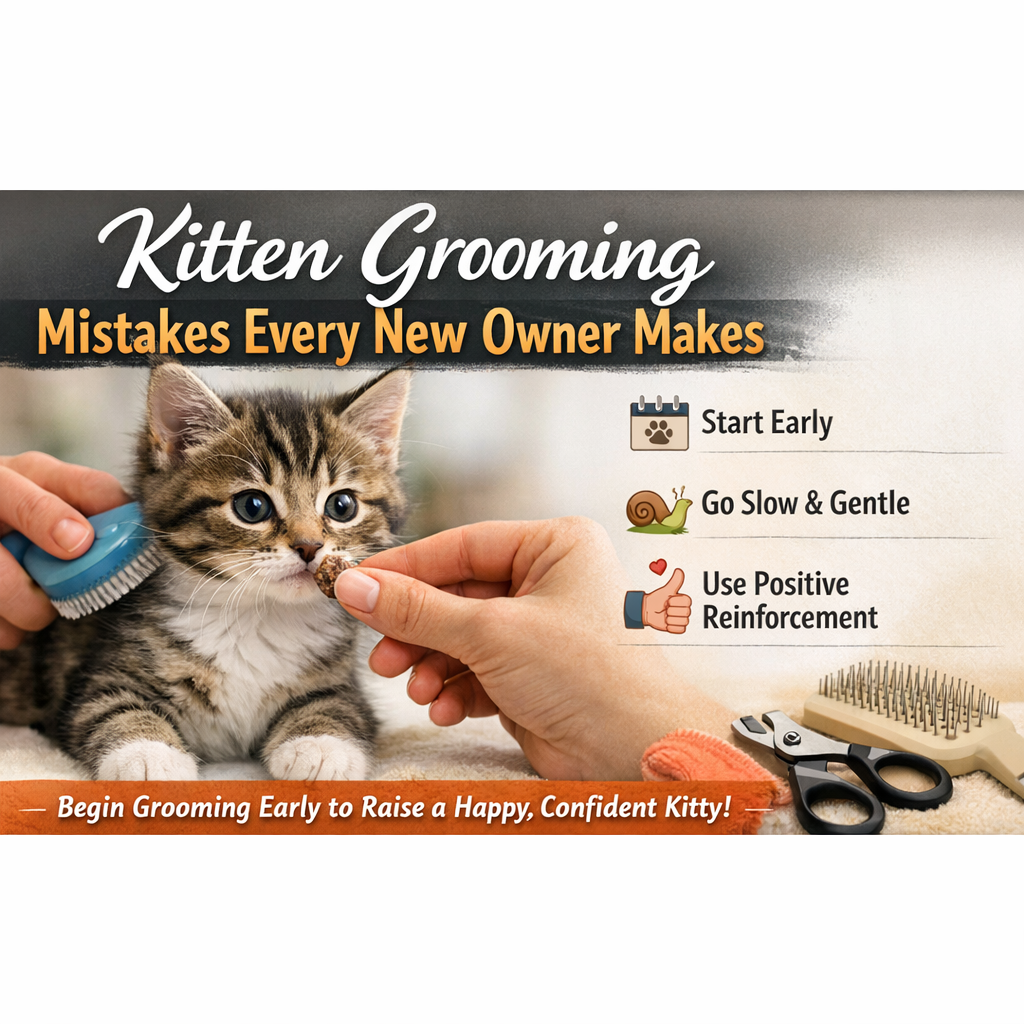
Kitten Grooming Mistakes Every New Owner Makes
Bringing a new kitten home is a whirlwind of tiny paws and soft purrs. You want everything to be perfect for your new feline friend, from their cozy bed to their feeding schedules. However, many new owners stumble when it comes to the art of cat grooming.
It seems simple until you are facing a wiggly ball of fur with tiny claws. In short: proper grooming is about more than just looking good. It is vital for cat health and long term happiness. If you have ever watched a professional animal grooming session at a spa or seen a viral cat grooming guide, you know it takes more than a quick brush to get it right.
Feline health care starts the moment you bring that kitten home. Whether you are dealing with a long haired cat or a short haired cat, avoiding common pet grooming mistakes is essential. Your kitten needs your full attention during their hygiene routine to ensure they feel safe and comfortable.
The Importance of Gradual Introduction to Grooming
One of the biggest grooming fails is rushing the process. Experts emphasize that slowly acclimating kittens to grooming reduces anxiety. You should start with short, positive sessions that last only a few minutes.
Using animal bonding techniques helps your kitten associate the brush with love rather than fear. Incorporate positive reinforcement training by offering treats or toys as rewards. This gradual approach is a cornerstone of cat behavior modification, ensuring your pet does not develop a lifelong fear of the brush.
Proper Grooming Techniques for Kittens
When learning how to groom, gentle grooming methods are the gold standard. Using appropriate tools and techniques prevents stress or skin injuries. For example, brushing a cat should never involve pulling on mats or using heavy pressure.
Proper grooming techniques can reduce stress and prevent skin injuries that lead to costly feline hygiene issues. Whether you are caring for a pedigree kitten or focusing on stray cat rehabilitation, the technique remains the same: follow the direction of hair growth and stay calm. This home pet maintenance keeps their coat shiny and their skin healthy.
Choosing the Right Grooming Tools for Kittens
Using incorrect tools can cause discomfort or injury, leading to a permanent fear of grooming. You need specific grooming tools like gentle brushes and nail clippers suited for kittens. A tool meant for a large dog or an adult cat might be too sharp or heavy for a tiny kitten.
Selecting the right equipment is a vital part of pet care advice. For long haired cat grooming, you may need a stainless steel comb, while short haired cat care usually requires a soft bristle brush. Investing in quality tools is just as important as pet nutrition when it comes to overall cat health care.
Common Grooming Mistakes to Avoid with Kittens
Many new owners fall into the trap of pet grooming errors like using harsh tools or improper handling. Over grooming can also lead to skin irritations or bald patches. Proper guidance is essential to avoid traumatizing a young cat during their formative weeks.
Avoid bathing your kitten too frequently, as this can strip natural oils and cause cat skin care issues. Another mistake is neglecting flea treatment during the grooming process. Always check for pests while you brush to maintain high standards of cat hygiene and pet health.
Recognizing Signs of Stress or Discomfort During Grooming
Expert pet health tips always advise owners to watch for signs like growling, scratching, or hiding. These behaviors indicate significant stress. If your kitten begins to hiss or pull away, it is time to stop the session immediately.
Addressing these signs early can prevent trauma and improve future grooming experiences. By paying attention to cat behavior, you can implement pet anxiety management strategies before the situation escalates. Remember, a happy kitten is much easier to groom than one that is terrified of the grooming table.
Addressing Behavioral Issues Like Biting and Scratching
Kittens often view a moving brush as a toy, which leads to biting and scratching. To manage this, try maximizing play to prevent aggressive behavior during grooming by tiring them out with a laser or feather wand first.
Using toys and play to reduce biting keeps the focus off your hands and the grooming tools. If they continue to struggle, it might be a sign of emotional distress in kittens, which requires a slower, more patient approach. Consistent home pet maintenance is the key to a happy, well groomed feline.
Comparing Grooming Needs by Coat Type
Whether your new roommate is a sleek short haired cat or a fluffy long haired cat, their maintenance needs are unique. Understanding these differences is the first step in feline health care and avoiding common pet grooming mistakes.
| Feature |
Short Haired Cat Care |
Long Haired Cat Grooming |
| Brushing Frequency |
Once or twice weekly |
Daily sessions required |
| Primary Tool |
Soft bristle or rubber mitt |
Slicker brush and wide tooth comb |
| Matting Risk |
Very Low |
Very High |
| Bath Necessity |
Rarely needed |
Occasionally needed |
Addressing Health and Hygiene Beyond the Fur
Grooming is the perfect time to perform a basic cat health check. Check the ears for dark debris, which could indicate mites. Look at the eyes for any discharge or redness that might require a vet visit to ensure your kitten stays in top shape.
Feline hygiene also includes dental care, which many owners unfortunately ignore. Starting tooth brushing early prevents expensive procedures later in life. Keep an eye on their weight and feeding schedules during these sessions, too. Proper pet nutrition is the foundation of a shiny, healthy coat.
“The goal of kitten grooming is not just a clean coat, but a confident cat who trusts your touch.”
Frequently Asked Questions about Kitten Grooming
How often should I bathe my kitten?
Most cats rarely need a full bath because they are world class self groomers. You should only reach for the shampoo if they get into something sticky, smelly, or toxic. Over bathing is a classic mistake that strips natural oils and causes dry skin.
What if my kitten hates being brushed?
If your kitten treats a brush like a mortal enemy, pivot to cat behavior modification. Start by using your hands to mimic the brushing motion during a cuddle session. Introduce the tool slowly, offering high value treats every time the bristles make contact.
Can I use human nail clippers on my kitten?
It is much safer to use specific pet clippers designed for the unique, cylindrical shape of cat claws. Human clippers can crush the nail rather than cutting it cleanly, leading to pain. When grooming a cat, always watch for the “quick” to avoid bleeding.
When should I start grooming my new kitten?
You should start as soon as they are comfortable in your home, typically within the first week. The socialization window for kittens is small, making early exposure a critical cat care tip. Early grooming prevents future emotional distress related to being handled by vets or sitters.