



Cat Vocalization Chart: 20 Sounds Explained
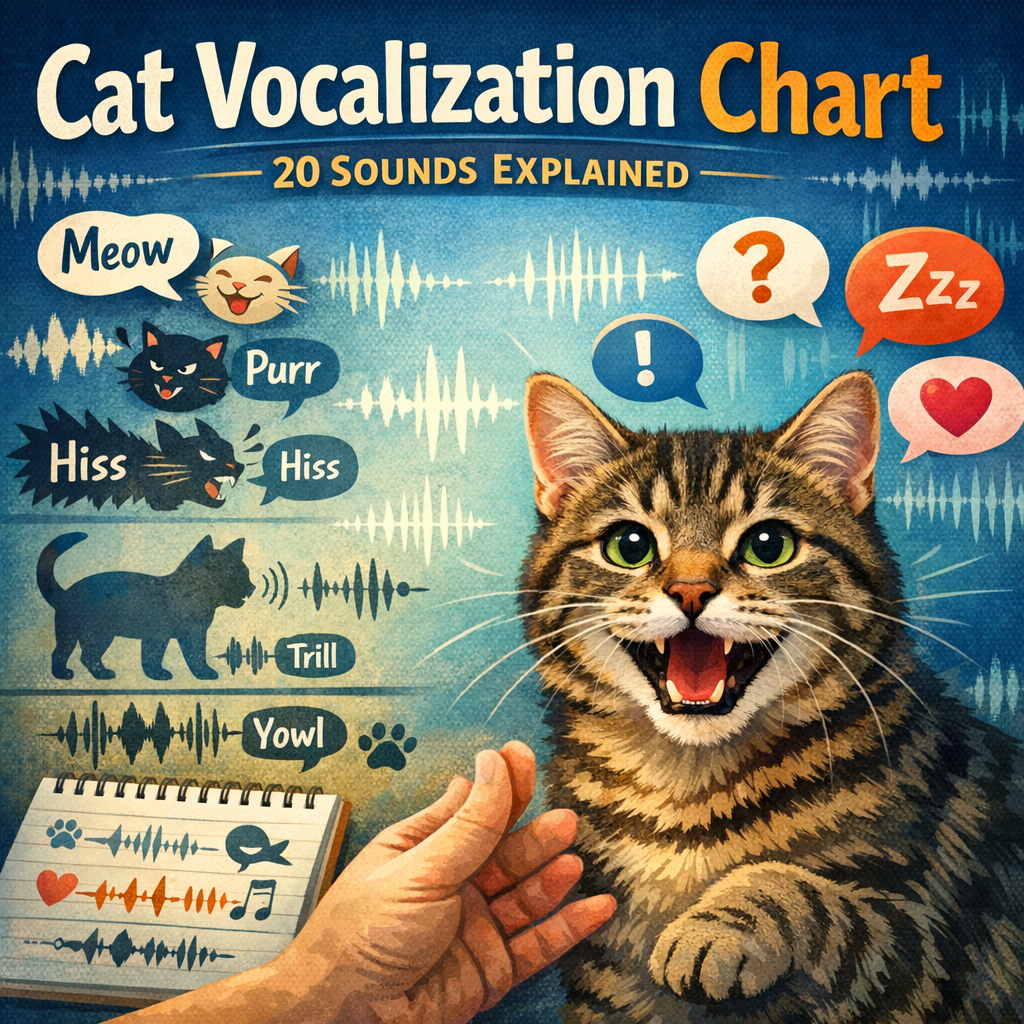
- Cats possess a sophisticated vocabulary of over 100 sounds, using specific vocalizations like meows primarily to communicate with humans rather than other adult cats.
- Common sounds range from positive social cues (trills and chirrups) and hunting instincts (chattering) to defensive warnings (hissing and growling) and mating signals (caterwauling).
- Purring is a complex tool used not only for contentment but also as a biological self-soothing mechanism to aid in physical healing and stress management.
- Monitoring sudden changes in your cat’s vocal patterns is essential, as shifts in pitch or frequency can indicate underlying health issues, pain, or cognitive decline.
Table of Contents
- Understanding Feline Communication and Cat Mojo
- The Science of Cat Vocalizations: More Than Just Noise
- Why Cats Meow: The Human Connection
- The Mystery of Cat Purring and Contentment
- Friendly Greetings: The Cat Trill and Chirrup
- Hunting Instincts: Chattering and Chirping
- Defensive Sounds: Hissing and Fear Signals
- Aggression and Distress: Growling and Yowling
- Mating Calls: The Caterwaul
- The Science of Feline Communication
- Understanding Why Cats Meow to Humans
- The Secrets of Cat Purring and Contentment
- Friendly Greetings: The Cat Trill and Chirrup
- Hunting Instincts: Chattering and Chirping
- Vocal Signs of Fear: Hissing and Growling
- Signs of Discontent: Yowling and Caterwauling
- Understanding Why Cats Meow
- Main Reasons for Meowing
- The Mystery and Significance of Purring
- Decoding Feline Communication: The Cat Vocalization Comparison Table
- Greeting and Affection Sounds
- Prey and Hunting Related Sounds
- Vocal Signs of Fear or Threat
- Vocalizations Showing Aggression or Discontent
- Understanding the Growl and Snarl
- Mating and Reproductive Vocalizations
- Detecting Health Issues Through Vocal Changes
- Mating and Reproductive Sounds
- How to Use Your New Feline Vocabulary
- Frequently Asked Questions About Cat Vocalizations
Ever feel like your cat is trying to tell you the secrets of the universe, but you just do not speak the language? You are not alone. While we might think a meow is just a meow, our feline friends actually have a massive vocabulary.
In fact, research shows that cats can make over 100 distinct sounds. This makes them some of the most vocal carnivores on the planet. Whether they are demanding snacks or telling you to back off, every chirp and growl has a specific meaning.
At Bella Gatti US Shop, we love a chatty kitty almost as much as we love a Unisex Soft Cotton Tee. Understanding your cat’s voice is the best way to build a lifelong bond. Let’s decode the feline dictionary together.
Understanding Feline Communication and Cat Mojo
To truly master cat communication, you have to look at the big picture. Feline behaviorist Jackson Galaxy often talks about Cat Mojo, which is the confidence a cat feels when they can express their natural instincts in their environment.
Feline communication is a huge part of that confidence. Experts like Dr. Amy L. Pike at the Animal Behavior Wellness Center emphasize that cat sounds are rarely random. They are calculated tools used to manage their world and their humans.
Whether you are browsing YouTube for cat training tips or shopping on Chewy for the latest toys, knowing why cats meow changes everything. It turns a simple pet parent relationship into a deep, communicative partnership.
The Science of Cat Vocalizations: More Than Just Noise
Feline communication is a complex mix of cat body language and auditory signals. While humans rely heavily on words, cats use a variety of cat noises to convey cat emotions ranging from pure bliss to intense fear.
Researchers have identified around 20 plus clearly classified vocal types. These sounds are often an onomatopoeia of the feline experience, such as the rhythmic purr or the sharp hiss. Each sound serves a distinct biological or social purpose.
From the high pitched meow of a kitten to the deep growl of an adult, understanding cats requires listening for pitch, duration, and intensity. This helps pet parents identify the learned meow signals before they escalate into behavioral issues.
Why Cats Meow: The Human Connection
Interestingly, adult cats rarely meow at each other. They primarily use this sound to communicate with humans. It is an evolutionary trick they developed to get our attention for greetings, food requests, or pure excitement.
The cat meow meaning can change based on the situation. A short, mid pitched meow is usually a standard hello. A long, drawn out protest meow might mean they are unhappy about a late dinner or a closed door.
Some breeds are naturally more talkative than others. The Siamese cat is famous for being especially chatty, often following their owners from room to room in places like Fairfax or Richmond, Virginia, to give a full report on their day. Additionally, excessive vocalization are classic signs of anxiety and cat stress.
The Mystery of Cat Purring and Contentment
Cat purring is one of the most comforting sounds in nature. Most people assume a cat’s purring meaning is strictly happiness, but it is actually a multi purpose tool. It can be a sign of contentment or a self soothing mechanism.
Cats purr in various states, including when they are in pain or feeling stressed. Veterinary behavior experts suggest the low frequency of a purr may even help heal bones and tissues. It is a built in feline medical kit.
A purr can be barely perceptible or loud enough to hear from a distance. Whether your cat is curled up on your lap or hiding under the bed, this vibration is a key indicator of their internal state and physical comfort.
Friendly Greetings: The Cat Trill and Chirrup
Have you ever heard a friendly mrrp sound when you walk into a room? That is a cat trill or a chirrup. These cat greeting sounds are used by mothers to tell kittens to follow them, and by adult cats to greet their favorite humans.
The cat trilling sound is a short burst of sound that acts as a positive social cue. It is a cross between a meow and a purr, usually indicating that your cat is happy to see you and feels safe in your presence.
These sounds are essential for cat bonding. When your cat greets you with a chirrup, they are acknowledging you as a member of their family. It is a high compliment in the world of feline social dynamics.
Hunting Instincts: Chattering and Chirping
If your cat sits by the window and makes a rapid clicking noise at a bird, they are chattering. This cat chirping behavior is deeply tied to their prey drive and hunting instinct. It is often a sign of intense excitement or even frustration.
The chatter often occurs when cats see potential prey they cannot reach. Some feline behaviorists believe this mimics the killing bite cats use in the wild. It is a vivid display of their natural predatory heritage.
This cat activation sound is a great example of how cat body cues and vocalizations work together. You will often see their tail twitching and their eyes dilated while they make these unique hunting noises.
Defensive Sounds: Hissing and Fear Signals
When a cat feels vulnerable or threatened, they switch to defensive vocalizations. Hissing, snarling, and spitting are clear warnings to back off. Hissing can be loud or soft, but the message is always the same: I need space.
These are vital cat stress signals that every pet parent should respect. A hiss is not necessarily an act of aggression; it is often a sign of fear. It is the cat’s way of trying to avoid a physical fight by sounding scary.
If your cat is hissing frequently, it may be time to consult a veterinary behavior expert. Understanding these signs of annoyance or terror can prevent injuries and help you create a more peaceful home environment.
Aggression and Distress: Growling and Yowling
Growls, snarls, and yowls are signs of serious anger, frustration, or physical pain. A growl is a deep, guttural warning that an attack might be imminent. Yowling is a longer, more melodic sound that indicates distress or territorial disputes.
If a cat starts yowling suddenly, it could indicate illness or injury. In older cats, frequent yowling is sometimes linked to cognitive dysfunction or disorientation. It is a vocalization that should never be ignored by a pet parent.
Distress calls and mewling are common in kittens, but in adults, these sounds suggest a high level of discomfort. Monitoring changes in these vocalizations is a key part of maintaining your cat’s long term health and wellness.
Mating Calls: The Caterwaul
The caterwaul is a sound you will never forget once you hear it. It is a long, loud, scream like sound produced by unspayed females in heat. This vocalization is designed to alert male cats across long distances.
Mating behavior involves some of the most intense feline communication. These sounds are part of a biological drive and can be quite startling to humans who are not used to them. It is a primal, reproductive signal that is unique to the mating cycle.
While these sounds are natural for intact cats, they are often a primary reason why pet owners choose to spay or neuter their animals. It eliminates the caterwaul and the stress associated with the mating season.
The Science of Feline Communication
Cats do not just make noise for the sake of it. Their vocal repertoire is a sophisticated system divided into three main physical categories: sounds made with a closed mouth, sounds where the mouth opens and gradually closes, and sounds produced with a tensely open mouth. This complexity allows for incredible nuance in feline communication.
Interestingly, the way a cat talks changes based on their audience. Domestic cats have actually evolved to be much more vocal than their wild cousins. This is largely due to their 10,000 year history of living alongside humans in places like Fairfax and Richmond, Virginia.
In short, wild cats are relatively quiet. Your house cat, however, has learned that making noise is the fastest way to get your attention. They have essentially trained us to respond to their every whim, from a high pitched meow for breakfast to a soft purr for cuddles.
Understanding Why Cats Meow to Humans
Research into feline behavior suggests that cats primarily meow to communicate with humans rather than other cats. While kittens meow to their mothers, adult cats in the wild rarely use this vocalization with each other. Your cat uses these sounds for greeting, requesting food, or expressing pure excitement when you walk through the door.
Some breeds are naturally more talkative than others. For instance, the Siamese is famous for being especially chatty, using a wide range of cat sounds to keep the conversation going. Whether it is a short greeting or a long demand for treats, understanding cats starts with recognizing these vocal cues.
The Secrets of Cat Purring and Contentment
Cat purring is one of the most recognizable cat noises, yet it is more complex than it seems. While purring is typically a sign of contentment and relaxation, it can also occur when cats are in pain or stressed. Experts like Jackson Galaxy often discuss this as a self soothing mechanism that helps cats heal or calm down.
A cat purr can be barely perceptible or loud enough to hear from across the room. As a pet parent, noticing when your cat purrs can help you gauge their cat mojo and overall comfort level. It is a unique vibration that serves both as a social signal and a biological tool for recovery.
Friendly Greetings: The Cat Trill and Chirrup
Have you ever heard a friendly “mrrp” sound? That is a cat trill or chirrup. These cat greeting sounds are used to acknowledge humans or other friendly cats. It is a positive social cue that often occurs in short bursts when your feline friend is feeling particularly affectionate.
A trilling sound is distinct from a standard meow because it is musical and bird like. Feline behaviorists, including those at the Animal Behavior Wellness Center, note that mothers often use these sounds to tell kittens to follow them. When your cat trills at you, they are likely inviting you into their space for some bonding time.
Hunting Instincts: Chattering and Chirping
If you have ever seen your cat staring out the window at a bird while making a clicking noise, you have witnessed chattering. These cat noises mimic prey calls or indicate intense excitement during hunting behavior. It is an instinctive hunting cue triggered by the sight of potential prey they cannot reach.
This behavior is closely linked to their prey drive. While it might look like your cat is talking to the birds, they are actually experiencing a rush of adrenaline. You can find many examples of this on YouTube, where cats exhibit this unique feline communication style while watching squirrels or insects.
Vocal Signs of Fear: Hissing and Growling
When a cat feels threatened or annoyed, they turn to defensive sounds like hissing, snarling, or a deep growl. These are clear cat stress signals meant to warn an intruder to back off. Hissing can be loud or soft, depending on how vulnerable the cat feels in that moment.
Dr. Amy L. Pike and other experts in veterinary behavior emphasize that these sounds are essential for avoiding physical conflict. If your cat is spitting or growling, they are communicating that they need space. Recognizing these cat body cues early can prevent a situation from escalating into a scratch or a bite.
Signs of Discontent: Yowling and Caterwauling
Yowling and caterwauling are signs of intense anger, frustration, or physical pain. A yowl is a long, drawn out moan that can indicate a cat is distressed or feeling unwell. If your cat suddenly starts yowling, it might be time to check in with a vet or consult resources on Chewy for health advice.
Caterwauling is a specific, scream like sound produced by unspayed females in heat to alert male cats. These loud mating vocalizations are part of natural reproductive behaviors. In older cats, frequent yowling can sometimes be a sign of cognitive decline or other age related issues that require professional attention.
Understanding Why Cats Meow
The meow is the ultimate all purpose tool in a cat’s belt. It is a classic example of onomatopoeia, sounding exactly like the word itself. While kittens meow to get their mother’s attention, adult cats rarely meow at each other in the wild.
Instead, our feline friends save this sound almost exclusively for humans. They use it to say hello, ask for dinner, or complain that their favorite sun spot is occupied. Some breeds, like the Siamese, are famous for being extra talkative and will hold full conversations with you until you acknowledge them.
A high pitched meow usually signals excitement or a friendly greeting. If the sound becomes low pitched or drawn out, your cat might be expressing frustration, boredom, or a bit of sass because the kibble bowl is only half full. This is a key part of cat communication that every pet parent should learn.
Feline behaviorists like Jackson Galaxy often discuss Cat Mojo, emphasizing that meowing is a learned behavior used to manipulate human roommates. Whether they want treats or a head scratch, cats have perfected the art of the vocal nudge to get exactly what they want from us.
Main Reasons for Meowing
Cats primarily meow to communicate with humans for specific purposes. This includes greeting you at the door, requesting food, or expressing pure excitement when you pull out the feather wand. It is a specialized feline communication tool developed specifically for their lives with people.
Research from experts at the Animal Behavior Wellness Center and observations by Dr. Amy L. Pike suggest that cats adapt their meows based on human responses. If a certain pitch gets them a treat, they will use it again. This makes the meow a very personal language between you and your pet.
Beyond simple requests, meowing can also indicate cat stress signals or cat emotions like confusion. If an older cat begins meowing loudly at night, it could be a sign of cognitive changes or health issues. Always monitor your cat’s vocal patterns for sudden shifts that might require a trip to the vet.
While most meows are harmless demands for attention, they are a vital part of understanding cats. From the tiny “mew” of a kitten to the demanding “rowr” of a hungry adult, these cat noises are the primary way your feline friend builds a cat bonding experience with you every day.
Expert Insight
“While many humans don’t know how to read a cat, their meows are actually a personal language and specialized communication tool developed specifically for their lives with people.”, Jackson Galaxy, Cat Behavior Expert
The Mystery and Significance of Purring
We usually associate purring with a happy, vibrating cat on our lap. This low, rhythmic tone is produced during both inhaling and exhaling, serving as a primary tool for cat bonding. Most of the time, it is a sign of pure contentment and cat mojo.
However, cat purring is also a powerful self soothing mechanism. Cats have been known to purr when they are in pain, stressed, or even sitting on the exam table at the vet. Experts like Jackson Galaxy and Dr. Amy L. Pike from the Animal Behavior Wellness Center note that this behavior helps cats manage cat stress signals.
Research suggests that the specific frequency of a purr can actually aid physical healing and improve bone density. It is an incredible biological survival trait that helps with feline communication and recovery simultaneously.
If your cat is purring while tucked away in a corner or acting unusual, they might be trying to comfort themselves through discomfort. Always look at the feline body language and cat body cues to get the full story of their cat emotions.
Whether it is a barely perceptible rumble or a sound loud enough to be heard across the room, understanding the cat purr meaning is vital for any pet parent. If the purring is accompanied by lethargy, it may be time to consult veterinary behavior specialists in Fairfax, Richmond, or your local Virginia clinic.
Expert Insight
“Cats purr at a frequency between 25 and 150 Hertz, where frequencies of 25 and 50 Hertz specifically relate to the acceleration of bone and tissue healing, making it a survival mechanism that helps them recover faster from injury or stress.”, Dr. Leslie A. Lyons, Feline Genetics Expert
Decoding Feline Communication: The Cat Vocalization Comparison Table
Understanding cats starts with realizing that your living room tiger is one of the most vocal carnivores on the planet. While a Siamese might be more chatty than a tabby, every feline uses a complex system of onomatopoeia to get their point across.
Experts like Jackson Galaxy often discuss cat mojo, which is the confidence a cat feels when they can effectively communicate their needs to their pet parent. Whether it is a high pitched meow for breakfast or a low growl of annoyance, these sounds are key to feline behavior.
Below is a quick reference guide to help you translate these common cat noises into human terms. This chart covers the basics of cat communication and the emotional states behind the sounds.
| Sound Type | Common Meaning | Emotional State |
|---|---|---|
| High Pitched Meow | Greeting or Request for Food | Happy / Excited |
| Purr | Contentment or Self Soothing | Relaxed / Stressed |
| Trill / Chirrup | Friendly Hello or Follow Me | Social / Playful |
| Hiss | Warning to Back Off | Fearful / Defensive |
| Yowl | Distress, Pain, or Mating | Upset / Hormonal |
| Chatter | Prey Drive / Hunting Instinct | Frustrated / Focused |
| Caterwaul | Mating Call / Female in Heat | Urgent / Seeking |
Why Cats Meow and How They Talk to Humans
Research from veterinary behavior experts like Dr. Amy L. Pike at the Animal Behavior Wellness Center suggests that adult cats primarily meow to communicate with humans rather than other cats. It is a specialized feline communication tool developed just for you.
Common reasons for why cats meow include greeting you after work, demanding a refill of their favorite kibble from Chewy, or simply seeking attention. A high pitched meow is usually a positive cat greeting sound, while a repetitive, insistent meow might indicate a demand.
If you live in Fairfax, Richmond, or anywhere across Virginia, you have likely seen how different breeds use their voices. A Siamese is famous for being incredibly vocal, often using a range of cat sounds to hold a full conversation with their owners.
The Significance of Purring and Self Soothing
Cat purring is one of the most misunderstood cat vocalizations. While we love a vibrating cat on our lap, this low frequency sound is also a powerful self soothing mechanism used during times of pain or recovery.
A cat purr meaning can shift from pure contentment to a sign of cat stress signals depending on the context. Feline behaviorists note that the vibration can actually help heal bones and tissues, making it a biological miracle for the animal.
Whether the purr is loud enough to hear from a distance or a subtle internal hum, it remains a vital part of cat bonding. It is the ultimate sign that your cat is trying to regulate their internal state or connect with you.
Friendly Greetings: The Cat Trill and Chirrup
The cat trill or chirrup is a delightful, bird like sound that serves as a friendly hello. Often described as a mrrp, this sound is used by mother cats to tell kittens to follow them, and by adult cats to greet their favorite humans.
This cat trilling sound is a high priority social cue that indicates a positive emotional state. When your cat greets you at the door with a quick chirrup, they are expressing social warmth and a desire for interaction.
Unlike a demanding meow, the trill is a soft, musical feline communication that reinforces the bond between pet and parent. It is one of the most charming cat noises in their massive vocabulary.
Hunting Instincts: Chattering and Chirping
Have you ever watched your cat stare out the window at a bird and make a strange clicking noise? This is known as chattering or chirping, and it is a direct result of their prey drive and hunting instinct.
Feline behaviorists believe chattering occurs when a cat sees prey they cannot reach, leading to a mix of excitement and frustration. It mimics the killing bite a cat would use in the wild, showing just how deep their predatory roots go.
This cat activation sound is often seen on YouTube videos where cats track insects or birds. It is a fascinating look at how cat body cues and vocalizations work together during a hunt.
Vocal Signs of Fear, Threat, and Aggression
Not all cat sounds are pleasant. Hissing, snarling, and growling are clear defensive sounds that signify fear or a perceived threat. A hiss can be loud or soft, but the message is always the same: stay away.
When a cat feels vulnerable, they use these cat stress signals to avoid a physical fight. If you hear a growl or a snarl, it is a sign of intense anger or frustration, and you should give your pet plenty of space.
Understanding these feline body language cues alongside their sounds is essential for safety. A hissing cat is a cat that is pushed to its limit, and ignoring this warning can lead to aggressive interactions.
Distress and Mating: Yowls and Caterwauling
A yowl is a long, drawn out moan that indicates distress, worry, or even disorientation, especially in senior cats. However, if the sound is a loud, scream like caterwaul, it is likely related to mating behavior.
Unspayed female cats in heat produce a caterwaul to alert male cats of their presence. These reproductive vocalizations are incredibly loud and can be heard from quite a distance, often sounding like a human in distress.
If your cat begins yowling suddenly and is not in heat, it may indicate illness or injury. In these cases, it is best to consult a professional or search Google for a local vet in your area to rule out medical issues.
Greeting and Affection Sounds
Have you ever heard a short, musical sound that is halfway between a meow and a purr? That is a trill or a chirrup. Mother cats use this “mrrp” sound to tell their kittens to follow them, and pet cats use it to greet their favorite humans.
According to experts like Jackson Galaxy, these sounds are high priority social cues. They indicate that your cat is in a great mood and wants to interact. It is the feline equivalent of a friendly “Hey, how is it going?”
These sounds are often accompanied by Cat Mojo, a term popularized by Galaxy to describe a cat’s confidence and security in their environment. A trilling cat is a confident cat that feels safe in its territory.
The Magic of Cat Purring
Cat purring is perhaps the most recognizable sound in the world of feline communication. While most pet parents associate it with pure bliss, it is actually a complex self soothing mechanism.
Research from centers like the Animal Behavior Wellness Center suggests cats purr to lower their blood pressure or even heal bones through vibration. Whether your cat is snuggling or visiting the vet in Fairfax, a purr is a powerful tool for cat bonding.
Understanding cat purr meaning is vital for any pet parent. While it usually signals contentment, it can also be a distress call if the cat is in pain, making it a nuanced part of cat behavior.
High Pitched Meow and Friendly Chirping
A high pitched meow is the standard “hello” in the cat vocalizations dictionary. Siamese cats are particularly famous for being chatty, using these cat noises to demand attention or a snack.
Cat chirping and trilling are positive cat body cues that show your feline is excited to see you. These feline behaviorist approved sounds are the building blocks of a healthy relationship with your living room tiger.
When you hear these cat greeting sounds, it is the perfect time to engage. Your cat is showing off its cat mojo and inviting you to be part of its world, whether through play or a few head scratches.
Expert Insight
“Chirps and trills are good news: they are a sign of excitement, affection, or an invitation to follow along. Think of them as an amped up purr and your cat’s way of happily saying, ‘Come here, I want to show you something.'”, Jackson Galaxy, Cat Behaviorist
Prey and Hunting Related Sounds
If you have ever caught your cat staring out the window at a bird while making a rhythmic clicking noise, you have witnessed chattering. This fascinating feline behavior involves fast, stuttering movements of the jaw and is often paired with a high pitched chirping noise.
This vocalization is deeply linked to the hunting instinct and prey drive of your little house panther. Some feline behaviorists believe it mimics the “kill bite” used in the wild to dispatch prey quickly, while others suggest it is an onomatopoeia of the sounds birds or rodents make.
According to experts like Jackson Galaxy, this is a classic cat activation sound. It often indicates a mix of intense excitement and a little bit of frustration because they cannot reach the prey through the glass. It is a prime example of cat mojo in action, showing their natural predatory roots.
In short, when you hear that chatter or chirrup during a play session with a feather wand, you are seeing their inner hunter come alive. Even if they are just a pampered pet, their feline communication still relies on these ancient predatory cues.
Understanding these cat sounds helps you bond with your pet. Whether they are chattering at a squirrel or chirping at a laser pointer, they are expressing their natural instincts. It is all part of the complex world of feline body language and vocalizations that make our cats so unique.
Vocal Signs of Fear or Threat
When a cat feels vulnerable, their vocalizations change instantly to signal distress. Hissing, snarling, and spitting are primary defensive signals in cat communication that warn others to back off.
A hiss sounds like air escaping a tire and is a clear onomatopoeia for feline discomfort. It is a universal cat stress signal that tells you your pet needs immediate personal space.
Dr. Amy L. Pike from the Animal Behavior Wellness Center, which serves areas like Fairfax and Richmond, Virginia, notes that these sounds are often a reaction to a perceived threat. If your cat is hissing, they are telling you they are scared or annoyed.
While a hiss is defensive, a growl is a deeper and more serious warning. This guttural cat sound suggests that the feline is ready to protect themselves if the situation does not change immediately.
Snarling often accompanies a growl and is frequently seen during aggressive interactions or when a cat is in pain. These cat noises are vital indicators of feline body language and emotional state.
Feline behaviorists like Jackson Galaxy often discuss “Cat Mojo,” emphasizing that a cat using these vocalizations is trying to regain a sense of security. It is best to give them room to calm down rather than forcing interaction.
Understanding these cat emotions helps you build a stronger bond with your pet. Recognizing these vocal signs of fear early can prevent a scratch and keep your house panther feeling safe and respected.
Whether you are a new pet parent or a seasoned cat lover, paying attention to these stress signals is a key part of master level cat bonding. Always look for accompanying body cues like flattened ears or a puffed up tail.
Vocalizations Showing Aggression or Discontent
A yowl is a long and drawn out cry that sounds much more mournful than your standard high pitched meow. This feline communication tool can signify anything from deep distress and boredom to serious territorial disputes with the neighbor’s cat.
In older cats, frequent yowling can sometimes indicate cognitive dysfunction or medical issues like high blood pressure. If your cat starts yowling out of nowhere, it is a smart move to check in with a veterinary behavior specialist or a clinic like the Animal Behavior Wellness Center.
Growls, snarls, and yowls are clear signs of anger, frustration, or physical pain. When the volume goes up and the sound becomes persistent, your cat is shouting that something is definitely not right in their world.
Understanding the Growl and Snarl
While a hiss is a warning, a growl or snarl is a serious escalation in cat body language. These deep and guttural cat noises are used during aggressive interactions or when a cat feels extremely vulnerable and ready to defend itself.
Feline behaviorists often note that these sounds are meant to intimidate an opponent without resorting to a physical fight. It is a vital part of cat mojo to set boundaries before the claws come out.
Mating and Reproductive Vocalizations
If you have ever heard a sound that resembles a long and loud scream, you have likely heard a caterwaul. This specific vocalization is produced by unspayed female cats in heat to alert male cats of their presence.
These mating behaviors are part of the natural hunting instinct and reproductive cycle. To the uninitiated, a caterwaul can sound like a distress call, but it is actually a very loud invitation for feline companionship.
Detecting Health Issues Through Vocal Changes
As a dedicated pet parent, you should monitor any sudden changes in how your cat speaks. If a quiet cat suddenly becomes a Siamese level chatterbox, or if a vocal cat goes silent, it could indicate underlying cat stress signals or illness.
Experts like Jackson Galaxy emphasize that understanding these shifts in feline behavior is key to cat bonding. Keeping an eye on cat body cues alongside these sounds will help you provide the best care for your furry friend.
Mating and Reproductive Sounds
The caterwaul is a feline communication sound you will never forget once you hear it. This long, loud, scream like noise is primarily produced by unspayed female cats in heat to alert potential suitors of their location.
It is a primal part of mating behavior that can travel incredible distances. While it might sound like a distress call to an untrained pet parent, it is actually a very specific signal in the world of cat mojo and reproduction.
Male cats often respond with their own intense vocalizations, leading to a loud, rhythmic symphony that can be quite startling. Feline behaviorist experts like Jackson Galaxy often note that these sounds are deeply rooted in a cat’s biological drive.
If you want to keep your home quiet and peaceful, the best solution is to have your pet spayed or neutered. This simple step eliminates mating related cat noises and provides significant health benefits for your furry friend.
Veterinary behavior specialists at institutions like the Animal Behavior Wellness Center emphasize that altering your cat reduces the urge to roam and prevents the stress associated with heat cycles. It is a win for both the cat and the pet parent.
Whether you are dealing with a chatty Siamese or a quiet tabby, understanding these reproductive signals is key to mastering cat communication. For more pet parent tips on feline body language, check out resources from Dr. Amy L. Pike or search for cat behavior guides on YouTube and Chewy.
How to Use Your New Feline Vocabulary
Understanding these 20 cat vocalizations is like gaining a superpower for your household. When you can distinguish a friendly trill from a stressed yowl, you provide much better care for your feline friend. Knowledge of cat communication helps you respond to their needs before they have to resort to knocking your favorite mug off the counter.
Always pair these cat sounds with feline body language for the full story. A high pitched meow paired with a vertical tail usually means a happy greeting. However, if that same sound comes with pinned ears or flicking tail movement, your cat might be overstimulated. Observing cat body cues ensures you never miss a beat in your cat bonding journey.
Detecting Health Issues Through Vocal Changes
A sudden change in how your cat sounds can be a major red flag. If your normally quiet cat starts yowling or if their purr sounds strained, it could be a sign of illness or injury. Feline behaviorists often note that senior cats may vocalize more due to cognitive dysfunction or physical discomfort.
If you notice persistent distress calls or unusual vocal patterns, consult a professional. Experts like Dr. Amy L. Pike at the Animal Behavior Wellness Center or a local vet in Fairfax, Richmond, or anywhere in Virginia can help. Monitoring these cat stress signals is a vital part of being a proactive pet parent.
Becoming a Feline Language Expert
For more pet parent tips and to see these sounds in action, check out resources from Chewy, Google, or YouTube. Watching videos of specific behaviors like the cat activation sound or the hunting instinct chatter helps you recognize them in your own home. You can even study the work of Jackson Galaxy to master your cat mojo.
Learning to speak cat is a rewarding journey that strengthens the bond between you and your pet. Whether you are dealing with a chatty Siamese or a mellow tabby, understanding their onomatopoeia makes life together much more harmonious. After all, a cat that feels understood is a happy cat.
“The vocal repertoire of the domestic cat is more extensive and complex than almost any other carnivore, fine tuned over centuries of living with us.”
Frequently Asked Questions About Cat Vocalizations
Why does my cat meow at night?
Nighttime meowing, or caterwauling, often stems from boredom, hunger, or a high prey drive. Your cat might be leaning into their natural hunting instinct while you are trying to sleep.
In older cats, excessive vocalization at night can be a sign of confusion, distress, or cognitive dysfunction. Feline behaviorist experts like Jackson Galaxy suggest a rigorous play session before bed to help them find their cat mojo and settle down.
If your cat is unspayed, these loud nighttime calls might actually be mating behavior. Female cats in heat produce a distinct, scream like sound to alert males in the area.
Do different breeds sound different?
Yes, individual variations and breed differences play a huge role in feline communication. The Siamese is world famous for being incredibly chatty, often using a loud, raspy meow to demand attention.
Conversely, breeds like the Maine Coon are known for their unique chirping and trilling sounds rather than traditional meowing. They often use a friendly mrrp as a positive social cue when greeting their favorite humans.
According to research from institutions like the Animal Behavior Wellness Center, while all cats share a 100 sound vocabulary, your specific pet will develop a unique dialect based on their breed and how you respond to them.
What should I do if my cat suddenly stops making noise?
A sudden change in cat sounds, such as becoming completely silent or losing their voice, can indicate stress or an underlying medical issue. It is a vital sign that something might be wrong with their health.
Laryngeal issues or respiratory infections can change the pitch of a cat purr or meow. If your cat’s vocal behavior changes overnight, consult a professional like Dr. Amy L. Pike or your local veterinarian in cities like Fairfax or Richmond, Virginia.
Always monitor for other cat stress signals, such as hiding or changes in appetite, alongside the loss of vocalization. Early detection is key to maintaining your cat’s well being.
Can cats mimic human speech?
While cats cannot speak human languages, they are masters of onomatopoeia and vocal mimicry. They often adjust the tone and pitch of their meows to match their owners’ voices to get a specific reaction.
Many pet parents notice their cats have a specific high pitched meow for food that sounds remarkably like a human baby crying. This is an evolved feline communication tactic designed to trigger a caretaking response in humans.
You can find countless examples on YouTube or Google of cats making sounds that mimic “no” or “hello.” This is usually a combination of excitement and the cat trying to bridge the communication gap with their human family.
How can I tell if a sound is aggressive or friendly?
Understanding cats requires looking at the whole package. Friendly greeting sounds like the cat trill or chirrup are short, upbeat, and usually paired with a tail held high.
Vocal signs of fear or threat, such as hissing, snarling, and growling, are defensive warnings. A hiss can be loud or soft, but it always means the cat feels vulnerable and needs space.
Aggressive yowls and spits are clear signs of anger or frustration. If you hear these, it is best to let the cat calm down before attempting any cat bonding activities or handling.
References






Disclaimer
The information provided on this website, including articles, blogs, and tips, is designed solely for general informational and educational purposes. It is important to understand that this content is not intended to serve as veterinary advice, diagnosis, or treatment. For any questions or concerns regarding your pet’s medical condition, always consult directly with a qualified veterinarian to ensure the best care and guidance for your furry friend.
Bella Gatti US Shop