TL;DR (Too Long; Didn’t Read)
- Understand FCD: Feline Cognitive Dysfunction (FCD) is a neurodegenerative condition in senior cats (10+ years) similar to human dementia, often identified by the VISHDAAL acronym (Vocalization, Interaction changes, Sleep disturbances, House soiling, Disorientation, Activity levels, Anxiety, and Learning deficits).
- Rule Out Medical Issues: Behavioral changes like nighttime howling or litter box accidents aren’t always dementia; they can be caused by treatable conditions such as arthritis, kidney disease, hypertension, or hyperthyroidism, requiring a professional veterinary diagnosis.
- Management & Treatment: While there is no cure, FCD symptoms can be managed through specialized diets rich in omega-3s and antioxidants, behavioral medications (like Gabapentin or Prozac), and maintaining high hydration levels.
- Supportive Environment: You can improve a senior cat’s quality of life by making home modifications like adding nightlights, using ramps, keeping furniture in consistent locations, and providing mental stimulation through interactive play or videos.
Table of Contents
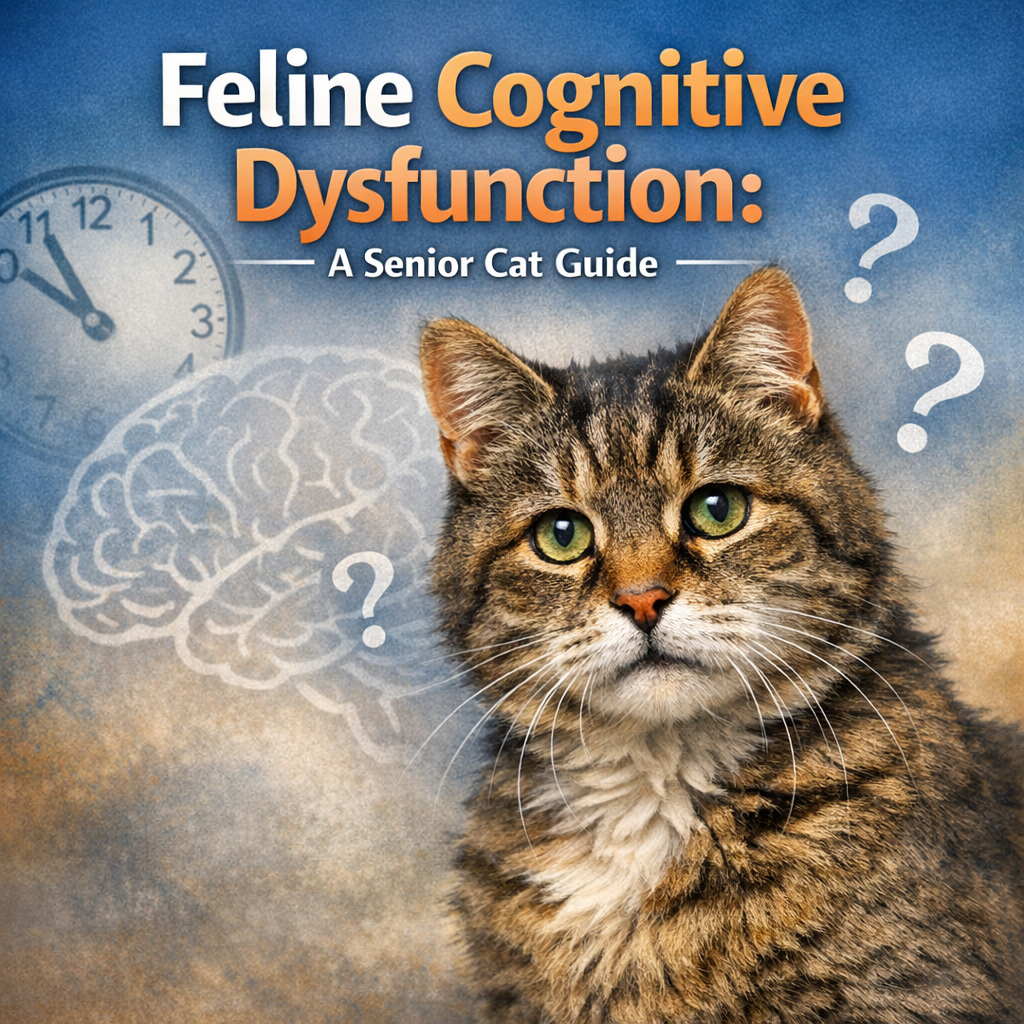
Feline Cognitive Dysfunction: A Senior Cat Guide
This guide explores cognitive dysfunction in senior (FCD), a condition similar to dementia in humans, to help you navigate these silver-whisker years with grace and humor.
Signs and Behavioral Changes of Feline Cognitive Dysfunction
Understanding cat dementia symptoms starts with recognizing that your older cat behavior is changing due to neurodegenerative disorders. According to the Cornell Feline Health Center, over 58 percent of senior cats show increased vocalization during the day.
More than 30 percent of geriatric cats experience nighttime vocalization, which often sounds like loud cat howling in the middle of the hallway. This is a hallmark of cat cognitive decline and sleep-wake cycle alterations.
Experts like Cathy M. Rosenthal and organizations such as the Feline Veterinary Medical Association use the VISHDAAL diagnostic acronym to track these changes. This stands for vocalization, interaction changes, sleep disturbances, house soiling, disorientation, activity levels, anxiety, and learning deficits.
You might notice your cat staring at walls or experiencing disorientation in animals, such as getting stuck in corners. These feline behavior changes are often the first signs that your pet needs a vet consultation at a place like the Schwarzman Animal Medical Center. Additionally, it’s important to enrich senior cats’ lives, which can help improve their quality of life.
Medical and Environmental Causes of Senior Cat Behavior Changes
Before assuming it is strictly feline cognitive dysfunction, you must consider other senior cat health issues. Poor litterbox habits or house soiling may actually be caused by arthritis in geriatric cats or a painful urinary tract infection.
Medical conditions like untreated hypertension or feline hydration and chronic intestinal disorder can mimic cat dementia symptoms. A cat may stop using the box because it hurts to climb in, not because they forgot where it is.
The American Association of Feline Practitioners notes that feline dehydration and chronic intestinal disorder can also affect how a senior cat interacts with their environment. Always rule out physical ailments before concluding it is purely a cognitive issue.
Diagnostic Process for Feline Cognitive Dysfunction
There is no single specific test for cat cognitive decline, so your primary care vet must perform a process of elimination. This involves a thorough feline health exam to rule out cat hearing loss or vision issues that cause confusion.
Dr. Ann Hohenhaus and the Usdan Institute for Animal Health Education emphasize that veterinarians should perform diagnostics to rule out medical issues like infection before diagnosing FCD. This ensures the cat quality of life remains the priority.
During a vet consultation, be prepared to discuss the VISHDAAL symptoms you have observed. Organizations like the American Animal Hospital Association and the World Small Animal Veterinary Association provide guidelines for managing these geriatric cats effectively.
Treatment Strategies for Feline Cognitive Dysfunction
While there is no cure for feline cognitive dysfunction, cat dementia treatment focuses on managing symptoms. Promising therapies include diets enriched with omega-3 fatty acids and antioxidant supplements to support the cat immune system and brain.
Behavioral medications such as anxiety medications like Gabapentin to manage anxiety and nighttime vocalization. These help your cat feel more secure and improve the overall senior cat care experience at home.
Consulting with specialized feline communities can provide peer support. Always follow veterinary advice when introducing new medications to ensure they do not interfere with other senior cat needs.
Environmental Modifications to Support Senior Cats with FCD
Research shows that stable environments reduce signs of cognitive decline. Simple environmental enrichment can significantly improve the daily life of a cat with feline cognitive dysfunction.
Recommended modifications include adding nightlights to help with cat hearing loss and disorientation, as well as ramps for easy access to favorite spots. Keeping furniture stable is crucial so your cat does not become lost in a familiar room.
Some studies suggest that cats in rural environments show fewer signs of decline due to increased physical activity. For indoor cats, using videos for cats or interactive play can help with brain health maintenance and keep those senior whiskers twitching.
The VISHDAAL Acronym Breakdown
| Symptom Category |
Common Behavior |
| Vocalization |
Loud meowing or howling, especially after dark. |
| Interaction |
Increased irritability or unusual attention-seeking. |
| Sleep-Wake Cycle |
Restlessness at night and deep lethargy during the day. |
| Disorientation |
Getting stuck in corners or appearing lost in familiar spots. |
Expert Insight
“If a medical evaluation determines the cat is healthy, then feline cognitive dysfunction becomes a more likely explanation: it is time for a visit to the veterinarian.” : Dr. Ann Hohenhaus, Schwarzman Animal Medical Center (AMC)
The Role of Nutrition and Supplements in Feline Brain Health
What your cat eats directly impacts their cognitive longevity and senior cat health care. Just as you might reach for a superfood smoothie to stay sharp, your aging feline needs a specialized fuel mix to keep those gears turning.
To combat neurodegenerative disorders, look for high quality foods enriched with Vitamin E, Vitamin C, and beta-carotene. These antioxidants act like a shield for feline brain health, protecting delicate cells from oxidative stress.
In short: a healthy gut often leads to a healthier brain. When the digestive system is humming along, your cat is better equipped to absorb the nutrients necessary for maintaining their feline life stages with grace.
During your next vet consultation, ask about omega-3 fatty acids. These essential fats have shown immense promise in reducing inflammation within the central nervous system, effectively acting as a lubricant for a maturing mind.
Maintaining proper hydration is also vital. Feline dehydration can quickly worsen cat age-related changes and lead to sudden bouts of confusion or lethargy. Keep the water bowl full or consider a fountain to pique their interest.
Expert Insight
“It is a very under-diagnosed and under-recognized disorder… Owners are assuming it is just part of aging, so they oftentimes do not offer the information to their veterinarian. Never assume that changes you see in your older cat are simply due to old age and are therefore untreatable.” : Amy Pike, DVM, DACVB and Cornell Feline Health Center
Frequently Asked Questions About Senior Cat Health
Navigating the golden years with your feline friend can feel like a bit of a puzzle. At Bella Gatti US Shop, we want your cat to stay as sharp as the graphics on our Unisex Soft Cotton Tees.
To help you manage feline cognitive dysfunction and maintain that precious bond, we have rounded up the most common questions regarding cat dementia symptoms and geriatric cats.
Can kittens get cognitive dysfunction?
No, this specific condition is a hallmark of feline life stages related to aging. Feline cognitive dysfunction typically affects cats over the age of ten and is not found in younger kittens.
Is cat howling at night always dementia?
While nighttime vocalization is a classic sign of feline cognitive dysfunction, it is not the only culprit. Your senior cat might be shouting because of untreated hypertension or hyperthyroidism.
Before assuming it is cat dementia, schedule a vet consultation. A primary care vet at a clinic like the Schwarzman Animal Medical Center can rule out medical issues like feline kidney health problems or high blood pressure.
How can I help my cat’s brain health?
Keeping those gears turning is essential for feline brain health. You can use environmental enrichment to keep your senior cat engaged and active throughout the day.
Try playing videos for cats featuring birds and squirrels, or introduce new puzzle toys. Keeping their mind busy helps slow cat cognitive decline and improves their overall cat quality of life.
What is the VISHDAAL acronym?
VISHDAAL is the diagnostic tool used by professionals, including those at the Cornell Feline Health Center, to track feline behavior changes. It helps identify the core symptoms of cognitive decline.
It stands for Vocalization, Interaction changes, Sleep-wake cycle alterations, House soiling, Disorientation, Activity level changes, Anxiety, and Learning or memory deficits.
What are the best treatments for feline cognitive dysfunction?
Current cat dementia treatment strategies often involve a mix of specialized diets and behavioral medications. Many experts recommend foods rich in Omega-3 fatty acids and antioxidant supplements.
In some cases, a veterinarian may prescribe medications like Prozac or Gabapentin to help manage anxiety and nighttime vocalization. Always follow professional veterinary advice when starting new treatments.
How can I modify my home for a disoriented senior cat?
Small changes make a big difference for senior cat needs. Since cat hearing loss and feline dehydration are common in geriatric cats, keep water bowls and litter boxes easily accessible.
Install nightlights to help with disorientation and use ramps if arthritis makes jumping difficult. Keeping furniture in a stable position prevents your cat from feeling lost in their own home.