TL;DR (Too Long; Didn’t Read)
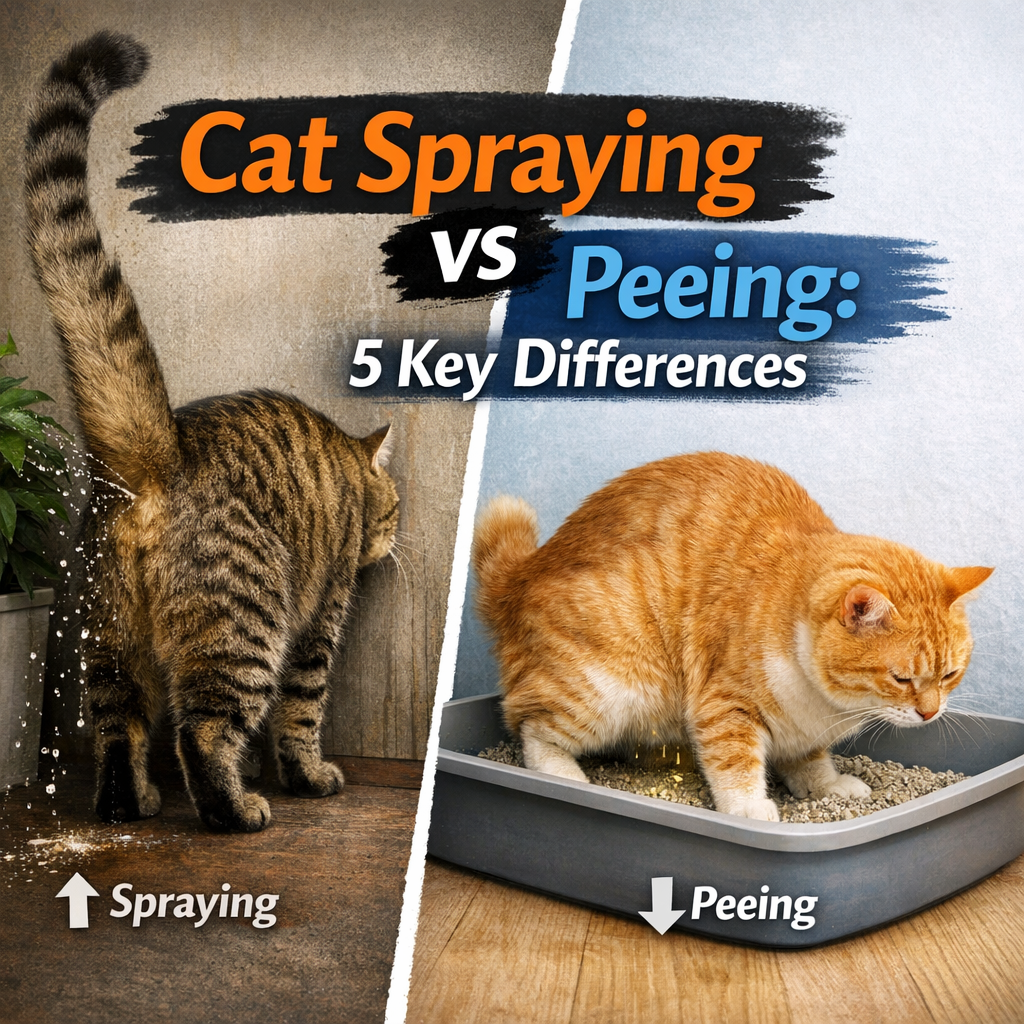
- Physical Cues: Regular urination involves a low squat on horizontal surfaces, while spraying is a standing behavior where the cat backs up to a vertical surface with a quivering tail.
- Scent and Volume: Spray is a small “spritz” of liquid containing pheromones and oils that create a much more pungent, musky ammonia odor than the large puddles of standard urine.
- Root Causes: Urination is usually for physical relief or medical issues, whereas spraying is a communication tool triggered by territorial marking, mating instincts, or environmental stress.
- Solutions: While spaying and neutering resolve 90-95% of spraying cases, persistent marking should be addressed with enzymatic cleaners, stress-reducing tools like Feliway, or a veterinary consultation to rule out urinary diseases.
Table of Contents
You walk into the living room and catch a whiff of something potent. Is it a litter box mishap, or has your feline friend decided to redecorate the walls with a personal scent? Understanding the difference between cat spraying and regular urination is the first step toward a fresh smelling home.
At Bella Gatti US Shop, we love cats almost as much as we love a Unisex Soft Cotton Tee, but we know that living with a marking kitty can be stressful. To help you decode this behavior, we have rounded up the essential facts to keep your home, and your favorite shirts, spray free.
The Scent Factor: Cat Spray Smell vs Regular Urine
One of the most immediate ways to tell the difference is by using your nose. While all cat urination has an ammonia scent, cat spray is on a whole different level of intensity. This is because spray is not just liquid waste; it is a complex form of chemical communication.
Cat spray contains a high concentration of cat pheromones and anal gland secretions, along with fatty acids that give it a distinct musky odor, playing a crucial role in chemical communication among felines. This ammonia-like scent, rich in pheromones, is designed to be oily and persistent, ensuring the message stays put for other cats to find. It lingers much longer than standard urine and often requires specialized enzymatic cleaners to fully remove the cat urine odor. Additionally, understanding health & diet: spaying or neutering is crucial for managing hormonal behaviors, which can impact these pheromone signals, helping to mitigate these issues.
Physical Cues: Vertical Surface Spraying vs Squatting
The posture your cat assumes is a dead giveaway. When a cat is simply using the bathroom, they typically find a horizontal surface, like the litter in their box, and perform a cat squatting motion. This results in a larger volume of liquid pooled in one spot.
In contrast, urine spraying is a standing event. You will notice your cat backing up to a wall, door frame, or even your iPhone charger. The cat will stand tall with a tail quivering motion and release a small amount of fluid onto a vertical surface. This territorial marking is a classic sign of territorial marking rather than a litter box habits issue.
Behavioral Triggers: Territory, Mating, and Cat Stress
Why do they do it? Cat behavior experts at places like PetMD and Yalesville Veterinary Hospital note that spraying is rarely about the bladder and usually about the brain. Understanding the purpose of cat spraying reveals the various causes of cat urine marking, with one of the primary reasons involving an unneutered male cat signaling his availability to a female cat in heat nearby as a mating behavior. Additionally, environmental triggers of cat spraying, such as changes in the home environment, the introduction of new pets, or even the scent marks left by other animals, can significantly exacerbate this behavior. Other reasons can include marking territory, communicating stress, or even asserting dominance over other pets. Understanding these reasons helps owners manage and address this behavior effectively.
However, cat stress and cat anxiety are also major culprits when it comes to undesirable behaviors like spraying. Changes in the home, such as a new pet or even seeing a stray through the window, can trigger these feline behavior modification needs. Managing cat anxiety to reduce spraying involves providing a safe space for your cat, where they can retreat and feel secure. In a multi-cat household, cats use pheromone communication markers to establish boundaries and claim territory, especially if they feel their resources are threatened. Ensuring your cat has a designated area that is quiet and away from disturbances can help alleviate their stress and foster a sense of safety, thereby reducing the likelihood of marking their territory inappropriately.
The Impact of Spaying and Neutering
Hormones play a massive role in cat marking territory. Spaying and neutering are the most effective ways to curb this habit. Hormone driven spraying is significantly reduced once a cat is fixed, as the biological urge to seek a mate or defend a wide territory diminishes.
According to data from the Mobile SPCA, while surgery helps most, it is not a 100 percent guarantee. Approximately 10% of neutered males and 5% of spayed females continue to spray post surgery, which suggests a notable difference in the frequency of spraying in neutered versus unneutered cats. In fact, unneutered males are often more prone to spraying due to their reproductive instincts. If your neutered cat spraying persists, it is often a sign of environmental feline stress and anxiety rather than reproductive urges.
Medical Concerns: When to Seek a Veterinary Consultation
Before assuming your cat is just being territorial, it’s crucial to distinguish between territorial marking and medical issues; health problems must be ruled out first. Inappropriate urination can be a cry for help. Conditions like a urinary tract infection, bladder stones, or lower urinary tract disease can make urination painful, driving a cat to avoid the litter box and leading to confusion about their behavior.
If your kitty is acting out, a veterinarian can run a quick urinalysis to rule out crystals or infections. It’s the best way to ensure that “misbehavior” isn’t actually a hidden medical cry for help.
A veterinary consultation is essential if you notice a change in habits. A vet can check for bladder stones or infections that require medication. If the issue is behavioral, they might recommend environmental enrichment or synthetic pheromone products like Feliway to help calm your kitty. You can even find helpful tutorials on YouTube or Google to help create a stress free environment for your pet.
If you’re feeling overwhelmed by feline drama, the experts at Caring Hearts Animal Hospital suggest tracking these patterns early. Pinpointing whether it’s a medical UTI or a territorial spat helps you choose the right fix before your sofa becomes a permanent landmark.
1. Posture and Physical Cues: Squatting vs. Tail Quivering
The most obvious giveaway is how your cat positions their body. When a cat is simply urinating, they will typically squat low to the ground on a horizontal surface, releasing urine in a functional manner. In contrast, during spraying, a cat will often stand upright, lifting their tail and directing a stream of urine backwards to mark territory. This distinction in posture is a clear indicator of the physical cues of cat spraying vs urination, and the behavior is often followed by digging or covering the spot in the litter box, emphasizing their desire for privacy.
Spraying is a completely different performance. You will see your cat standing tall, backing up to a vertical surface like a wall or the side of your favorite armchair, and lifting their tail high. This is a deliberate act of chemical communication rather than a bathroom break.
Keep an eye out for tail quivering. This rapid shaking of the upright tail is a classic sign of territorial marking. While the cat is standing and vibrating their tail, they release a small amount of fluid onto the surface behind them to claim the area.
In short, if they squat on the floor, it is regular cat urination. If they stand, back up to a wall, and shake their tail, it is urine spraying. Recognizing these physical cues is the first step in feline behavior modification and restoring peace to your home.
Understanding these postures helps you determine if your cat is dealing with a medical issue like bladder stones or if they are engaging in hormone driven spraying. If you are unsure, checking out a video on YouTube or PetMD can provide a clear visual of these distinct behaviors.
At Bella Gatti US Shop, we know that dealing with a spraying cat can be stressful. Much like choosing the perfect Unisex Soft Cotton Tee, managing your cat’s environment requires attention to detail. Whether it is stress or mating behavior, identifying the posture helps you find the right solution.
2. Location and Surface: Vertical Surface Marking vs. Horizontal Hits
Where you find the mess tells a specific story about your cat’s intentions. Regular cat urination usually happens on flat, horizontal surfaces like the floor, a rug, or even a pile of laundry. This is often an inappropriate urination issue caused by litter box aversion or medical conditions like bladder stones.
Urine spraying is almost always a vertical surface marking behavior. You will find it on doorframes, the backs of chairs, or curtains. It is strategically placed at nose level for other cats to find, acting as a form of chemical communication within the home.
The location of the spray is a key part of territorial marking. By hitting vertical targets, the scent remains at eye level for feline intruders. This behavior is common in a multi-cat household where cats feel the need to establish their rank or claim specific rooms as their own.
That said, some cats are overachievers and may spray horizontal items if they are particularly stressed. However, the vertical “hit” remains the classic hallmark of a sprayer. If your cat is targeting the walls, they are likely trying to send a message rather than just looking for a bathroom break.
The Pungent Truth: Cat Spray Smell vs. Regular Urine
One of the most distinct differences lies in the cat spray smell. While all urine has a scent, cat spray contains a high concentration of pheromones and anal gland secretions. This combination creates a musky odor that is far more potent than a standard puddle in the litter box.
The spray contains fatty acids that help the scent stick to surfaces longer, distinguishing it from regular cat pee, which tends to have a more fleeting odor. This ammonia-like scent from the spray is designed to be a long-lasting signpost for other cats. Even after the liquid dries, the chemical signaling remains active, which is why your cat might return to the same spot to re-mark their territory, treating it as an important marker, unlike the more transient presence left by cat pee.
If the smell in your home is particularly sharp and lingering, you’re likely dealing with the distinct smell of cat spray rather than a simple accident. This odor intensity can be quite overpowering, and because of the fatty lipids present in the spray, standard cleaners often fall short. Effective cleaning solutions for cat spray involve using enzymatic cleaners, as recommended by experts at PetMD and Yalesville Veterinary Hospital. These specialized cleaners work to fully break down the proteins in the spray, effectively eliminating not only the musky scent but also addressing the underlying cause of the odor, which can be crucial in managing its intensity.
Behavioral Triggers: Territory, Mating, and Stress
Spraying is rarely about a full bladder; it is about cat behavior and emotion. An unneutered male cat is the most frequent sprayer, using the scent to attract a mate. However, a female cat spraying is also common when she is in heat, signaling her availability to nearby males.
Beyond mating behavior, cat stress and cat anxiety are major triggers. Changes in the environment, such as a new baby, a move, or even seeing a stray cat through the window, can spark a marking episode. This is their way of feeling more secure by surrounding themselves with their own familiar pheromones.
If you notice your cat spraying near windows or doors, they may be reacting to outside street cats. This territorial marking is a defensive response. Using tools like Feliway diffusers can help mimic calming pheromones and reduce the feline stress that leads to these messy displays.
3. Odor Intensity and Composition: Why Cat Spray Smells Worse
All cat urine smells, but cat spray smell is in a league of its own. While regular cat urination is mostly metabolic waste and water, spray is a concentrated cocktail of cat pheromones, fatty acids, and anal gland secretions.
The result is a pungent, musky odor with a heavy ammonia scent that lingers far longer than a typical bathroom accident. This chemical communication is designed to survive the elements and send a loud message to the neighborhood.
If the smell makes your eyes water from across the living room, you are likely dealing with territorial marking. This ammonia-like odor is a primary way cats engage in chemical signaling to establish boundaries.
The Science Behind the Stink
Research from sources like PetMD and Yalesville Veterinary Hospital confirms that cat spray contains specific proteins and lipids that regular pee lacks. These extra ingredients ensure the scent sticks to vertical surfaces for days or weeks.
This intense musk is particularly strong in an unneutered male cat due to high testosterone levels. However, a neutered cat spraying or even a female cat spraying can still produce a potent scent if they feel their territory is under threat.
If you catch your cat with a quivering tail near a wall, they are likely releasing these anal gland secretions. This behavior is often triggered by mating behavior or environmental stressors that require a more permanent scent mark.
How to Handle the Persistent Aroma
Because of the complex composition of cat spray, standard household cleaners often fail. You need enzymatic cleaners to break down the proteins and fatty acids found in the spray to fully eliminate the cat urine odor.
Without these specialized cleaners, the pheromone communication remains active. Your cat will continue to return to the same spot for vertical surface marking, thinking the message needs a “refresh.”
If the smell persists despite deep cleaning, it might be time for a veterinary consultation. Issues like a urinary tract infection or bladder stones can sometimes alter the scent and frequency of your cat’s deposits.
Expert Insight
“Unlike standard urination, cat spray contains a higher concentration of pheromones and fatty acids that create a potent, musky scent used to signal ownership, advertise sexual availability, or communicate distress in response to environmental changes.”, Veterinary Health Specialist
4. Volume of Liquid: The Flood vs. The Spritz
When your cat decides to fully empty their bladder, you will usually find a significant puddle on the floor. This is a standard urination event where the goal is physical relief and comfort.
Cat spraying involves a much smaller amount of liquid. Think of it as a pungent spritz rather than a flood, as the goal is pheromone communication rather than relieving a full bladder.
Because spraying is a targeted message, your cat only needs a small amount of liquid to get their point across to the rest of the feline world. It is a calculated move to mark territory or signal mating behavior.
If you notice large puddles in unusual places, it might not be a behavioral message. Inappropriate urination can often be a sign of a urinary tract infection or bladder stones, which requires a veterinary consultation.
At Bella Gatti US Shop, we know that dealing with feline territorial marking can be stressful. While you are busy using enzymatic cleaners to save your walls, let us help you stay comfortable in a Unisex Soft Cotton Tee.
| Feature |
Regular Urination |
Cat Spraying |
| Posture |
Cat squatting low |
Standing with tail quivering |
| Surface |
Horizontal surfaces like the floor |
Vertical surface marking on walls |
| Volume |
Large puddle of liquid |
Small spray or fine mist |
| Scent |
Standard urine odor |
Pungent, musky, oily ammonia scent |
| Purpose |
Elimination of metabolic waste |
Communication, stress, or mating |
How Neutering and Spaying Affect Liquid Volume
Spaying and neutering play a massive role in how much your cat feels the need to spray. Hormone driven spraying is most common in an unneutered male cat looking for a mate.
Data from experts at PetMD and the Mobile SPCA shows that neutering significantly reduces the urge to spray. However, approximately 10% of neutered males and 5% of spayed females may still engage in urine spraying.
In these cases, the behavior is usually triggered by cat stress or cat anxiety. Environmental enrichment and products like Feliway can help calm a cat that feels the need to defend its space through chemical signaling.
Whether your cat is a female cat spraying to signal her cycle or a male cat marking territory, the volume remains low. If the volume is high and the cat is squatting, it is time to check for lower urinary tract disease.
Dealing with a multi-cat household can increase the frequency of these small sprays. When feline behavior modification is needed, understanding these volume differences helps you provide the right info during a veterinary consultation.
5. Behavioral Triggers: Territory Marking vs. Physical Needs
Why is your cat turning your home into a scent-mapped obstacle course? Regular cat urination outside the litter box usually signals a practical problem. It might be a dirty box, a preference for a different litter type, or a medical issue like a urinary tract infection or bladder stones.
Cat spraying is a different beast entirely. This behavior is rooted in chemical communication and pheromone signaling. Your cat is using their scent to send a message to the world, much like how you might wear a bold graphic tee to express your personality.
Mating Behavior and Hormone Driven Spraying
An unneutered male cat is the most common culprit when it comes to urine spraying. These intact males use a pungent, musky odor to announce their presence to potential mates. This behavior is entirely hormone driven and serves as a biological billboard.
The good news is that spaying and neutering can solve the problem for most felines. However, statistics from PetMD and veterinary experts show that about 10 percent of neutered males and 5 percent of spayed females will continue to spray. Even without the hormones, the habit can persist if the cat feels their territory is under threat.
Territorial Marking and Cat Anxiety
If your fixed feline is still vertical surface marking, they are likely reacting to cat stress. Multi-cat household dynamics are a frequent trigger, as cats compete for resources like food, water, and lounging spots. Your cat might feel the need to reinforce their boundaries to feel secure.
External factors also play a huge role in cat anxiety. Seeing a stray cat through a window can trigger a territorial response, leading your pet to spray near doors or windows. This is their way of saying the indoor space is occupied. Environmental enrichment and products like Feliway can help soothe these frazzled feline nerves.
The Distinctive Cat Spray Smell
The difference in odor between cat spray and regular urine is impossible to miss. While standard cat urination has a typical ammonia scent, spray contains additional pheromones and anal gland secretions. This creates a thick, musky scent designed to linger for a long time.
Because of these extra fatty acids, the smell is much harder to remove. You cannot just wipe it away with standard soap. To truly eliminate the odor and prevent your cat from re-marking the spot, you must use enzymatic cleaners that break down the proteins in the spray.
When to Seek a Veterinary Consultation
If your cat’s litter box habits change suddenly, it is time for a trip to the vet. Issues like feline lower urinary tract disease or bladder stones can cause pain that leads to inappropriate urination. A professional can help rule out medical causes before you focus on behavioral modification.
Whether you are dealing with a medical mishap or a territorial statement, understanding these triggers is the key to a happy home. Much like finding the perfect Unisex Soft Cotton Tee, solving cat behavior issues requires the right fit and a little bit of patience.
The Role of Hormones and Neutering
Hormones are the main drivers behind that pungent musky odor you might find on your curtains. In the feline world, an unneutered male cat is the primary culprit for hormone driven spraying, as they use pheromone communication to announce their presence to potential mates.
Spaying and neutering are the most effective ways to stop this behavior. By removing the hormonal urge, you significantly reduce the drive for territorial marking. It is a much better solution than constantly scrubbing your walls with enzymatic cleaners.
According to data often cited by PetMD and the Mobile SPCA, neutering and spaying eliminates spraying in about 90 percent of males and 95 percent of females. This simple veterinary consultation can save your nose and your furniture from a permanent ammonia scent.
However, surgery is not always a 100 percent guarantee regarding its impacts on spraying behavior. About 10 percent of neutered males and 5 percent of spayed females may still engage in urine spraying despite the operation. If your female cat continues spraying after being fixed, it is usually a sign of cat stress or environmental anxiety, indicating that spaying or neutering, while often effective, may not fully resolve the issue for every individual cat.
When hormones are no longer the trigger, your cat might be reacting to multi-cat household dynamics or a stray cat outside the window. In these cases, products like Feliway can help mimic natural cat pheromones to create a sense of security and stop the vertical surface marking.
If you have ruled out mating behavior and the behavior persists, it is vital to check for medical issues. Conditions like a urinary tract infection, bladder stones, or lower urinary tract disease can mimic spraying. Always consult a professional, like the team at Yalesville Veterinary Hospital, to ensure your cat is healthy.
At Bella Gatti US Shop, we know that dealing with cat behavior can be a workout. That is why we make sure you look good doing it in our Unisex Soft Cotton Tee. It is the perfect attire for a day of environmental enrichment and bond building with your favorite feline.
Environmental and Behavioral Strategies to Stop Cat Spraying
To prevent cat spraying issues, which often stem from stress, territorial anxiety, or insufficient resources, you must lower cat stress and address the root of feline anxiety. One of the best solutions for cat spraying issues is to start by using enzymatic cleaners to completely destroy the pungent ammonia-like odor left behind during territorial marking, as this can deter repeat behavior. Additionally, creating a calm environment through play, providing adequate resources, and using pheromone diffusers are essential tips that can significantly contribute to reducing the chances of your cat resorting to spraying, effectively tackling both the causes of cat spraying and providing comprehensive solutions.
If a cat can still smell their mark, they will return to refresh it with a new musky scent. Standard household cleaners often fail to break down the proteins in cat urine odor, leaving a chemical trail only your pet can detect.
Products like Feliway diffusers are a game changer in feline behavior modification. These devices release synthetic cat pheromones that mimic the natural facial pheromones used by cats to mark an area as safe and secure.
By using pheromone communication, you can signal to your cat that their environment is stable. This reduces the need for vertical surface marking, especially in a multi-cat household where social tension is high.
Providing environmental enrichment is another essential strategy for a happy home. Tall cat trees and designated vertical spaces allow your cat to survey their kingdom without feeling the urge to mark it.
When a cat feels confident and has plenty of mental stimulation, they are less likely to engage in hormone driven spraying. Think of it as giving them a hobby that doesn’t involve ruining your favorite rug.
If you have checked out PetMD or watched helpful tutorials on YouTube, you know that consistency is key. Maintaining a strict routine helps mitigate feline stress and anxiety, which are primary triggers for inappropriate urination.
For more complex cases, a veterinary consultation is vital. Professionals at places like Yalesville Veterinary Hospital often recommend a mix of environmental changes and medical reviews to rule out bladder stones or other issues.
At Bella Gatti US Shop, we know that dealing with cat behavior can be a workout. Why not do it in style? Our Unisex Soft Cotton Tees are perfect for cat parents who handle every “sprinkle” with a sense of humor and a lot of patience.
When to See the Vet for Your Cat
You should never ignore a sudden change in bathroom habits. While your cat might look like they are just being picky, medical issues often hide behind what looks like a behavioral quirk.
A professional veterinary consultation is essential to rule out serious physical conditions. Issues like lower urinary tract disease and cystitis can make the litter box a painful place, causing a cat to avoid it entirely.
If you notice your cat straining, crying, or spending an unusual amount of time in the squatting position, treat it as a medical emergency. These are classic signs of bladder stones or a life threatening blockage.
Veterinary experts at places like the Yalesville Veterinary Hospital or PetMD often note that physical pain is a primary driver for inappropriate urination. A quick checkup can identify a urinary tract infection before it becomes a chronic problem.
Once your vet gives the all clear, you can shift your focus to feline behavior modification. This involves looking at multi-cat household dynamics and using tools like Feliway to manage feline stress and anxiety.
Addressing the root cause of cat stress is much easier when you know your pet is physically healthy. Whether it is a territorial dispute or a reaction to a new stray cat outside, a healthy cat is a much happier roommate.
At Bella Gatti US Shop, we believe a stress free home is the best kind of home. While you work on your cat behavior strategies, why not treat yourself to a Unisex Soft Cotton Tee to keep your spirits high?
Expert Insight
“Cats who experience discomfort during elimination often seek an alternate location that allows them to stretch or move their bodies more easily, and they may associate the litter box with pain, leading to an aversion to it.”, VCA Animal Hospitals
Frequently Asked Questions
Still have questions about why your living room smells like a feline locker room? We have rounded up the most common queries to help you navigate the world of cat spraying and inappropriate urination.
Does cat spray smell different than pee?
Yes, cat spray smell is significantly more potent than regular cat urination. Because it contains anal gland secretions and specific fatty acids, the musky odor is designed to linger as a form of long term pheromone communication.
This ammonia like odor is much harder to scrub away than standard urine. While regular pee smells like, well, pee, cat spraying smells like a concentrated chemical signal meant to tell the whole neighborhood who is boss.
Can a neutered cat still spray?
While spaying and neutering significantly reduces hormone driven spraying, it is not a 100 percent guarantee. Research from PetMD and organizations like the Mobile SPCA shows that about 10 percent of neutered males and 5 percent of spayed females continue to spray.
In these cases, neutered cat spraying is usually triggered by cat anxiety or territorial marking. If your cat sees a stray through the window or feels threatened by a new pet, they may still use urine spraying to reclaim their turf.
How do I clean cat spray effectively?
You must use enzymatic cleaners to break down the proteins and pheromones found in the spray. Traditional household cleaners often contain ammonia, which is a major mistake because it smells like a rival cat urine odor.
If you use an ammonia based cleaner, your cat might think a stranger has moved in and will spray the spot again to cover the scent. Stick to specialized products like Feliway or enzymatic solutions to ensure the musky scent is truly gone.
Is spraying always about territory?
Territorial marking is the most common reason, but it is not the only one. For an unneutered male cat, spraying is a vital part of mating behavior used to attract a female cat spraying her own signals nearby.
However, it can also be a sign of feline stress or a reaction to a medical issue. If you notice vertical surface marking combined with tail quivering, it is likely behavioral, but always rule out a urinary tract infection or bladder stones first.
When should I seek a veterinary consultation?
If your cat suddenly stops using the litter box or begins squatting in odd places, it is time to call the vet. What looks like a behavior quirk could actually be lower urinary tract disease or painful bladder stones.
A professional at a clinic like Yalesville Veterinary Hospital can perform a urinalysis to ensure your cat is healthy. Sometimes, feline behavior modification and environmental enrichment are the best cures for a stressed out kitty.