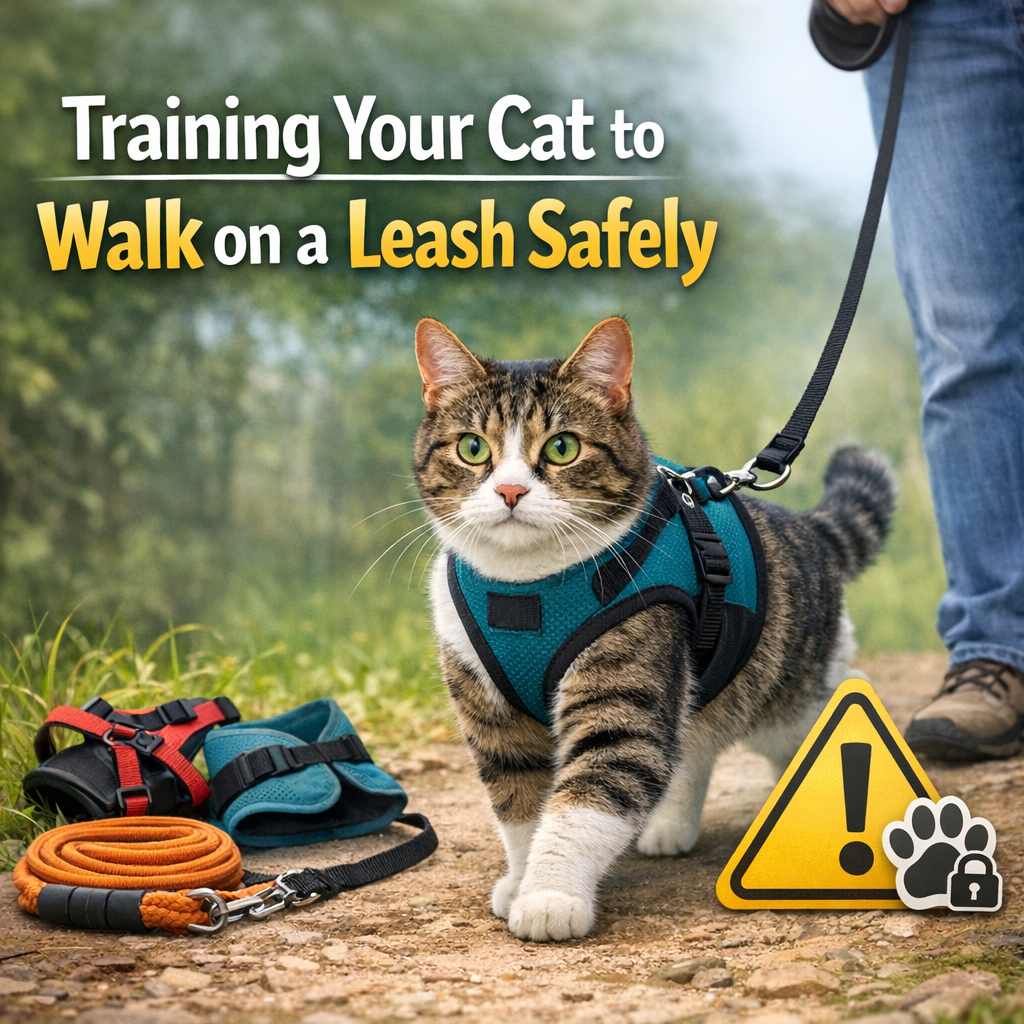
TL;DR (Too Long; Didn’t Read)
- Prioritize Safety: Use a well-fitted H-style or vest harness (never a collar) and a fixed leash to prevent escapes and injuries during outdoor exploration.
- Gradual Training: Start indoors by building positive associations with gear using high-value treats, allowing your cat to get comfortable with the harness and leash in a controlled environment.
- Respect Feline Cues: Pay close attention to body language; never force a cat to walk if they are stressed, and always let them lead the pace to build confidence.
- Health Benefits: Leash walking provides essential mental stimulation and physical exercise, aiding in weight management and overall feline enrichment for indoor cats.
Table of Contents
Train Your Cat to Walk on a Leash Safely
Do you have a curious kitty staring longingly out the window? You are not alone. Many indoor cats crave the stimulation of the great outdoors, but letting them roam free is risky. Between traffic and local wildlife, the world is a big, scary place for a small feline.
The solution? Leash training cats. It is the ultimate way to turn your living room lion into a brave adventure cat, especially when you focus on choosing the right cat harness and leash. This careful selection ensures your feline friend is comfortable and secure, enabling them to enjoy the numerous benefits of cat leash training. Not only does it provide physical exercise, helping them stay fit and trim, but it also stimulates their mind and offers a safe way to explore the outdoors. Plus, it is a fantastic way to manage cat weight for neutered pets who might be getting a little round around the middle.
In short: You can give your cat the best of both worlds. They get the fresh air and feline stimulation they crave, while you get the peace of mind. Let us dive into how you can make this happen without the drama.
Choosing the Right Cat Harness and Leash
Success starts with the right safety equipment for cat leash training. Experts on Reddit and YouTube often recommend adjustable harnesses like the Red Dingo Classic Nylon or Rabbitgoo options. A well-fitted harness should be snug but not tight, allowing you to fit two fingers underneath, ensuring your cat is comfortable and secure while exploring the outdoors on a leash.
For a specialized fit, the PetSafe Come With Me Kitty harness is a fan favorite because it gently tightens across the shoulders rather than the throat, making it a stylish and secure choice for your tiny tiger.
Never attach a leash directly to a collar. This creates a high injury risk and makes it easy for a panicked feline to escape. For leash training cats, a standard fixed leash is better than a retractable one, as it gives you more control during outdoor cat safety maneuvers.
Before you head out, consider your transport options. Many owners use a cat backpack or a sturdy cat carrier to reach a quiet spot. Brands like Pandaloon or Chroko are popular among the adventure cat community for keeping pets secure during transit.
Building Positive Associations with Gear
Cat training relies heavily on positive reinforcement, and using treats effectively in leash training can enhance this process. Start by leaving the harness near your cat’s favorite sleeping spot or food bowl to facilitate harness acclimatization for indoor cats. Combine this with treats to encourage your cat to approach and investigate the harness. This approach helps them view the equipment as a normal part of their environment rather than a threat, making it easier for them to adjust when you begin introducing the harness and rewarding them with treats for positive behavior.
Use high value cat treats and plenty of praise to create a positive association. When your cat sniffs the harness, give them a reward. This reward based training improves acceptance and reduces stress before the actual walking begins.
Mental stimulation for indoor cats is just as important as physical pet exercise. By pairing the gear with fun activities, you are teaching your pet that the harness leads to exciting new experiences and tasty snacks.
Gradual Introduction to the Harness and Leash
The secret to successful leash training techniques for cats, including adult and even older cats, lies in patience and understanding. When learning training tips for leash walking with cats, start by simply draping the harness over their back without buckling it, which is one of the key tips for easing them into the process. Once they are comfortable with that, try snapping the harness shut and immediately offering a treat. This gradual approach ensures they associate the harness with positive experiences, making the transition to walking on a leash smoother and more enjoyable. Regularly practicing short sessions and gradually increasing the duration of walks can further enhance their comfort and confidence with leash walking.
If your kitty is a nervous traveler, a quick spritz of Feliway Calming Spray on the harness or inside the carrier can work wonders. These synthetic pheromones help lower stress, turning a scary gear-fitting session into a chill hangout.
Do not be surprised if your cat “flops” or freezes the first time they wear a leash, as this is a common challenge in cats leash training. Many cats may react this way out of uncertainty. To help ease this transition, use toys to encourage them to move and assist them in realizing that they can still walk while wearing their new gear. This approach can make the training process easier and more enjoyable for both of you.
Once they are walking comfortably in the harness, attach the cat leash. Let them drag it around the house under your supervision. This helps them get used to the weight and the feeling of something trailing behind them.
Training Inside Before Venturing Outdoors
Indoor cat exercise is the perfect warm up for the real thing. Practice walking indoor cats in a hallway or large room for 5 minute intervals. This allows them to get used to the tension of the leash in a controlled environment.
Practice leash walking by following your cat at first, then gently guiding them with treats. Gradually increase the duration of these sessions. The goal is to build their confidence until they are ready to explore beyond the front door.
During these sessions, watch for signs of overstimulation. If your cat becomes reactive, take a break. Building a strong foundation indoors ensures that your first trip outside is a success rather than a stressful event.
Recognizing Cat Cues and Comfort Levels
Understanding cat body language and stress is vital for safety, especially when considering leash training. If your cat’s ears are pinned back or their tail is lashing, they are likely overwhelmed and not ready for the experience. However, signs your cat is ready for leash training may include relaxed ears, a playful demeanor, and curiosity about their surroundings. Never force a cat to proceed if they are showing signs of discomfort or pulling away; instead, watch for those positive indicators that suggest they are open to exploring while on a leash.
If they freeze, stay calm and offer a treat to encourage them. Cat socialization and environmental enrichment take time. Some cats may only ever want to sit on the porch, and that is perfectly okay for their feline health.
Always let the cat lead the way. Walking with cats is more about wandering than a brisk stroll. By respecting their pace, you foster confidence and ensure they feel safe in their role as an adventure cat.
Safety Measures for Outdoor Walks
When you finally step outside, prioritize outdoor cat safety. Ensure your cat is microchipped and up to date on vaccines. Avoid busy areas with loud noises or off leash dogs that could spook your pet.
Keep a close eye on your surroundings to prevent dangers like toxic plants or local wildlife, essential safety measures for cat leash training. Using a non-retractable leash helps you maintain control if your cat tries to bolt, allowing for safer exploration. Always have a plan for a quick exit if things get difficult, ensuring that both you and your cat remain safe during your outdoor adventures.
Outdoor exploration techniques for cats should include a safe zone, like an open cat carrier or your lap, where they can retreat if they feel overwhelmed. When introducing your cat to the outdoors, it’s essential they have a clear understanding of where to go for protection if they get scared while adjusting to the harness and leash. With the right gear, including a comfortable harness, and a slow, patient approach, you can help your cat acclimate to their new outdoor experience. By incorporating these exploration techniques, you can ensure that both you and your feline companion enjoy the great outdoors together without unnecessary stress.
| Gear Type |
Recommendation |
Why It Matters |
| Harness |
H-Style or Vest (like Rabbitgoo) |
Prevents choking and ensures outdoor cat safety. |
| Leash |
Fixed 4-6ft Nylon |
Provides better control for pet exercise than retractable versions. |
| Safety |
ID Tags and Microchip |
Crucial for cat identification if they manage to slip away. |
Building Positive Associations
Training adult cats requires patience and a healthy supply of bribes. High value rewards are your best friend when building positive reinforcement. Think tuna, chicken, or those squeeze tube treats that cats enjoy.
Every step of the cat training process should involve praise and play. If your kitty loves a feather wand, bring it out while they wear the cat harness. This distracts them from the gear and encourages them to move naturally.
The goal is to make the harness feel like a second skin. If they are purring and playing, you are doing it right. This mental stimulation is a key part of feline enrichment and helps with cat weight management for indoor pets.
Advanced Adventure Cat Tips
As your kitty becomes a pro at cat socialization and leash walking, you can explore new environments while incorporating advanced adventure cat tips to enhance your experiences. Many owners look to online communities for inspiration on how to handle different terrains and implement these advanced techniques, from navigating challenging landscapes to ensuring your cat’s safety on outings. Remember that cat enrichment is a journey, not a race.
Whether you are focused on weight management or just want to give your indoor cat some fresh air, the right cat safety gear is essential. Brands like Rabbitgoo offer adjustable options that prevent escapes, ensuring your pet exercise remains a stress free experience for both of you.
Frequently Asked Questions About Cat Training
Training your cat to walk on a leash is a journey that requires patience and the right cat safety gear. Whether you are aiming for feline health or just some extra cat enrichment, these common questions will help you navigate the process.
Can you succeed with training older cats?
Yes, training adult cats is entirely possible, including when it comes to training adult cats for leash walking. While kittens are often more adaptable and can be introduced to new experiences like leash training at an early age, older cats can learn new tricks with a bit of extra time. Use the same gradual steps and plenty of positive reinforcement to help them adjust to their harness and the sensation of walking on a leash, making the experience enjoyable for both you and your feline friend.
What if my cat just flops over when I put the harness on?
This is a very common part of cat harness training. It is a natural reflex where the cat feels pinned by a predator. Do not worry, your kitty is not broken. Use play and favorite toys to distract them and encourage them to take steps toward a treat.
How long should a typical cat walk be?
Start with 5 to 10 minutes in a quiet area to ensure proper cat socialization with the environment. As your cat becomes more confident, you can slowly extend the time. Most cats are satisfied with 15 to 20 minutes of sniffing and exploring.
Is it safe to walk a cat in a city?
It can be safe, but it requires extra care and the right cat safety gear. Use a very secure, escape proof harness to ensure they cannot slip out if startled. Stick to quiet side streets or parks during off peak hours to avoid heavy noise and crowds.
How does leash walking help with cat weight management?
Walking indoor cats is a fantastic form of pet exercise. It helps with weight management by burning calories and building muscle through active exploration. Beyond physical fitness, controlled walks provide the necessary movement to prevent obesity related feline health issues.