




- Normal Adjustment: It is common for newly adopted kittens to refuse food for the first 24, 48 hours due to environmental stress and sensory overload.
- Encouraging Appetite: Stimulate interest by offering highly aromatic wet food, warm tuna water, or lickable treats, and ensure their “safe zone” is quiet and away from loud noises.
- Patience is Key: Avoid forcing interaction; providing a consistent diet and a secure confinement area helps the kitten decompress and build trust naturally.
- When to Act: Seek immediate veterinary care if the kitten is unresponsive, shows extreme lethargy, or refuses all food and water for more than 24, 48 hours to prevent serious health complications.
Table of Contents
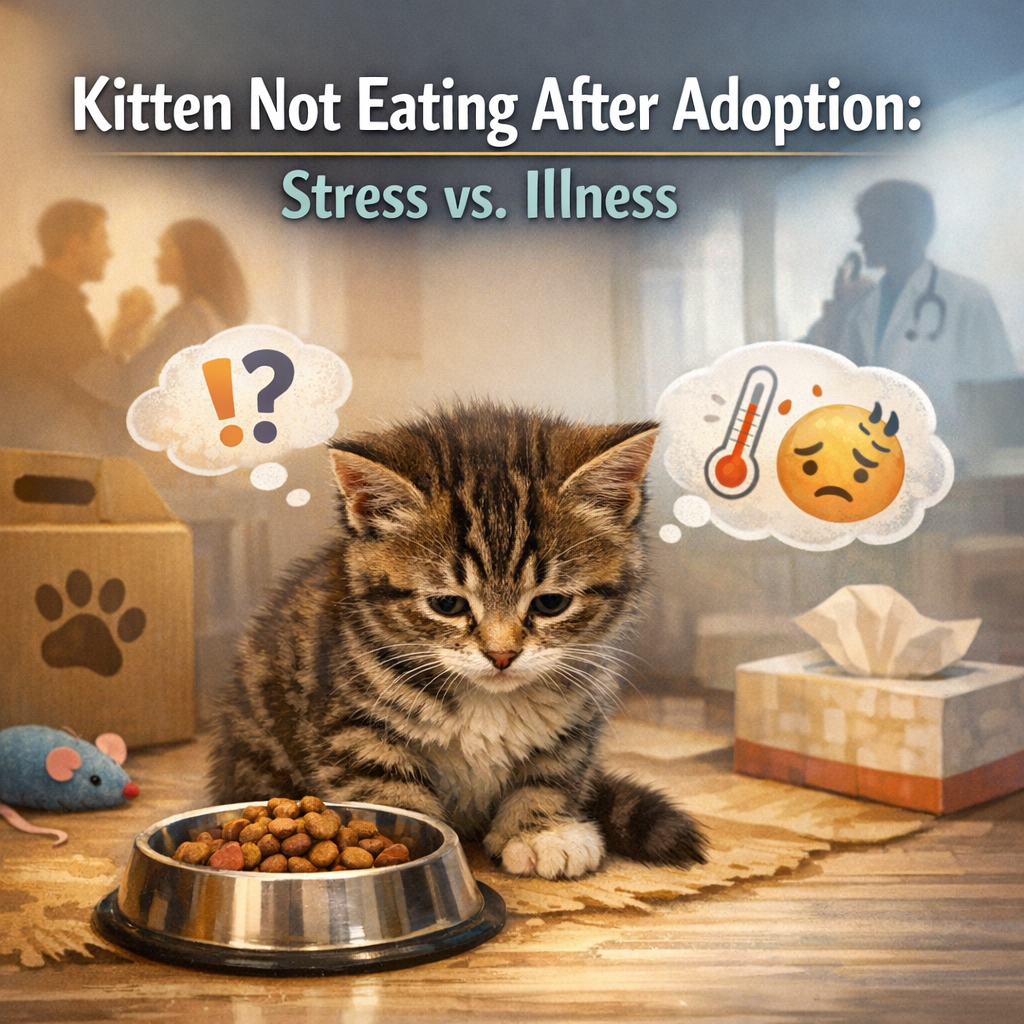
- Kitten Not Eating After Adoption: Stress vs. Illness
- Normal Stress Behavior After Adoption
- The Importance of Giving Space and Time
- Signs of Normal Stress vs. Illness
- Offering Preferred Food Types (Wet vs. Dry)
- Creating a Safe and Quiet Environment
- Behavioral Signs Indicating Illness
- When to Seek Immediate Veterinary Care
- The Role of Owner Patience and Reassurance
- Offering Preferred Food Types and Stimulating the Appetite
- Frequently Asked Questions
Kitten Not Eating After Adoption: Stress vs. Illness
You finally brought home that adorable ball of fur from the animal shelter. You have the perfect soft cotton tee ready for snuggling, the best toys, and a bowl of premium kibble. Then, the silence hits: your new kitten won’t eat.
Do not panic just yet. Fussy behavior in a newly adopted kitten is incredibly common, especially when it comes to home care for kittens not eating. Whether you are a seasoned cat parent or a first timer, seeing a tiny creature refuse food is stressful and can make you anxious about their well-being.
In short: Your kitten is likely overwhelmed by their new world.
Normal Stress Behavior After Adoption
It is perfectly normal for a scared kitten experiencing adoption anxiety to refuse food, water, or even litter box usage for the first 24 to 48 hours. This initial adjustment period can be overwhelming, leading to stress that affects their behavior and causes a lack of appetite, which encompasses several reasons why a kitten might not be eating. The immense sensory overload they encounter can be disorienting and frightening, potentially leading to illness or discomfort that deters them from their food. Additionally, health issues or a sudden change in environment can further exacerbate their reluctance to eat, making it essential to monitor their well-being closely during this delicate phase.
Many owners report that their feline friends took nearly 48 hours to touch their meals. This delay is usually due to kitten stress rather than a medical emergency.
During this shelter cat transition, your pet is processing new smells and sounds. If they are hiding, they are simply prioritizing safety over their cat appetite. This is a standard part of pet acclimation.
The Importance of Giving Space and Time
When dealing with feline stress and anxiety, the importance of patience with new kittens cannot be overstated, particularly when utilizing effective kitten socialization techniques. Patience is your greatest tool in helping a kitten adjust to a new home. Experts suggest that forcing interaction can actually prolong the kitten hiding phase, so allowing them to explore their environment at their own pace is crucial for their comfort and adjustment. Incorporating gentle socialization practices, such as gradual introductions to different sounds and people, helps create a more engaging atmosphere. By giving them the time they need, you foster a secure environment that promotes trust and a smoother transition.
Allow your newly adopted kitten to decompress in a designated safe zone. This pet confinement strategy helps them feel secure enough to eventually explore their surroundings and find the food bowl.
Some cats may take days or even weeks to fully adjust, so understanding kitten behavior post-adoption is essential for a happier pet and a stress-free home. In fact, many new kitten owners wonder how long it takes for a kitten to adapt, and patience is key during this process. Recognizing their needs and quirks will provide valuable insight into their adjustment journey. Respecting their boundaries now builds a stronger foundation for cat bonding later on.
Signs of Normal Stress vs. Illness
Distinguishing between a scared kitten and a sick one is vital for kitten care. In addition to noting signs of stress in kittens, such as hiding or excessive grooming, it’s important to monitor for other physical symptoms that could indicate potential health issues, including lethargy or changes in litter box habits, which can also lead to appetite loss. While cat appetite loss for a day is common, these behavioral cues and physical signs of health issues in kittens can help you identify if your kitten is truly unwell and may require veterinary attention.
Normal stress typically involves hiding behavior but otherwise alert reactions. If the kitten is responsive when they do peek out, they are likely just adjusting to their kitten adoption.
However, if the cat won’t eat and also shows kitten lethargy or respiratory issues, the situation changes. Stress should not cause a total physical collapse or extreme weakness.
Offering Preferred Food Types (Wet vs. Dry)
If your newly adopted kitten not eating is causing worry, try changing the menu by offering preferred food types specifically for kittens. Many cat care tips recommend transitioning food for newly adopted kittens by moving from dry kibble to a highly aromatic wet food to stimulate the senses, especially if your little one is picky about their meals.
Strongly scented options like tuna based recipes or special pâtés can often tempt a scared kitten out of hiding. Wet food also provides essential hydration if the cat not drinking is an additional concern.
Consult cat foster advice or check what the animal shelter was feeding them. Keeping the diet consistent with their previous environment can reduce the digestive shock during kitten socialization.
Creating a Safe and Quiet Environment
Your home should be a sanctuary, not a loud playground, during the first week. Minimize sudden movements and loud noises to help with kitten health and mental well being.
Set up a quiet corner with their litter box, water, and cat treats nearby. Using calming pheromone diffusers can significantly lower feline behavior issues related to fear.
Providing comfort items, like a blanket that smells like their previous home or even a soft cotton tee, can offer a sense of security and encourage cat communication.
Behavioral Signs Indicating Illness
You must monitor for specific kitten behavior that points toward a medical issue. Refusal to eat for more than 48 hours is a major red flag that requires attention, and it is essential to know when to consult a vet for a kitten not eating, as this could signal an underlying health concern that needs immediate care.
Watch for persistent diarrhea, vomiting, or signs of dehydration. While stress is common, physical symptoms like discharge from the eyes or nose are not.
If the kitten remains tucked away and shows no interest in cat nutrition or play after several days, it is time to look beyond simple kitten stress.
When to Seek Immediate Veterinary Care
An emergency vet visit is necessary if your kitten is totally unresponsive or shows signs of severe kitten lethargy. Do not wait if they have not consumed any liquids for over 24 hours.
Veterinary professionals warn that small kittens can decline rapidly without proper cat care. Dehydration and hypoglycemia are serious risks for young felines.
If cat appetite loss is accompanied by fever or labored breathing, seek veterinary emergency care immediately. It is always better to be safe when it comes to feline behavior and health.
The Role of Owner Patience and Reassurance
Your role in cat adoption advice is to be a calm, steady presence. Avoid forceful interactions or pulling the kitten out of their hiding spot, as this resets the cat adjustment period.
Offer gentle reassurance through soft speaking and slow blinks. This animal socialization technique tells the kitten you are a friend, not a predator.
With time, your newly adopted kitten will realize they are safe. Once they feel secure, their appetite will return, and they will be ready for a lifetime of cat bonding and snuggles.
Expert Insight
“Young pets are especially prone to accidents and illnesses due to their fragile immune systems; recognizing early signs like lethargy or breathing difficulties and acting fast is crucial for their survival.”, Veterinary Health Specialist
Offering Preferred Food Types and Stimulating the Appetite
If your newly adopted kitten is snubbing the dry kibble, it is time to break out the strong smelling food. As kittens transition from milk to solid food, cat adoption advice often suggests that wet food is best during the shelter cat transition because the strong aroma stimulates the appetite better than dry food. Additionally, incorporating methods to encourage feeding in cats, such as offering a variety of textures or warm food to enhance the scent, can further entice your kitten to eat and help establish a healthy feeding routine as they adjust to their new diet.
Try offering a lickable treat or a small amount of warm tuna water. Hand feeding a tiny bit of wet food while the kitten is in your lap can sometimes break the fast and kickstart their hunger.
| Food Type | Benefit for New Kittens | Best Use Case |
|---|---|---|
| Dry Kibble | Easy to leave out for grazing | Once the kitten is comfortable |
| Wet Pâté | High moisture and strong scent | Encouraging a scared kitten to eat |
| Lickable Treats | High palatability | Bonding and initial appetite stimulation |
| Warm Tuna Water | Irresistible aroma | Emergency hydration and interest |
Expert Insight
“Socialization should always be tailored to the individual kitten; provide a safe, quiet sanctuary room during the first three days to allow them to adjust to new stimuli without becoming overwhelmed.”, Veterinary Socialization Expert
Expert Insight
“Food refusal for more than 24 hours in cats, especially kittens, is a medical emergency that can lead to hepatic lipidosis; immediate intervention with warmed wet food and veterinary care is essential to avoid fatal complications.”, Feline Health Specialist
Frequently Asked Questions
How long can a kitten go without eating?
A newly adopted kitten should not go more than 24 to 48 hours without food. Because they are growing, they lack the fat reserves of adult cats and can develop kitten health issues like hepatic lipidosis very quickly.
Should I change the brand of food the shelter gave me?
Not immediately. Stick to what they were eating at the animal shelter for the first week to minimize feline stress and anxiety. A shelter cat transition is hard enough without a sudden change in cat nutrition causing a sensitive stomach.
My kitten is drinking but not eating, is that okay?
It is better than neither, but they still need calories to support their immune system. Try offering wet food or strongly scented cat treats to entice them, as the moisture and aroma are often more appealing to a scared kitten.
What if my kitten is hiding and won’t come out?
This is common kitten behavior and a natural part of the cat bonding process. Ensure their food, water, and litter box usage area are right outside their hiding spot so they do not have to cross a large room to survive.
When should I worry about my kitten not using the litter box?
Just like eating, litter box usage can be delayed by kitten stress. If they haven’t gone within 24 to 36 hours, check under furniture for hidden accidents. Provide a low entry box and avoid loud areas to help them feel safe.
References
- Newly adopted kitten hasn’t eaten almost anything, neither used the …
- Newly Adopted Kitten Not Eating? Expert Advice & Solutions
- Anxious kitten not eating after adoption? – Facebook
- My kitten isn’t eating much and seems lethargic, is this normal after …
- I adopted a cat and he won’t to eat, because is so stressed … – Quora