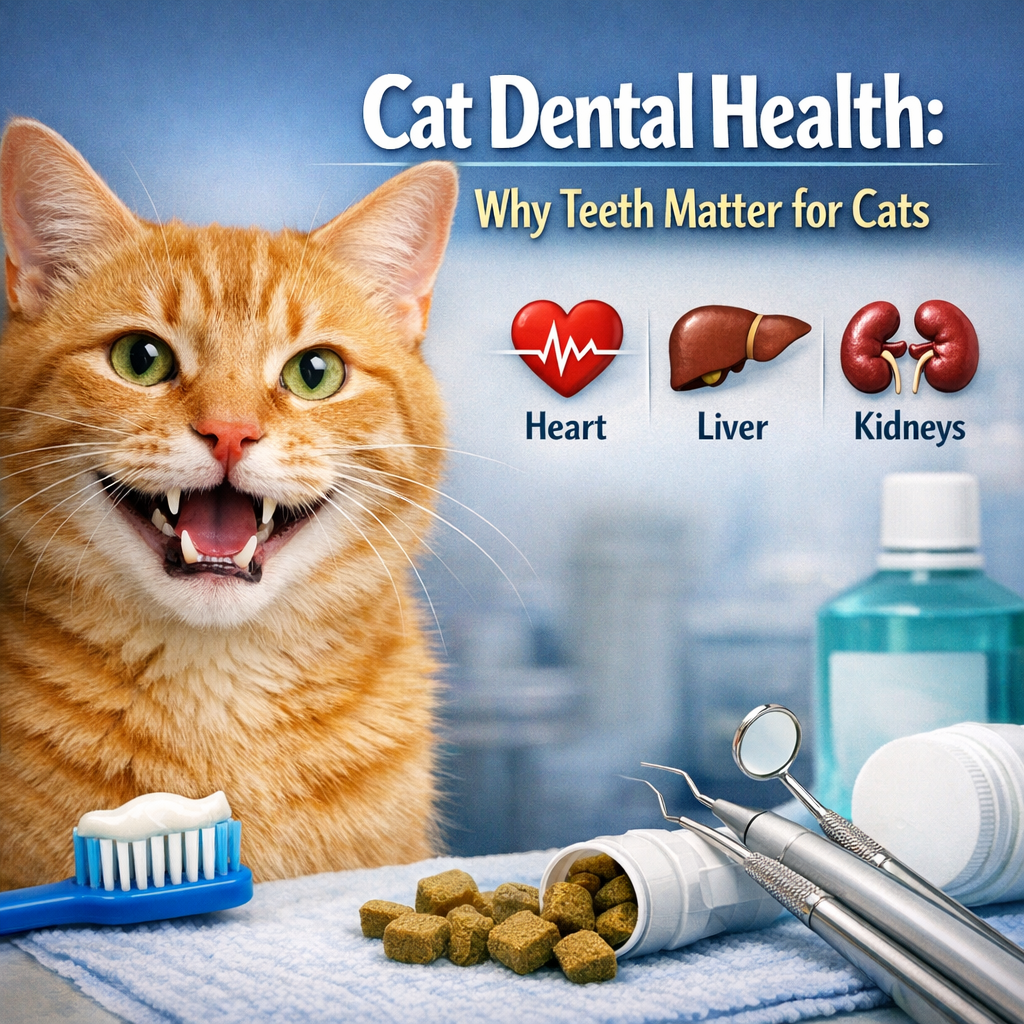
- Regular cat dental care matters for overall health, as oral infections can affect the heart, liver, and kidneys.
- Prevention (at-home brushing, dental diets, and periodic professional cleanings) helps reduce plaque, tartar, and pain, potentially lowering veterinary costs.
- Be alert for signs of dental disease (bad breath, changed eating, drooling, facial swelling) and seek veterinary care promptly.
- A structured routine (daily brushing, appropriate chews, and periodic checkups) supports long-term oral health and quality of life.
Table of Contents
Why Cat Teeth Matter for Overall Health
You may think dental care is just about fresh breath, but a cat’s teeth influence their overall well being. Poor dental health can cause pain and infections that allow bacteria to travel through the bloodstream and affect the heart, liver, and kidneys. Regular dental care helps protect these organs and supports a longer, healthier life for your cat.
Practical steps you can take today
Start with a quick at home check: look for red or swollen gums, loose teeth, or bad breath. If you notice signs, schedule a veterinary visit and ask about a dental cleaning plan for your cat. Bella Gatti US Shop offers vet approved dental chews and brushable gels that fit into daily routines.
- Brush your cat’s teeth three times a week using a cat friendly toothpaste and a soft finger brush.
- Introduce dental treats gradually, pairing them with positive reinforcement to reduce stress.
- Request a professional dental exam at your next annual checkup, and discuss frequency based on risk factors.
Common pitfalls to avoid
Avoid delaying action when you notice signs. Dental disease can progress silently, so use preventive products regularly and follow your vet’s guidance on scale and polish intervals.
Common Dental Diseases You Should Know
Many cats eventually develop some form of dental disease. Understanding the main conditions helps you catch issues early and work with your veterinarian on a plan.
- Periodontal disease affects the gums and the structures that support the teeth. It is common in older cats and can progress quietly over time.
- Feline odontoclastic resorptive lesions (FORL) involve the gradual loss of tooth structure, which can be painful and often requires intervention as cats age.
- Tooth resorption leads to damaged teeth and potential tooth loss if untreated, and may occur without obvious early signs.
Regular dental checks are essential because many cats show few external symptoms in the early stages. Watch for dental pain; your veterinarian can identify these conditions through examination and imaging and recommend appropriate treatment or prevention strategies.
Signs of Dental Disease in Cats
Early cues can be subtle, so monitor for concrete signals you can act on.
- Bad breath paired with red or swollen gums may indicate gingivitis or dental disease.
- Reluctance to eat, pawing at the mouth, or dropping food while chewing signals oral discomfort.
- Drooling, facial swelling, or missing or loose teeth over time can precede abscesses or tooth loss if untreated.
These signs often precede visible pain. Treating dental issues early reduces infection risk and expenses later. Schedule a vet visit if you notice any of these, and discuss a proactive dental plan with your veterinarian to support preventive care.
Dental Disease and Systemic Health
Oral infections can release bacteria into the bloodstream, potentially stressing organs such as the heart, liver, and kidneys. This is about the cat as a whole, not just the mouth, and unchecked dental issues can contribute to systemic inflammation over time.
Regular veterinary dental cleanings remain essential to reduce bacterial load and keep inflammation in check. Antibiotics should only be used under professional guidance to address active infections or specific surgical needs.
Between visits, monitor for warning signs such as persistent bad breath, appetite changes, or unusual water intake. Consider Bella Gatti US Shop dental chews and water additives as part of an overall maintenance plan, but use them to complement, not replace, professional care.
Preventive Home Dental Care That Works
Prevention is easier than you think. A steady home routine helps keep plaque and tartar from building up.
Begin with brushing your cat’s teeth using a feline friendly toothpaste and a soft, small brush. Start slowly, aiming for a comfortable pace, and gradually increase to a consistent routine.
Pair brushing with a positive reward to build cooperation and reduce stress during sessions.
Beyond brushing, incorporate dental diets or treats designed to support oral health. Discuss with your veterinarian whether sea kelp or enamel‑friendly options are appropriate for your cat based on health history and needs.
Professional Dental Cleanings and Procedures
Professional dental care for cats is typically performed under anesthesia to allow thorough cleaning of all tooth surfaces and accurate dental radiographs. A complete cleaning includes scaling, polishing, and a careful assessment for underlying issues that may not be visible during a routine at-home exam. The price range and required procedures vary based on the cat’s oral condition and whether extractions or other treatments are needed.
Prepping for a dental visit involves a short pre-anesthetic evaluation to minimize risk and establish a safe plan for pain management and recovery. Your veterinarian will discuss the expected steps, potential costs, and any special considerations based on your cat’s health history.
How to plan your appointment
Ask your veterinarian for a written estimate that itemizes cleaning, X-rays, anesthesia, and potential extractions. Bring recent medical records and list any medications your pet takes. If cost is a concern, discuss options like staged procedures or payment plans with your clinic and check if Bella Gatti US Shop offers related support or guidance.
Common pitfalls to avoid
Avoid delaying dental care when you notice persistent bad breath or chewing difficulties. Skipping anesthesia can lead to incomplete cleaning and missed infections. Ensure post procedure follow ups, schedule regular cleanings every 6 to 12 months, and use veterinarian recommended dental treats or brushing tools from Bella Gatti US Shop to maintain oral health between visits.
Routine Veterinary Dental Checkups
Routine dental checkups are a cornerstone of maintaining your cat’s oral and overall health. Most cats do well with annual exams, while seniors may need more frequent assessments to catch age related dental changes early.
During a typical visit, your veterinarian will perform an oral exam, record a dental chart, and may take dental radiographs if indicated. Regular checkups help identify gingivitis, tartar buildup, and tooth loss before these issues worsen.
Practical steps you can take now include discussing radiographs for higher risk cats, maintaining a daily brushing routine when possible, and using Bella Gatti US Shop approved dental treats or gels to support ongoing care between visits. Monitor at home for red gums, bad breath, or trouble eating and report these signs promptly.
FAQ: Your Cat Dental Health Questions Answered
Q: How can I tell if my cat has dental pain?
A: Watch for signs like reduced appetite, slow eating, pawing at the mouth, drooling, or persistent bad breath. If you notice any of these, schedule a dental check with your veterinarian promptly. Bella Gatti US Shop offers gentle, cat friendly dental care products to support routines.
Practical at home steps
Brush with a feline friendly toothpaste daily, starting with a brief 10 second session and gradually increasing to a longer routine. Pair brushing with a dental treat designed to reduce tartar to reinforce positive associations.
Introduction
Why dental health matters for cats
Dental disease isn’t just about bad breath. It can cause pain that makes chewing difficult, which can lead to weight loss and selective eating. A cat with tartar buildup may avoid dry kibble, favoring softer foods that don’t meet their nutritional needs.
Concrete steps you can take now include scheduling an annual feline dental exam and asking about a professional cleaning if gingivitis is flagged. Daily brushing with a cat-safe toothpaste for a few minutes helps prevent tartar buildup and can reduce the need for extractions later.
How oral health affects overall wellbeing
Bacteria from oral infections can travel through the bloodstream and affect organs such as the heart and kidneys over time. Untreated dental issues are linked to higher veterinary costs later and longer recovery from other illnesses.
Observe for changes like reduced appetite, puffy cheeks after meals, or reluctance to drink. If you notice these signs, consult your Bella Gatti US Shop veterinarian for guidance on targeted care, including diet considerations or rinses when appropriate.
Expert Insight
“Maintaining dental health helps protect a pet’s overall health and comfort by reducing mouth pain, preventing infections, and supporting organ health, which in turn supports eating, activity, and quality of life.” , Veterinary dental health expert
1. How Cat Teeth Are Structured and How They Function
Milk teeth to adult teeth transition
Cats begin with two sets of teeth in their first weeks. By six months, most kittens have a full set of permanent teeth, with baby teeth loosening as adult teeth emerge. This switch supports a cat’s growing need to catch, tear, and process prey.
monitor teething by noting loose milk teeth and the appearance of new, sharper adult teeth. Schedule a vet check if a tooth doesn’t shed or if you see persistent gaps or swelling.
What each type of tooth does in a cat’s mouth
- Incisors: Small front teeth used for nibbling and grooming.
- Canines: Longer teeth designed for gripping and tearing prey.
- Premolars and molars: Sharper points for slicing meat and shearing tough fibers.
Cats are built to slice rather than grind, which concentrates wear on narrow surfaces. This design means plaque can hide in tight spaces near the gumline, making regular cleaning essential to prevent buildup and irritation.
2. Common Dental Problems in Cats
Plaque and tartar buildup
Plaque forms on teeth from leftover food and bacteria. If not removed, it hardens into tartar, which irritates the gums. Tartar creates a rough surface that traps more bacteria and speeds up gum inflammation.
Regular dental care helps prevent this cycle and protects the gumline from further damage.
Plaque and tartar buildup in real life
For example, a busy pet owner might notice morning halitosis and red, swollen gums within weeks of skipping brushing. A brushing routine with a soft brush and enzymatic toothpaste can cut plaque by up to 60% in the first month.
In practice, schedule a professional cleaning twice a year and use daily dental treats designed for cats, like Bella Gatti US Shop options, to reduce tartar formation between visits.
Gingivitis and periodontal disease
Gingivitis is the early stage of gum inflammation, showing as swelling and red gums at the gumline. If untreated, it can progress to periodontal disease, where the structures supporting the tooth weaken.
Pain, difficulty eating, and persistent bad breath can accompany these conditions as they advance.
Gingivitis in action and steps to intervene
Observe for bleeding when brushing or after meals. If you notice redness, start a daily routine: brush teeth for 2 minutes, twice a day, and add a vet-approved oral rinse. A 6-week check with your vet helps catch progression early.
- Monitor gum color and texture between visits
- Offer moisture-rich foods to support overall oral health
- Avoid human foods that can irritate gums
Tooth resorption and tooth loss
Tooth resorption is a painful condition where tooth structure begins to break down. It often requires extraction to relieve pain and restore oral health.
This issue is common in cats and can progress quietly, underscoring the need for routine dental checks.
Resorption patterns and management
Owners should watch for sudden changes in chewing behavior, drop in appetite, or sensitivity to touch near the jaws. Early radiographs during routine exams can reveal lesions before they become symptomatic.
- Ask your vet about regular dental radiographs for older cats
- Limit soft tissue irritants and provide consistent brushing with feline-safe products
- Consider dietary supplements proven to support gum health, after vet approval
Oral infections and systemic risks
Infections in the mouth can spread to other parts of the body, affecting organs such as the heart, liver, and kidneys. Bacteria released from diseased teeth may lead to more serious health problems if not managed.
Oral health therefore plays a role in overall wellbeing beyond the mouth itself.
Systemic impact and practical precautions
Regular dental checkups reduce bacteremia risk. If your pet has heart or kidney disease, coordinate dental care with your veterinarian to time cleanings when systemic risk is lowest.
- Choose treats or toys that promote chewing without injuring gums
- Maintain fresh water and monitor for signs of oral discomfort
- Keep up with vaccinations and baseline bloodwork as advised by your vet
3. Signs Your Cat May Have Dental Issues
Bad breath indicators
Persistent bad breath can signal dental problems beyond ordinary odor. If your cat smells foul or metallic, it may reflect gingivitis, tartar buildup, or other dental disease.
Example: a cat that previously tolerated brushing now shows a strong fishy scent even after meals. Consider scheduling a vet check to assess dental charts and consider professional cleaning if indicated.
Changes in eating or chewing behavior
Notice a shift in how your cat eats. Eating slowly, dropping food, or chewing on just one side of the mouth can indicate tooth discomfort or painful gums. This may point to dental disease progression like gingivitis or tooth resorption.
Action steps: offer softer foods for a week, monitor appetite changes, and track any weight loss. If the behavior persists beyond 3-5 days, book a checkup with your veterinarian to evaluate tooth structure and possible extractions.
Drooling, pawing at the mouth, or facial swelling
Excessive drooling or pawing at the mouth are common signs of oral pain. Facial swelling or visible lumps around the jaw can signal infection or abscesses that require veterinary care.
some cats drool during teething or after anesthesia. If swelling develops or foul drainage occurs, seek urgent veterinary attention, as untreated infections can spread.
Reluctance to groom or decreased grooming
A cat may skip brushing sessions or groom itself less when tooth pain is present. This change can affect coat condition and skin health over time, and it may hint at broader oral health issues.
pair dental checks with grooming cues. Bella Gatti US Shop offers cat dental chews and veterinarian-approved dental treats to support ongoing care alongside regular brushing.
Expert Insight
“Cats commonly suffer from gingivitis, periodontitis, and tooth resorption, and most signs of dental pain are hidden; proactive dental care and monitoring are essential to prevent progression and protect quality of life.” , Veterinary Dentistry Expert
4. Essential Dental Care Practices for Cats
Regular brushing and safe dental products
Establish a daily brushing routine using a cat friendly toothpaste. Look for enzymatic formulas that help break down plaque without harming your cat. Start slowly to build tolerance and avoid forcing brushing, which can create fear or resistance.
- Use a soft bristled finger brush or a small cat toothbrush.
- Choose flavors your cat accepts to encourage cooperation.
- Avoid human toothpaste and rawhide chews that can cause digestion issues.
Dietary choices that support dental health
Your cat’s diet influences plaque and tartar buildup. Some foods are designed with textures or added ingredients to aid dental health. When in doubt, align meals with dental focused options as advised by your veterinarian.
- Dry kibble with an abrasive texture can aid surface cleaning.
- High moisture diets support hydration and oral comfort.
- Discuss prescription or specialized diets if gingivitis or tartar are concerns.
Chews and toys that promote clean teeth
Mechanical cleaning from chews and toys can complement brushing. Look for products labeled for dental health and inspect for wear or sharp edges.
- Dental chews designed for cats can help reduce plaque between brushings.
- Grooming toys that encourage jaw movement support gum health and circulation.
- Avoid overly hard objects that may crack teeth or cause discomfort.
Professional dental cleanings and anesthesia considerations
Professional cleanings remove plaque and tartar below the gumline and uncover hidden issues. Anesthesia is typically used to ensure safety and thoroughness during the procedure.
- Regular veterinary exams help determine cleaning frequency.
- Pre-anesthetic evaluation minimizes risk and guides dosing.
- Post-procedure care includes pain management and monitoring healing progress.
Expert Insight
“Regular brushing prevents common dental problems like gingivitis, tartar buildup, and periodontal disease, all of which can have serious consequences for a cat’s health.” , Industry Analyst
5. At-Home Dental Care: Step-by-Step Routine
Setting up a brushing routine
Consistency matters more than intensity. Aim for daily brushing, even if only for a few minutes. Use a cat-safe toothpaste and a soft brush designed for small mouths. Start with a calm, distraction-free environment to build a positive association.
- Choose a quiet time and a familiar space.
- Have treats or praise ready to reward cooperation.
- Keep sessions brief at first, then gradually extend.
How to introduce brushing to a cat
Introduce brushing gradually to avoid stress. Begin with your finger and slowly progress to a brush. Focus on the outer surfaces where plaque tends to accumulate along the gumline. Move slowly and stop if your cat shows signs of distress.
- Let your cat sniff the toothpaste for exposure control.
- Use short, gentle strokes along the gumline.
- Progress to a brush as your cat accepts touch in the mouth.
Common mistakes to avoid
Avoid forcing brushing or using human toothpaste. Don’t rush through sessions or skip days, which can disrupt progress. Watch for signs of irritation and adjust pace accordingly.
- Forcing compliance can create fear and resistance.
- Human toothpaste contains ingredients not safe for cats.
- Inconsistent routines diminish long-term benefits.
Integrating dental care into daily life
Pair brushing with a daily routine you already follow, such as morning feeding or evening wind-down time. Consider dental-friendly supports like specially formulated dental diets or treats when appropriate, and discuss options with your veterinarian.
Practical steps and tips
Start with a 30-second session and add 15 seconds each week until you reach 2 minutes. Use a pea-sized amount of toothpaste and let Bella sniff it first to reduce surprise. If your cat yowls or swats, pause for 1-2 minutes and try again later in the day.
- Document progress with a simple checkmark chart to stay consistent.
- Alternate between brushing and gentle mouth massage if full brushing is not yet tolerated.
- Consult Bella Gatti US Shop for cat-safe dental tools tailored to small breeds.
6. When to See a Veterinarian for Dental Issues
Urgent signs that require veterinary attention
If you notice sudden facial swelling, persistent mouth bleeding, or a dramatic appetite drop, contact your veterinarian promptly. Severe halitosis with pain can indicate an infection or tooth root issue that needs evaluation.
- Facial swelling or jaw tenderness
- Bleeding gums that do not stop within a few minutes
- Reluctance to eat or drink for more than 24 hours
What to expect during a dental exam or cleaning
A dental visit typically includes an oral exam and dental radiographs to reveal underlying problems. A professional cleaning removes tartar, may treat hidden infections, and sometimes requires anesthesia for safety and thoroughness.
- Triage of visible signs and measurement of gum inflammation
- Undergo imaging to check tooth roots and bone support
- Clarify anesthesia plan and pain management strategy
Pain management and post-procedure care
Post procedure care focuses on comfort and healing. Your cat may need short-term medications and a soft food plan. Monitor for lingering discomfort, appetite return, and activity levels as healing progresses.
- Follow dosing instructions for any analgesics
- Provide a calm recovery space and fresh water
- Schedule a follow-up check to ensure proper healing
FAQ
Which teeth are most important for cats?
Cats rely on the canine teeth for grabbing and holding prey, and the premolars and molars for slicing and tearing. The front teeth assist with grooming and spacing, while the back teeth support chewing and grinding. Healthy surfaces along the gumline matter most for ongoing comfort and function. For example, a feral cat uses canines to seize prey, then relies on molars to break it down before swallowing.
How often should a cat have dental cleanings?
Frequency depends on risk factors like age, breed, and current oral health. Many cats benefit from a professional cleaning every 1 to 2 years, but some may require more frequent evaluations. Your veterinarian can tailor the schedule to your cat’s needs. Bella Gatti US Shop recommends pairing cleanings with annual wellness checks and tracking oral scores over time to spot trends early.
Are there risks to at-home dental care?
At-home care is generally safe when you use feline-safe products and follow guidance. Risks include gum irritation from improper brushing technique, swallowing toothpaste, or applying excessive force. Start slowly and monitor your cat’s comfort. Practical steps: limit brushing sessions to 2 minutes, use a soft-bristled finger brush, and reward your cat with a treat after each session.
Can diet alone prevent dental disease?
Diet plays a supporting role but is not a standalone prevention. Some dry foods and dental formulations can help reduce plaque buildup, yet routine brushing and professional checkups remain essential for long-term oral health. Look for products with veterinary-recommended dental benefits and consult Bella Gatti US Shop for options suitable to your cat’s needs.
Conclusion
Recap of why teeth matter
Your cat’s teeth are more than a pretty smile. They support efficient eating, daily grooming, and comfortable activity. When dental health declines, your cat may show discomfort through changes in behavior or activity. Healthy teeth contribute to digestion and overall vitality, so monitoring dental health matters for long‑term quality of life.
- Gumline health and tooth integrity influence mouth comfort and eating habits.
- Untreated dental issues can allow bacteria to spread beyond the mouth, impacting overall health.
Practical steps to start or maintain a dental care routine for long-term feline health
Develop a sustainable plan that fits your routine. Use a timer, simple checklists, and consistent rewards to stay on track.
- Aim for a regular brushing window of 2-3 minutes daily and pair it with praise or a treat to reinforce the habit.
- Introduce dental chews or texture‑rich snacks gradually, and watch for stomach upset or reluctance.
- Have a veterinarian or technician demonstrate brushing technique and assess your cat’s comfort level.
- Track progress with a monthly check for signs like fresh breath or reduced plaque on visible teeth.
For Bella Gatti US Shop customers, consider integrating the recommended dental care kit into your routine to simplify purchases and ensure product compatibility with your cat’s needs.