TL;DR (Too Long; Didn’t Read)
- The 9-Point Body Condition Score (BCS) is the gold standard for assessing feline fitness, with a score of 4 to 5 being the ideal weight for most breeds.
- Assessment involves a three-step check: observing an hourglass waist from above, identifying an upward abdominal tuck from the side, and performing a hands-on rib palpation (ribs should feel like the back of your hand).
- It is crucial to distinguish between the primordial pouch (a natural skin flap) and actual abdominal fat, especially in long-haired breeds where manual feel is more accurate than visual inspection.
- Maintaining an ideal weight prevents serious health risks such as diabetes, osteoarthritis, and hepatic lipidosis; any weight loss plan should be gradual and supervised by a veterinarian.
Table of Contents
Is My Cat Fit? The Body Condition Score Guide
Is your cat’s extra fluff becoming a health concern? At Bella Gatti US Shop, we prioritize feline wellness alongside style. Monitoring weight is vital for a long, happy life.
The Body Condition Score (BCS) assesses physique better than a scale alone. Use these professional tools to evaluate your pet’s fitness like a pro.
What is the Cat Body Condition Score?
The Body Condition Score (BCS) assesses fat and muscle mass through visual and physical exams. Unlike weight alone, this method evaluates diverse frames—from slender Siamese to sturdy Shorthairs. Regularly monitoring BCS is vital for pet obesity prevention, helping owners manage caloric intake and detect weight shifts before serious health issues develop.
The 9-Point BCS System and Its Scale
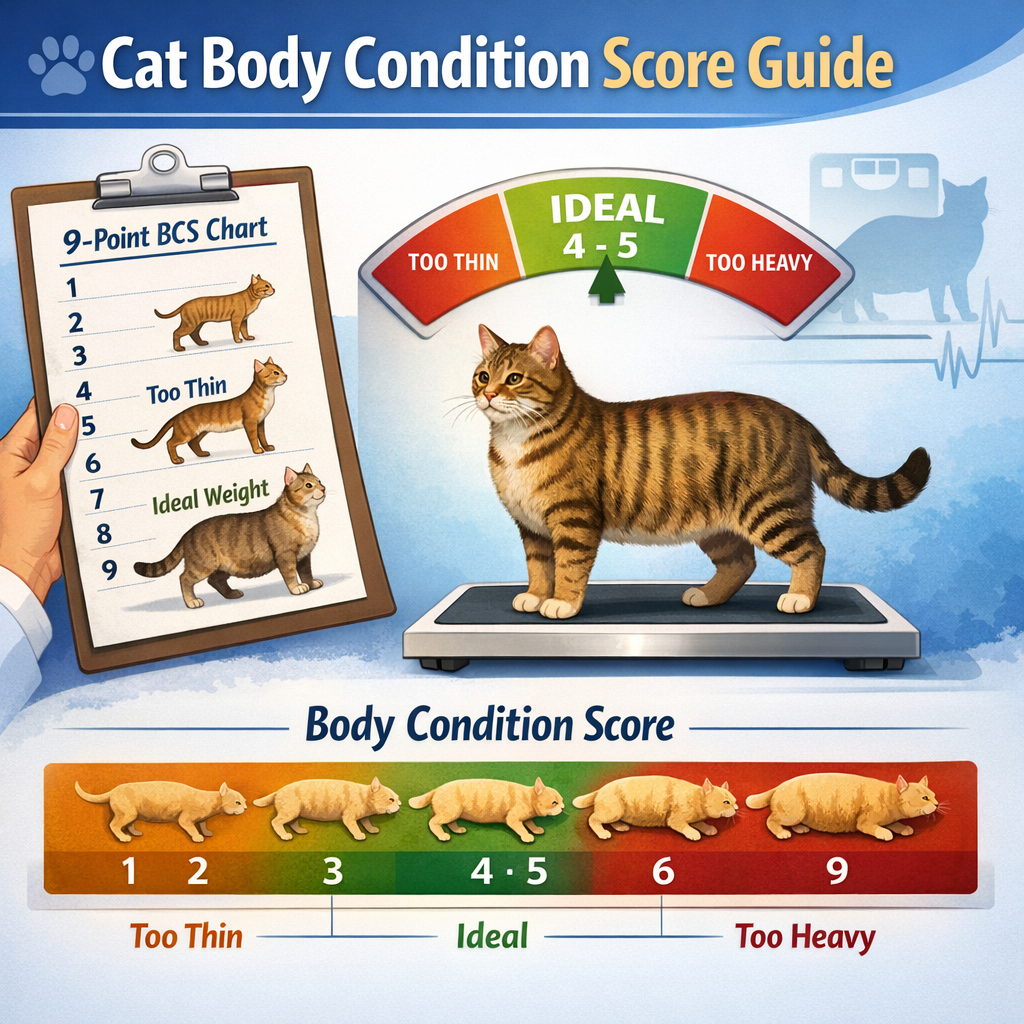
The standard feline BCS uses a 1-to-9 scale to evaluate physical health. While 1 is emaciated and 9 is obese, 4 or 5 represents the ideal weight. This gold-standard assessment monitors health by examining rib visibility, waistline definition, and the abdominal tuck, ensuring a healthy balance of muscle and fat without straining vital joints.
Hands-On Assessment: The Rib Palpation Technique
Visual checks are insufficient, especially for long-haired breeds. Perform a hands-on rib palpation to assess subcutaneous fat. In healthy cats, ribs should feel like the back of your hand under light pressure. If they feel like prominent knuckles, your cat is underweight; if they are difficult to locate, your cat is likely overweight.
Top View: Evaluating the Waistline and Body Shape
Observe your cat from above to check for waist definition. A healthy cat features a noticeable taper behind the ribs, creating an hourglass silhouette. If their body appears rectangular or bulbous, they are likely overweight. While breeds like the Siamese have sharper waistlines, even stockier cats should narrow slightly before the hips.
Side View: Abdominal Tuck and Primordial Pouch
View your cat from the side to check for an abdominal tuck—a gradual upward curve behind the ribs. A sagging belly often indicates excess fat, though don’t mistake the primordial pouch for obesity. Conversely, a hollowed-out appearance suggests your cat is underweight, increasing risks for serious conditions like hepatic lipidosis.
Assessing Fat Deposits and Muscle Condition Score
Weight management balances fat reduction with muscle preservation. While aging cats often face muscle atrophy, excess fat deposits around the chest and tail base increase health risks. During a spine check, look for light padding rather than sharp bone or thick rolls. Prioritizing muscle mass prevents osteoarthritis, ensuring your cat remains mobile and energetic.
Definition and Purpose of Cat Body Condition Score
The Body Condition Score (BCS) is a 9-point scale used to evaluate feline fat and muscle quality. By combining visual checks of the waist and abdominal tuck with rib palpation, owners can identify if a cat is underweight, ideal, or obese, helping prevent serious health issues like osteoarthritis and hepatic lipidosis.
The 9 Point BCS System and Its Scale
This standardized metric ranges from 1 (severely underweight) to 9 (obese). A score of 4 or 5 represents the ideal body condition, where ribs are easily felt but not visible, and a clear waistline is present from above.
The 9 Point BCS System and Its Scale
Veterinarians use a 9-point Body Condition Score (BCS) to assess feline health. An ideal score of 4–5 features a visible waist and palpable ribs. Scores below 4 indicate malnutrition, while scores above 5 suggest obesity. Regular visual checks and rib palpation help maintain muscle mass and prevent weight-related diseases.
Visual Indicators of Body Condition
Assess your cat from above and the side. Look for an hourglass waist and an upward abdominal tuck. Breed-specific frames vary, but a discernible waistline remains the primary indicator of a healthy weight.
Palpation Techniques for Feel Assessment
Hands-on checks are essential for long-haired breeds. Ribs should feel like the back of your hand. If they feel like knuckles, the cat is underweight; if like your palm, the cat is overweight.
Assessment of Fat Deposits and Muscle Mass
Evaluate fat at the tail base and neck while ensuring firm muscle tone. Distinguish the primordial pouch from abdominal fat; a healthy pouch is saggy, whereas obesity creates a firm, rounded belly.
| Score |
Classification |
Physical Characteristics |
| 1 to 3 |
Underweight |
Visible ribs and prominent bones. |
| 4 to 5 |
Ideal |
Palpable ribs and visible waist. |
| 6 to 7 |
Overweight |
Difficult to feel ribs; absent waist. |
| 8 to 9 |
Obese |
Heavy fat deposits; rounded belly. |
Visual Assessment: The Top View and Waist Definition
Viewed from above, healthy cats display a distinct waistline tapering behind the ribs. Conversely, obese cats appear oval or rectangular due to bulging fat deposits over the hips. Underweight cats exhibit a skeletal silhouette, with prominent ribs, sharp hip bones, and a protruding spine indicating a lack of essential fat and muscle mass.
Side View: Abdominal Tuck and Rounding
Assess your cat’s profile for an abdominal tuck—the upward slant behind the ribs. Healthy cats show a slight curve, while overweight felines appear straight or distended. Conversely, underweight cats look hollowed. Distinguish fat from the natural primordial pouch to monitor weight accurately, preventing serious issues like osteoarthritis or hepatic lipidosis.
Hands-On Assessment: The Cat Rib Check
Manual rib checks are essential for thick-furred breeds. Ideally, ribs should feel like the back of your hand under light pressure. If you must press hard, excess fat indicates obesity. Conversely, ribs feeling prominent—like knuckles—suggest the cat is underweight. Use these tactile cues to determine if your pet requires dietary adjustments or veterinary intervention.
Palpation Techniques for Feel Assessment
Visual checks are insufficient; you must palpate your cat’s ribs to accurately assess fat and muscle. In healthy cats, ribs feel like the back of your hand—discernible under thin fat.
If they feel like prominent knuckles, the cat is underweight. Conversely, difficulty feeling ribs indicates obesity, a critical feline body condition warning.
Assessment of Fat Deposits and Muscle Mass
Beyond ribs, evaluate the spine, hips, and muscle mass to detect atrophy. Distinguish the primordial pouch from abdominal fat by feeling tissue thickness. For long-haired breeds, manual palpation is essential, as thick fur अक्सर masks weight changes. Regular hands-on checks ensure accurate health monitoring and effective pet obesity prevention.
Assessment of Fat Deposits and Muscle Mass
Effective Body Condition Score assessments must differentiate between muscle mass and fat. While aging cats may suffer from muscle atrophy, others accumulate dangerous subcutaneous fat near the ribs and tail. This excess weight triggers osteoarthritis and life-threatening hepatic lipidosis. Regular spine and hip evaluations ensure your cat maintains lean muscle rather than metabolic-disrupting fat.
Side View: Abdominal Tuck and Rounding
Viewed from the side, a healthy cat displays a gradual upward abdominal tuck from the ribs to the back legs. Overweight cats lose this silhouette, showing bulging bellies rather than a sleek slope. Conversely, an extreme, “sucked-in” tuck indicates an underweight status. Distinguish this tuck from the primordial pouch, a natural, loose flap of skin.
Top View: Waist Definition and Body Shape
Assess waist definition by looking down at your standing cat. An ideal body condition features a clear hourglass taper behind the ribs. If the silhouette resembles a rectangular loaf, feline obesity is likely. Regularly monitor this shape to guide weight management and portion control, ensuring your cat remains lean, healthy, and mobile.
Risks Associated with Overweight and Obese Cats
Feline obesity is a serious health crisis, increasing risks for diabetes, heart strain, and life-threatening fatty liver disease. Excess weight also impairs grooming and exacerbates painful osteoarthritis. By prioritizing calorie restriction and weight management, owners can prevent chronic illness and extend their cat’s life by up to two years through improved mobility and hygiene.
“A proactive veterinary assessment and a consistent body condition score check are the best tools for pet obesity prevention and long term health.”
Safety and Guidelines for Gradual Weight Loss
Avoid crash diets; rapid weight loss risks feline hepatic lipidosis. Consult a vet before altering routines. Effective management combines portion control with nutritional enrichment, using BCS charts to track the transition to a healthy abdominal tuck. Prioritize exercise to maintain muscle mass and metabolism, tailoring your strategy to your cat’s specific breed and needs.
Frequently Asked Questions: Mastering the Feline BCS Chart
Perform a monthly rib palpation and visual check to monitor your cat’s condition. For long-haired breeds, hands-on assessment is essential to bypass fur. Focus on waist definition and rib coverage, ignoring the primordial pouch. Aim for a BCS of 4–5 to prevent obesity-related risks like fatty liver disease and ensure long-term health.
Deep Dive into Body Fat Estimation and Veterinary Assessment
The 9-point BCS system evaluates fat deposits beyond simple scale weight. A healthy cat features a visible waist and ribs that feel like the back of your hand. Identifying these trends early helps prevent osteoarthritis and muscle atrophy, ensuring your feline remains fit and mobile throughout their life.
The Final Verdict on Feline Fitness
Think of this as a fit check; like a perfectly tailored Unisex Soft Cotton Tee, your cat should maintain a sleek, healthy silhouette.
Summary of the 9-Point BCS System
The 9-point BCS system assesses cat obesity through visual assessment of the waistline and hands-on assessment of ribs. An ideal score (4–5) balances muscle mass with minimal fat. Scores above 7 risk osteoarthritis or fatty liver disease, while scores below 3 indicate muscle atrophy, requiring an urgent veterinary assessment.
How to Assess Cat Weight at Home
Assess your cat’s waist definition from above; a visible taper indicates health, while a rectangular shape suggests obesity. From the side, look for an abdominal tuck slanting upward. Finally, perform a rib check; you should easily feel ribs under light pressure, similar to the knuckles on the back of your hand.
Special Considerations: Breeds and Anatomy
Body type varies by breed; slender Siamese cats differ naturally from stocky British Shorthairs. For long-haired cats, thick coats hide the frame, making hands-on assessment like rib palpation essential. Additionally, distinguish the primordial pouch from feline obesity. This protective skin flap is normal, so prioritize waistline and hip bone evaluation for accuracy.
Weight Management and Pet Obesity Prevention
Prioritizing pet obesity prevention protects your cat from hepatic lipidosis and joint issues. For overweight cats, consult a vet for a gradual weight-loss plan to avoid fatty liver disease. Combine a high-quality diet with nutritional enrichment and play, monitoring regular checks to ensure your cat remains healthy and mobile long-term.