




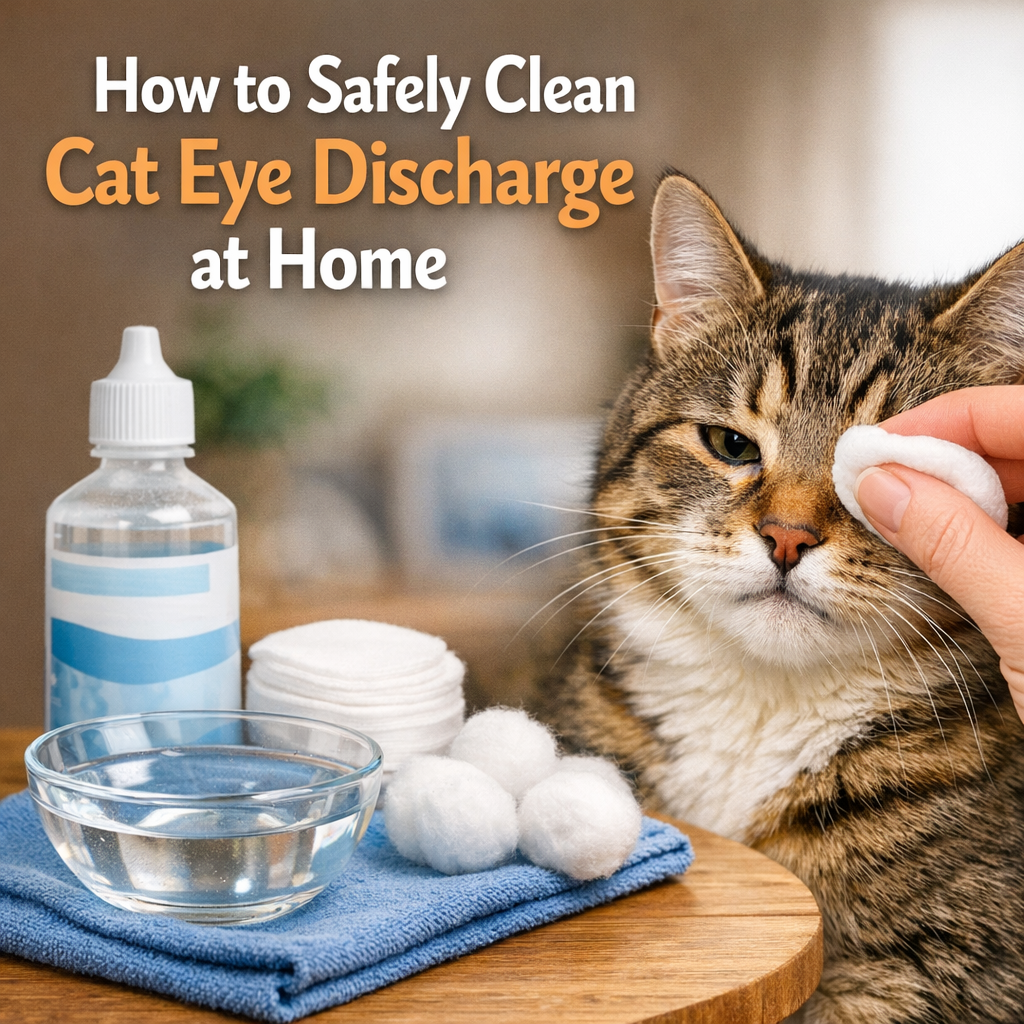
- Cleaning Procedure: Use a clean cotton ball or soft cloth dampened with lukewarm water or sterile saline. Gently wipe from the inner corner outward, using a fresh material for each eye to prevent cross-contamination.
- Tools & Safety: Stick to cat-safe materials like fragrance-free wipes or cotton balls; avoid human baby wipes and over-the-counter human eye drops, as these can cause severe irritation.
- Normal vs. Abnormal: While clear or dried “gunk” is often normal, you should consult a vet immediately if you notice redness, cloudiness, squinting, or yellow/green pus-like discharge.
- Benefits: Regular eye maintenance supports hygiene, allows for early detection of health issues like allergies or infections, and serves as a vital bonding ritual for you and your cat.
Table of Contents
- Recognizing Normal vs. Abnormal Eye Appearance
- Common Causes of Cat Eye Discharge
- Role of Diet and Allergies in Eye Discharge
- Signs of Eye Discharge and When to See a Vet
- Steps to Safely Remove Eye Discharge at Home
- Tools for At-Home Eye Cleaning
- Behavioral Significance of Eye Cleaning and Bonding
- Tools for At-Home Eye Cleaning
- Behavioral Significance of Eye Cleaning and Mutual Grooming
- Pros and Cons of At-Home Eye Care
- Frequently Asked Questions About Feline Eye Care
- Keeping Your Cat Healthy and Happy
Your cat has those big, beautiful eyes that seem to look right into your soul. But sometimes, those inquisitive tabby cat eyes look a little less than sparkling.
You might notice some crusty bits or wet patches in the corners. This is what we call cat eye gunk, and it is a totally normal part of feline life and daily grooming rituals.
At Bella Gatti US Shop, we know you want your kitty looking as sharp as our Unisex Soft Cotton Tees. Cleaning those eye goobers is a simple feline hygiene task you can handle at home to keep them feeling fresh.
Regular eye hygiene maintenance keeps your cat comfortable and helps you spot health issues early. Let us dive into the best eye cleaning techniques for your furry friend.
Recognizing Normal vs. Abnormal Eye Appearance
Before you start removing cat gunk, you need to know what a healthy eye looks like. A healthy cat should have clear, bright eyes with symmetrical pupils and no murkiness.
Check for pink, healthy looking eyelids and ensure the whites of the eyes are not red or inflamed. While some dried ocular secretions are normal, cloudiness or redness are major red flags for cat eye irritation.
If you see your cat squinting or notice the third eyelid is visible, these are signs of discomfort. Healthy eyes should be moist but not constantly leaking fluid or showing signs of heavy eye drainage.
Common Causes of Cat Eye Discharge
Understanding feline ocular health requires identifying why cat eye discharge appears in the first place. Often, these secretions are linked to contagious upper respiratory infections, such as feline calicivirus or feline herpesvirus, which can cause chronic inflammation. These viral triggers frequently lead to secondary bacterial complications if left untreated.
Other frequent sources of discharge include painful conjunctivitis, corneal ulcers, or obstructed tear duct drainage. In specific clinical cases, conditions like uveitis or keratoconjunctivitis sicca (dry eye) result in persistent moisture, thick mucus, and unsightly fur staining.
Environmental triggers also play a significant role. Irritation from household dust or strong fragrances can lead to watery eyes that require consistent, gentle cleaning to prevent infection.
Role of Diet and Allergies in Eye Discharge
Did you know that cat allergies frequently manifest in the eyes? While food allergy symptoms often include itchy skin or chronic ear infections, they can also cause increased eye drainage and feline acne around the mouth. If you suspect a reaction, consider a transition to a limited ingredient diet to rule out common protein sensitivities like chicken or beef.
Some cats even experience plastic bowl sensitivity, where porous surfaces harbor bacteria, leading to chin breakouts and secondary eye irritation. Managing cat behavior around food and maintaining a sterile feeding environment can significantly reduce these triggers. For chronic viral issues like feline herpes, many owners use lysine supplements to support the immune system and minimize ocular flare-ups.
Signs of Eye Discharge and When to See a Vet
While cleaning cat eyes at home is great, you must know when to call a professional. If you notice sticky, pus like, or cloudy discharge, it is time for a veterinary consultation.
Unresolved symptoms that do not improve within 24 hours warrant an immediate visit. Eye problems can lead to serious consequences like a corneal abrasion or even permanent blindness if left untreated.
Keep an eye out for yellow or green discharge, as this usually indicates a bacterial infection. If your cat is pawing at their face constantly, they may be in significant pain that a simple cleaning cannot fix.
Steps to Safely Remove Eye Discharge at Home
When it comes to removing cat gunk, gentleness is the golden rule. Start by using a clean cotton ball or a soft, lint-free tissue dampened with lukewarm water or a sterile saline solution. Ensure the cloth is moist but not dripping wet to avoid irritating your pet.
Gently wipe from the inner corner of the eye toward the outer corner. This specific motion mimics the natural flow of tear duct drainage and prevents pushing harmful debris or bacteria back into the eye socket. Always use a fresh cotton ball for each eye to prevent cross-contamination. Finally, avoid using over-the-counter human drops or medications unless specifically prescribed by your veterinarian for your cat’s unique condition.
Tools for At-Home Eye Cleaning
You do not need an expensive grooming kit to maintain proper feline hygiene. Most experts on Reddit and specialized communities like CatAdvice recommend utilizing simple household items to clean dried gunk effectively and safely. Using everyday supplies ensures you can provide immediate care without specialized purchases.
Standard cotton balls, fragrance-free baby wipes, or a soft microfiber cloth dampened with lukewarm water are the best tools for this task. These materials allow for high precision without the risk of scratching the delicate eye surface or causing irritation. For particularly stubborn, crusty debris, let the damp cloth sit against the area for thirty seconds to soften the buildup before gently wiping it away.
Behavioral Significance of Eye Cleaning and Bonding
In the wild, cats utilize mutual grooming to reinforce social bonds. By cleaning your cat’s eyes, you participate in these vital grooming rituals, transforming routine pet care into a meaningful bonding experience. Training kittens early ensures this process remains stress-free throughout their lives.
For an aging cat, self-grooming often becomes difficult. Assisting with their eye hygiene maintenance is a compassionate way to support senior pets as they slow down. Consistent care prevents discomfort and ensures your feline friend feels secure and clean.
Expert Insight
“Rather than the cat or dog not being irritated, it is more likely that due to their inability to communicate the underlying cause and their inability to effectively remove the excess discharge, they are simply tolerating it, patiently, until their beloved person figures out how to help them.” (Apex Veterinary Ophthalmology Team)
Tools for At-Home Eye Cleaning
Maintaining your cat’s eye health doesn’t require specialized kits; simple household items work best. Prioritize gentle materials to avoid corneal abrasions, ensuring the process remains stress-free.
| Tool | Best Use | Safety Level |
|---|---|---|
| Cotton Balls | Wiping soft discharge | High |
| Warm Cloth | Softening dried crusts | High |
| Saline Solution | Flushing out irritants | Medium |
| Grooming Wipes | Daily hygiene maintenance | High |
Use a fresh cotton ball for each eye to prevent spreading infections like conjunctivitis. For stubborn buildup, a warm compress safely loosens secretions without irritating sensitive skin. Never use human eye drops; stick to cat-safe saline or distilled water to ensure feline ocular safety.
Behavioral Significance of Eye Cleaning and Mutual Grooming
In the wild, cats practice mutual grooming to strengthen social bonds and maintain colony harmony. When you gently remove eye discharge, you participate in this ancient ritual. Many cats find this soothing, leaning into your hand as they would with a trusted littermate.
Establishing a consistent hygiene routine reinforces your role as caregiver and makes your pet feel secure. If they resist, use high-value treats and praise to build positive associations. Over time, your cat may even seek you out for relief from crusty buildup.
Daily facial inspections also allow you to spot early signs of irritation or sinus issues, making proactive care a cornerstone of long-term feline health.
Pros and Cons of At-Home Eye Care
DIY eye cleaning offers several benefits but requires caution. Understanding the trade-offs helps ensure your cat’s safety and comfort.
- Pro: Hygiene and Comfort. Regular cleaning prevents hardened crusts, keeping your cat’s eyes bright and irritation-free.
- Pro: Bonding. This routine mimics natural grooming, fostering trust and strengthening your emotional connection.
- Pro: Early Detection. Close inspections help you spot redness or cloudiness early, which is vital for managing age-related health issues.
- Con: Injury Risk. Sudden movements can lead to accidental corneal abrasions or physical trauma.
- Con: Infection Spread. Using contaminated materials can transfer bacteria or viruses between eyes. Always use separate, sterile cloths for each eye to maintain hygiene.
Frequently Asked Questions About Feline Eye Care
Daily bonding includes keeping your tabby’s eyes clear. Use these tips to manage common ocular discharge safely.
Can I use baby wipes on my cat’s eyes?
Avoid human baby wipes; their fragrances and chemicals cause irritation. Use a soft cloth with warm water or dedicated pet-safe wipes to maintain hygiene without stinging delicate tissues.
How often should I clean my cat’s eyes?
Check eyes daily, cleaning once or twice weekly. Brachycephalic breeds or cats with sinus issues require daily wipes to prevent permanent staining from dried secretions.
What if the gunk is stuck?
Never pull dried discharge. Apply a warm, wet compress for one minute to soften the crust, allowing it to slide away gently without causing pain.
When should I call the vet?
Consult a veterinarian if you notice squinting, redness, cloudiness, or yellow, pus-like discharge, which may indicate infections like conjunctivitis or feline herpes virus.
Keeping Your Cat Healthy and Happy
Effective pet care begins with diligent observation. Monitoring cat behavior and grooming rituals ensures your feline remains healthy. Feline eye care is critical; discharge can signal sinus issues, food allergies, or age-related changes. Whether assisting a messy kitten or a senior cat, maintaining hygiene preserves their well-being. Regular checks allow you to spot abnormalities early, ensuring comfort and long-term ocular health.