





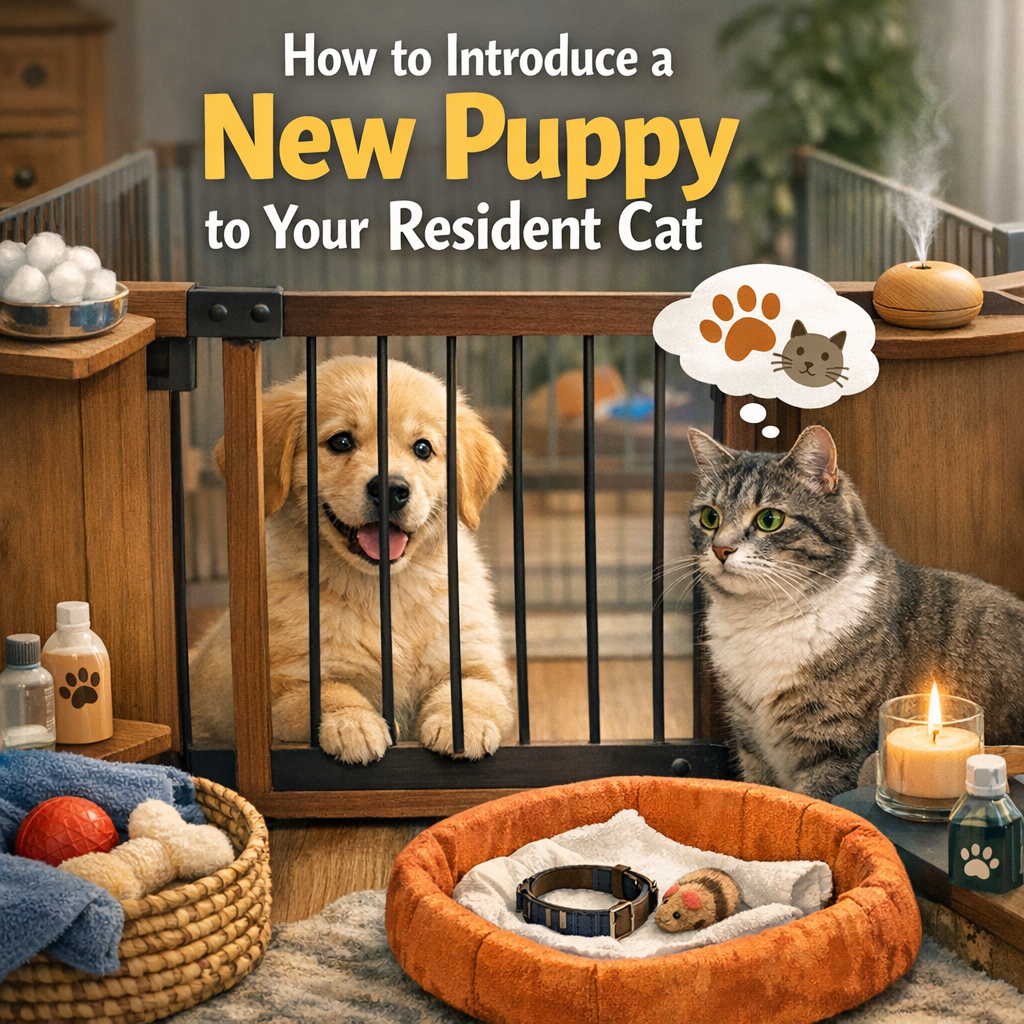
- Prioritize a Gradual Process: Start with scent swapping and visual-only contact through baby gates or playpens for several days before attempting face-to-face meetings.
- Ensure Feline Safety: Create “dog-free zones” and provide vertical territory (like cat trees or shelves) so your cat can observe the puppy from a secure, elevated position.
- Use Positive Reinforcement: Reward both pets with high-value treats for calm behavior and use leashes indoors to prevent chasing and manage interactions.
- Monitor Body Language: Watch closely for stress signals like lip licking or pinned ears, and never leave the pets unsupervised until they have a long history of peaceful coexistence.
Table of Contents
- The Gradual Introduction Process
- Using Barriers and Dog Baby Gates
- Positive Reinforcement Training and Treats
- Providing Safe Escape and High Places for Cats
- Managing Environment and Space
- Monitoring and Recognizing Stress Signals
- Having Separate Spaces for Cats and Dogs
- The Golden Rule: Take It Slower Than You Think
- Essential Gear for Pet Introductions
- Creating a Safe Zone and Vertical Territory
- The Power of Scent Swapping and Sniffing
- Positive Reinforcement and High-Value Treats
- Monitoring Stress Signals During Scent Exchange
- Using Barriers and Barrier-Based Introduction
- Leash-Controlled Interactions and Puppy Training Tips
- Using Positive Reinforcement and High-Value Treats
- Providing Safe Escape and High Places for Cats
- Monitoring and Recognizing Stress Signals
- Managing Environment and Space
- Recognizing Stress Signals and Animal Body Language Observation
- Creating a Dog Free Zone and Vertical Territory for Cats
- Positive Reinforcement Training and High-Value Treat Distraction
- The Importance of Environment Management and Barrier-Based Introduction
- Managing the Environment for Long-Term Success
- Pros and Cons of Different Introduction Methods
- Frequently Asked Questions About Puppy and Cat Socialization
- Final Thoughts on Pet Cohabitation
Bringing a bouncy new puppy into your home is an absolute blast, but your resident cat might not share that immediate enthusiasm. Cats are creatures of habit, and a tiny whirlwind of fur can feel like a fuzzy home invasion.
In short: you need a plan that respects the feline hierarchy while teaching your pup some manners. Whether you are bringing home a German Shepherd puppy or a tiny terrier, the goal is peaceful animal cohabitation.
At Bella Gatti US Shop, we love seeing multi-pet households thrive. Just like our Unisex Soft Cotton Tees, a great pet relationship requires the right fit and a little bit of style.
The Gradual Introduction Process
The secret to successful pet introductions is patience. Competitors and experts on puppy forums and YouTube emphasize that you should never rush the first meeting on day one.
Keep your animals separated for at least two days to allow them to adjust to new sounds and smells. Progress gradually through supervised sessions, increasing interaction over weeks or months to ensure a stress free pet transition period.
Interspecies socialization is a marathon, not a sprint. Take slow, incremental steps to ensure your cat and dog socialization remains positive and controlled from the very start.
Using Barriers and Dog Baby Gates
Barrier based introduction is a game changer for cat safety. All major sources recommend using a dog baby gate or a puppy play pen to manage initial visual contact.
Try raising baby gates 8 inches off the floor. This allows your cat to observe the puppy safely and provides an easy escape route that the dog cannot follow.
Using a puppy play area or barrier training helps manage interactions without forcing proximity. It allows both pets to satisfy their curiosity while maintaining a physical dog free zone for the cat. Incorporating positive reinforcement training can further enhance their relationship.
Positive Reinforcement Training and Treats
Positive reinforcement training is the most effective way to build a bond. Use high value treat distraction to reward calm behavior whenever the pets are in sight of each other.
Feeding your pets on opposite sides of a closed door creates positive associations with each other’s scent. This desensitization technique helps link the presence of the other animal to tasty pet treats.
When the puppy remains calm instead of lunging, reward them immediately. This puppy training tip ensures the dog learns that being quiet around the cat results in a win for everyone.
Providing Safe Escape and High Places for Cats
Vertical territory for cats is essential for reducing cat stress. Studies show that high surfaces help cats feel secure and give them a sense of control over their environment.
Install a sturdy cat tree or wall shelves to create high places for cats. These act as a safe zone establishment where the cat can observe the puppy behavior from a distance.
If a cat feels trapped, they are more likely to lash out. Always ensure there are clear escape routes so your resident cat never feels cornered by a curious German Shepherd.
Managing Environment and Space
Environment management strategies are vital for a smooth pet cohabitation transition. Confine the puppy to designated areas using a puppy leash or gates to limit access to sensitive spots.
Establish strict “cats only” zones, such as a guest bedroom or the laundry room, where the litter box and food are kept. This prevents the puppy from interfering with the cat’s basic needs.
By using puppy playpen management, you can ensure the puppy does not overwhelm the household. This structure helps prevent resource guarding and keeps the peace in a multi-pet household.
Monitoring and Recognizing Stress Signals
You must become an expert in animal body language observation. Watch for signs of cat stress like a twitching tail, flattened ears, or a scared cat hiding for long periods.
Puppy behavior can also signal overstimulation. Look for lip licking, body leaning, a tense mouth, or excessive panting during puppy socialization sessions.
Continuous monitoring is stressed by experienced pet owners on social platforms. If you see stiffness or intense staring, adjust the pace and increase the distance between the pets immediately.
Having Separate Spaces for Cats and Dogs
Creating exclusive territories prevents territorial disputes and reduces anxiety. Your cat needs a space, like an upstairs area or a specific bed, where the dog is never allowed to enter.
Scent swapping and sniffing are great ways to introduce the animals before they meet face to face. Rub a cloth on the puppy and place it in the cat’s area to start the phased introduction process.
Using pheromone calming therapy can also help soothe a cat during this transition. Maintaining separate resources ensures that neither animal feels their lifestyle is under threat.
The Golden Rule: Take It Slower Than You Think
Whatever you think slow means, take it even slower. The goal is a peaceful multi-pet household, not a viral video of a chaotic chase. Forced proximity is a recipe for a scared cat and a nippy puppy.
Your resident cat and your new German Shepherd puppy should not meet face to face on the first day. Everyone is stressed from the transition, and first impressions are everything. If you rush this, you might spend months fixing a single bad interaction.
Keeping them separated in different rooms for at least the first two days is essential. This pet transition period allows your cat to maintain their sense of security. Meanwhile, the puppy gets used to the new smells and sounds of your house without being a nuisance.
Establish a Dog Free Zone and Vertical Territory
Creating safe escape routes is crucial for cat safety. You should provide plenty of high places for cats, such as a sturdy cat tree or wall shelves. Expert communities suggest that vertical territory helps cats feel secure and significantly reduces cat stress.
You must also establish a dedicated dog free zone. Use a dog baby gate to block off a guest bedroom or an upstairs area. This ensures your cat has a private sanctuary for their food and litter box where the puppy cannot follow.
A clever tip is to raise the dog baby gate about eight inches off the floor. This allows the cat to slip underneath and escape if they feel overwhelmed while keeping the puppy contained.
Interspecies Socialization and Scent Swapping
Before any visual contact happens, focus on scent swapping and sniffing. Rub a towel on your puppy and place it near your cat’s favorite lounging spot. This introduces the puppy’s scent in a non-threatening way while the cat is relaxed.
You can also use pheromone calming therapy to soothe feline nerves during this phase. This type of animal cohabitation strategy helps signal to the cat that their environment is still safe despite the new intruder.
During this time, you are managing the environment to prevent any negative first impressions. Patience is your best friend. If you need more visual guides, check out expert tutorials online to see these barrier-based introduction techniques in action.
Positive Reinforcement Training and Reward Systems
Positive reinforcement training is the secret sauce for a successful introduction. Start feeding both pets on opposite sides of a closed door. This creates a positive association between the smell of the other animal and delicious pet treats.
When you eventually move to visual introductions through a puppy playpen or gate, keep the sessions short. Reward your puppy for calm behavior and for ignoring the cat. If the puppy starts staring or lunging, use high-value treat distraction to redirect their attention.
Use puppy leash training even inside the house. Keeping your pup on a lead during early interactions prevents the dreaded cat chasing behavior. This allows you to maintain control while teaching the puppy that the cat is a friend, not a toy.
Monitoring Animal Body Language and Stress Signals
You must become an expert at reading animal body language. Watch for signs of cat stress like a lashing tail, pinned ears, or hiding. On the puppy side, look for a tense mouth, lip licking, or intense staring, which can signal high arousal or potential resource guarding.
If you see these signals, end the session immediately. Community members often emphasize that it is better to have ten short, successful meetings than one long, stressful one.
Consistent puppy socialization takes time, especially with high-energy breeds. By using barrier training and phased introduction processes, you ensure that both pets feel respected in their own home. Stay patient, keep the treats handy, and let the friendship grow at a feline pace.
Expert Insight
“Never punish your dog for making mistakes; instead use positive reinforcement to encourage the behaviors you want to see.”, Victoria Stilwell
Essential Gear for Pet Introductions
Before your bouncy German Shepherd puppy even walks through the door, you need the right tools. Think of these as the peace-keeping equipment for your living room that ensures a smooth pet transition period.
Preparation is the secret to successful animal cohabitation. If you are browsing forums or watching tutorials, you will notice one common theme: environment management is king.
| Tool | Purpose | Benefit |
|---|---|---|
| Dog Baby Gate | Visual contact without physical touch | Allows the cat to observe safely while maintaining a dog free zone. |
| Puppy Play Pen | Confined puppy play area | Prevents the puppy from chasing the cat during the initial adjustment. |
| Cat Tree | Vertical territory for cats | Provides high places for cats to escape and feel secure. |
| Puppy Leash | Leash-controlled interactions | Gives you total control over puppy behavior and movement. |
Using a Dog Baby Gate for Barrier-Based Introduction
A dog baby gate is your most valuable asset for barrier-based introduction. Many experts suggest raising the gate about 8 inches off the ground.
This allows your cat to slip underneath and escape if they feel a sense of cat stress, while keeping the larger German Shepherd puppy on the other side. This setup facilitates visual contact without the risk of a physical altercation.
By using a gate, you are practicing desensitization techniques. Your cat can watch the puppy from a distance, realizing the new arrival is not a threat, which is a vital part of cat and dog socialization.
The Importance of a Puppy Play Pen and Safe Zones
A puppy play pen is essential for puppy playpen management. It creates a dedicated puppy play area where your new friend can burn off energy without terrorizing the resident feline.
While the puppy is in the pen, your cat can explore the room at their own pace. This helps establish a safe zone for the cat, ensuring they do not feel like their entire home has been taken over.
To help with the transition, many owners use pheromone calming therapy. You can also use high-value treat distraction to reward your cat for staying in the same room as the pen.
Vertical Territory and High Places for Cats
Providing vertical territory for cats is a non-negotiable step in the phased introduction process. A sturdy cat tree or wall-mounted shelves allow your cat to observe the puppy from a position of power.
When a cat is up high, their cat behavior shifts from defensive to observant. They feel safe because they know the puppy cannot reach them, which significantly reduces the chance of a scared cat reacting with aggression.
Ensure these high perches are located in common areas. This allows for interspecies socialization where both animals can exist in the same space while maintaining a respectful distance.
Puppy Leash Training and Positive Reinforcement
Even inside the house, puppy leash training is a must for supervised meetings. A puppy leash gives you the ability to redirect your dog immediately if they show signs of wanting to start a cat chasing game.
During these leash-controlled interactions, use positive reinforcement training. Keep a pouch of pet treats ready to reward your puppy for sitting or looking away from the cat.
If you see your puppy displaying calm puppy behavior, reward them instantly. This teaches them that being calm around the cat results in delicious snacks, forming a positive association for both pets.
Monitoring Animal Body Language and Stress Signals
As you use this gear, you must become an expert at animal body language observation. Watch for stress signals in both your German Shepherd and your cat to prevent any setbacks.
Common signs of stress include lip licking, a tense mouth, panting, or a stiff body posture. If you notice these, it is time to increase the distance between them and return to barrier training.
Consistent monitoring is stressed by pet behavior specialists. If you rush the process or ignore these signals, you risk resource guarding prevention issues or long-term territorial disputes.
Creating a Safe Zone and Vertical Territory
Your resident cat needs to know they have a dedicated dog free zone where they can eat, sleep, and use the litter box in peace. This is often a guest bedroom or a laundry room blocked off with a sturdy dog baby gate.
Setting up this safe zone establishment is the first step in successful animal cohabitation. By using a gate, you allow for scent swapping and sniffing while preventing your German Shepherd puppy from crashing the party.
If the cat feels trapped on the floor, they will feel immediately threatened by a curious pup. High places for cats are non-negotiable because they significantly reduce cat stress during the transition period.
Install shelving or clear off the top of a dresser so your feline can survey their kingdom. This vertical territory for cats acts as their ultimate safety net, allowing them to observe puppy behavior from a distance.
Ideally, your cat should be able to cross a room using a cat tree or wall perches without ever touching the floor. This provides a crucial escape route if your puppy gets a little too overzealous with their greeting.
Environment management is king when dealing with a scared cat. You can find great layout inspiration from expert online resources to ensure your home remains a sanctuary.
Managing Environment and Space for Peace
Successful pet introductions rely on strict puppy playpen management. By confining the puppy to designated areas, you ensure the cat does not feel like their entire world has been hijacked by a fuzzy invader.
Keep the puppy play area separate from the cat’s core resources. Use gates to limit access to the cat’s food and litter, as nothing ruins a relationship faster than a puppy raiding the litter box.
Establishing these cats-only zones helps prevent territorial disputes and lowers anxiety. You want your cat to feel they still own the house, even if they have to share it with a bouncy German Shepherd.
Interspecies socialization works best when neither animal feels their primary territory is under siege. Use a puppy play pen during the day to give your cat the freedom to roam without being chased.
Providing Safe Escape and High Places
Creating high surfaces is one of the most effective desensitization techniques. A tall cat tree or a series of shelves allows your cat to engage in animal body language observation without physical contact.
Studies show that having a high perch helps cats feel secure. It allows them to watch the puppy leash training sessions from a safe vantage point, slowly getting used to the new arrival’s energy.
If you are following expert advice, you know that a “cat-first” environment is the secret to a multi-pet household.
Ensure that every room has a “launchpad” where the cat can jump up if they feel overwhelmed. This prevents cat chasing before it even starts, keeping the peace for everyone involved.
For extra comfort, consider using pheromone calming therapy in these high spaces. It sends a chemical signal of safety, making the phased introduction process much smoother for your resident feline.
The Power of Scent Swapping and Sniffing
Before your pets ever lock eyes, they should already be acquainted with each other’s unique cologne. This is a classic Desensitization Technique used by pet experts to lower tension.
Take a soft towel and rub it gently on your German Shepherd puppy, then place it near your cat’s food bowl. Do the same with a cat-scented cloth for the puppy. This Scent Swapping and Sniffing process builds a familiar bond before the high-stakes visual introduction.
If your scared cat hisses at the towel, do not worry. This is a common cat behavior indicating they simply need more time to process the new arrival. Keep repeating this pet transition period until both animals remain calm when smelling the other.
Positive Reinforcement and High-Value Treats
Interspecies Socialization works best when everyone is getting paid in snacks. Use Positive Reinforcement Training by offering pet treats whenever your cat or puppy sniffs the other’s scent without reacting aggressively.
If you notice your puppy showing calm puppy behavior around the cat’s scent, reward them immediately. This creates a positive association, teaching them that the cat’s presence means good things are happening.
You can even use a High-Value Treat Distraction, like a bit of plain chicken or special tuna, to keep your cat engaged and happy while they explore the puppy’s scent. This is a key part of the Phased Introduction Process.
Monitoring Stress Signals During Scent Exchange
Even during this non-physical stage, you must be a detective. Watch for animal body language observation cues that suggest your pets are overwhelmed by the new smells.
Signs of cat stress include a flicking tail, pinned ears, or hiding away from the scented object. For your puppy, look for lip licking, panting, or a stiff body posture which can signal over-excitement or anxiety.
If the stress levels seem high, try using Pheromone Calming Therapy to help soothe the environment. Experts suggest that keeping the atmosphere relaxed early on prevents future cat chasing and territorial disputes.
Using Barriers and Barrier-Based Introduction
Once scent swapping is successful, it is time to level up to a Barrier-Based Introduction. This phase is all about visual contact without the physical chaos. Use a dog baby gate or a sturdy puppy play pen to separate two rooms, allowing your pets to see each other safely.
Pro tip: Try raising baby gates 8 inches off the ground. This clever gap allows your cat to slip underneath and escape if they feel overwhelmed, while keeping your bouncy German Shepherd puppy securely contained. It is an essential part of cat safety during this transition.
Managing Environment and Space for Success
Effective environment management is the secret sauce to a peaceful multi-pet household. You must establish a dog free zone where your cat can retreat. This could be a guest bedroom or a specific upstairs area blocked off from the puppy.
In short:
Feed both animals on opposite sides of the door or gate. This strategy associates the sight and smell of the other pet with the best thing in the world: food. This is the heart of Positive Reinforcement Training and helps lower cat stress significantly.
If your German Shepherd puppy starts barking or lunging at the gate, simply move the food bowls further away. You want them to be aware of each other but focused on their meal. Over several days, gradually move the bowls closer as they get comfortable.
Monitoring and Recognizing Stress Signals
During these interactions, you must be a detective of animal body language. Watch for signs of stress like lip licking, a tense mouth, or a stiff body. If your cat is hiding or your puppy is panting excessively, you may need to slow down the Phased Introduction Process.
If you need more visual examples, many pet owners share videos of these subtle cues online. Recognizing a scared cat early can prevent a full blown cat chasing incident later.
Providing Safe Escape and High Places for Cats
Vertical Territory for Cats is a non-negotiable requirement. Ensure your living space has a tall cat tree or high perches where the puppy cannot reach. Cats feel significantly more secure when they can observe the “furry intruder” from a position of height.
By providing these high places for cats, you empower your resident feline to choose when they want to interact. This sense of control is vital for animal cohabitation. It prevents your cat from feeling cornered, which is the primary trigger for defensive aggression.
The Importance of a Gradual Introduction Process
Patience is your best friend when introducing puppy to cats. Experts recommend a pet transition period that lasts weeks, not days. Never force a face to face meeting on day one; instead, stick to supervised sessions that increase in duration very slowly.
For extra help during this time, some owners use Pheromone Calming Therapy to keep the atmosphere relaxed. Remember, the goal of puppy socialization is a calm coexistence, and rushing the process only leads to setbacks in their long term relationship.
Leash-Controlled Interactions and Puppy Training Tips
When you finally decide they are ready for a room-to-room meeting, the puppy must be on a leash. This is for cat safety and to prevent any instinctual puppy chasing that could ruin weeks of progress.
Keep these Leash-Controlled Interactions short, ideally five to ten minutes. Use a high-value treat distraction to keep the puppy’s focus on you rather than the cat, ensuring the cat feels like a background character rather than a target.
If your puppy stays calm while the cat is in the room, reward them immediately. This form of positive reinforcement training helps the puppy associate the cat’s presence with delicious snacks rather than a game of tag.
Using Positive Reinforcement and High-Value Treats
Positive reinforcement training is the secret sauce for a happy multi-pet household. You want both animals to view these meetings as a five-star dining experience where pet treats flow freely for good behavior.
For a high-energy German Shepherd puppy, focus on desensitization techniques. Reward the puppy for looking at the cat and then looking back at you. This breaks the stare and prevents the puppy behavior from escalating into a chase.
Never force your cat to stay in the room. If they want to leave, let them retreat to their dog free zone. The goal is to show the cat that the puppy is a boring, non-threatening addition to the family who happens to be a source of treats for everyone.
Providing Safe Escape and High Places for Cats
Creating vertical territory for cats is non-negotiable during the pet transition period. A sturdy cat tree or wall-mounted shelving allows your cat to observe the puppy from a position of power and safety.
Research on cat behavior suggests that high places for cats significantly reduce cat stress. Being able to look down on a bouncy puppy helps the cat feel secure, as they know the puppy cannot reach them in their elevated safe zone.
Ensure these escape routes are always accessible. If the puppy gets too rowdy, your cat should have a clear path to a high perch or a separate room. This prevents the cat from feeling cornered, which is a major trigger for aggression.
Monitoring and Recognizing Stress Signals
During every interaction, you must be an expert in animal body language observation. Watch for signs of cat stress like flattened ears, a twitching tail, or a low growl, which indicate the cat has had enough.
Puppy behavior also needs close monitoring. Signs of over-excitement include lip licking, a stiff posture, or intense staring. If you see these, use a puppy play pen or barrier training to end the session before a conflict occurs.
If you are looking for extra support, online communities often share real-life tips on managing interspecies socialization. You can even find helpful tutorials to see these stress signals in action.
Managing Environment and Space
Successful animal cohabitation requires strict environment management. Use a dog baby gate to establish “cats-only” areas where the puppy is never allowed to go, such as the room containing the litter box and food bowls.
This phased introduction process ensures that your cat does not feel their entire world has been taken over. Keeping the puppy playpen management consistent helps the puppy learn boundaries while giving the cat much-needed peace.
By maintaining separate spaces for cats and dogs, you prevent resource guarding and territorial disputes. Over time, these small steps lead to a peaceful home where your cat and dog can coexist without the constant need for supervision.
Recognizing Stress Signals and Animal Body Language Observation
You must become an expert in animal body language observation to keep the peace. A German Shepherd puppy might have a playful stance that looks like a full scale tactical assault to a cat. Conversely, a cat being perfectly still might not be calm; it could be a sign of extreme fear or a precursor to a feline slap-down.
Watch for these specific puppy behavior cues: lip licking, yawning when not tired, body leaning away, or a stiff, vibrating tail. If your puppy shows fixed staring or hyper-focus, that is a major red flag for a high prey drive that requires immediate redirection with positive reinforcement training.
Cat stress signals are often more subtle but just as vital. Look for flattened ears, puffed-up fur, dilated pupils, or a tail twitching like a windshield wiper on high speed. If you see these signs, end the session immediately without scolding; just calmly separate them and try again later when everyone is relaxed.
Creating a Dog Free Zone and Vertical Territory for Cats
Providing safe escape routes and high places for cats is a non-negotiable part of animal cohabitation. Use a cat tree or wall-mounted shelving to create vertical territory for cats, allowing them to observe the bouncy intruder from a position of power. Studies show that high surfaces help cats feel secure and significantly reduce stress during the pet transition period.
Establishing a dedicated dog free zone is essential for your cat’s mental health. Use a dog baby gate to block off a guest bedroom or an upstairs area where the puppy cannot follow. This ensures your cat has private access to their litter box and food without the threat of a wet nose interruptus.
For the puppy play area, consider using a puppy playpen or barrier training to manage the environment. This prevents the puppy from cornering the cat and ensures the cat always has a clear exit strategy. Setting these boundaries early helps prevent resource guarding and territorial disputes in your multi-pet household.
Positive Reinforcement Training and High-Value Treat Distraction
To speed up cat and dog socialization, you need to become a master of the high-value treat distraction. Use premium pet treats or even small bits of plain chicken to reward both animals for simply being in the same room. This creates a positive association where the cat views the puppy as a snack-triggering friend rather than a furry nuisance.
If you are looking for expert advice on specific breeds like a German Shepherd, online communities often share tips on desensitization techniques. Barrier-based introduction methods can prevent a scared cat from hiding for weeks.
For extra help during this phased introduction process, many owners turn to pheromone calming therapy. You can find tutorials or search for specific puppy socialization drills. Remember to capture your progress to see how far they have come since day one.
The Importance of Environment Management and Barrier-Based Introduction
Successful pet introductions rely heavily on environment management strategies. Experts suggest keeping animals separated for at least two days before any visual contact. This initial period should focus entirely on scent swapping and sniffing through a closed door.
When you move to visual contact, raising baby gates 8 inches off the floor allows cats to scoot under and escape while keeping the puppy contained. This managed interaction prevents the dreaded cat chasing behavior that can ruin weeks of progress. Always prioritize cat safety over quick results.
Consistency is key during this pet cohabitation transition. The goal is a slow, incremental progression. By using a puppy play pen and leash-controlled interactions, you ensure that every meeting ends on a positive note, paving the way for a lifetime of peaceful naps together.
Managing the Environment for Long-Term Success
Even after those first tail wags and curious nose boops go well, environment management remains the secret sauce for a happy home. Many pet parents make the mistake of letting their guard down too soon. Remember, interspecies socialization is a marathon, not a sprint.
You should continue using a puppy playpen management strategy whenever you cannot actively supervise your new friend. This prevents a rowdy German Shepherd puppy from cornering your cat or raiding the litter box. Keeping the peace means being proactive about resource guarding prevention before a spat even starts.
Establishing a Dog Free Zone and Vertical Territory
Your resident cat needs to feel like the king or queen of their castle. Creating a dedicated dog free zone, such as a guest bedroom or an upstairs area, is essential for cat safety. Use a dog baby gate to block off these areas, allowing your cat to retreat whenever the puppy energy gets a bit too high.
Vertical territory for cats is just as vital as floor space. A tall cat tree or strategically placed wall shelves provide high places for cats to observe the world safely. Studies show that having a high perch significantly reduces cat stress because they can monitor the puppy without feeling vulnerable to a pounce.
Barrier Training and Puppy Play Area Setup
Consistency is your best friend during this pet transition period. A phased introduction process often involves barrier training where the animals see each other but cannot touch. You can use a puppy play area or a mesh gate to facilitate these visual check-ins while you work on puppy leash training indoors.
Experts recommend keeping animals separated for at least two days before any face-to-face contact. This allows for scent swapping and sniffing under doors, which are critical desensitization techniques.
Positive Reinforcement Training and Calming Aids
Use positive reinforcement training to reward your puppy for being calm around the cat. Keep high-value pet treats on hand to distract your dog when they start staring too intensely. If you reward the puppy for looking at you instead of the cat, you are teaching them that ignoring the feline leads to delicious rewards.
To help lower general anxiety levels, consider pheromone calming therapy. Products like Feliway release synthetic facial pheromones that tell your cat the environment is safe. This is a game-changer for a scared cat who might be hiding under the sofa or feeling overwhelmed by the new addition.
In short: keep those interactions short and sweet. Stay patient. With the right puppy playpen and a sturdy cat tree, your multi-pet household will be a zen den in no time.
Pros and Cons of Different Introduction Methods
Every household is different. Methods might need some fine tuning for your specific living room layout.
The Slow Method (Highly Recommended):
- Pros: Offers the lowest risk of injury and builds long term trust through desensitization techniques.
- Cons: Requires weeks of patience and consistent use of physical barriers like a puppy playpen.
The Visual Only Method:
- Pros: Allows your German Shepherd puppy and resident cat to get used to movement without physical contact.
- Cons: Can lead to frustration barking or barrier reactivity in high energy breeds.
The Importance of Gradual Introduction Process
Top experts agree that rushing the first meeting is a recipe for disaster. You should avoid any face to face interactions on day one to prevent a scared cat from forming a permanent grudge.
Keep your pets separated for at least two days while practicing scent swapping and sniffing exercises. Progress gradually through supervised sessions over several weeks to ensure a smooth pet cohabitation transition.
Strategic Use of Barriers and Dog Baby Gates
Using a dog baby gate is a game changer for animal cohabitation. Pro tip: Raise the gate about 8 inches off the floor so your cat can zip underneath while the puppy stays put.
This setup allows your cat to observe the new intruder from a distance. It facilitates barrier training and helps manage interactions without forcing uncomfortable proximity between the two.
Positive Reinforcement Training and Pet Treats
Positive reinforcement training is your best friend during this period. Use high value treat distraction to reward your puppy for ignoring the cat and staying calm.
Feed both animals on opposite sides of a closed door to create a positive association with each other’s scent. When they finally see each other, keep the pet treats flowing to signal that being peaceful equals delicious rewards.
Providing Safe Escape Routes and High Places for Cats
Vertical territory for cats is non-negotiable when a bouncy puppy is in the mix. Ensure your cat has access to a tall cat tree or wall shelves where they can watch the action from above.
Research shows that high surfaces help cats feel secure and significantly reduce cat stress. Always provide a dog free zone where the cat can retreat via a cat flap.
Managing Environment and Space for Safety
Effective puppy playpen management prevents your new friend from cornering the cat. Confine the puppy to designated areas using a play pen to establish clear boundaries from the start.
Use gates to limit access to sensitive areas like the litter box and feeding stations. Establishing these cats only zones prevents territorial disputes and keeps the environment predictable for your senior feline.
Monitoring and Recognizing Stress Signals
You must become an expert in animal body language observation. Watch for stress signals like lip licking, a tense mouth, flattened ears, or a stiff tail.
If you see your puppy fixating or your cat hissing, it is time to end the session. Continuous monitoring is essential to prevent any chasing behavior from escalating.
Establishing Separate Territories
Successful interspecies socialization relies on giving each pet their own kingdom. Your cat needs a space where the dog is never allowed to enter, such as an upstairs landing or a specific bedroom.
This separate territory allows the cat to decompress from the puppy socialization process. Using pheromone calming therapy in these areas can further help your cat feel relaxed during the transition period.
Remember that every pet moves at their own pace. Stay consistent, keep the puppy leash training active, and prioritize cat safety above all else.
Frequently Asked Questions About Puppy and Cat Socialization
How long does it take for a cat to get used to a puppy?
The pet transition period typically takes anywhere from two weeks to several months. Every multi-pet household is unique, and some cats may take even longer to feel completely comfortable with a new roommate.
The timeline depends heavily on your cat behavior and the energy level of your German Shepherd puppy. Patience is your best tool during interspecies socialization.
You should focus on desensitization techniques and scent swapping before rushing into face to face meetings. Rushing the process can lead to long term cat stress and set your progress back by weeks.
What if my puppy won’t stop chasing the cat?
Cat chasing requires immediate boundary training and redirection. Use puppy leash training indoors at all times to maintain control over their movements and prevent a fuzzy home invasion.
When your puppy looks at the cat, use positive reinforcement training by calling their name. Reward them with high value treat distraction or pet treats for choosing to look at you instead of the cat.
If the puppy is too focused, use barrier training with a dog baby gate or a puppy play pen to create a physical limit. This breaks the chase instinct and teaches the pup that the cat is not a toy.
Is it okay to leave them alone together?
Never leave a new puppy and a resident cat unsupervised until you have witnessed months of peaceful interaction. Even a friendly dog can accidentally hurt a cat during a high energy play session.
Safety first is the golden rule for animal cohabitation. Ensure your cat has access to high places for cats, such as a sturdy cat tree or wall shelves, to escape any unwanted puppy attention.
Keep the puppy confined to a puppy play area or crate when you are not actively monitoring them. This ensures your cat feels secure in their territory and prevents any sudden resource guarding prevention issues.
How do I manage the environment to reduce cat stress?
Successful pet introductions rely on environment management techniques. Establish a dedicated dog free zone where your cat can eat, sleep, and use the litter box without being disturbed.
Using a dog baby gate raised about eight inches off the floor allows your cat to slip underneath while keeping a bouncy German Shepherd out. This creates a safe zone establishment that is vital for feline confidence.
You can also use pheromone calming therapy to help soothe your cat during the phased introduction process. Check online for visual guides on setting up vertical territory for cats.
What are the signs that the introduction is going well?
Look for relaxed animal body language observation in both pets. If your cat is not hiding and your puppy can remain calm while the cat moves across the room, you are on the right track.
Rewarding these quiet moments with praise is highly recommended. If you see lip licking, a tense mouth, or a stiff posture, it is time to increase the distance between them.
Consistent barrier based introduction and leash controlled interactions will eventually lead to a peaceful home. Just remember that every pet is an individual, so follow the pace set by your most nervous animal.
Final Thoughts on Pet Cohabitation
Mastering animal cohabitation is less about luck and more about strategy. By using a phased introduction process, you ensure your scared cat feels like the king of the castle while your German Shepherd puppy learns that the cat is a roommate, not a squeaky toy.
Remember to keep the vibe as comfortable as a soft cotton tee. Stay professional and clear with your training boundaries, and soon those tense standoffs will turn into peaceful naps on the sofa. Consistency is your best friend.
The Importance of Environment Management Techniques
Success in a multi-pet household depends on environment management. Using a dog baby gate or a puppy play pen prevents accidental face-offs. These barriers allow for scent swapping and sniffing without the risk of a high speed cat chasing session through the living room.
Establish a permanent dog free zone where your cat can retreat. High places for cats, like a sturdy cat tree or wall shelves, are essential for cat safety. When your feline friend can observe the puppy from a vertical territory, their cat stress levels drop significantly.
Mastering Positive Reinforcement Training
Positive reinforcement training is the gold standard for pet introductions. Keep a pouch of high value pet treats ready to reward your German Shepherd puppy for calm behavior. If they look at the cat and then look back at you, that deserves a reward and a “good dog.”
For the cat, use pheromone calming therapy to create a soothing atmosphere. Pair the sight of the puppy with their favorite wet food. This creates a positive association, teaching both animals that being near each other leads to delicious things.
Monitoring Cat Behavior and Puppy Behavior
Always prioritize animal body language observation. If you see your cat tail flicking or your puppy stiffening, it is time for a break. Use puppy leash training indoors to maintain total control during these early face-to-face pet interactions.
Rushing the pet transition period is the most common mistake. Take it slow, keep sessions short, and always end on a high note.
Handling Mistakes and Unexpected Incidents
If a chase happens, do not panic. Use a quick redirection technique to get your puppy’s attention back on a toy. Having a solid “leave it” command is a lifesaver for interspecies socialization.
Boundary training takes time. Never leave them alone until they have months of supervised, peaceful history. With patience and the right gear, your resident cat and new pup will eventually become the best of friends.