TL;DR (Too Long; Didn’t Read)
- Identify the Blood: Bright red blood (hematochezia) typically indicates lower intestinal issues like colitis or stress, while black, tarry stool (melena) signifies digested blood from the upper GI tract and is often more serious.
- Common Causes: Most cases are caused by internal parasites (worms, Giardia, Coccidia), sudden dietary changes, food intolerances, or bacterial and viral infections.
- When to Act: While a single drop of red blood requires a vet visit within 24 hours, you should seek emergency care immediately if your kitten shows lethargy, pale gums, persistent vomiting, or refuses food.
- Diagnosis & Recovery: Vets use fecal analysis and imaging to determine the cause; treatment usually involves dewormers, antibiotics (like Metronidazole), and a temporary bland diet to restore gut health.
Table of Contents
Finding blood in your kitten’s litter box is a heart stopping moment for any pet parent. You expect to see those little brown nuggets, not a splash of red or a dark, tarry mess.
At Bella Gatti US Shop, we know you care about your feline friends as much as you care about your favorite Unisex Soft Cotton Tee. While we usually focus on cat themed style, your kitten’s health is the top priority today.
In short: stay calm but stay alert. Most causes of blood in kitten stool are treatable, but young cats can get sick very quickly. Understanding the difference between fresh blood and digested blood is your first step toward getting them the right veterinary care.
Types of Blood in Kitten Stool: Fresh vs Dark
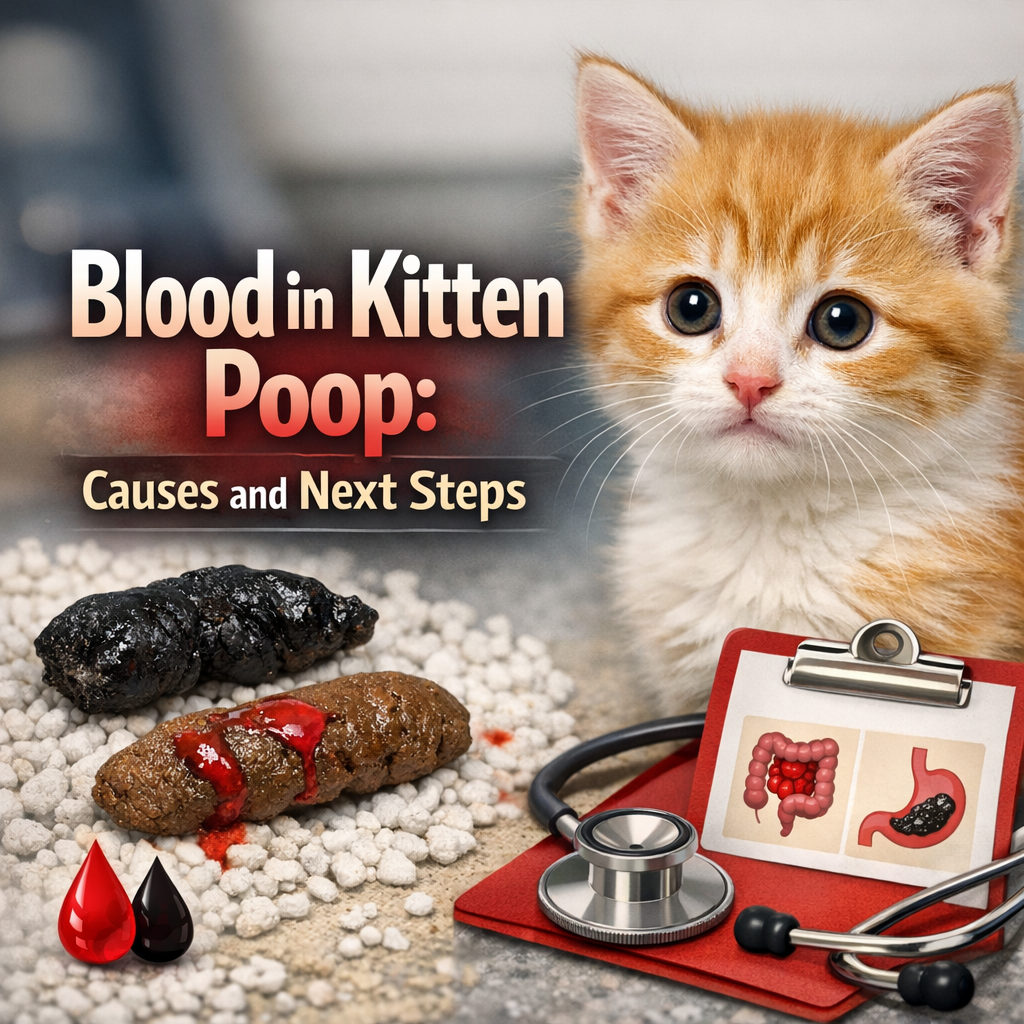
When you spot blood in kitten stool, the color tells a story. Hematochezia appears as bright red blood or fresh blood, which usually indicates inflammation in the gut or issues in the lower intestinal tract and rectum.
If the poop looks like a black tarry mess, this is known as melena. This dark appearance signifies digested blood, suggesting a problem higher up in the stomach or small intestine.
You might also notice mucus in stool along with these colors. Whether it is a tiny streak or a significant amount, documenting the appearance helps your vet use professional databases to track symptoms accurately.
Common Causes of Blood in Kitten Stool
Kitten health is fragile, and several factors can trigger bloody stool. Internal parasites are a primary culprit, as many kittens are born with a heavy parasite burden or contract them shortly after birth.
Kitten worms, tapeworm, and microscopic protozoa like Giardia and Coccidia often cause gastric upset. These invaders irritate the intestinal lining, leading to colitis in kittens and red flag symptoms like blood in stool.
Dietary change or food intolerance can also cause trouble. A sudden switch in kibble or lactose intolerance from sneaking a saucer of milk can lead to gastrointestinal inflammation and abnormal kitten stool.
Environmental factors like kitten re-homing stress can trigger a flare up of Feline Panleukopaenia Virus or bacterial infections such as Salmonella, Clostridia, and E. coli. In rare, serious cases, an intussusception (where the bowel slides into itself) may occur.
When to See a Veterinarian Immediately
Young kittens can deteriorate faster than a phone battery on its last leg. You must seek urgent veterinary care if you notice pale or dry gums, lethargy, or rapid breathing.
If your kitten is passing large amounts of blood, experiencing persistent vomiting, or showing signs of abdominal swelling, do not wait. These are emergency indicators that require a clinical dehydration assessment.
A kitten that refuses food entirely is at risk of becoming immunocompromised. Consult a veterinarian immediately to rule out underlying medical issues. Prompt checkups within 24 hours are highly recommended to prevent long term damage or severe dehydration.
Veterinary Diagnosis and Tests
To find the root cause, your vet will perform a fecal analysis. Providing a pooled stool sample collected over three days can significantly increase the diagnostic accuracy for spotting elusive parasites.
Blood tests are often used to check for systemic infection or inflammation levels. If an obstruction is suspected, the vet may use an abdominal ultrasound or contrast media imaging to see what is happening inside.
In some cases, specialized tests for Salmonella or E. coli are necessary. These diagnostics ensure your kitten gets the specific treatment they need rather than a one size fits all approach.
Treatments for Blood in Kitten Stool
Treatment usually begins with clearing out uninvited guests. Routine parasite prevention and deworming medications like Fenbendazole are standard for tackling kitten worms and Coccidia.
If a bacterial infection or Giardia is present, your vet might prescribe antibiotics like Metronidazole. For kittens with a sensitive stomach, a bland diet of boiled chicken and rice or prescription foods like Hills i/d and Royal Canin Sensitivity can help.
Supportive care is vital for recovery. This often includes prebiotics and probiotics to balance the gut flora, along with subcutaneous fluids if the kitten shows signs of dehydration.
Prevention through Routine Care
The best way to keep your kitten healthy is through consistent flea prevention and internal parasite control. Keeping their environment clean reduces the risk of zoonotic infections that can spread to humans.
Avoid sudden dietary changes; always transition new food slowly over a week. Minimizing stress during re-homing and maintaining a regular vaccination schedule will keep their immune system strong.
While you are browsing online for cute cat videos or shopping for a new graphic tee, remember that a healthy kitten is a happy kitten. Keep a close eye on the litter box to catch issues before they become emergencies.
What Does Blood in Kitten Stool Mean?
The presence of blood usually confirms that there is inflammation in the gut. This is a non specific sign, meaning it tells us there is a problem, but not exactly what that problem is.
You might see fresh red spots or something that looks like dark coffee grounds. Both are signals from your kitten’s body that the digestive tract is struggling, much like a poorly made knock off shirt struggles after one wash.
A normal stool should be smooth, brown, and firm enough to leave no residue when picked up. Any abnormal kitten stool warrants a closer look to ensure your little fluffball stays healthy.
Types of Blood (Fresh vs Dark)
Bright red, fresh blood in stool is known as haematochezia. This typically indicates bleeding further down in the digestive tract, such as the colon, rectum, or anal glands.
If you see these red streaks, it often points to colitis in kittens or simple rectal irritation from straining. It appears fresh because it has not been through the long digestion process yet.
Black or tarry poop is known as melaena. This is digested blood in stool that usually originates in the upper digestive tract, like the stomach or small intestine.
In some cases, this happens if a kitten swallows blood from a mouth injury or a bleeding stomach ulcer. It looks dark and tarry because stomach acid has processed it, which is a serious sign of gastrointestinal inflammation.
Common Causes of Blood in Kitten Stool
One of the most frequent culprits is internal parasites. Many kittens are born with a parasite burden or pick up kitten worms, tapeworm, coccidia, or giardia from their environment.
Dietary change or food intolerance can also cause gastric upset. Whether it is a sudden brand swap or lactose intolerance from a saucer of milk, their sensitive tummies react quickly.
Kitten re-homing stress can lead to colitis, while more severe issues like a bacterial infection from Salmonella, Clostridia, or E. coli require immediate veterinary care.
In rare, life threatening cases, blood may be caused by intussusception, where the intestine slides into itself. This, or the Feline Panleukopaenia Virus, represents a true medical emergency.
When to See a Veterinarian Immediately
Young kittens can deteriorate rapidly, so prompt checkups within 24 hours are recommended if you spot blood. You should seek veterinary care immediately if you notice pale or dry gums.
Other emergency signs include lethargy, rapid breathing, abdominal swelling, or if the kitten is passing large amounts of blood. Clinical dehydration assessment by a pro is vital during these times.
If your kitten is also experiencing kitten diarrhea, persistent vomiting, or complete food refusal, do not wait. Early intervention is the best way to protect your pet from immunocompromised risk.
Veterinary Diagnosis and Tests
To find the root cause, a vet will likely perform a fecal analysis. A microscopic examination is the only way to find giardia or coccidia.
Providing a pooled stool sample collected over three days can significantly increase diagnostic accuracy. Your vet may also suggest blood tests to check for systemic bacterial infection or inflammation in the gut.
In complex cases, an abdominal ultrasound or contrast media imaging (like X-rays) helps rule out obstructions. This ensures your kitten gets the right treatment rather than a guessing game.
Treatments for Blood in Kitten Stool
Treatment often starts with deworming medications like Fenbendazole. If a protozoal infection is found, your vet might prescribe Metronidazole to clear the tract.
Dietary support is key to recovery. Switching to a bland diet, such as boiled chicken and rice or vet prescribed options like Hills i/d or Royal Canin Sensitivity, helps soothe the system.
Adding prebiotics and probiotics can restore healthy gut flora. Always ensure routine parasite prevention and flea prevention are up to date to stop future cycles of zoonotic infections.
Common Causes of Blood in Kitten Stool
The color of the blood tells a story about where the trouble is located. Fresh blood in stool, which appears as bright red blood, usually indicates bleeding in the lower digestive tract or rectum. You should also be aware of the signs your furball needs a vet ASAP.
Comparing Stool Types and Causes
Just like choosing between a classic fit or a premium Unisex Soft Cotton Tee, identifying the right look in the litter box helps you make the best choice for your kitten health. Use this guide to decode the abnormal kitten stool before you call the vet.
| Stool Appearance |
Potential Location |
Common Causes |
| Bright Red Blood (Fresh Blood) |
Lower GI / Rectum |
Colitis in kittens, Stress, Internal parasites |
| Black Tarry Poop (Digested Blood) |
Upper GI / Stomach |
Ulcers, Gastric upset, Swallowed blood |
| Bloody Diarrhea + Mucus in stool |
Large Intestine |
Giardia, Coccidia, Bacterial infection |
| Hard Stool + Red Flecks |
Anus / Rectum |
Constipation, Dietary change, Straining |
Fresh Blood vs. Digested Blood in Kitten Stool
When you spot blood in kitten stool, the color tells a story. Bright red blood, also known as hematochezia, usually indicates inflammation in the gut or issues in the lower digestive tract.
This fresh blood often points toward colitis or a reaction to kitten re-homing stress. It is a sign that the irritation is happening close to the exit, much like a surface snag on a new shirt.
On the flip side, black tarry poop, or melena, is more serious. This represents digested blood that has traveled from the stomach or small intestine, often caused by ulcers or severe gastric upset.
Common Causes of Blood in Kitten Stool
Why is your tiny friend struggling? Internal parasites are the most frequent culprits. Kitten worms, including tapeworm and hookworms, can damage the intestinal lining and cause visible bleeding.
Protozoal infections like Giardia and Coccidia are also common in young cats with developing immune systems. These often require specific medications like Fenbendazole or Metronidazole to clear up.
Dietary issues play a huge role too. A sudden dietary change or lactose intolerance from sneaking a saucer of milk can lead to gastrointestinal inflammation and bloody diarrhea.
Infections and Serious Conditions to Watch For
Sometimes the cause is microscopic but mighty. Bacterial infections such as Salmonella, Clostridia, or E. coli can wreak havoc on a kitten’s tummy, leading to mucus in stool and bright red streaks.
In rare, scary cases, blood can signal an intussusception, where the intestine slides into itself like a telescope. This is a life threatening emergency that requires immediate veterinary care.
Viral threats like Feline Panleukopaenia Virus are also a concern for unvaccinated kittens. These conditions cause rapid deterioration, making routine parasite prevention and vaccinations essential for kitten health.
When to Seek Urgent Veterinary Care
While a single red fleck might just be a minor dietary indiscretion, some symptoms mean you need to head to the clinic right now. Do not wait if you see pale gums or lethargy.
If your kitten is experiencing persistent vomiting, rapid breathing, or abdominal swelling, they are in trouble. Young kittens are fragile and can become dehydrated almost as fast as a spilled drink on a Unisex Soft Cotton Tee.
A clinical dehydration assessment by a professional is vital if your kitten refuses food. If you see large amounts of blood or if the kitten seems weak, contact your local emergency vet immediately.
Veterinary Diagnosis and Treatment Options
Your vet will likely start with a fecal analysis to check for parasite burden. Pro tip: bringing a pooled stool sample collected over three days can help the vet find elusive parasites like Giardia more accurately.
In more complex cases, the vet might suggest an abdominal ultrasound or contrast media imaging to look for obstructions. Blood tests help rule out systemic infections like Salmonella or E. coli.
Treatment often involves a bland diet, such as Hills i/d or Royal Canin Sensitivity, paired with prebiotics and probiotics. For infections, Metronidazole is frequently prescribed to calm gastrointestinal inflammation and get your kitty back to their playful self.
When to See a Veterinarian Immediately for Kitten Health
Because kittens are so small, they can become dehydrated in a matter of hours. You should not wait and see if the problem goes away on its own, especially if you notice fresh blood in stool or dark tarry poop.
If your kitten is under 3 months old, any bloody stool causes should be investigated by a professional within 24 hours. They simply do not have the body mass to handle blood loss or fluid loss for long.
Seek emergency veterinary care if you notice any of these red flags:
- Pale or dry gums (a sign of anemia or dehydration).
- Extreme lethargy, rapid breathing, or inability to stand.
- Persistent vomiting alongside the kitten diarrhea.
- A complete food refusal for more than 12 hours.
- Abdominal swelling or extreme pain when touched.
- Passing large amounts of bright red blood or black tarry poop.
Young kittens can deteriorate rapidly. A clinical dehydration assessment by a vet is the only way to ensure they get the fluids they need to survive serious infections like Feline Panleukopaenia Virus or Salmonella.
Recognizing Emergency Signs and Critical Symptoms
Just like you would not ignore a snag in your favorite Unisex Soft Cotton Tee, do not ignore signs of gastric upset. If your kitten shows symptoms of intussusception, which is a life threatening condition where the intestine slides into itself, immediate surgery is required.
Be on the lookout for zoonotic infections like Giardia or Coccidia that can spread to humans. If your kitten is also showing signs of a heavy parasite burden, such as a pot bellied appearance or kitten worms visible in the stool, they need a professional dewormer like Fenbendazole.
Before you head to the clinic, snap a photo of the abnormal kitten stool. This helps the vet determine if the issue is gastrointestinal inflammation, colitis, or something more severe. Your vet may recommend an abdominal ultrasound or contrast media imaging to rule out obstructions.
“Young kittens can deteriorate rapidly. A clinical dehydration assessment by a vet is the only way to ensure they get the fluids they need to survive serious infections.”
Veterinary Diagnosis and Professional Treatments
When you arrive, the vet will likely perform a fecal analysis or a stool culture to look for E. coli or Clostridia. They might suggest a pooled stool sample over 3 days to increase diagnostic accuracy for elusive internal parasites.
Treatments often include medications like Metronidazole for bacterial infections or specific diets like Hills i/d or Royal Canin Sensitivity. These vet prescribed diets help manage inflammation in gut and soothe the digestive tract during recovery.
Supportive care is vital. Your vet might provide prebiotics and probiotics to balance the gut flora or administer fluids if the kitten is dangerously dehydrated. Once the kitten is stable, you can focus on routine parasite prevention and flea prevention to keep them healthy and happy.
Veterinary Diagnosis and Tests for Kitten Health
When you arrive at the clinic, your vet will start a detective mission to find the source of that scary red splash. Much like choosing the perfect fit for a Unisex Soft Cotton Tee, getting the right diagnosis requires looking at the fine details.
The vet will likely ask you to bring a stool sample. Pro tip: A pooled stool sample collected over three days is often much more accurate for finding elusive internal parasites like Giardia or Coccidia that do not shed eggs every single day.
Common diagnostic steps for abnormal kitten stool include:
- Fecal analysis: A thorough microscopic examination to hunt for kitten worms, eggs, or protozoa.
- Blood tests: These check for Feline Panleukopaenia Virus, Salmonella, or signs of systemic inflammation in the gut.
- Abdominal ultrasound: A vital tool to check for intussusception, a serious condition where the bowel slides into itself like a telescope.
- Contrast media imaging: Using X-rays and special dyes to look for blockages, foreign objects, or structural issues in the digestive tract.
The clinical approach usually involves a clinical dehydration assessment to stabilize the kitten first if they are in shock. Once the little one is hydrated, the focus shifts to hunting for the underlying cause, whether it is a bacterial infection like E. coli or Clostridia.
Treatments for Blood in Kitten Stool
Treatment depends entirely on what the tests reveal, but the goal is always to soothe that gastric upset and stop the bleeding. For many kittens, the solution starts with clearing out uninvited guests using a dewormer like Fenbendazole.
If the vet identifies a protozoal infection or specific bacterial overgrowth, they may prescribe antibiotics such as Metronidazole. This medication is a heavy hitter for treating Giardia and reducing inflammation in the colon.
Dietary support is the next pillar of recovery. Your vet might recommend a bland diet or specific prescription foods like Hills i/d or Royal Canin Sensitivity to give the intestines a much needed break from hard work.
To help rebuild a healthy gut microbiome, the vet may suggest prebiotics and probiotics. These supplements work to balance the bacteria in the digestive system, making it harder for harmful bugs to take over again in the future.
Recognizing Emergency Signs in Kittens
Because kittens have so little body mass, you must be ready to act fast. If you notice your kitten has pale or dry gums, this is a major red flag for clinical dehydration or anemia from blood loss.
Other emergency indicators include extreme lethargy, rapid breathing, or a sudden abdominal swelling. If your kitten is passing large amounts of fresh blood or is also struggling with persistent vomiting, do not wait for a morning appointment.
A kitten who refuses food entirely is at high risk for a rapid decline. While we love a playful cat graphic on a t-shirt, a real life kitten who loses their spark needs professional veterinary care immediately to prevent serious complications.
Treatments for Blood in Kitten Stool
Once your vet identifies the culprit behind that abnormal kitten stool, treatment is usually very effective. Most kittens bounce back with the same energy as a fresh design on a Unisex Soft Cotton Tee once the gastric upset is managed.
Common medications include Fenbendazole to clear out internal parasites like roundworms and hookworms. For protozoal invaders like Giardia or certain bacterial infections, your vet will likely prescribe Metronidazole to calm the gastrointestinal inflammation.
If the issue is a bacterial infection like Salmonella, Clostridia, or E. coli, specific antibiotics are used. These treatments target the specific invaders causing colitis in kittens, reducing the inflammation in the gut that leads to fresh blood in stool.
Dietary support is a huge part of the recovery mission. Your vet might recommend a bland diet, such as boiled chicken and rice, or specialized veterinary diets like Hills i/d or Royal Canin Sensitivity to soothe the digestive tract.
Adding prebiotics and probiotics is essential to restore the healthy bacteria in the gut. This helps kittens struggling with food intolerance or the aftermath of a heavy parasite burden regain their digestive balance.
In cases where kitten diarrhea has led to clinical dehydration, your vet will administer fluids under the skin or via an IV. This is critical for young kittens who can deteriorate rapidly without proper hydration and electrolyte support.
For more serious conditions like intussusception, where the bowel folds into itself, surgery may be required. However, for most cases of bright red blood caused by stress or diet, a quick course of meds and some TLC does the trick.
Expert Insight
“The presence of blood in a cat’s stool indicates intestinal inflammation, and although it may be due to dietary changes or common parasites, kittens can deteriorate quickly, so it is essential to stabilize them through hydration, a bland diet, and a specific veterinary plan.” : Feline Health Specialist
Prevention through Routine Care
The best way to handle kitten health issues is to stop them before they start. Keeping your kitty healthy is just as satisfying as a crisp, new design on a Unisex Soft Cotton Tee.
Stick to a strict routine parasite prevention schedule. Even indoor cats need protection against a parasite burden, as your boots can carry microscopic eggs from the sidewalk into your home.
When changing foods, do it slowly over 7 to 10 days to avoid gastric upset. Mix a tiny bit of the new food into the old food and gradually increase the ratio to prevent food intolerance or lactose intolerance.
Finally, keep the stress low. Provide plenty of hiding spots and vertical space to prevent kitten re-homing stress. A happy cat is a healthy cat, and a stress free environment reduces the risk of colitis in kittens.
When to See a Veterinarian Immediately
Finding blood in kitten stool is scary, but some signs mean you need to grab your keys and head to the clinic right now. Young kittens can deteriorate faster than a cheap t-shirt in a bleach bath.
Seek veterinary care immediately if you notice pale or dry gums, extreme lethargy, or rapid breathing. These are signs of clinical dehydration assessment needs or severe internal parasites draining their energy.
If your kitten has abdominal swelling, is passing large amounts of fresh blood, or shows persistent vomiting and food refusal, do not wait. These symptoms could point to a serious bacterial infection like Salmonella or even intussusception.
Veterinary Diagnosis and Tests
To figure out why there is abnormal kitten stool, your vet will perform a series of detective moves. They usually start with a fecal analysis to look for kitten worms, Giardia, or Coccidia under a microscope.
For a more accurate result, your vet might suggest a pooled stool sample collected over three days. They may also use educational resources to show you exactly what hookworms or roundworms look like during the exam.
In complex cases, your vet may run blood tests to check for inflammation in gut markers or use an abdominal ultrasound. If they suspect a blockage, contrast media imaging or X-rays will help them see what is happening inside.
Recognizing Emergency Signs
Emergency indicators include black tarry poop, which signals digested blood from the upper digestive tract. This is often more serious than bright red blood from the lower colon.
Watch out for signs of Feline Panleukopaenia Virus or heavy zoonotic infections like E. coli and Clostridia. If your kitten looks “flat” or won’t play with their favorite toy, it is time for a professional checkup.
Prompt veterinary care within 24 hours is the gold standard for any bloody stool causes. Your vet might prescribe a bland diet like Hills i/d or Royal Canin Sensitivity to soothe gastrointestinal inflammation while they recover.
Frequently Asked Questions About Blood in Kitten Stool
Finding blood in your kitten’s stool is enough to make any pet parent panic. While we love a good laugh at a Funny Slogan T-shirt, we take kitten health very seriously. Here are the answers to the most common questions you might have.
Can stress cause blood in kitten poop?
Yes, stress induced colitis is incredibly common. Kitten re-homing stress or meeting a new dog can cause inflammation in the gut, specifically the large intestine.
This inflammation often leads to the passing of fresh blood and mucus in stool. It is essentially a physical reaction to an emotional or environmental change.
Is one drop of bright red blood in kitten poop an emergency?
If your kitten is acting normal, eating, and playing, one drop of bright red blood may not be an immediate emergency, but it still requires a veterinary visit within 24 hours.
Bright red blood, or hematochezia, indicates the bleeding is occurring in the lower digestive tract. However, kittens can decline quickly, so never ignore it.
When should I seek emergency veterinary care?
You must seek immediate help if you see black tarry poop, which indicates digested blood from the stomach or small intestine. This is often a sign of a more serious bacterial infection or internal issue.
Other emergency signs include pale or dry gums, lethargy, rapid breathing, abdominal swelling, or persistent vomiting. If they refuse food or show signs of clinical dehydration, go to the vet now.
How do I collect a stool sample for the vet?
Use a clean plastic bag or container to collect the freshest sample possible. Try to avoid getting too much litter on the specimen, as it can interfere with the fecal analysis.
For the most accurate results, some vets recommend a pooled stool sample collected over three days. This helps detect a parasite burden that might not show up in a single movement.
Can kittens get Giardia or Coccidia from water?
Yes, Giardia and Coccidia are common internal parasites found in contaminated water or soil. These protozoa cause chronic kitten diarrhea and significant gastric upset.
Treatment usually involves medications like Fenbendazole or Metronidazole. Even indoor cats are at risk, as you can track microscopic eggs into your home on your shoes.
What are the common medical treatments for bloody stool?
Veterinary care often involves a multi pronged approach. This includes deworming for kitten worms and potentially a bland diet like Hills i/d or Royal Canin Sensitivity to soothe the colon.
In cases of bacterial infection like Salmonella, Clostridia, or E. coli, your vet may prescribe antibiotics. Supportive care with prebiotics and probiotics is also frequently recommended.
Can dietary changes or food intolerance cause blood?
A sudden dietary change can lead to gastrointestinal inflammation. Kittens also frequently suffer from lactose intolerance if given cow’s milk, leading to abnormal kitten stool.
If a food intolerance is suspected, your vet might suggest an elimination diet to rule out specific triggers that cause inflammation in the gut.
What serious conditions should be ruled out?
While parasites are common, vets must also rule out Feline Panleukopaenia Virus or a physical blockage like intussusception. This is why an abdominal ultrasound or X-ray is sometimes necessary.
Early diagnosis is key. Just like a high quality Unisex Soft Cotton Tee is built to last, a healthy foundation of routine parasite prevention helps your kitten live a long, happy life.