TL;DR (Too Long; Didn’t Read)
- Identify the Behavior: Distinguish between spraying (standing/quivering on vertical surfaces for communication) and inappropriate urination (squatting on horizontal surfaces), as the causes and solutions differ significantly.
- Rule Out Medical Issues: Before addressing behavior, consult a vet to rule out physical ailments like FLUTD, urinary tract infections, or kidney disease, which can cause pain-induced marking.
- Manage Stress and Environment: Reduce territorial triggers by using pheromone diffusers (like Feliway), increasing vertical space, and ensuring a “one-plus-one” litter box ratio in multi-cat households.
- Clean Effectively: Always use enzyme-based cleaners to break down urine proteins; avoid ammonia-based products, as they mimic the scent of rival markers and can encourage the cat to spray again.
Table of Contents
You went through the trouble of getting your boy fixed, yet here you are, scrubbing the walls again. It feels like a betrayal, doesn’t it?
At Bella Gatti US Shop, we love a good cat graphic on a Unisex Soft Cotton Tee, but we definitely don’t love the pungent urine odor that comes with territory marking. While neutering usually solves the problem, statistics from the Mobile SPCA and PetMD show that about 10% of neutered males and 5% of spayed females continue this behavior.
In short, it is not always about hormones. Your cat might be stressed, sick, or simply stuck in a bad habit that requires a deep dive into feline behavior.
The Difference Between Spraying and Inappropriate Urination
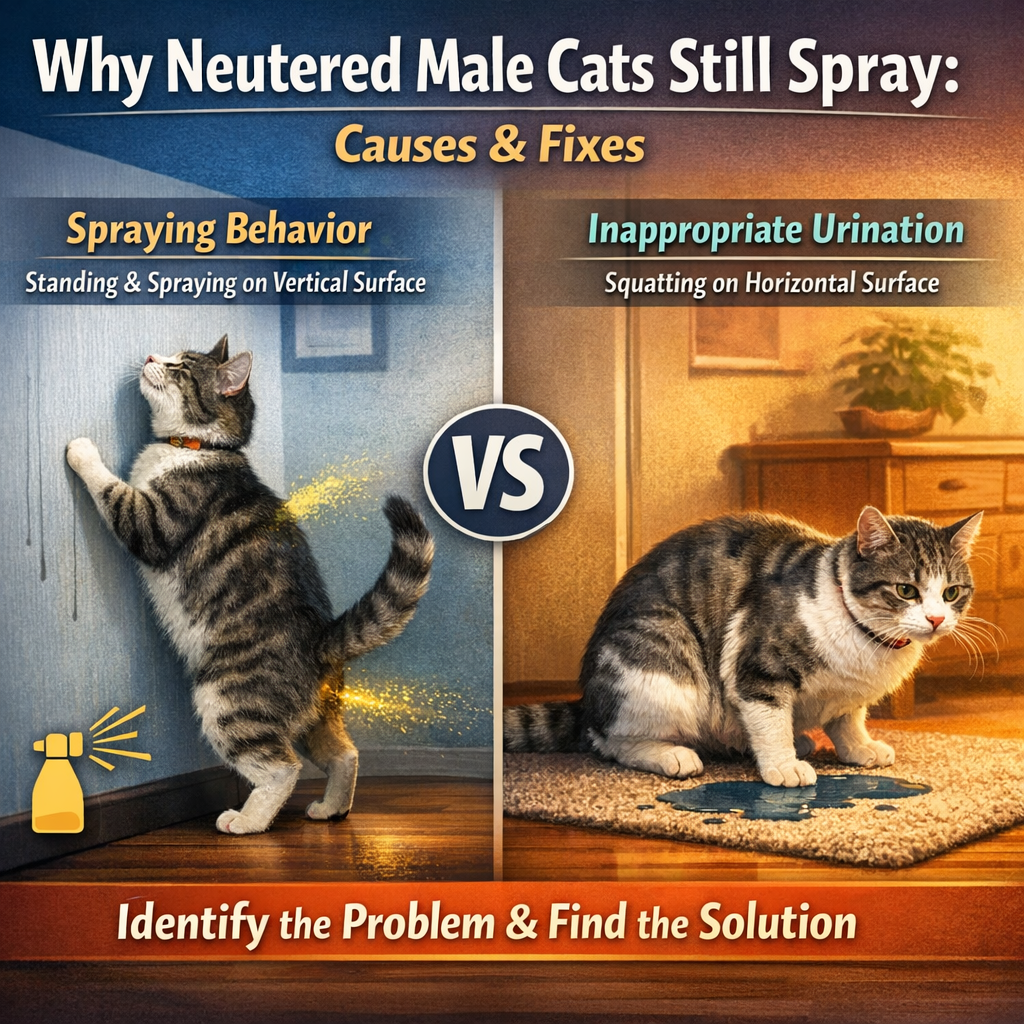
To stop cat spraying, you first need to identify if your cat is actually spraying or just having litter box issues. Spraying is a form of cat communication where the cat backs up to vertical surfaces, quivers its tail, and releases a small amount of urine.
This discharge often contains anal gland secretions, giving it a musky cat smell or a fishy urine smell that is much stronger than normal pee. Traditional inappropriate urination usually occurs on horizontal surfaces like laundry or rugs and involves a larger volume of liquid.
According to experts at Chewy and Purina Calming Care, distinguishing between these two is vital because the fixes for a territorial threat are very different from the fixes for a dirty litter box. Additionally, spaying or neutering is crucial for managing hormonal behaviors.
Medical Causes: Why a Health Check is Essential
Before assuming your cat is just being a rebel, you must rule out medical issues. Feline lower urinary tract disease, or FLUTD, can cause a cat to associate the litter box with pain, leading to spraying behavior.
A veterinarian will often perform a urinalysis to check for urine crystals, bladder stones, or a urinary tract infection. In some cases, kidney disease or general inflammation can trigger these episodes.
If your cat is straining or if the pungent urine odor seems different than usual, a trip to the vet is the first step. Organizations like PetMD emphasize that neutering can significantly reduce territorial aggression and urine spraying driven by hormones cannot fix a physical ailment.
Stress and Environmental Triggers for Cat Spraying
Cat stress and cat anxiety are leading reasons why a neutered male cat might start territorial marking. Cats are creatures of habit and any change in their environment can feel like a major threat.
Common triggers include moving to a new home, the arrival of a new baby, or even seeing a neighborhood cat through the window. This environmental stress causes the cat to mark its territory to feel more secure. Minimizing environmental factors and maximizing safety are essential steps to take.
Resources like Feliway diffusers or anxiety-reducing supplements like Zylkene are often recommended by feline behavior specialists to help lower the cat’s reactivity to these changes.
Multi-Cat Household Dynamics and Territorial Marking
In a multi-cat household, spraying is often a result of social friction. If one cat feels their resources are being threatened, they may use pheromone marking to claim their space.
To reduce territorial conflicts, ensure you have enough resources. The golden rule is one litter box per cat plus one extra, spread out in different locations to avoid resource guarding.
Providing vertical space, such as cat trees and high perches, allows cats to navigate the home without constant face-to-face confrontation, significantly reducing the urge to spray.
Effective Behavioral Fixes and Environmental Enrichment
Stopping the habit requires a mix of environmental enrichment and consistent routine. Increasing daily playtime can help vent the frustration that often leads to spraying.
If your cat is reacting to outdoor cats, try blocking their view of the yard or using motion-activated sprinklers to keep strays away. This removes the perceived territorial threat from their immediate surroundings.
Consistency is key. Using video tutorials from feline behaviorists or consulting search engines for localized training tips can provide additional strategies to redirect your cat’s energy into positive habits.
How to Clean Spray-Marked Areas Properly
Cleaning up the cat spray smell is the most important step in preventing a repeat performance. If a cat can still smell their own scent, they will return to that spot to refresh the mark.
You must use an enzyme-based cleaner specifically designed for pet waste. These cleaners break down the proteins in the urine rather than just masking the smell.
Never use ammonia-based cleaners. Since urine contains ammonia, using these products will actually trick the cat into thinking another intruder has marked the spot, compelling them to spray even more.
What Exactly Is Cat Spraying?
Before you can fix the problem, you need to know what you are looking at. Feline behavior experts emphasize that spraying is not the same as a litter box accident.
When a cat sprays, they usually stand tall, back up to a vertical surface, and let their tail quiver. They release a small amount of fluid that is much more concentrated than regular pee.
That musky cat smell is unmistakable. Because it contains anal gland secretions, the scent is designed to last and send a message to every other feline in the neighborhood.
If your cat is squatting on the floor, that is inappropriate urination. This often points to different issues like bladder stones, kidney disease, or lower urinary tract disease.
Differences Between Spray and Urination
Distinguishing between territorial marking and a simple bathroom break is the first step toward a solution. Spray typically involves small urine amounts on vertical surfaces with a pungent, musky or fishy urine smell.
In contrast, regular urination involves larger volumes on horizontal surfaces. Experts note these odor distinctions and associated behaviors, like the tail twitch, to differentiate them for a proper diagnosis.
While normal pee is just about relief, spraying is sophisticated cat communication. It acts as a chemical billboard telling others about their status or claiming a territorial threat.
The Impact of Neutering and Spaying on Spraying
You might think surgery is a magic off switch for this behavior. While it usually works, statistics show that approximately 10% of neutered males and 5% of spayed females still spray post-surgery.
If your boy is still backing up to the drywall, it is not always about hormones. Behavior may persist due to environmental stress, ingrained habit, or multi-cat household dynamics rather than just testosterone.
Neutering and spaying do reduce the drive for cat mating behavior, but they cannot fix a cat who feels their territory is under siege by the neighborhood stray they see through the window.
Medical Causes of Spraying and Health Checks
Before you blame your cat’s attitude, you must rule out a medical emergency. A veterinary diagnosis is essential because what looks like attitude might actually be pain.
A vet will often perform a urinalysis to check for urine crystals, urinary tract infections, or inflammation. These conditions can make a cat feel the need to mark more frequently or cause pain that leads to litter box aversion.
Conditions like kidney disease or bladder stones can also trigger these episodes. Always consult a professional to ensure your cat is healthy before starting a behavioral modification plan.
The Main Causes of Neutered Cat Spraying
If the manly hormones are gone, why is the behavior still there? Most experts agree that it usually boils down to communication and comfort.
Even after neutering, about 10 percent of male cats and 5 percent of spayed females continue to spray. It is rarely about being naughty and almost always about your cat trying to tell you something important.
Territorial Marking and Cat Communication
Cats are solitary by nature and use pheromone marking to draw invisible lines in the sand. This is their primary form of cat communication, acting like a scented billboard for other felines.
In multi-cat household dynamics, this behavior often peaks. If your cats are fighting over the best sunny spot or a specific perch, one might spray to claim the throne and ward off a territorial threat.
This is especially common if they see a stray cat through the window. Your cat may feel the need to top up their scent on vertical surfaces near doors or windows to protect their home turf.
Cat Stress and Environmental Triggers
Cats are creatures of habit, and even small changes can trigger cat anxiety. A new roommate, a loud construction project next door, or a change in your work schedule can lead to feline stress.
When a cat feels unsafe, they surround themselves with their own pungent urine odor to create a security blanket of smell. While it feels gross to us, that musky cat smell is incredibly calming to a worried kitty.
To help reduce this anxiety, many experts suggest using pheromone diffusers like Feliway. These products mimic natural calming scents to lower stress levels and stop cat spraying before it starts.
Medical Issues and Urinary Tract Disease
Never assume spraying is just a bad attitude. Feline behavior is often a mirror of physical health, and inappropriate urination is a common cry for help.
Feline lower urinary tract disease, urinary tract infections, or even bladder stones can make it very painful to pee. If your cat associates the litter box with pain, they may choose to spray a wall or furniture instead.
A quick trip to the vet for a urinalysis is the best first step to rule out kidney disease or urine crystals. If your cat is straining or you notice a fishy urine smell, seek medical advice immediately.
Litter Box Aversion and Environmental Enrichment
Sometimes the issue is the bathroom itself. Litter box issues, such as a dirty box or the wrong type of litter, can lead to a neutered cat spraying elsewhere to avoid the discomfort.
The golden rule is to have one litter box per cat plus one extra. Placing these in quiet, low-traffic areas helps your cat feel secure while doing their business.
Beyond the box, environmental enrichment is key. Providing high perches, hiding spots, and plenty of interactive play can distract your cat from the urge to mark and help them feel like the king of their castle.
The Habit of Spraying and Sexual Maturity
If a male cat was neutered after reaching sexual maturity, he may have already developed a habit of territorial marking. In these cases, the behavior is more about muscle memory than active hormones.
Even without the testosterone drive, the physical act of backing up to a wall and quivering the tail can become a go-to response for any excitement or frustration.
Breaking this habit requires patience and a consistent routine. By identifying the specific triggers in your home, you can redirect their energy toward toys or scratching posts instead of your favorite rug.
Spray vs. Urination: How to Tell
Before you start searching for DIY cleaning hacks, you need to know exactly what you are dealing with. Is your cat simply having a bathroom mishap, or is he engaging in complex pheromone communication?
Identifying the difference between feline behavior patterns like territorial marking and standard litter box issues is the first step toward a smell-free home. While both involve urine, the motivation and the delivery method are worlds apart.
| Feature |
Urine Spraying |
Inappropriate Urination |
| Posture |
Standing, tail quivering, treading feet |
Squatting low to the ground |
| Surface |
Vertical surfaces (walls, doors, curtains) |
Horizontal surfaces (rugs, beds, laundry) |
| Volume |
Small amounts, strategically placed |
Large puddles or full bladder release |
| Odor |
Pungent urine odor, musky cat smell, or fishy urine smell |
Standard ammonia smell |
| Primary Cause |
Communication, cat stress, or cat anxiety |
Medical issues or litter box issues |
The odor of spray is notoriously difficult to mask because it contains anal gland secretions and extra proteins designed to last. This musky cat smell tells every other feline in the neighborhood exactly who owns the property.
How to Stop the Spraying for Good
You do not have to live in a house that smells like a locker room or a fish market. Reclaiming your space is possible by using proven methods from trusted experts.
While it is frustrating to find your favorite Unisex Soft Cotton Tee targeted by a territorial feline, remember that this is a form of cat communication. By addressing the root causes of cat stress and environmental triggers, you can restore peace to your home.
Clean Like a Professional to Remove Cat Spray Smell
The first rule of cleaning up after a territorial threat is to avoid ammonia at all costs. Since cat urine naturally contains ammonia, using an ammonia-based cleaner acts like a neon sign that tells your cat to re-mark that exact spot.
Instead, use an enzyme-based cleaner to neutralize the pungent urine odor. These specialized formulas break down the specific proteins and uric acid found in feline urine, removing the scent entirely so even a cat’s sensitive nose cannot detect it.
Focus your cleaning efforts on vertical surfaces where the musky cat smell is most concentrated. Thoroughly soaking the area ensures that the enzymes reach the deep layers of the surface to prevent repeat offenses.
Reduce Territorial Conflict in Multi-Cat Households
Feline behavior experts often point to multi-cat household dynamics as a major source of cat anxiety. If your cats are competing for resources, they will use pheromone marking to establish boundaries and claim ownership of specific zones.
Follow the golden rule of litter box management: provide one litter box per cat, plus one extra. This prevents litter box aversion and ensures that no cat feels cornered or blocked from using the facilities.
Spread out food bowls and water stations to minimize tension during meal times. Providing vertical space, such as cat trees or wall perches, allows your cats to escape social friction and feel secure in their environment without resorting to spraying.
Use Calming Aids and Behavioral Interventions
If environmental changes aren’t enough, consider using pheromone diffusers like Feliway. These products mimic natural feline facial pheromones, sending a happy message to your cat that their territory is safe and secure.
For cats with severe cat anxiety, supplements like Zylkene or Purina Calming Care can help take the edge off. These anxiety-reducing supplements are often recommended to help cats cope with environmental stress.
Consistent playtime and a predictable routine are also vital. When a cat feels confident and engaged, they are far less likely to engage in inappropriate urination or spray-marked areas to express their frustration.
When to See a Veterinarian
If you have scrubbed every vertical surface and added extra litter boxes but the spraying continues, it is time for a professional opinion. Feline behavior is complex, and sometimes your cat is not just being moody; he might be dealing with a physical ailment.
A vet can perform a urinalysis to check for urine crystals, bladder stones, or inflammation. These issues often fall under the umbrella of lower urinary tract disease, which can make urination painful and lead to inappropriate urination outside the box.
During your visit, discuss your cat’s environment. If medical issues like kidney disease or urinary tract infections are ruled out, your vet may focus on cat stress and anxiety as the primary drivers of the behavior.
“Spraying is a language. To stop the behavior, you have to understand what your cat is trying to say.”
Expert Insight
“Urine marking is a form of communication and a natural response to stress: punishing this behavior will not reduce it, but will instead create fear and negative outcomes for your cat.”, Feline Behavior Specialist
Frequently Asked Questions About Cat Spraying
Can a cat start spraying years after being neutered?
Yes, your seasoned feline friend can suddenly start marking vertical surfaces long after his procedure. This behavior is usually triggered by a territorial threat or a major life change that spikes cat anxiety.
Common triggers include moving to a new home, the arrival of a new baby, or even seeing a neighborhood cat through the window. These environmental stress factors can make a neutered cat feel the need to re-establish his territory using pungent urine odor.
Do female cats spray too?
They certainly do. While many people associate this behavior only with males, about 5% of spayed females will engage in female cat spraying to express stress or mark territory.
In a multi-cat household, a female might spray to communicate with other cats or as a reaction to litter box aversion. Even without the heat cycle, the instinct for pheromone communication remains a part of feline behavior.
Will more playtime help stop cat spraying?
Often, yes. Environmental enrichment is a powerful tool to stop cat spraying because it reduces boredom and builds confidence. Interactive play mimics hunting, which helps lower cat stress levels.
How do I tell the difference between spraying and a litter box issue?
The main difference lies in the posture and the location. Spraying usually occurs on vertical surfaces, with the cat standing tall and quivering his tail. The result is a small amount of urine with a very musky cat smell.
Standard inappropriate urination typically happens on horizontal surfaces like rugs or laundry. If your cat is squatting to leave large puddles, he might be dealing with lower urinary tract disease or bladder stones rather than a behavioral marking habit.
What are the best products to stop territorial marking?
Veterinarians often recommend pheromone diffusers to create a sense of calm. For cats with high anxiety, supplements can be very effective when paired with behavioral modification. To clean up the mess, always use enzyme-based cleaners and avoid any cleaners containing ammonia.