



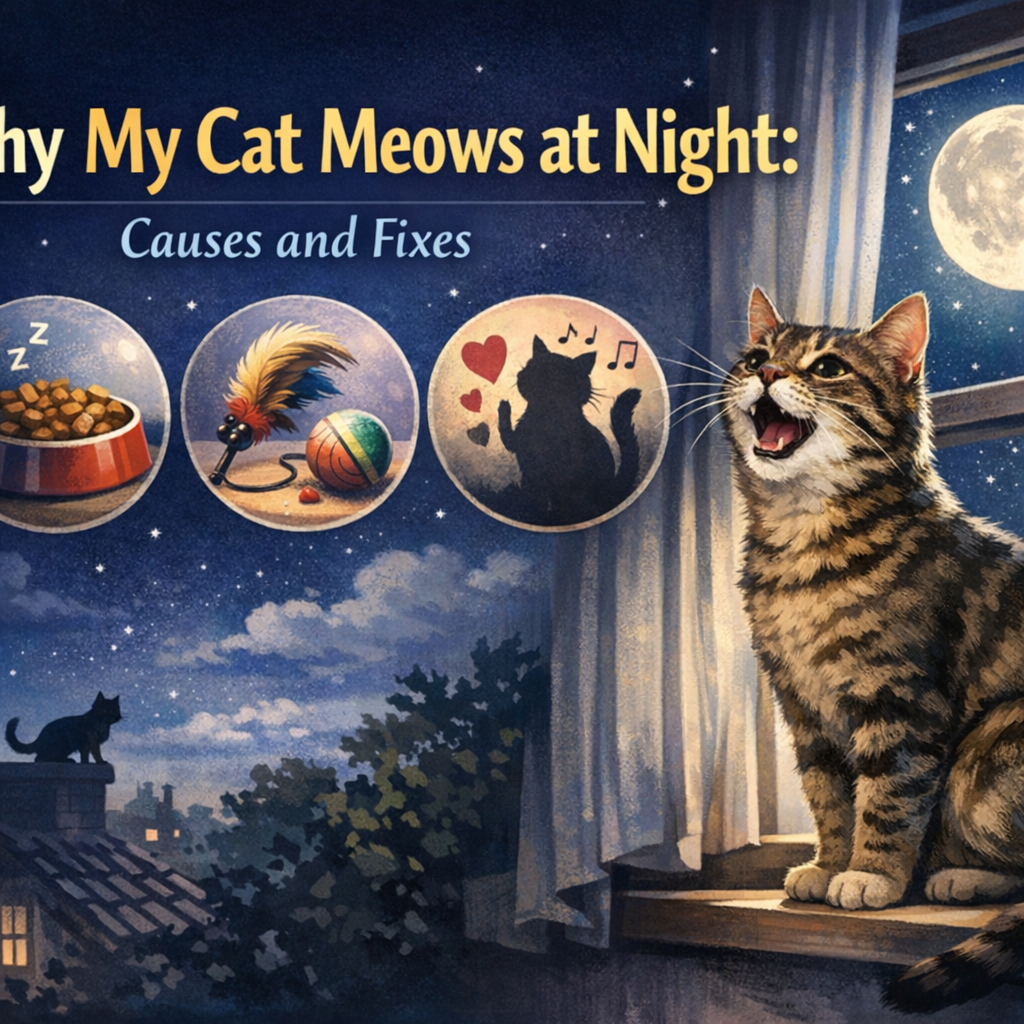
- Common Triggers: Nighttime meowing is usually driven by boredom, hunger, or attention-seeking behavior, though in unspayed cats, it is often a hormonal mating call during their heat cycle.
- Medical Considerations: Sudden vocalization changes, especially in senior cats, may signal underlying health issues like hyperthyroidism, kidney disease, or cognitive dysfunction (dementia).
- Effective Fixes: Implement a “hunt, eat, sleep” routine by engaging in vigorous play followed by a meal before bed, or use automatic feeders to satisfy middle-of-the-night hunger without reinforcing attention-seeking habits.
- Consistency is Key: Once health and basic needs are met, the best way to stop the behavior is to consistently ignore it; providing any attention—even negative—tells the cat that meowing successfully gets a reaction.
Table of Contents
- Common Reasons for Nighttime Meowing
- Spaying and the Feline Heat Cycle
- Health Issues Causing Night Meowing
- Providing Enrichment and Playtime
- Feeding and Litterbox Maintenance
- Attention and Affection Strategies
- Expert Community Insights
- Common Reasons for Nighttime Meowing
- Health Issues and Feline Nighttime Vocalization
- Decoding the Midnight Chorus: Comparison of Nighttime Meowing Triggers
- Managing Cat Boredom and Hunting Instincts
- Addressing Hunger and Feeding Routines
- Spaying Cats and the Feline Heat Cycle
- When Cat Vocalization Causes Are Medical
- Social Needs and Cat Separation Anxiety
- Providing Enrichment and Playtime to Stop Nighttime Meowing
- Feeding and Litterbox Maintenance
- Attention and Affection Strategies for Nighttime Meowing
- Frequently Asked Questions
You are finally tucked in, the house is quiet, and your eyes are heavy. Suddenly, a mournful yowl echoes through the hallway. Your cat is awake, and they want the entire world to know about it.
Nighttime meowing is one of the most common hurdles for pet parents. While you are dreaming of your next soft cotton tee, your feline friend is busy performing a midnight solo. Understanding why this happens is the first step to reclaiming your sleep.
In short: Your cat is not just being a jerk. They are communicating a specific need, whether it is biological, emotional, or physical.
Common Reasons for Nighttime Meowing
Boredom and attention seeking are the most frequent culprits behind feline nighttime vocalization. Since cats are naturally crepuscular, their energy peaks while you are trying to catch some rest.
According to discussions on social platforms, many cats meow simply because they want interaction. If you respond to every cry, you inadvertently reinforce the boredom and attention seeking cat play behavior.
Hunger also plays a massive role. If your cat has a fast metabolism, they might experience midnight munchies that result in loud demands for tuna or a fresh bowl of kibble.
Spaying and the Feline Heat Cycle
If you have an unspayed female, that nighttime meowing might actually be a feline estrus cycle. A cat in heat can meow or yowl for up to 10 days straight to attract a mate.
These mating calls occur every 18 to 24 days during the breeding season. Experts often suggest spaying and neutering as the primary fix for this specific vocalization.
Spaying cats not only stops the loud calling but also prevents health issues like hydrometra or uterine infections. It is a vital part of responsible pet ownership and home tranquility.
Health Issues Causing Night Meowing
Sometimes the noise is a cry for help. Cat health issues such as hyperthyroidism or a urinary tract infection can cause significant discomfort and increased vocalization at night.
Older cats may suffer from cognitive dysfunction, leading to disorientation and feline night vision struggles. This often results in wandering and yowling.
If the behavior starts suddenly, check for cat stress signs or consult a vet. Ruling out physical pain is essential before assuming it is just a behavioral quirk.
Providing Enrichment and Playtime
To combat cat boredom, you must provide environmental enrichment. Interactive toys, climbing trees, and chase games during the daylight hours help burn off excess feline energy.
Experts recommend a vigorous 10 minute play session right before bedtime. This mimics the cat hunting instinct, making them more likely to settle down afterward.
Combine this with a small meal after play. This follows the natural hunt, eat, groom, sleep cycle that governs healthy cat sleep habits.
Feeding and Litterbox Maintenance
A hungry cat is a loud cat. Many pet owner tips suggest using an automated feeder to provide a small snack at 3 AM to satisfy their appetite without waking you up.
A dirty litterbox is another common trigger. Cats are fastidious creatures; if their bathroom is not up to par, they will let you know with persistent cat communication.
Ensure fresh water is always available. Sometimes a cat carrying toys to your door and meowing is simply a sign that they need their basic environmental needs met.
Attention and Affection Strategies
Cat separation anxiety can lead to mournful cries when the house goes dark. Establishing consistent evening routines is vital for their security.
Spend time giving cuddles or quiet affection before you head to bed. This satisfies their social needs and reduces the likelihood of attention seeking meows once the lights go out.
If the meowing persists, the best advice is often to not get out of bed. Providing any attention, even negative, tells the cat that meowing works.
Expert Community Insights
The pet community suggests that sensory issues can also play a role. A nightlight might help a senior cat feel more secure if they are becoming disoriented at night.
By addressing these biological and emotional triggers, you can transition from sleepless nights to peaceful rest. Your cat will be happier, and you will finally be able to enjoy your morning coffee in peace.
Expert Insight
“A good play session before bedtime is one of the best ways to encourage a healthy sleeping time for your cat; addressing these biological and emotional triggers through interactive play and mental stimulation helps transition from sleepless nights to peaceful rest.” , Woodland Springs Veterinary Hospital
Common Reasons for Nighttime Meowing
Cats are naturally crepuscular, which means they are most active at dawn and dusk. However, many indoor cats struggle to flip their internal switch to match our human schedules. Feline nighttime vocalization is often a sign that your cat is ready to party while you are ready to sleep.
Boredom, attention seeking, and hunger are the top triggers for these nocturnal concerts. If your cat is meowing at the door, they might simply be looking for social interaction. Cats left alone during the work day often have a surplus of social energy by the time you hit the pillow.
They see your bedroom door as a barrier to their favorite person. Many owners describe their cats hunting socks or stuffed snakes at 3:00 am. These feline night vision experts often present their kill with loud cries of victory to show off their cat play behavior.
The Role of Spaying and Heat Cycles
If your cat is not fixed, the noise might be purely hormonal. Unspayed female cats in heat produce a very specific, loud, and frequent yowl known as a mating call. This feline estrus cycle can cause a cat to meow for up to 10 days straight, repeating every 18 to 24 days.
In this case, spaying and neutering is the most effective fix. Not only does it stop the midnight serenades, but it also prevents health issues like hydrometra or uterine infections. If you hear intense screaming from an intact cat, hormones are likely the culprit.
Spaying cats is a primary step in managing vocalization. It transitions the cat from reproductive drives to a more relaxed domestic lifestyle, saving your ears and their health.
Health Issues and Sensory Changes
Sometimes the cause is more primal or medical. It is important to rule out cat health issues such as a urinary tract infection, hyperthyroidism, or high blood pressure. These conditions can cause discomfort that leads to persistent nighttime meowing.
Older cats may experience cognitive dysfunction, leading to disorientation and cat sensory issues. Senior cats often feel lost in the dark, and a small nightlight can sometimes help a confused senior find their way back to bed.
If your cat suddenly changes their vocalization patterns, a vet visit is essential. Ruling out physical pain is the first priority for any responsible pet owner. This ensures your cat communication is understood as a cry for help rather than just a nuisance.
Managing Boredom and Hunting Instincts
Cat boredom is a major driver of middle of the night noise. If your cat has spent the day napping, they will have plenty of energy for cat play behavior at 2:00 am. Providing environmental enrichment such as climbing trees and interactive toys can help burn that fuel.
Intense play sessions before bed using a wand toy to mimic prey can satisfy the cat hunting instinct. Following this with a small snack of tuna or kibble can trigger the hunt, catch, kill, eat, sleep cycle.
A tired cat is a quiet cat. By engaging in chase games for at least 10 minutes before you turn out the lights, you help align their activity patterns with yours. This reduces the likelihood of them carrying toys around and yowling while you try to rest.
Feeding and Social Needs
Hunger is a classic reason for feline nighttime vocalization. If your cat thinks the kitchen is closed for the night, they might lodge a loud protest. Some pet owners find success using automatic feeders to provide a small 4:00 am snack without getting out of bed.
Cat separation anxiety can also play a role. If your cat is used to constant attention, being shut out of the bedroom can cause stress. Consistent routines involving affection before bed can decrease meowing caused by loneliness.
Ensure the litterbox is clean and water is available. A cat meowing at night might simply be complaining about a dirty bathroom or an empty bowl. Addressing these basic needs is a simple way to restore peace to your home.
Expert Insight
“Nighttime vocalizations are often caused by boredom, hunger, or just wanting attention; addressing these basic needs through consistent routines and tools like automatic feeders can help restore peace to your home.” , Dr. Katrina Warren, Veterinarian and Pet Behavior Expert
Health Issues and Feline Nighttime Vocalization
When a quiet cat suddenly becomes a midnight chatterbox, it is time to put on your detective hat. Medical discomfort is a major driver of feline nighttime vocalization, and your cat might be trying to tell you something is wrong. A change in cat behavior warrants professional attention.
If you notice your friend yowling more than usual, research symptoms online but always prioritize a vet visit. Underlying cat health issues can often mimic simple boredom. Ruling out pain is the first step toward getting you both back to a peaceful night of sleep.
Common medical causes for nighttime meowing include:
- Urinary Tract Infection: A urinary tract infection or conditions like hydrometra can cause significant cat stress signs. Pain during urination often leads to vocalizing near the litterbox.
- Hyperthyroidism: An overactive thyroid makes cats feel restless, hyperactive, and constantly hungry, leading to those 3 AM kitchen protests.
- Kidney Disease: Increased thirst and general discomfort from kidney issues often lead to more vocal nights as your cat seeks water or reassurance.
- Cognitive Dysfunction: Much like dementia in humans, senior cats can suffer from feline cognitive dysfunction, leaving them feeling lost in the dark.
If your senior cat seems confused, they may be struggling with cat sensory issues or age related decline. Keeping a small nightlight on can help them navigate the house without feeling panicked. This simple adjustment to their cat sleep habits can reduce the anxiety that triggers a midnight solo.
Cat vocalization causes are rarely just spite. Whether it is a physical ailment or separation anxiety, your cat is communicating a need. Addressing these cat health issues early ensures your pet stays happy and your home stays quiet during a long night of rest.
Expert Insight
“Excessive vocalization isn’t ‘just old age.’ It can be an early sign of cognitive dysfunction or your cat’s way of saying something in their body is off, from hyperthyroidism to pain, so a vet visit is the first step to ensure they aren’t just crying for help.” , Dr. Megan Petroff, Veterinary Behaviorist
Decoding the Midnight Chorus: Comparison of Nighttime Meowing Triggers
If your cat is currently treating your bedroom door like a stage at a sold out concert, you are likely looking for answers. Understanding cat behavior is the first step toward reclaiming your sleep.
Feline nighttime vocalization is rarely a random act. Whether it is a hunting instinct kicking in or a cry for a midnight snack, your cat is communicating a specific need. Below is a quick breakdown of common triggers and how to handle them.
| Cause | Behavioral Sign | Potential Fix |
|---|---|---|
| Cat Boredom | Meowing while carrying toys or pacing | High intensity evening play sessions |
| Hunger or Thirst | Meowing near the kitchen or food bowl | Automatic feeder or late night snack |
| Cat Health Issues | Sudden, sharp yowling or disorientation | Immediate veterinary consultation |
| Feline Heat Cycle | Persistent, loud mating calls | Spaying or neutering the cat |
| Attention Seeking | Pawing at the door and meowing loudly | Consistent bedtime routine and affection |
Managing Cat Boredom and Hunting Instincts
Cat play behavior is often misunderstood. Because cats are crepuscular, their energy peaks while you are trying to catch some shut eye. This burst of energy often manifests as a cat carrying toys around the house while letting out a muffled yowl. This is a classic example of the cat hunting instinct in action.
To curb this, engage in at least 10 minutes of interactive play before bed. Using feather wands or laser pointers helps burn off that excess energy, satisfying their need for environmental enrichment.
Addressing Hunger and Feeding Routines
A hungry cat is a loud cat. If your feline friend is meowing near the kitchen, they are likely looking for a calorie boost to fuel their nighttime adventures. An automatic feeder can be a lifesaver, shifting the cat’s focus from you to the machine and breaking the cycle of attention seeking meows at 3 AM.
Providing a small meal of tuna or high quality kibble right before you go to bed can also help. This aligns with their natural cycle of hunt, eat, groom, and sleep, leading to better cat sleep habits for everyone.
Spaying Cats and the Feline Heat Cycle
If you have an unspayed female, the noise might be driven by biology rather than boredom. A cat in heat can meow or yowl for up to 10 days straight during their feline estrus cycle. These mating calls are incredibly loud and persistent, occurring every 18 to 24 days during the breeding season.
Spaying and neutering is the most effective pet advice for this issue. Not only does it stop the vocalization, but it also prevents health complications like hydrometra or uterine infections.
When Cat Vocalization Causes Are Medical
Sometimes the meowing is a red flag for cat health issues. Older cats may suffer from cognitive dysfunction, leading to confusion and nighttime vocalization due to feline night vision changes or sensory issues. Common medical drivers include hyperthyroidism, high blood pressure, or a urinary tract infection.
Veterinary professionals often recommend blood work to rule out these conditions. Ensuring your cat is physically comfortable is the foundation of any behavioral training for vocalization.
Social Needs and Cat Separation Anxiety
Your cat might just be lonely. Cat communication often involves meowing to locate their social group, and if you are behind a closed door, they may feel a sense of cat separation anxiety. Leaving the bedroom door slightly ajar or providing a comfortable perch nearby can reduce cat stress signs significantly.
Consistent routines involving cuddles and affection before lights out can satisfy their social needs. A secure cat is a quiet cat. Additionally, ensure the litterbox is clean and water is available to prevent complaints about their environment.
Providing Enrichment and Playtime to Stop Nighttime Meowing
A bored cat is a loud cat. If your feline spends the whole day napping on the sofa while you are at work, they will have full energy at midnight. You need to drain that energy before you go to bed.
Cat boredom is a leading cause of attention seeking behavior. Without an outlet for their cat hunting instinct, they turn to feline nighttime vocalization to express their frustration. Introduce environmental enrichment like climbing trees, window perches, and interactive puzzles.
A vigorous 10 to 15 minute play session right before bedtime can work wonders for cat play behavior. This mimics natural activity patterns. Following this with a small meal creates a natural rhythm: hunt, eat, and sleep. Consistency is key for managing cat behavior and aligning their activity patterns with yours.
Feeding and Litterbox Maintenance
Hunger is a powerful motivator for feline nighttime vocalization. If your cat wakes you up at 4:00 am for breakfast, you have accidentally trained them that meowing equals food. To break this cycle, consider an automatic feeder that dispenses a small snack in the early morning hours.
Leaving out extra food and fresh water overnight reduces the likelihood of your cat meowing due to hunger or thirst. This is a simple pet owner tip that can save your sleep. Your cat enjoys the security of a full belly.
Check the litterbox as well. Some cats are incredibly fastidious and will vocalize if their box is not perfectly clean. Ensuring the box is scooped before you go to bed removes one more reason for them to complain about their environment.
A dirty litterbox can lead to cat stress signs or even medical issues. If the meowing is accompanied by frequent trips to the box, it is time to consult a vet to check for infections or other health conditions.
Attention and Affection Strategies for Nighttime Meowing
It is tempting to shout or get out of bed to pet your cat when they start their midnight concert. However, any attention rewards the behavior. If you get out of bed, your cat wins the battle for your sleep.
Consistency is your best friend when dealing with cat attention seeking. You must ignore the meowing entirely. Once your cat realizes that feline nighttime vocalization results in zero interaction, they will eventually stop.
Combine this approach with plenty of cuddles and affection during the evening. Ensuring their social needs are met before lights out helps prevent cat separation anxiety and loneliness during the night. A consistent routine is the best defense against a noisy pet.
Frequently Asked Questions
Should I ignore my cat meowing at night?
If you have ruled out cat health issues and hunger, the answer is yes. Ignoring the behavior prevents demand meowing from becoming a permanent habit. If you respond, you are reinforcing the idea that noise gets results. Consistency is the only way to break the cycle.
Can cats have separation anxiety at night?
Yes, cat separation anxiety is a real phenomenon. Some cats feel vulnerable when they are separated from their favorite humans by a closed door. Leaving the door cracked or providing a piece of clothing with your scent can provide a sense of security.
Do certain breeds meow more?
Absolutely. Cat vocalization causes can often be traced back to genetics. Breeds like the Siamese or Oriental Shorthair are famous for being extremely vocal. If you have a vocal breed, some level of nighttime chatting might just be part of their personality.
Is my cat meowing because of the dark?
While cats have excellent feline night vision, senior cats can struggle. Issues like cognitive dysfunction or failing eyesight can make them feel disoriented in total darkness. A simple plug in nightlight can provide enough assistance to keep them calm.
How does spaying or neutering affect night meowing?
An unspayed female cat in her feline heat cycle will produce loud mating calls to attract a mate. Spaying cats is the most effective way to stop this hormonal nighttime meowing and prevents unwanted health complications.
What if my cat is carrying toys while meowing?
If you find a gift at your door, your cat is indulging their hunting instinct. Carrying toys at night is a way for them to announce a successful hunt. To manage this, engage in high intensity play before bed to burn off that energy.