TL;DR (Too Long; Didn’t Read)
- Overstimulation: Most bites occur because of “petting aggression,” where prolonged touch becomes physically irritating or painful for a cat’s sensitive skin.
- Warning Signals: You can prevent bites by watching for subtle body language, such as tail lashing, ear flattening, skin twitching, or sudden body tension.
- Play vs. Affection: Cats often confuse hands with prey due to their natural hunting instinct; use toys rather than hands for play to redirect this energy.
- Trust & Boundaries: Behaviors like showing the belly are signs of trust (vulnerability displays) rather than invitations for touch, so it is best to stick to safe zones like head scratches.
Table of Contents
You are sitting on the sofa, enjoying a peaceful moment with your favorite feline. You reach out to offer some head scratches, and everything seems perfect.
Suddenly, those soft purrs turn into a sharp nip. Your hand is now a target, and you are left wondering what went wrong with your beloved Boots or Pepper.
Do not worry, you are not alone in this confusing cycle of affection and teeth. Understanding your cat is just as important as enjoying their company.
Whether you are a college student living with a dorm kitty or parents managing a busy household, cat biting can be startling. Even a professional cleaning woman might tell you stories of a cat attacking ankles while she works.
Decoding Overstimulation in Cats
Your cat is likely communicating a boundary or feeling overstimulated. Petting aggression is one of the most common reasons a peaceful moment turns prickly.
Overstimulation in cats occurs when prolonged petting for longer than a few minutes becomes physically irritating. While you see it as love, your cat feels a sensory overload that triggers a sudden need to move away. This is often a sign of extreme overstimulation.
In the online cat advice community, users often discuss how tactile sensitivity varies. What starts as social bonding can quickly feel like a vulnerability display for a cat, leading to those warning nips.
Reading Cat Body Language and Tail Signals
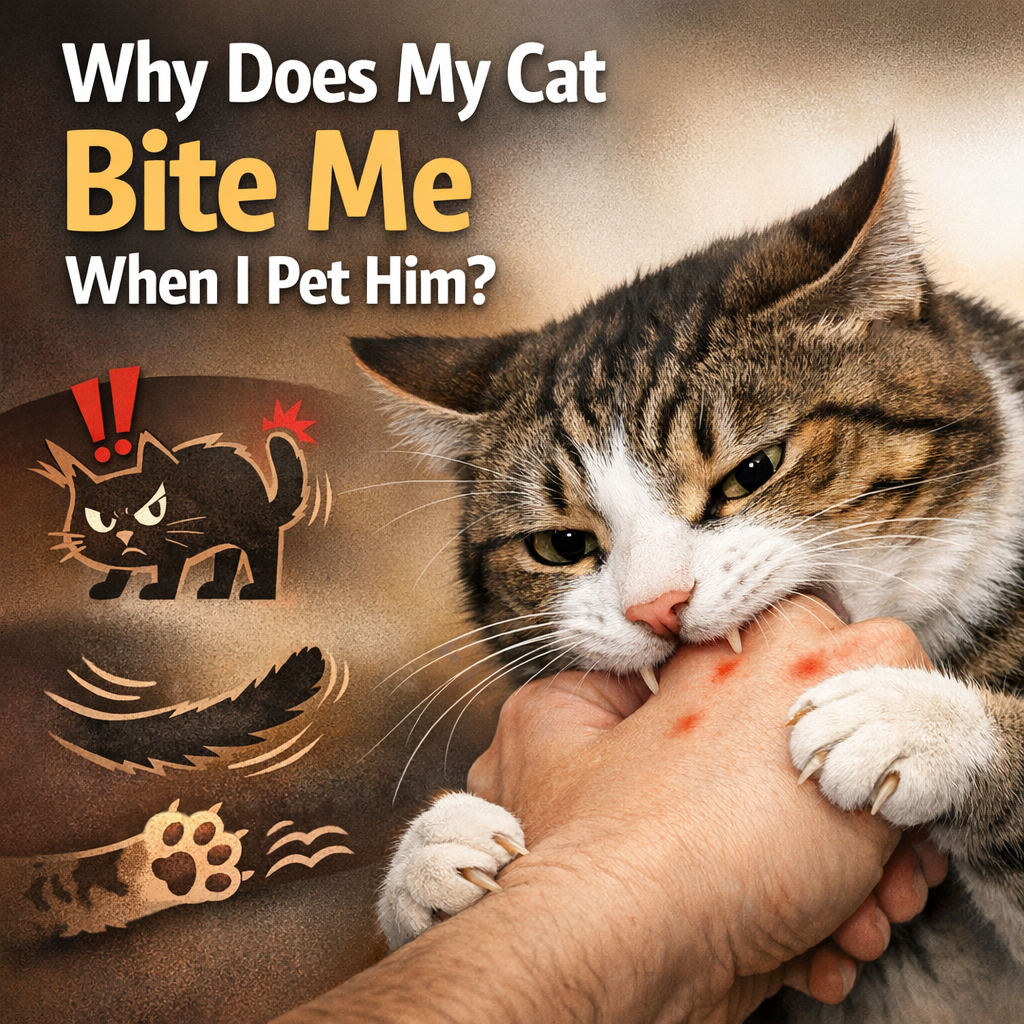
Watch for tail swishing or tail thrashing. A moving tail or tail lashing is a major data point indicating that your cat wants the petting to stop immediately.
Playing vs. Petting: The Hunting Instinct
Sometimes, cat play aggression is the culprit. Cats often confuse a moving hand with prey, leading to playful cat biting that mimics hunting behavior.
This hunting mimicry is why you might see your cat perform cat kicks against your arm. They are not trying to hurt you: they are simply following a natural play response that involves their decoding feline behavior instinct.
If your cat is attacking ankles as you walk by, they are likely looking for play motivation. Experts suggest using kick toys or cat toys instead of your hands to redirect this energy.
Communication, Scent Marking, and Trust
Cat communication involves more than just sounds. When your cat engages in head bumping or pheromone marking, they are showing trust signs and claiming you as their own.
Scent marking through head bumping is a reciprocal greeting. However, a belly exposure does not always mean they want a belly rub: for many cats, the belly is a sensitive area where they feel a high sense of vulnerability.
By learning these tips, you can transform your relationship from a game of tag into a steady bond. Remember, a happy cat makes for a happy home.
Understanding Petting Aggression and Overstimulation
The most common reason for a sudden bite is petting aggression. This happens when a cat becomes overstimulated by prolonged touch or tactile sensitivity.
Think of it like being tickled. It feels great for the first ten seconds, but after a minute, you just want the person to stop. Cats feel the same way about social bonding.
Data shows that petting for longer than a few minutes can significantly increase the likelihood of a bite. Your cat has a limited petting tank, and once it is full, any further touch feels irritating or even painful to their sensitive skin.
This behavior is especially common in younger, high energy cats. These felines have not yet learned to manage their arousal levels during moments of affection. It’s important to recognize when cats signal impending aggression through flattened “earmuff” ears, a lashing or twitching tail.
Recognizing Body Language and Communication Signals
Cats communicate their discomfort through subtle body language signals long before they resort to feline aggression. If you are observant, you can spot the warning nips before they happen.
A moving tail or tail lashing is a common sign that the cat wants to stop petting. If you see tail swishing or tail thrashing, it is time to give your pet some space.
Watch the ears and skin too. If their ears flatten or their skin ripples, they are reaching their limit. These are clear cat communication cues that the petting session has reached its end.
Why Cats Confuse Playing with Petting
Sometimes your cat bites because they confuse petting with play motivation. This is often seen as play aggression, where your hand suddenly looks like a target for hunting mimicry.
Chasing or attacking ankles mimics hunting behavior and is a natural play response. This is why animal shelters often suggest using kick toys instead of hands to engage a cat hunting instinct.
If your cat kicks with their hind legs while biting your hand, they are treating you like prey. To prevent this, always redirect that energy toward cat toys rather than your fingers.
The Science of Scent Marking and Trust
Not every interaction is about aggression. Sometimes a cat uses their mouth as part of a reciprocal greeting or pheromone marking.
You might notice head bumping or scent marking against your hand. This is a sign of social bonding, where they use pheromones to claim you as their own.
Even a vulnerability display like belly exposure can be confusing. While a cat showing their belly is one of the ultimate trust signs, it is not always an invitation for a tummy rub. For many cats, the belly is a sensitive area that triggers a defensive bite.
Decoding Cat Body Language and Communication Signals
Your cat is actually talking to you long before they use their teeth. They use subtle body language to tell you they have had enough of the social bonding session.
If you miss these signals, your cat feels forced to shout by giving you a nip. Professionals often point out that humans are frequently unaware of these early warnings.
Think of it like a cleaning woman trying to tidy a room while you are still in it. At first, it is helpful, but eventually, you just want your space back. Cats feel that same tactile sensitivity during prolonged petting.
Keep a close eye on these physical changes to avoid feline aggression:
- Tail swishing or tail thrashing: This is a major red flag that irritation is building. A moving tail is the cat equivalent of a stop sign.
- Ear positions: If the ears start to rotate backward or flatten against the head, stop petting immediately to maintain trust.
- Body tension: If your relaxed cat suddenly stiffens or ripples their skin, they are reaching their limit of overstimulation.
- Dilation: Watch for pupils that suddenly grow large and dark, signaling a shift from calm to hunting mimicry.
Petting a cat requires paying attention to these shifts. Even a friendly cat might go from head bumping to biting if you ignore the warning nips or the ripple of their fur.
Overstimulation in cats is real, and recognizing signs like tail flicking or ear flattening helps prevent bites. Data shows that tail lashing often indicates that a cat wants the interaction to end immediately.
In short, respect the sign! If you see that tail start to whip, it is time to put down the brush and perhaps reach for some cat toys instead to redirect that energy.
Distinguishing Between Love Bites and Real Bites
Not every bite is an act of war. Sometimes, your cat is giving you warning nips or what many cat parents call love bites.
A cat love bite is usually a gentle, controlled pressure that rarely breaks the skin. It serves as a reciprocal greeting or a sign of social bonding, much like how a mother cat grooms her kittens to show affection.
However, if the bite is hard, accompanied by a hiss, or followed by scratching, you are dealing with genuine feline aggression or extreme tactile sensitivity. These reactions often stem from overstimulation during petting, where the repetitive sensation becomes physically painful for the cat.
Many cat owners have shared stories of how their pets switch from purring to nipping in seconds. This is usually because the human missed the subtle body language signals that the social bonding session had reached its limit.
| Feature |
Love Bite / Play |
Petting Aggression |
| Pressure |
Light, gentle pressure |
Firm, can break skin |
| Tail Movement |
Twitching tip |
Heavy lashing or thumping |
| Vocalization |
Silent or chirping |
Hissing or growling |
| Next Action |
Licking or rubbing |
Running away or staring |
Overstimulation During Petting
Petting aggression is one of the most common reasons a cat biting incident occurs. Experts note that cats become overstimulated when petting lasts for longer than a few minutes.
This physiological response happens because a cat’s hair follicles are incredibly sensitive. While a few strokes feel like a massage, continuous petting can feel like a static shock or an annoying itch that they cannot escape without using their teeth.
If you notice your cat’s skin rippling or their ears rotating sideways like airplane wings, they are telling you that they have reached their sensory threshold. Taking a break before they bite is the best way to maintain trust and keep the relationship friendly.
Playing vs. Petting Confusion
Sometimes, your cat bites because they confuse your hand with cat toys. This is often referred to as play motivation or hunting mimicry, where the cat’s natural hunting instinct kicks in during a quiet moment.
If you have ever seen your cat attacking ankles as you walk by, they are practicing their predatory skills. When you pet them, they might suddenly roll over and use cat kicks against your forearm, treating your limb like a piece of prey.
To prevent this, it is essential to redirect that energy toward appropriate outlets. Using kick toys or feather wands allows them to satisfy their hunting instinct without turning your skin into a chew toy. Experts suggest that consistent play sessions can significantly reduce redirected aggression in the home.
Play Motivation and Hunting Mimicry
Sometimes that sudden nip has nothing to do with anger and everything to do with play motivation. Your cat is a tiny predator designed for hunting mimicry, and your hand just happens to be in the strike zone.
When you move your hand quickly across the bed, your cat sees prey rather than a parent. This leads to playful cat biting where they might even perform cat kicks with their hind legs to disable the target.
This hunting instinct is why a cat might be attacking ankles as you walk away. To them, your moving feet are the ultimate prize in a game of chase, triggering their internal drive to stalk and pounce.
Playing vs. Petting Confusion
Cats often confuse petting with play behavior, especially if they were raised by owners who used their hands as toys. This creates a habit of play aggression that carries into adulthood.
If your cat starts treating your fingers like a mouse, it is time to redirect that energy. Chasing or attacking ankles mimics hunting behavior and is a natural play response that needs a proper outlet.
To prevent biting incidents, introduce cat toys like feather wands or kick toys. These allow your feline to express their hunting instinct without turning your skin into a scratchpad.
Understanding Overstimulation and Body Language
Even the most affectionate cat can experience overstimulation during petting. Research shows that petting a cat for longer than a few minutes can increase the likelihood of biting due to tactile sensitivity.
You must watch for body language signals. A moving tail or tail lashing is a common sign that the cat wants to stop petting immediately. If you ignore these signals, a bite is usually the next step.
Keep an eye on ear positions and body tension. If the skin on their back starts twitching or the tail begins thrashing, they are reaching their limit. Recognizing these signs helps build trust and prevents aggression.
The Mystery of Belly Exposure and Vulnerability
It is the classic trap: your cat rolls over, shows you their fluffy tummy, and then attacks the moment you touch it. While it looks like an invitation for a belly rub, this is often a misunderstood piece of cat body language.
In the world of cat communication, belly exposure is actually a vulnerability display. It is one of the ultimate trust signs, showing they feel safe enough to expose their vital organs to you.
When you reach for the belly, the cat feels threatened and reacts with their hunting instinct to protect themselves. This is a social bonding moment gone wrong because of a human misunderstanding. Stick to head bumping and chin scratches instead!
Understanding Overstimulation in Cats
Many owners of feline friends report that their cat bites after a few minutes of perfectly normal petting. This is known as petting aggression or overstimulation.
Overstimulation in cats occurs because their skin is highly sensitive. Data shows that petting for longer than a few minutes can cause a neurological overload where the sensation actually becomes painful or irritating for the cat.
If you do not stop when they reach their limit, they use a warning nip to tell you they have had enough. It is not about being mean: it is about setting a boundary when their tactile sensitivity is maxed out.
Reading Cat Body Language and Communication Signals
To avoid biting, you must learn to read body signals before the teeth come out. Experts suggest watching for subtle changes in body language during your cuddle sessions.
Look for tail swishing or tail lashing. A moving tail or tail thrashing often indicates that a cat is becoming annoyed and wants the petting to stop immediately. If the tail starts thumping, your hand is in the danger zone.
Other signs include ear flattening, body stiffening, or skin twitching along the back. By paying attention to these cues, you can stop petting before the aggression begins, keeping the peace between you and your furry roommate.
Practical Tips to Stop Cat Biting and Manage Petting Aggression
You do not have to live in fear of your feline friend or hide your ankles under heavy boots. Managing petting aggression is one of the easiest behavioral issues to fix with a little patience and some expert advice.
First, you must limit the petting duration to prevent overstimulation. If you know your cat usually bites after three minutes of affection, make sure you stop at two. Leave them wanting more rather than reaching their limit!
Second, focus on safe zones that encourage positive social bonding. Most cats prefer scent marking behaviors like head bumping or rubbing their cheeks against your hand to spread pheromones. Avoid the base of the tail or the paws, as these are high sensitivity areas that often trigger a defensive nip.
Recognizing Overstimulation and Body Language Signals
Understanding cat body language is the best way to prevent aggression before it starts. Pay close attention to tail signals: tail lashing or tail thrashing often indicates that a cat is becoming annoyed and wants the petting to stop immediately.
Other body signals to watch for include ear flattening, body stiffening, or skin twitching along the back. If you notice these signs, give your cat some space. This respect for their boundaries is one of the ultimate trust signs and strengthens your relationship.
Distinguishing Between Playing and Petting Confusion
Many cats bite because they confuse petting with play behavior, often driven by their natural hunting instinct. This play motivation can lead to a cat attacking ankles or pouncing on hands because they view moving fingers as prey to be caught.
If your cat starts to get nippy during a cuddle session, it might be redirected aggression. They have built up energy that needs an outlet, and your hand is simply the closest target for their hunting mimicry.
Using Cat Toys to Redirect Playful Cat Biting
The golden rule for every cat owner is to never use your hands as toys. When you use your fingers to tease a kitten, you are teaching them that human skin is fair game for scratching and biting.
Always keep a variety of cat toys nearby to redirect that energy. If a cat begins to show warning nips, immediately toss a kick toy or a feather wand. This allows them to perform kicks and bites on an appropriate object rather than your arm.
In short: Hands are for love and greetings, while toys are for teeth and hunting. Following this simple guide will help turn your bitey beast back into a purring companion.
When to Seek Cat Advice
If your cat’s behavior changes suddenly, it might not be an attitude problem. It could be a medical issue hidden beneath those soft layers of fur.
Cats are masters at hiding pain and vulnerability. A cat that previously loved being petted but now bites when you touch a specific spot may be dealing with arthritis, dental pain, or an injury.
If you notice aggression that seems out of character, a trip to the vet is the best advice you can take. Medical discomfort can lower a cat’s threshold for tactile sensitivity, leading to faster warning nips.
Whether you are a college student living in a dorm or parents managing a busy household, understanding these nuances makes life with a cat much smoother. Sometimes, what looks like a grumpy cat is actually a cat in need of a check-up.
If the vet gives a clean bill of health, you might just be dealing with classic overstimulation. Experts often point out that cats use biting as a form of communication when their personal space is invaded. Learning to read body signals is your best defense against biting scenarios.
Keep an eye out for tail swishing or ear flattening. These are the primary ways a cat signals when petting should stop before they resort to teeth. Even an affectionate cat needs a break from the attention sometimes.
By respecting these boundaries, you build trust signs and strengthen your social bonding. This ensures your feline friend feels safe enough to offer a head bumping greeting rather than a sharp bite.
Expert Insight
“Most often, what is perceived as aggression is actually an overstimulated cat. Owners must learn to recognize subtle body language, like tail twitching or ear flattening, and stop petting before a bite occurs to avoid inadvertently reinforcing the behavior.” (Feline Behavior Specialist)
Frequently Asked Questions About Cat Biting
Still puzzled by your feline friend’s mood swings? You are not alone. Whether you are a college student living with a dorm kitty or parents managing a household with kids and pets, understanding cat behavior is the key to a bite-free life.
Why does my cat bite me then lick me?
This confusing behavior is actually a sign of social bonding. When your cat gives you a quick nip followed by a tongue bath, they are likely using a stop signal to manage tactile sensitivity.
The lick that follows is a form of reciprocal greeting or grooming. It shows trust signs and helps maintain your relationship, proving that the bite was just a request for space.
How do I tell my cat ‘no’ when he bites?
Never yell at or hit your cat, as this destroys the bond of trust. Instead, mimic cat signals by making a high-pitched ouch sound to startle them gently.
Immediately stop all interaction and walk away. This teaches your pet that biting ends the fun, effectively curbing play motivation that has gone too far.
Is it normal for a cat to bite my hand while petting?
Yes, it is very common and usually points to overstimulation. When you pet a cat for longer than a few minutes, their nervous system can become overwhelmed.
This often happens if you touch sensitive areas like the belly or the tail base. Even if they show you a belly exposure, it is often a vulnerability display rather than an invitation for a tummy rub.
Can cat pheromones help with biting?
Absolutely. Using cat pheromones in a diffuser can create a calming environment that reduces the stress leading to aggression. It mimics natural scent marking and pheromone marking.
This is a great tip often shared by experts to help soothe a cat that is prone to redirected aggression or hunting mimicry.
Why is my cat attacking ankles when I walk by?
When a cat leaps at your feet, they are following their hunting instinct. This is often seen in cats with high play motivation who lack enough toys to keep them busy.
To stop this, provide kick toys or wand toys to redirect that energy. Remember, your ankles should not be the target of your cat’s imaginary hunt!
What are the warning signs that my cat is about to bite?
Watch for body language such as tail swishing, tail lashing, or ear flattening. If you notice tail flicking or body stiffening, it is time to stop petting immediately.
Cats communicate through these subtle signals. Recognizing a moving tail as a precursor to a nip will save your skin and keep your cat happy.