

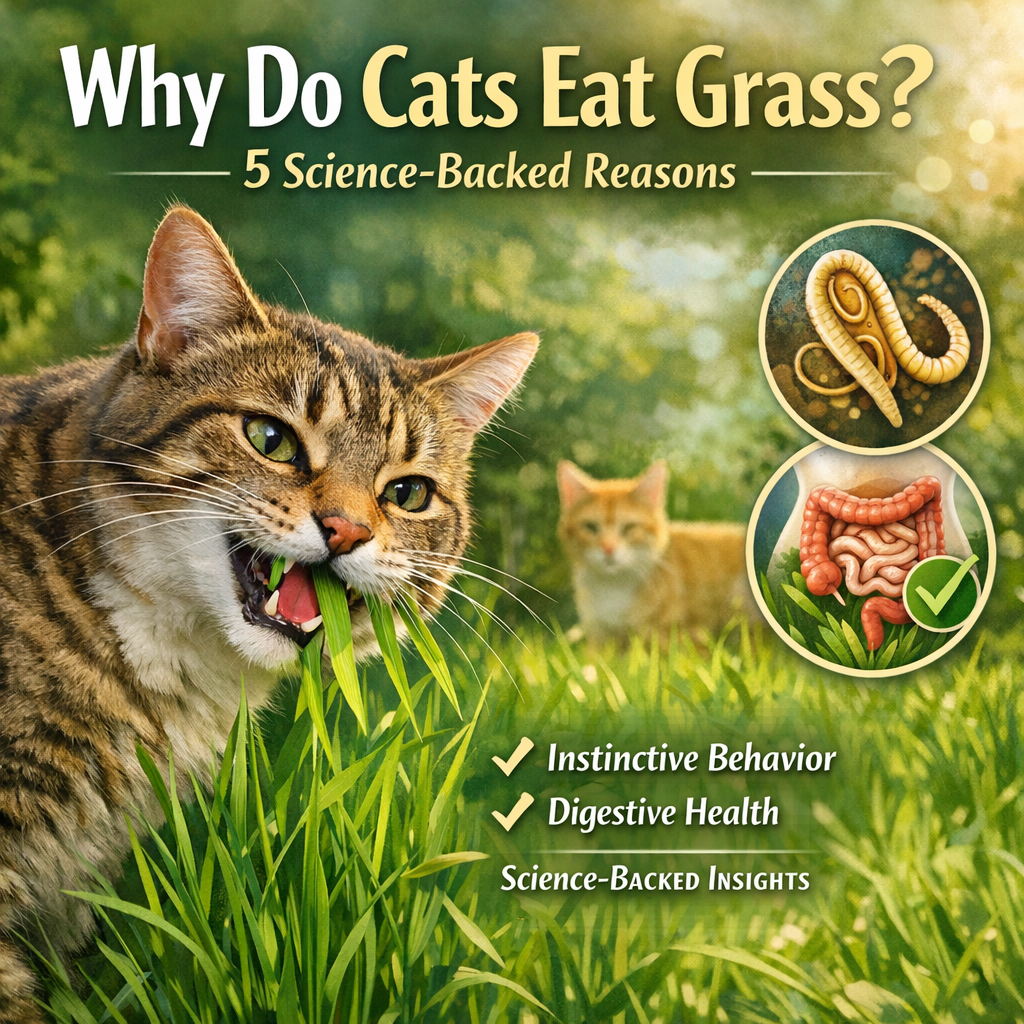
- Innate Instinct: Eating grass is a natural, evolutionary behavior inherited from wild ancestors to help increase digestive muscle activity and expel intestinal parasites.
- Digestive Aid: Grass acts as a natural laxative and mechanical tool to help cats move or vomit up indigestible materials like hairballs, feathers, and small bones.
- Nutritional Boost: Grazing provides essential micronutrients, specifically folic acid (Vitamin B9), which supports hemoglobin production and overall blood health.
- Safety First: While usually healthy, owners should provide pesticide-free “cat grass” (oat, barley, or wheat) to prevent cats from eating chemically treated lawns or toxic household plants.
Table of Contents
- Understanding Feline Instinct and the Mystery of Vomiting
- A Natural Laxative for Hairball Management
- The Evolutionary Benefit of Parasite Removal
- Folic Acid and Feline Nutrition
- Safe Grazing and Pet Safety
- 1. An Instinctual Drive to Expel Parasites
- 2. Managing Hairballs and Indigestible Material
- 3. A Natural Laxative for Digestive Health
- 4. Nutritional Supplementation and Folic Acid
- 5. The Myth of the Sick Stomach and Evolutionary Benefits
- Comparing Grass Eating Theories
- Safety Tips for Cat Owners and Feline Health
- Frequently Asked Questions
- Is it normal for my cat to eat grass every day?
- Instinctual Grass Eating and the Mystery of Why Cats Vomit
- Grass as a Natural Purge for Intestinal Parasites
- Using Grass for Hairball Management and Digestive Health
- Nutritional Boosts: Folic Acid and Feline Health Tips
- What is the best type of grass for cats?
- The Evolutionary Benefit: Why Cats Eat Grass
- Grass Assisted Expulsion of Fur and Hairballs
- Nutritional Perks and Folic Acid
- Should I stop my cat from eating grass?
- Instinctual Grass Eating and the Mystery of Cat Vomiting
- A Natural Purge for Intestinal Parasites
- Grass Assisted Expulsion of Fur and Hairballs
- Nutritional Benefits: Folic Acid and Feline Health
You have likely seen it before. Your sophisticated feline friend, a descendant of majestic hunters, suddenly decides to graze like a miniature cow in your backyard. It is a puzzling sight for many cat owners.
Why do these obligate carnivores, who typically demand the finest poultry or fish, suddenly crave a side of lawn? While it might seem like a strange glitch in their programming, science suggests there are several logical reasons for this behavior.
At Bella Gatti US Shop, we love the quirky side of feline life, but we also value the facts behind their mysterious habits. Let us dive into the science of why your kitty is hitting the salad bar.
Understanding Feline Instinct and the Mystery of Vomiting
One of the most common cat health tips you will hear involves the link between eating grass and vomiting. Many cat owners believe their pets eat greens specifically to settle an upset stomach, but the animal behavior science tells a more nuanced story.
Research presented to the International Society for Applied Ethology suggests that only about 25 to 30 percent of cats actually vomit after eating grass. In fact, most cats do not appear to be sick before they start nibbling on your lawn.
Instead of a sign of illness, this is an innate behavior rooted in feline evolution. This instinctual drive helps modern cats prevent digestive upset like vomiting, even if they spend their days lounging on a sofa rather than hunting in the wild.
A Natural Laxative for Hairball Management
We all know the sound of a cat trying to hack up a hairball. Because cats are meticulous groomers, they inevitably swallow a large amount of fur, which can lead to blockages in the digestive system.
Grass acts as a natural laxative, providing the dietary fiber necessary to help move hair through the digestive tract. While some believe long haired cats eat more grass, studies found no significant difference in grass eating frequency between different coat lengths.
By increasing muscle activity in the digestive tract, grass helps your cat expel indigestible materials like fur, feathers, or even small bones. This helps prevent the formation of painful obstructions that might otherwise require vet reviewed advice.
The Evolutionary Benefit of Parasite Removal
Feline instinct is often a carryover from their ancestors. In the wild, eating grass was a strategic move for survival. Research conducted in Bergen, Norway, and other global centers highlights how wild carnivores use plant matter to stay healthy.
Studies on animals like wolves and civets show that plant fibers help wrap around intestinal parasites. This process makes it easier for the body to purge these pests through the stool, ensuring the animal remains strong and competitive.
Even if your indoor cat is free of worms, they still carry the genetic programming of their ancestors. This evolutionary benefit explains why the urge to graze remains a core part of cat behavior today.
Folic Acid and Feline Nutrition
Did you know that grass contains a vital nutrient called folic acid? Also known as vitamin B9, folic acid is essential for the production of hemoglobin, which helps carry oxygen in the blood.
If a cat’s diet is lacking in certain micronutrients, they may turn to nonpoisonous plants to supplement their intake. Chewing on grass provides a boost of digestive enzymes and vitamins that support overall feline nutrition and help in anemia prevention.
While high quality commercial cat food usually covers these bases, your cat might still crave the fresh juices found in living plants. If you notice excessive grazing, it might be worth discussing their dietary habits with a professional.
Safe Grazing and Pet Safety
If your kitty loves their greens, pet safety should be your top priority. Many outdoor lawns are treated with pesticides or fertilizers that are toxic to animals. Furthermore, many common household plants are not safe for feline consumption.
To provide a safe experience, many owners use indoor cat grass kits. These typically feature oats, rye, or barley and are grown in a controlled environment. You can find many tutorials on YouTube or search Google for the best nonpoisonous vegetation for your home.
By providing a dedicated cat grass station, you satisfy their feline instinct while protecting them from toxic plants. It is a simple way to support their cat digestive health while keeping your favorite houseplants intact.
1. An Instinctual Drive to Expel Parasites
One of the most compelling theories regarding cat behavior comes from researchers at the University of California, Davis. They presented fascinating findings to the International Society for Applied Ethology in Bergen, Norway, suggesting that grass eating is an innate behavior rather than a sign of illness.
In the wild, feline ancestors dealt with intestinal parasites regularly. Eating plant matter increases muscle activity in the digestive tract, which helps physically wrap around and flush out these unwanted guests. This feline evolution strategy ensured that ancient cats could maintain their health without a trip to the vet.
Even if your indoor cat is dewormed and pampered, that ancient evolutionary benefit still lingers in their DNA. They are simply following a biological script written thousands of years ago. It is a natural part of feline nutrition and instinctual maintenance.
Interestingly, animal behavior science shows that this habit is not just for cats. Other wild animals, including wolves and civets, exhibit similar grass eating habits to manage their internal health. It is a tried and true method for intestinal parasite control in the animal kingdom.
While your fluffy friend might be wearing a stylish bow instead of hunting in the jungle, their digestive system still appreciates the extra fiber. This natural laxative effect helps keep things moving smoothly through the digestive tract, ensuring your pet stays comfortable and active.
Whether you are looking at data from PangoVet, Science, or Catster, the consensus is clear. This behavior is a deeply rooted feline instinct that connects your modern pet to its wild roots. It is just another quirky chapter in the cat owners guide to understanding our favorite obligate carnivores.
Expert Insight
“Instead, the scientists believe that cats might instinctually eat grass and other plant matter to rid themselves of intestinal parasites, a strategy that probably first evolved in a distant ancestor.” : Researchers at the University of California, Davis, School of Veterinary Medicine
2. Managing Hairballs and Indigestible Material
Cats are meticulous groomers, spending hours perfecting their coat. This means they inevitably swallow a significant amount of their own fur, leading to the dreaded hairball that every cat owner knows too well.
Grass may act as a natural tool for hairball management. Expert Michael Berger suggests that certain grass species have spiky projections that act like a biological drain snake within the feline digestive tract.
These fibers help dislodge wads of fur or other indigestible items, like tiny bones or feathers from prey. While a 2021 study showed no major difference in grass eating between long haired and short haired cats, the instinct to purge remains a primary suspect in cat behavior.
“Eating plants is instinctual and comes with an evolutionary benefit to felines, helping them clear their systems of things they cannot digest.”
Interestingly, animal behavior science shows that only about 25 to 30 percent of cats actually vomit after eating grass. Most felines do not appear sick before they start grazing, suggesting they use it as a proactive maintenance tool rather than a reaction to illness.
For the modern indoor cat, this feline instinct persists even without the need to hunt. Providing indoor cat grass can be a great way to satisfy this urge safely, ensuring they do not nibble on potentially toxic plants found around the home.
Whether your cat is a sophisticated shorthair or a fluffy Maine Coon, this hairball management strategy is a testament to feline evolution. It is a simple, natural laxative effect that keeps their system running as smoothly as a well oiled engine.
3. A Natural Laxative for Digestive Health
Not everything a cat eats comes back up the front way. While your cat might resemble a tiny lawnmower, that grass often serves as a natural laxative to help things move along the digestive tract toward the exit.
The added dietary fiber from the vegetation provides essential support for bowel regularity. This is especially helpful for cats dealing with mild constipation or those needing a little extra help with their feline nutrition.
If the grass is not vomited, it typically travels through the system unchanged. This adds bulk to the stool and assists the colon in its daily duties, ensuring the pipes stay clear for your favorite obligate carnivores.
Research into animal behavior science suggests that this habit is an innate behavior. By increasing muscle activity in the digestive tract, grass helps push out unwanted waste that the body cannot process on its own.
This evolutionary benefit is not just about comfort. It is a biological strategy used by ancestors to ensure their system remained efficient after a day of hunting in the wild.
Beyond simple fiber, grass contains folic acid. This essential vitamin B9 is vital for red blood cell health and supports overall cat digestive health while providing a green boost to their daily routine.
If you have an indoor cat, providing safe indoor cat grass is a great way to satisfy this feline instinct. It prevents them from nibbling on toxic plants and ensures they only access nonpoisonous vegetation.
While most cat owners guide their pets toward the best kibble, a little supplemental fiber for cats goes a long way. It is a simple, vet reviewed advice strategy for a happy, healthy kitty.
4. Nutritional Supplementation and Folic Acid
Believe it or not, your sophisticated feline might be looking for a vitamin boost to supplement their diet. While they are obligate carnivores, grass juice contains folic acid, also known as vitamin B9.
This specific nutrient is vital for feline nutrition because it assists in the production of hemoglobin. This is the essential protein that carries oxygen in the blood, supporting overall heart health and energy levels.
A deficiency in folic acid could lead to anemia prevention issues. Your cat might be instinctively self-medicating to ensure their blood remains healthy and oxygen rich, a behavior rooted in feline evolution.
Animal behavior science suggests that chewing on nonpoisonous plants provides these micronutrients. It is a clever way for a cat to round out their intake, even if they already enjoy premium kibble.
Most modern high quality cat foods are balanced with all necessary vitamins. If you suspect a real deficiency, a vet reviewed advice session is always better than relying on the backyard lawn.
For indoor cats, providing a safe alternative like indoor cat grass ensures they get these nutrients without the risk of pesticides. This supports their innate behavior while keeping them away from your favorite houseplants.
While research from the International Society for Applied Ethology continues to explore these habits, the link between folic acid and red blood cell health remains a top theory for cat dietary habits.
5. The Myth of the Sick Stomach and Evolutionary Benefits
Many cat owners assume their feline is feeling under the weather when they start munching on the lawn. However, data from Science and PangoVet suggests that the “sick stomach” theory is largely a myth.
Research involving over 1,000 cat owners found that 91 percent of cats appeared perfectly normal and healthy before they started snacking on greens. It turns out your cat is not usually looking for a cure for nausea.
In fact, only about 25 to 30 percent of cats actually vomit after the act. This suggests that vomiting is an occasional byproduct of the behavior rather than the primary goal of feline evolution.
Animal behavior science suggests this is an innate behavior passed down from their wild ancestors. Even if your cat is an indoor homebody, they still carry the feline instinct of majestic hunters from Bergen, Norway, to the African savannah.
Experts at the International Society for Applied Ethology note that grass eating may have served as a natural purge for intestinal parasites in the wild. The plant matter increases muscle activity in the digestive tract to help expel unwanted guests.
While your pampered pet likely does not have worms, their brain is still hardwired to seek out dietary fiber for digestive health. It is a classic case of ancient biology meeting modern living.
So, if you see your kitty grazing, do not panic. They likely just enjoy the taste or texture. Just like you might appreciate the comfort of a soft cotton tee, your cat appreciates the simple luxury of a fresh blade of grass.
For the best pet safety, many cat owners guide their pets toward indoor cat grass. This ensures they avoid toxic plants or lawn chemicals while satisfying their natural cravings.
Whether it is for hairball management or a bit of extra folic acid, grass eating is a normal part of feline nutrition. If you have concerns about their frequency of eating plants, a quick check of vet reviewed advice is always a smart move.
Comparing Grass Eating Theories
To help you keep track of these feline mysteries, here is a quick breakdown of the primary scientific theories regarding why cats eat grass.
| Theory | Primary Benefit | Scientific Basis |
|---|---|---|
| Intestinal Parasites Removal | Clears intestinal worms | Evolutionary behavior seen in wild species like wolves |
| Hairball Management | Expels fur and bones | Mechanical action of plant fibers in the digestive tract |
| Folic Acid Boost | Blood health | Grass contains essential B9 vitamins for feline nutrition |
| Natural Laxative | Improves digestion | Fiber increases muscle activity in the digestive tract |
Feline Instinct and the Evolutionary Benefit of Grazing
While your pampered pet might spend most of their time on a soft cotton tee, their feline instinct remains sharp. Research presented at the International Society for Applied Ethology suggests that eating grass is an innate behavior inherited from their wild ancestors.
In the wild, feline evolution favored cats that consumed plant matter to increase muscle activity in the digestive tract. This helped ancestral cats purge intestinal parasites that could otherwise compromise their health.
Studies from Bergen, Norway, and data shared by Science and PangoVet indicate that this behavior is not about being sick. Instead, it is a biological strategy for digestive health that has persisted through feline evolution.
Hairballs and the Digestive Purge
We have all heard that distinctive sound of a cat getting ready to vomit. Many cat owners believe their pets eat grass specifically to induce this, but the reality is more nuanced.
According to experts at Catster and Michael Berger, grass acts as a mechanical aid. Because obligate carnivores lack the digestive enzymes to break down tough plant fiber, the grass helps wrap around hairballs, feathers, or bones.
This allows the cat to either vomit the indigestible material or pass it through the digestive tract more easily. Interestingly, recent studies show no significant difference in grass eating frequency between long haired and short haired cats.
Folic Acid and Essential Feline Nutrition
Beyond physical clearing, there is a nutritional component to this cat behavior. Grass juice contains folic acid, also known as vitamin B9, which is vital for the production of hemoglobin.
If a cat feels their oxygen levels are low or they are experiencing a mild form of anemia, they may seek out nonpoisonous plants to supplement their diet. This is a fascinating example of how animal behavior science aligns with biological needs.
While modern cat food is usually fortified, your cat may still follow an ancient urge to snack on indoor cat grass to ensure they get these essential micronutrients. If you notice a sudden obsession with greenery, it is always a good cat health tip to consult a vet about their dietary habits.
Pet Safety and Nonpoisonous Vegetation
Since grazing is such a common innate behavior, pet safety should be your top priority. Many common household plants are actually toxic plants that can cause severe feline health issues.
To satisfy their craving safely, many cat owners provide a dedicated tray of indoor cat grass, often grown from oats or barley. You can find plenty of tutorials on YouTube or search Google for the best seeds to use.
Using safe, pesticide free grass ensures your cat can enjoy the natural laxative benefits without the risk of poisoning. Always cross reference your house plants with a list of nonpoisonous vegetation to keep your sophisticated hunter safe.
Safety Tips for Cat Owners and Feline Health
While eating grass is a natural feline instinct, the modern environment is not always as safe as the wild landscapes of feline evolution. You must ensure your sophisticated hunter is not ingesting dangerous toxins along with their favorite greens.
According to research shared by the International Society for Applied Ethology, many cats graze to increase muscle activity in the digestive tract. However, if your lawn is treated with chemical fertilizers or pesticides, this innate behavior can lead to serious pet safety issues.
Always keep your yard free of toxic plants like lilies, sago palms, and azaleas. These are far from being nonpoisonous vegetation and can cause severe kidney failure or even death if chewed by a curious kitty.
Consider growing indoor cat grass to provide a safe, controlled source of fiber for cats. You can find excellent DIY kits and tutorials on platforms like YouTube or Google to help you start your own home garden with ease.
When to Consult a Professional
If you notice your cat vomiting excessively or appearing lethargic, it is time to check in with a veterinarian. While some believe cats eat grass to help hairball management, frequent distress might indicate an underlying issue like anemia or a lack of folic acid.
PangoVet and other experts like Michael Berger suggest that while grass acts as a natural laxative, it should not be the primary source of feline nutrition. A balanced diet is essential for maintaining a healthy digestive tract and preventing intestinal parasites.
For more visual inspiration on the quirky side of cat behavior, you can browse through high quality feline photography on Pixabay. Just remember that a safe cat is a happy cat, whether they are lounging on the couch or wearing a stylish soft cotton tee from our collection.
Providing indoor cat grass is the best way to satisfy that ancient feline instinct without the risks of the great outdoors. It keeps your cat healthy, your mind at ease, and your living room free of accidental messes from outdoor toxins.
Frequently Asked Questions
Is it normal for cats to eat grass every day?
Yes, it is perfectly normal for your feline friend to indulge in a daily salad. Research presented by the International Society for Applied Ethology suggests this is an innate behavior passed down through feline evolution.
Most cats graze to support their digestive tract and maintain bowel regularity. If your cat seems happy and healthy while snacking, there is usually no cause for concern.
However, if you notice your cat eating grass excessively or showing signs of distress, it might be time to consult a professional. You can find vet reviewed advice on platforms like Catster or PangoVet to help monitor their habits.
Why do cats vomit after eating grass?
Many cat owners believe cats eat grass specifically to get sick, but the reality is more nuanced. Animal behavior science shows that only about 25 to 30 percent of cats actually vomit after grazing.
Most cats do not appear ill before they start chewing. Instead, grass acts as a natural laxative or a way to expel indigestible materials like feathers or bones that a majestic hunter might pick up.
This behavior is a clever evolutionary benefit. Because cats lack the digestive enzymes to break down large amounts of plant matter, the grass helps clear out the stomach of anything that should not be there.
Does eating grass help with hairball management?
Hairballs are the ultimate vibe killer for a sophisticated cat. While many believe long haired cats eat more grass to deal with fur, studies show that grass eating frequency is similar across all fur lengths.
The extra dietary fiber found in grass helps move fur through the digestive system more efficiently. It acts as a mechanical broom for the gut, ensuring that grooming sessions do not lead to painful blockages.
By providing indoor cat grass, you can help your pet manage these internal tangles safely. This prevents them from nibbling on your favorite houseplants, which might not be as feline friendly.
Can grass help cats with intestinal parasites?
Science suggests that grass eating is a strategic move to combat intestinal parasites. This theory is supported by observations of wild animals like wolves and civets who use vegetation to purge their systems.
The plant fibers increase muscle activity in the digestive tract, which helps wrap around and flush out unwanted worms. Even if your indoor cat is parasite free, this innate behavior remains hardwired into their DNA.
Researchers in Bergen, Norway, have noted that this instinct is so strong it persists even in well fed domestic cats. It is a biological legacy from their ancestors who had to manage their own health in the wild.
Is there a nutritional reason why cats eat grass?
Feline nutrition is complex, and sometimes a cat craves grass because of a specific micronutrient called folic acid. Also known as vitamin B9, this essential nutrient is vital for red blood cell health and oxygen transport.
If a cat feels a slight deficiency, they might seek out nonpoisonous plants to supplement their diet. Folic acid is often found in the mother cat’s milk, and adults may seek it out instinctively to prevent anemia.
While modern cat food is usually balanced, chewing on fresh greens provides a boost of vitamins and enzymes. If you are worried about their levels, Michael Berger and other experts recommend a quick checkup to ensure their dietary habits are on track.
How can I provide grass safely for my indoor cat?
The best way to satisfy this feline instinct is to grow your own indoor cat grass. This ensures your pet is not consuming lawn grass treated with dangerous pesticides or fertilizers.
You can find high quality seeds for wheatgrass, oat, or barley online or at local pet shops. These are safe, nonpoisonous vegetation options that provide the perfect crunch for your kitty.
Setting up a small grazing station near their favorite sunspot is a great way to enhance their environment. It keeps them away from toxic plants and gives them a taste of the outdoors from the safety of your living room.
Should I stop my cat from eating grass?
In most cases, you should let your cat be a cat. As long as the grass is free of chemicals and they are not eating it to the point of exhaustion, it is a healthy part of their routine.
Keep an eye on their behavior through videos on YouTube or photos on Pixabay to compare what healthy grazing looks like. If the vomiting becomes frequent or they stop eating their regular food, pet safety should be your top priority.
Always ensure they have access to fresh water and a balanced diet. A happy cat is one that can express its natural behaviors, whether that is wearing a stylish soft cotton tee or munching on a blade of green grass.
Is it normal for my cat to eat grass every day?
Absolutely. It is perfectly normal for your feline friend to indulge in a daily salad. Research presented by the International Society for Applied Ethology suggests this is an innate behavior passed down through feline evolution.
Whether they are an outdoor explorer or an indoor cat enjoying a pot of indoor cat grass, most cats graze to support their digestive tract and maintain bowel regularity. If your cat seems happy and healthy while snacking, there is usually no cause for concern.
Instinctual Grass Eating and the Mystery of Why Cats Vomit
You might worry when your cat heads for the lawn and ends up losing their lunch. However, animal behavior science shows that only about 25 to 30 percent of cats actually vomit after eating grass. Most felines do not even appear sick before they start munching.
This suggests that eating grass is a deliberate feline instinct. It acts as a tool to help them expel indigestible materials like feathers or bones they might have consumed in the wild. For your pampered pet, it is a way to clear out anything that does not belong in their stomach.
Grass as a Natural Purge for Intestinal Parasites
Evolutionary benefit plays a huge role in this quirky habit. Research conducted in places like Bergen, Norway, suggests that grass eating helped the ancestors of our modern cats clear out intestinal parasites. By increasing muscle activity in the digestive tract, the plant matter helps push out unwanted hitchhikers.
This behavior is seen across the animal kingdom, from wolves to civets. Even if your cat is treated for worms, that ancient feline instinct still tells them that a little green fiber is the best way to keep their internal pipes clean and parasite free.
Using Grass for Hairball Management and Digestive Health
Every cat owner knows the dreaded sound of a hairball in progress. While you might think long haired breeds eat more greens, studies from experts at Science and Catster show that all cats graze at similar rates. Grass acts as a natural laxative to help fur pass through the system more easily.
Historically, grass helped wild cats purge non digestible stomach contents before they caused a blockage. Today, providing safe, nonpoisonous plants for your cat to chew on can significantly assist in their daily hairball management and overall feline nutrition.
Nutritional Boosts: Folic Acid and Feline Health Tips
There is a nutritional side to this lawn snacking too. Grass contains folic acid, also known as vitamin B9, which is essential for producing hemoglobin. This vital nutrient supports red blood cell health and helps prevent anemia in growing kittens.
If your cat is constantly craving greens, they might be looking for a boost in dietary fiber or specific micronutrients. While most commercial feline nutrition is complete, chewing on fresh blades provides a supplemental burst of vitamins and digestive enzymes that their bodies crave.
If you want to keep your pet safe, always ensure they have access to nonpoisonous vegetation. Avoid chemically treated lawns and stick to vet reviewed advice by growing your own pet safe kits. It is a simple way to satisfy their ancestral urges while keeping them healthy and stylish.
What is the best type of grass for cats?
If you want your kitty to feel like a VIP at a vegan buffet, choosing the right greenery is key. While your outdoor lawn might look tempting, it often hides fertilizers or pesticides that are a no go for feline nutrition.
Oat, barley, and wheat grasses are the gold standard for cat owners. These are often sold as indoor cat grass in pet stores because they are nonpoisonous plants that are perfectly safe for consumption.
Oat grass is a crowd favorite because it tends to be sweeter, while wheat grass is packed with chlorophyll. These varieties provide that crucial dietary fiber and folic acid cats crave to support red blood cell health and prevent anemia.
The Evolutionary Benefit: Why Cats Eat Grass
Feline evolution suggests that even though they are obligate carnivores, grass serves a functional purpose. Research from the International Society for Applied Ethology indicates that this is an innate behavior passed down from their wild ancestors in places like Bergen, Norway and beyond.
Wild cats often consume grass to increase muscle activity in the digestive tract. This extra movement helps in expelling intestinal parasites, a theory supported by animal behavior science and observations of wild species like wolves.
Grass Assisted Expulsion of Fur and Hairballs
We have all heard the dreaded sound of a cat hacking up a hairball. While you might think your cat eats grass specifically to vomit, the science is a bit more nuanced. Studies show only about 25 to 30 percent of cats actually vomit after grazing.
Instead of being a sign of illness, eating grass is a natural laxative. It helps move hairballs and other indigestible materials through the digestive tract. Whether your cat is a long haired beauty or a short haired tabby, this fiber for cats helps keep things moving smoothly.
Nutritional Perks and Folic Acid
Sometimes your cat is just looking for a vitamin boost. Grass juice contains folic acid, also known as vitamin B9, which is essential for feline health. This nutrient helps with hemoglobin production and overall oxygen flow in the blood.
If you notice your cat constantly eyeing your houseplants, they might be seeking these specific digestive enzymes. Always stick to safe, vet reviewed advice and provide a dedicated pot of wheat or barley grass to keep them away from potentially toxic plants.
Whether you are browsing for cat health tips or looking for the perfect soft cotton tee to show off your cat lover status, understanding these quirks makes you a better pet parent. For more visual guides on cat behavior, you can always find great clips on YouTube or high quality photos on Pixabay.
Expert Insight
“Plant eating reflects an innate predisposition acquired from the ancestral cat, serving as an instinctive method to stimulate digestive tract muscle activity and purge internal parasites.” : Dr. Benjamin L. Hart, UC Davis School of Veterinary Medicine
Should I stop my cat from eating grass?
Generally, you do not need to play the role of the garden police. Eating grass is an innate behavior that traces back to feline evolution and the habits of wild ancestors.
However, you should intervene if you suspect your backyard lawn has been treated with chemical fertilizers or pesticides. Safety is the top priority for any responsible cat owner.
Always keep an eye out for toxic plants. While grass is usually a safe bet, many common garden flowers can be dangerous, so sticking to nonpoisonous plants is essential for pet safety.
Instinctual Grass Eating and the Mystery of Cat Vomiting
You might think your cat is sick when they start munching on the lawn, but animal behavior science suggests otherwise. Research presented to the International Society for Applied Ethology indicates that most cats do not actually seem ill before they begin grazing.
While we often associate cats eating grass with a quick trip to the rug to vomit, studies show that only about 25 to 30 percent of cats actually throw up afterward. This suggests the behavior is a deeply rooted feline instinct rather than a sign of a stomach ache.
For many cats, this habit is simply a way to manage their internal environment. It is a natural part of being a cat, much like chasing a laser pointer or claiming your favorite soft cotton tee as their personal nap spot.
A Natural Purge for Intestinal Parasites
One of the most fascinating theories regarding why cats eat grass involves their ancient history. Experts like Michael Berger and researchers from Bergen, Norway, have noted that wild animals often consume plant matter to help clear out their systems.
In the wild, consuming grass may help increase muscle activity in the digestive tract. This extra movement helps feline ancestors expel intestinal parasites that they might have picked up from their prey.
Even though your indoor cat is likely parasite free thanks to modern feline nutrition and vet reviewed advice, the biological urge remains. It is an evolutionary benefit that has stayed with them through thousands of years.
Grass Assisted Expulsion of Fur and Hairballs
Every cat owner knows the struggle of hairball management. While we might reach for a brush, cats reach for the greenery to help move things along their digestive tract.
Grass acts as a natural laxative or an emetic, helping cats purge non digestible stomach contents like excess fur. Interestingly, Science shows there is no major difference in grass eating frequency between long haired and short haired cats.
Historically, this behavior helped wild cats get rid of feathers and bones. Today, it just helps your kitty keep their system running smoothly so they can get back to being the boss of the house.
Nutritional Benefits: Folic Acid and Feline Health
Beyond just moving things through the pipes, grass provides actual nutrients. Specifically, grass juice contains folic acid, also known as vitamin B9, which is vital for maintaining red blood cell health.
If a cat’s diet is lacking in certain micronutrients, they might seek out indoor cat grass to supplement their intake. Folic acid supports the production of hemoglobin and is a key part of overall feline nutrition.
If you notice your cat is obsessively eating grass, it might be worth a chat with your vet to check for anemia prevention. Most of the time, however, they are just enjoying a healthy, fiber rich snack.
Expert Insight
“Eating grass is an innate behavior in cats that serves as a source of fiber to aid digestion or trigger vomiting to expel hairballs, as well as providing essential micronutrients such as folic acid.” : Dr. Lori Teller, Veterinary Medicine Expert