




Table of Contents
- Introduction
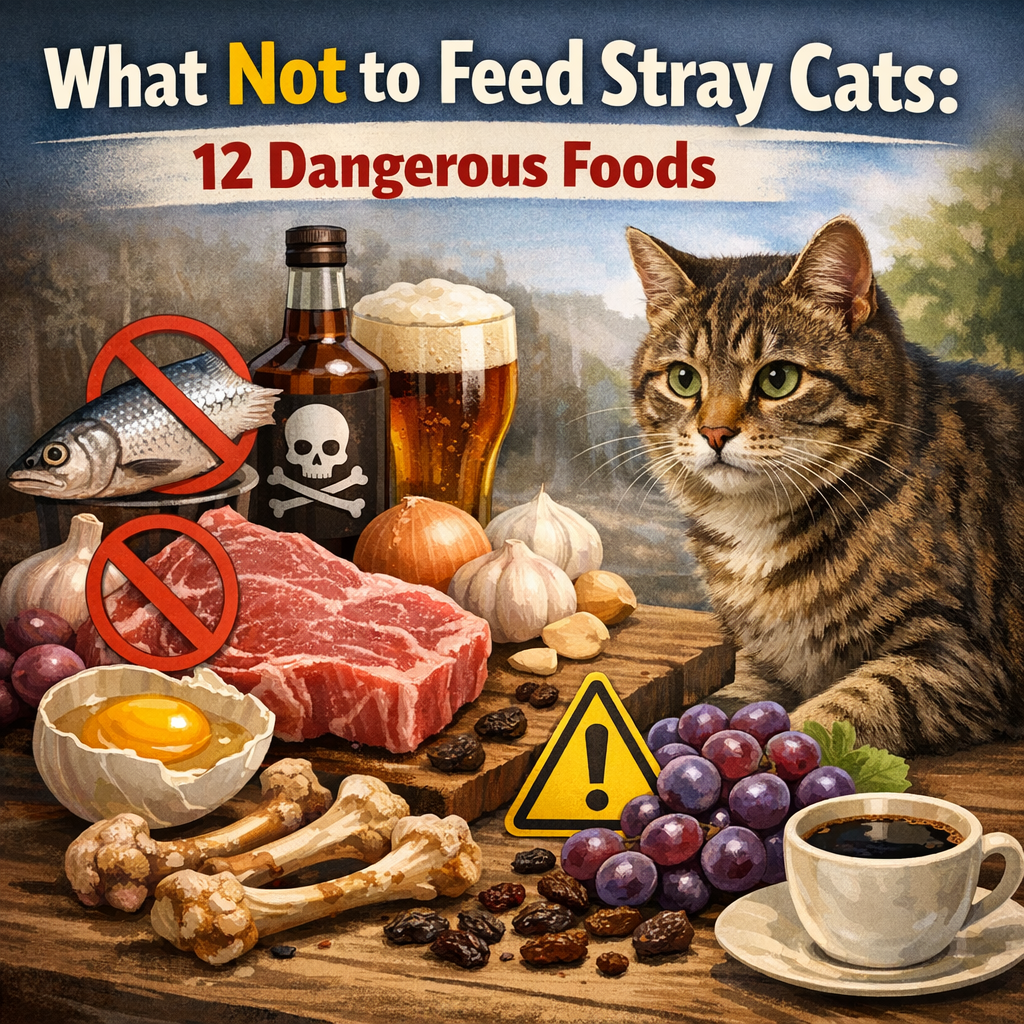
- 1. Raw Fish and Raw Meat
- 2. Onions, Garlic, Chives and Related Alliums
- 3. Uncooked Eggs
- 4. Cooked Bones
- 5. Alcohol and Yeast Dough
- 6. Chocolate and Caffeine
- 7. Grapes, Raisins, Sultanas, and Currants
- FAQ
- Conclusion
Expert Insight
“All human foods can be dangerous to cats, with onions, garlic, alcohol, chocolate, caffeine, and other common items posing serious risks that require immediate veterinary attention if ingested.” , Animal Nutrition Expert
Introduction
Cats can be selective about what they eat and how it affects their health. This guide highlights common foods that can be dangerous for stray cats and pets alike, helping you keep animals safe around shared meals and prevent accidental feeding mistakes.
We’re here to share practical, evidence-informed guidance grounded in reputable sources. The list that follows emphasizes awareness and prevention, not fear. Note which everyday items can cause trouble and how to respond if incidents occur.
Key themes you’ll see include:
- Foods to avoid completely or limit in household access
- Potential symptoms that signal a problem
- Simple steps to reduce risk while feeding stray cats or pets
Our aim is to provide clear, actionable information so you can protect cats from common dangers without overreacting. If you suspect a cat or stray has ingested something risky, seek veterinary guidance promptly.
Expert Insight
“Understanding and preventing exposure to common toxic foods, like onions, garlic, chocolate, caffeine, alcohol, and yeast dough, helps protect cats from serious illness, and quick veterinary guidance is essential if ingestion occurs.” , Industry Analyst
1. Raw Fish and Raw Meat
Raw fish and raw meat may seem tempting, but they pose real dangers for stray cats. Beyond taste, these foods can introduce bacteria and parasites that cats may not tolerate well, increasing the risk of illness.
Why raw foods can harm cats
Raw items can carry harmful pathogens that may trigger digestive upset or more serious infections. In addition, certain fish contain enzymes that can deplete thiamine, a vital B vitamin, potentially leading to neurological issues if exposure is repeated. Cooking reduces contamination and helps preserve nutrient balance.
Common risks and signs of illness
- Neurological symptoms such as disorientation, tremors, or seizures
- Loss of appetite, vomiting, or diarrhea
- Lethargy or weakness that persists after a meal
If you notice any of these signs after a stray cat accesses raw foods, seek veterinary guidance promptly. Maintain a clean feeding area and offer vetted, cat-friendly options to support stray cat health.
2. Onions, Garlic, Chives and Related Alliums
How these toxins affect red blood cells
Alliums can damage a cat’s red blood cells and lead to anemia. Even small exposures can be harmful over time if repeated or concentrated.
Signs to watch for after exposure include fatigue, pale gums, or reduced activity. Dark urine or limping warrant a prompt veterinary check.
What to watch out for in human meals
- Raw, cooked, or dried onions and garlic in any form
- Chives, shallots, and other members of the allium family
- Flavorings or seasonings that contain onion or garlic powder
- Dishes where alliums are blended into sauces, gravies, or marinades
3. Uncooked Eggs
Why raw eggs are risky for cats
Uncooked eggs pose two hazards for cats. First, avidin in raw egg whites can bind biotin, a vital B vitamin, potentially leading to deficiency with repeated exposure. Second, raw eggs can carry bacteria such as Salmonella or E. coli, which can cause vomiting, diarrhea, and lethargy in cats and humans who handle the food.
Safe ways to satisfy a craving
- Offer fully cooked eggs to eliminate the biotin binding issue and reduce bacterial risk
- Serve eggs without added salt, butter, or seasonings that could irritate the stomach
- Use plain, well-cooked preparations suitable for feline digestion
If a cat accidentally eats raw eggs, monitor for signs of illness and seek veterinary guidance if symptoms appear. Establish a clear rule against raw eggs to keep stray and domestic cats safe in shared feeding spaces.
Expert Insight
“Cooked eggs are safe for cats and should be offered without salt or seasonings, in moderation, as a nutrient-rich treat within a complete diet.” , Pet Nutrition Expert
4. Cooked Bones
Why cooked bones splinter
Cooked bones can fracture into sharp splinters that may lodge in the throat or scratch the digestive tract as a stray cat chews or swallows them. Bones from human meals, such as poultry or pork, carry heightened risk due to their preparation and size.
Potential GI and dental injuries
- Gastrointestinal obstructions from a fragment that cannot pass naturally
- Lacerations or perforations of the esophagus, stomach, or intestines
- Dental damage from hard splinters
- Infection risk if a splinter creates an opening for bacteria
After potential bone ingestion, monitor for vomiting, drooling, trouble swallowing, or loss of appetite. Seek veterinary care promptly if these signs appear. Maintain a safe feeding area free of bones to reduce long term risk for stray cats.
5. Alcohol and Yeast Dough
Toxins from alcohol in cats
Cats are far more sensitive to alcohol than people. Even small amounts can cause vomiting, disorientation, and slowed reflexes. In severe cases, exposure may lead to coma or respiratory distress. Keep stray cats away from drinks or foods containing alcohol.
Risks posed by rising bread dough
Raw dough can rise inside a cat’s stomach. Fermentation produces ethanol, increasing toxicity and potential for abdominal pain and distress. This can lead to a distended abdomen and dangerous shifts in blood sugar and pH.
- Immediate vomiting and signs of distress after ingestion
- Visible abdominal swelling or bloating
- Lethargy, tremors, or unsteady movement
6. Chocolate and Caffeine
Theobromine and methylxanthines in pets
Chocolate contains theobromine and caffeine, stimulants that can distress cats. Risk depends on the type and amount; darker chocolates and baking varieties have higher concentrations than milk chocolate, while white chocolate has the lowest risk.
Recognizing signs and response
Early signs include restlessness, increased heart rate, vomiting, and tremors. More severe exposure can lead to seizures or coma. If ingestion is suspected, contact a veterinarian promptly or reach out to the ASPCA Animal Poison Control Center for guidance.
- Note the chocolate type and approximate amount eaten
- Record the time since ingestion and any symptoms
- Seek veterinary or poison control guidance if symptoms appear or worsen
7. Grapes, Raisins, Sultanas, and Currants
Kidney risks and why they matter
Grapes and their dried relatives can cause kidney damage in cats, even in small amounts. The exact toxin is unknown, so the safest approach is to avoid these fruits entirely in shared feeding spaces.
What to do if ingestion occurs
- Identify the fruit and estimate the amount eaten
- Contact a veterinarian or ASPCA Animal Poison Control Center for guidance
- Avoid home remedies or waiting for symptoms to appear
FAQ
Found yourself or others with questions about stray cats and what not to feed them? This section covers common concerns and practical guidance grounded in reputable sources.
- What happens if a stray cat eats something dangerous? Watch for vomiting, drooling, diarrhea, or lethargy. If any signs appear, contact a veterinarian or a poison control resource for guidance. Quick action can prevent serious harm.
- Can I give cats dairy products safely? Many cats digest dairy poorly after weaning. If a cat drinks milk, monitor for digestive upset and limit dairy to small amounts only if tolerated.
- Are all human foods off limits for stray cats? No. The goal is to avoid known hazards and provide cat safe alternatives if feeding is part of a caretaking routine.
- Which items are especially risky for cats in shared feeding spaces? Foods that contain toxins, bones that can splinter, and high fat or highly salted items are best kept away from both stray and domestic cats.
- When should I seek professional help? If ingestion involves substances on safe feeding lists or if the cat shows symptoms such as trouble breathing, persistent vomiting, or fainting, contact a veterinarian promptly.
Conclusion
You now have a clear map of foods that can threaten stray cats. Keeping these items out of reach reduces the risk of serious illness and supports safer feeding practices in shared spaces.
Key takeaways to apply as you care for cats you encounter:
- Stick to foods designed for feline health and avoid shared human items that pose danger.
- Provide fresh water and a consistent feeding routine to minimize scavenging behavior.
- If you suspect ingestion of a dangerous item, contact a veterinary professional or poison control promptly.
For trusted guidance, consult reputable sources on pet health and safety. Our aim at Bella Gatti US Shop is to support caretakers with reliable information and dependable products that align with responsible pet care practices.