





Table of Contents
- Introduction
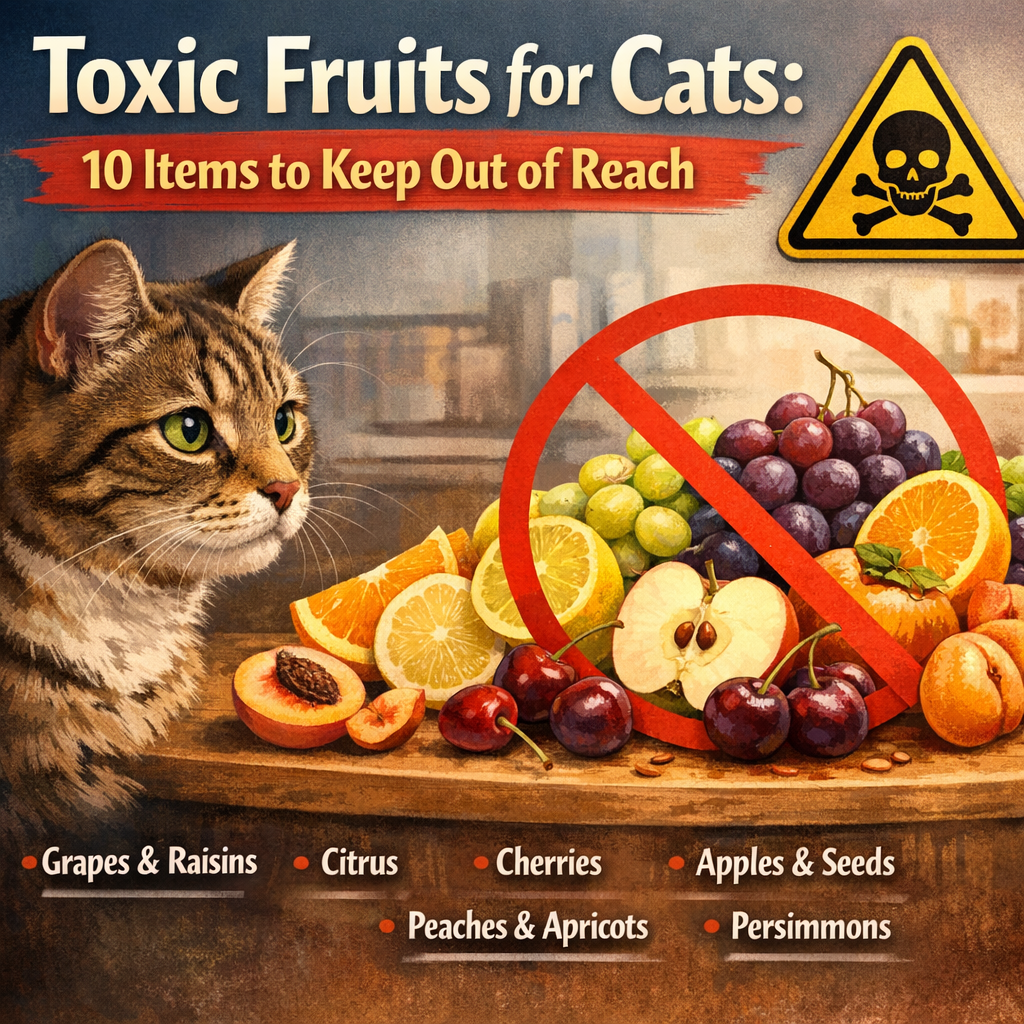
- 1. Grapes and Raisins
- 2. Citrus Fruits (Lemons, Limes, Oranges, Grapefruit)
- 3. Cherries
- 4. Apples (Seed and Core Exposure)
- 5. Persimmons
- 6. Apricots
- 7. Peaches and Nectarines
- FAQ
- Conclusion
Introduction
Why certain fruits are toxic to cats
Cats metabolize foods differently from dogs and humans. Some fruits contain compounds that can irritate the gut, damage organs, or cause systemic illness in felines. Even small amounts can trigger reactions in sensitive cats.
Grapes, raisins, citrus, and pit fruits are common culprits. The risk isn’t about flavor or sweetness alone; it’s about specific toxins concentrated in seeds, pits, skins, or sometimes the flesh.
How to use this guide safely
Treat this guide as a quick reference for keeping your home cat safe. If you also need ideas for safer alternatives to offer, Safe Human Foods for Stray Cats: A Complete Guide can help. You may also want to review 5 human foods cats must never eat to avoid other common sharing mistakes. Use it to identify fruits to avoid and recognize early warning signs.
- Store fruits out of reach and supervise fruit bowls.
- Offer only vet approved treats and foods for cats.
- If you suspect ingestion, contact a veterinarian promptly.
Expert Insight
“Fruits pose risks to cats because certain compounds concentrated in seeds, pits, skins, or flesh can irritate the gut or harm organs, so even small amounts warrant caution and veterinary guidance.” , Veterinary Safety Expert
1. Grapes and Raisins
Why they are dangerous for feline kidneys
Grapes and raisins can trigger acute kidney injury in cats, even from tiny amounts. The exact toxin remains unclear and risk varies between individuals. Don’t judge danger by color or sweetness.
Signs of poisoning and immediate actions
Monitor for changes in behavior, appetite, or urination after ingestion. If your cat is also chewing or licking unusual things around the house, 5 Reasons Your Cat Chews Everything (And How to Stop It) can help you address the habit before it leads to another scare. Early signs may be subtle but can progress quickly.
- Vomiting, lethargy, and decreased appetite
- Seizure-like activity or tremors in severe cases
- Reduced or no urination despite drinking
- Abdominal pain or tenderness
If ingestion is suspected, act quickly. Contact a veterinarian or veterinary emergency service immediately. Early decontamination and treatment improve outcomes.
2. Citrus Fruits (Lemons, Limes, Oranges, Grapefruit)
What makes citrus toxic to cats
Citrus fruits can irritate a cat’s digestive tract. The acids and essential oils in peels and membranes can trigger upset stomachs and vomiting. Some cats may also experience skin or sensitivity reactions to citrus.
In addition to ingestion, the aroma or skin oils can cause pawing at the mouth or drooling. Peels and pith commonly carry higher exposure for sensitive animals, even when the flesh is not eaten.
How to handle accidental ingestion
If your cat nibbles a small piece or licks juice, monitor for mild signs such as drooling or transient vomiting. Most cases resolve with light care.
- Offer small sips of water and withhold other foods for a short period if vomiting occurs.
- Check for dehydration or persistent vomiting, and seek veterinary advice if symptoms continue beyond a few hours.
- Keep citrus fruits and juice out of reach, including stored peels, to prevent recurrence.
3. Cherries
Toxic components and how they affect cats
Cherries present a choking risk from pits and can cause digestive upset if ingested in larger pieces. The flesh is less harmful, but swallowing sizeable fragments may still lead to stomach distress or a potential obstruction.
Potential cyanide-like exposure and signs
Chewed pits can release compounds similar to cyanide, which may irritate the gut and affect breathing in sensitive cats. Early signs are often mild but can worsen with larger amounts or if cherry material blocks the intestines.
- Vomiting or drooling
- Abdominal discomfort or pacing
- Lethargy or weakness
- Changes in breathing or a rapid heart rate in severe cases
If you suspect your cat has eaten cherries, contact your veterinarian promptly. Early assessment can guide care and prevent complications.
4. Apples (Seed and Core Exposure)
Why seeds pose a risk
Apple seeds contain trace amounts of amygdalin, which can release cyanide when crushed. A few seeds swallowed accidentally are unlikely to cause harm, but larger quantities raise the risk. Cats may chew and scatter seeds, increasing exposure.
Safe ways to offer apples if ever allowed
- Remove seeds and core completely before offering any apple pieces.
- Cut the fruit into small, easily swallowable bites to reduce choking risk.
- Offer only infrequent, tiny portions as a treat, if a veterinarian approves it.
Expert Insight
“Safely offering apples means removing seeds and core, slicing into small bites, and limiting quantities unless a veterinarian approves.” , Industry Analyst
5. Persimmons
What to watch for in the inner parts
Persimmons contain tannins and other compounds that can irritate a cat’s digestive system when eaten in larger amounts. The core and seeds concentrate these substances, so avoid letting your cat chew into the fruit’s inner tissue.
Possible GI signs and when to worry
Eating persimmons can cause stomach upset, abdominal discomfort, or mild GI distress. Some cats may show a temporary drop in appetite or drooling after exposure. Watch for vomiting, diarrhea, or signs of discomfort lasting more than a day.
- Look for vomiting or soft stools within a few hours of exposure
- Check for abdominal tenderness or bloating
- Note changes in energy or behavior
6. Apricots
Cyanide-containing seeds and flesh considerations
Apricots pose a risk from both the seeds and the flesh near the pit. The seeds can release cyanide-like compounds when crushed or chewed. The flesh itself is less toxic, but eating large amounts can upset a cat’s stomach or trigger vomiting.
How to prevent accidental ingestion
- Do not leave apricots or apricot pits within reach of your cat.
- Store fruit in sealed containers or high cupboards after preparing snacks.
- If you share fruit with your cat, offer only small, seed-free pieces and monitor for any signs of discomfort.
7. Peaches and Nectarines
Hazards beyond the pit
While the pit itself poses the primary risk, small stone fragments can still irritate the mouth or digestive tract as they pass. The flesh is less toxic but eating large amounts can upset a cat’s stomach.
Signs to watch for after exposure
Be alert for vomiting, drooling, abdominal tenderness, or changes in appetite. Severe cases may include restlessness or signs of dehydration.
- Persistent vomiting or repeated retching
- Abdominal discomfort or bloating
- Changes in breathing or drooling
FAQ
What should I do if my cat eats a toxic fruit?
Act quickly. If you know or suspect ingestion, contact a veterinarian or an animal poison control line right away. Do not wait for symptoms to appear, as early guidance can prevent complications.
Are small amounts dangerous or is only large amounts a concern?
Even small exposures can upset a cat’s stomach or lead to complications if the fruit contains toxic compounds or stones. The risk rises with quantity and the specific fruit involved. Always treat any exposure as a potential concern and seek guidance.
Can cats be trained to avoid fruit on the counter?
Yes. Use consistent boundaries and positive reinforcement. Keep fruit out of reach, use deterrents if needed, and reward when your cat ignores food items in accessible areas. Regular training sessions help reinforce safe habits over time.
Expert Insight
“Act quickly and seek veterinary or poison control guidance as soon as ingestion is suspected, because early direction can prevent complications and even small exposures can upset a cat’s stomach or lead to serious issues depending on the fruit.” , Veterinary Safety Expert
Conclusion
Key takeaways for keeping cats safe
Fruits pose real risks to your feline family. If you want a deeper guide on when to seek help and what vets look for during exams, check out Cat Vet Care Guide: Emergency Signs, Checkups & Rear Health. For a vet-approved guide to safer choices and portion tips, check out Safe Fruits for Cats: Vet-Approved List, Risks & Feeding Tips. Prevention matters: keep all fruits out of paw reach and remove pits, seeds, and cores from accessible areas.
- Supervise any fruit that leaves the kitchen, including rare sharing with pets.
- Watch for signs after exposure such as vomiting, drooling, abdominal discomfort, or changes in appetite.
- When in doubt, consult a veterinarian before offering any shared treats.
Tips for household fruit management around pets
- Store fruit in sealed containers or high cabinets to prevent nibbling.
- Use dedicated serving areas away from pet access for all fruit preparations.
- Educate household members about not leaving pits or cores in reachable spots.
- Keep a quick-reference pet poison guide handy for rapid guidance in an emergency.