Table of Contents
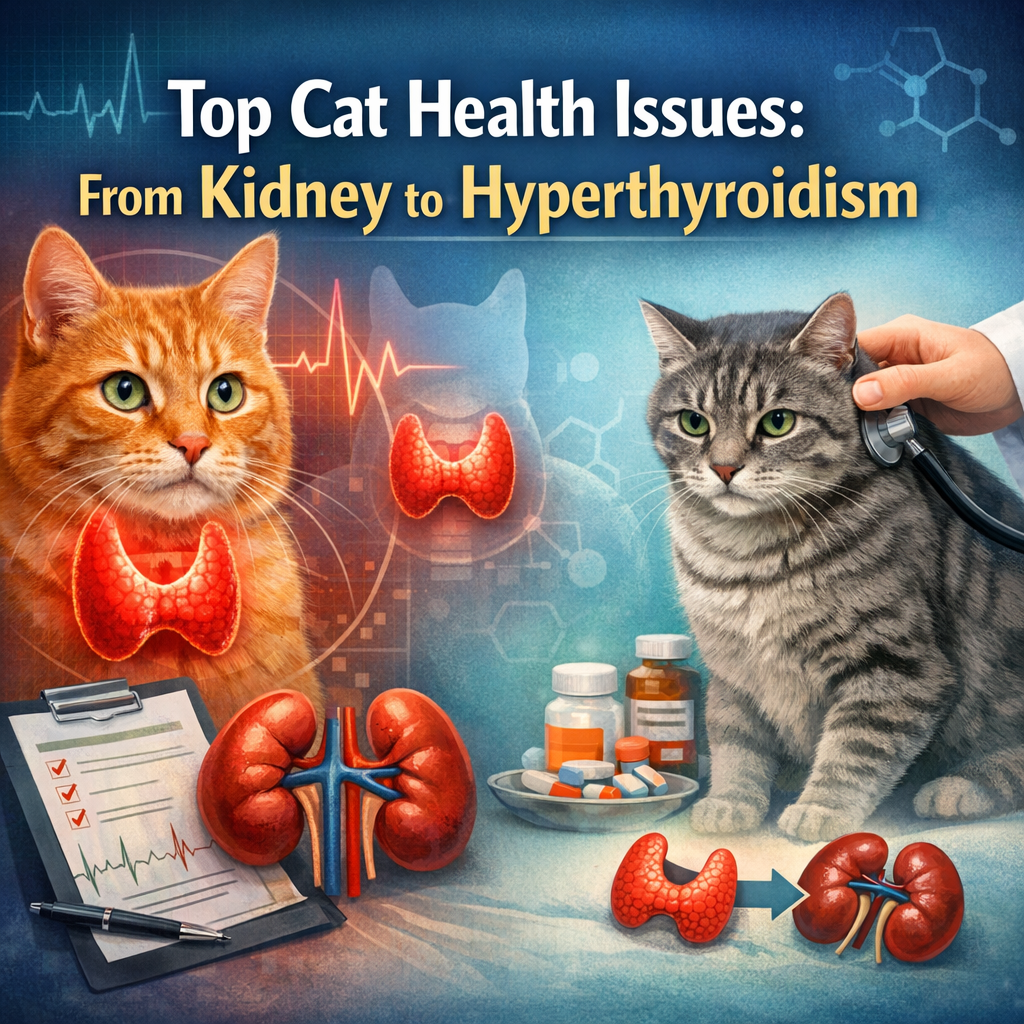
Top Cat Health Issues: From Kidney to Hyperthyroidism
Cats often hide when something’s off. In this section, we cover common feline health issues from kidneys to thyroids, including signs to watch, how they’re diagnosed, and what treatment may look like.
Introduction
Cats age, and with it comes a range of health issues that can quietly impact their quality of life. Here we cover the two big players you’ll hear about: thyroid health and kidney function. Understanding how these systems interact helps you spot problems early and seek the right care.
We’ll outline how feline hyperthyroidism and chronic kidney disease commonly occur together, why one can mask the other, and what this means for treatment. Our goal is to give you clear, practical guidance rooted in current veterinary understanding.
Key ideas you’ll take away:
- Hyperthyroid cats often show weight changes, appetite shifts, and energy levels that flag thyroid issues.
- Kidney disease signs may overlap with thyroid-related symptoms, making monitoring essential after diagnosis.
- Choosing the right treatment requires balancing thyroid control with supporting the urinary tract and kidney function.
Expert Insight
“Hyperthyroidism can increase renal blood flow and GFR, potentially masking CKD and making renal markers unreliable; treating hyperthyroidism cautiously to avoid iatrogenic hypothyroidism is essential for preserving renal function and long-term survival in cats.” , Feline Endocrinology Expert
1. Hyperthyroidism in Cats
What it is and how it affects the body
Feline hyperthyroidism occurs when there is an excess of thyroid hormone. That surplus speeds up metabolism, increasing heart rate and energy use. Tissues throughout the body work harder, which can place stress on the heart, muscles, and kidneys over time.
In older cats, hyperthyroidism often coexists with other age related changes. A precise diagnosis helps tailor care for thyroid health and overall well being, including nutrition and activity adjustments.
Common signs and early detection
Watch for early clues such as:
- Weight loss with preserved or increased appetite
- Increased activity, restlessness, or irritability
- Scruffy coat or thinning fur, especially along the back and flanks
Routine screening typically includes a blood panel and TT4 testing to confirm elevation. Regular checkups are key for early detection, particularly in senior cats.
Implications for kidney function and overall health
Thyroid excess can transiently boost kidney perfusion, which may mask underlying CKD. When thyroid levels are corrected, kidney tests can reveal pre existing kidney disease or a decline in function.
Care involves balancing thyroid control with kidney preservation, recognizing the interconnected health of aging cats and the need for timely, data driven decisions.
Expert Insight
“Hyperthyroidism artificially increases renal blood flow and GFR, masking CKD in aging cats; as thyroid function normalizes with treatment, renal function reveals the true state, underscoring the need to balance thyroid control with kidney health.” , Industry Expert
2. Kidney Disease in Cats
Overview of CKD in felines
Chronic kidney disease, or CKD, is common in older cats and results from a gradual loss of kidney function. The condition tends to progress slowly and can exist alongside other illnesses, including thyroid disorders. Monitoring renal function helps catch changes early and guide treatment choices.
Symptoms, progression, and monitoring
Early signs can be subtle and include changes in thirst, appetite, or weight. As CKD progresses, cats may vomit, become lethargic, or urinate less often. Regular tests track progression and kidney health over time.
- Renal markers to watch: creatinine, BUN, SDMA
- Glomerular filtration rate helps gauge overall function
- IRIS staging provides a framework for monitoring and management
Impact of age and comorbidity with thyroid issues
Age increases CKD risk, and concurrent thyroid disease can complicate assessment. Hyperthyroidism can mask CKD by altering renal perfusion, so reassessment after thyroid treatment is crucial. Coordinating thyroid and kidney care helps ensure better long-term outcomes.
3. The Thyroid-Kidney Relationship
How hyperthyroidism influences renal function
Hyperthyroidism raises metabolic rate and increases renal blood flow, which can temporarily elevate the glomerular filtration rate (GFR). In cats with active thyroid disease, this can mask underlying kidney issues by making function appear better than it is.
Thyroid excess also impacts protein turnover, which can shift renal biomarkers used to assess kidney health. Tests should be interpreted in the context of thyroid status to avoid misreading kidney function.
Why CKD can be masked by hyperthyroidism
High thyroid levels boost kidney perfusion, concealing early CKD. Kidney signs may only become evident after thyroid treatment lowers GFR and unmasks preexisting damage.
Post‑treatment rechecks are essential, especially in older cats with both conditions, to catch declines in renal function early.
Managing both conditions effectively
Management should balance thyroid control with kidney preservation. Practical steps include:
- Choose treatments that stabilize thyroid levels without causing abrupt changes in kidney perfusion
- Incorporate SDMA alongside traditional renal tests to monitor kidney health
- Schedule rechecks of thyroid and renal parameters after interventions
5. How to Monitor and Manage Concurrent Hyperthyroidism and CKD
Diagnostic approaches and biomarkers
Diagnosing hyperthyroidism with kidney disease requires a focused workup that recognizes how the two conditions influence each other. Use multiple tests to capture both systems without letting thyroid status bias results.
- Thyroid assessment: TT4, free T4, and trend data to confirm persistence or to detect iatrogenic hypothyroidism after treatment.
- Renal evaluation: SDMA alongside creatinine and BUN to gauge kidney function, noting SDMA may rise earlier in renal decline.
- GFR interpretation: Consider thyroid-driven changes in renal perfusion when evaluating eGFR and cross-check with body weight and muscle mass.
- IRIS staging: Apply aging cat guidelines to monitor progression and tailor interventions to renal risk.
Treatment considerations to avoid iatrogenic hypothyroidism
Balance thyroid control with kidney safety. Favor strategies that minimize abrupt renal perfusion shifts and anticipate downstream effects on appetite and hydration.
- Radioiodine therapy: Often effective for hyperthyroid cats; use post-treatment testing to avoid under or over-treatment and adjust follow-up plans accordingly.
- Medical therapies: Antithyroid drugs require careful dose adjustments based on thyroid response, renal status, and potential drug interactions with kidney disease meds.
- Early rechecks: Schedule thyroid and renal panels after any therapeutic adjustment to detect iatrogenic hypothyroidism promptly and refine dosing.
Monitoring schedules after treatment
Structured follow-up enables timely detection of shifts in thyroid and kidney health, guiding ongoing care plans.
- Short term: Recheck thyroid hormones and renal markers 4-6 weeks after therapy initiation or dose change.
- Medium term: Every 2-3 months during the first year, then at intervals based on stability and IRIS stage.
- Long term: Annual reviews or sooner if symptoms recur or kidney function declines.
6. Dietary and Lifestyle Considerations
Nutritional strategies for thyroid and kidney health
Nutrition should support both thyroid control and kidney function without overloading the organs. Start with balanced calories, moderate, high‑quality protein, and easily digestible sources. Align minerals and electrolytes with your cat’s thyroid treatment plan and kidney status.
- Moderate protein: enough to preserve lean mass without overburdening renal function
- Quality proteins: easily digestible options with complete amino acids
- Balanced minerals: monitor phosphorus and potassium with your veterinarian guidance
Hydration and appetite management
Maintaining hydration supports renal perfusion and can ease thyroid treatment effects. Appetite may shift with thyroid status, so offer small, frequent meals and appealing options to encourage intake.
- Water access: fresh water available at all times
- Meal timing: consistent feeding schedule to stabilize energy
- Electrolyte balance: follow vet recommendations for any additions
Safe activity and weight maintenance
Regular, moderate activity aids muscle health and metabolic balance. Monitor weight to prevent obesity or excessive loss, both of which stress the kidneys and heart.
- Low‑impact play: gentle daily sessions
- Weight checks: monthly during treatment changes
- Grooming and routines: steady daily habits to reduce stress
7. Early Signs and When to See a Vet
Red flags in behavior and physical symptoms
Watch for changes in energy, appetite, and thirst. Subtle shifts can signal problems, especially when thyroid or kidney issues are present.
- Unexplained weight loss or gain
- Increased or erratic thirst and urination
- Less activity, hiding, or reluctance to jump
- Vomiting or repeated episodes of diarrhea
- Muscle weakness, dull coat, or grooming changes
Timelines for reassessment after treatment changes
Plan follow-ups to catch changes early. Regular checks help prevent small shifts from becoming serious.
- Short term: thyroid and renal tests 4-6 weeks after therapy adjustments
- Mid term: repeat tests every 2-3 months during the first year
- Long term: annual reviews unless new symptoms occur
What to discuss at a veterinary visit
Bring a concise history and recent results to help the team adjust care promptly.
- Recent weight, appetite, and water intake changes
- Medication adherence and any side effects
- Previous thyroid and kidney test results
- Energy levels, vomiting, or behavioral concerns
8. FAQ
Here are common questions about feline thyroid and kidney health, with concise, practical answers grounded in current understanding.
- What is feline hyperthyroidism and how is it diagnosed? Hyperthyroidism speeds up metabolism due to overactive thyroid tissue. Diagnosis blends clinical signs, physical exam, and blood tests. The primary test is serum TT4, typically elevated. Free T4 testing by CEIA or ED offers higher sensitivity, though with slightly lower specificity. In tricky cases, repeat testing and adjunct tests or imaging like thyroid scintigraphy can confirm the source.
- Why does hyperthyroidism affect the kidneys? Thyroid hormones raise renal blood flow and GFR, which can mask CKD and shift kidney markers until thyroid status is corrected. This makes careful interpretation essential, especially before altering kidney-focused therapies.
- What signals CKD may be present alongside hyperthyroidism? Look for persistent appetite changes, weight loss or gain, thirst shifts, increased urination, or behavioral changes. Assess renal health with SDMA and creatinine, plus a urine analysis for USG and protein to gauge kidney function.
- How is concurrent hyperthyroidism and CKD managed? Treatment aims to normalize thyroid status while protecting kidneys. Start with approaches that balance thyroid control and renal preservation, then use follow-up panels to fine-tune therapy and limit adverse effects.
- What is radioiodine therapy and when is it used? I-131 radioiodine can cure benign hyperthyroidism by destroying overactive tissue. It is a common, effective option for many cats, with post-treatment monitoring of thyroid and renal parameters to ensure stability and detect any early CKD changes.
- What should I monitor after starting treatment? After therapy, track TT4 and, if needed, fT4, plus kidney panels. Weigh your cat weekly for the first month, check appetite and hydration daily, and watch for energy shifts that may prompt a therapy adjustment.
- Are there dietary considerations? Yes. A balanced protein plan and a kidney-friendly workload support recovery and overall health. Work with your veterinarian to tailor minerals, hydration strategies, and any diet adjustments during treatment and beyond.
- Practical tip from Bella Gatti US Shop Consider stocking a monitoring kit with at-home scale, a simple weight-trend log, and a urine color chart to flag early changes between vet visits.
Conclusion
As cats age, the link between thyroid health and kidney function becomes more important. Recognize how hyperthyroidism can influence renal tests and what that means for ongoing care.
Effective management relies on coordinated care that respects both thyroid control and kidney safety. Your veterinarian can help tailor treatments to balance metabolism with renal preservation, guided by regular monitoring.
Key takeaways for cat owners:
- Reassess thyroid and renal parameters after changes in therapy
- Note subtle shifts in energy, appetite, and hydration between visits
- Collaborate with your vet to choose therapies that minimize kidney risk
Staying informed and proactive supports your cat’s quality of life as thyroid and kidney health interact over time.