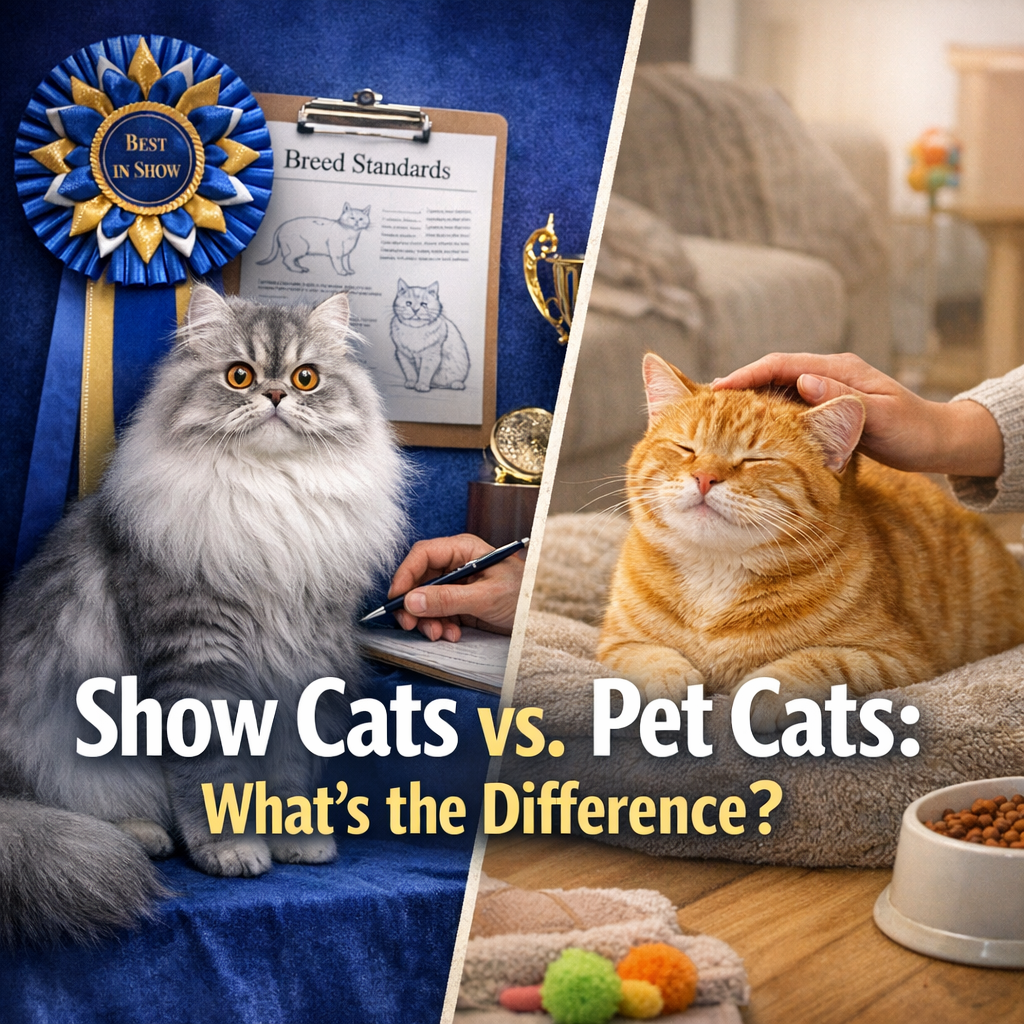
- Show cats are judged against strict breed standards and hold certificates; pet cats are companions emphasized for temperament and daily care.
- Understanding breed standards helps both show prep and everyday ownership, including health, grooming, and suitability for lifestyle.
- Practical choices depend on goals: show involvement vs. family companionship, with attention to health records, temperament, and long-term care.
Table of Contents
You might hear show cats praised for perfect bloodlines and precise body structure, while ordinary pet cats win hearts with personality and everyday charm. Here’s how breed standards come into play for show cats and how understanding those traits can help you, even if you’re not planning to compete.
What defines a Show Cat?
A show cat is a feline that competes in formal events and meets established criteria set by recognized cat associations. These cats generally come from strong bloodlines and have documented competitive histories. Common certificates include a pedigree, parental pedigree, and championship documentation. Judges assess how well the cat conforms to breed standards through evaluation of appearance, movement, and overall balance.
What is a Pet Cat?
Pet cats are kept at home or on farms for companionship, not for show or breeding. They may be mixed or pedigreed, but the focus is on temperament, health, and daily life suitability rather than competition.
In practical terms, pet cats thrive with steady routines, predictable grooming, and gentle handling. They can exhibit a wide range of appearances and temperaments, all compatible with a family or household environment.
Breeds, Standards, and What Judges Look For
Breed standards define how a show cat should appear and move on the judging floor. They cover body proportions, head shape, coat texture, color patterns, and the expected temperament for each breed. These criteria drive eligibility and scoring, guiding grooming, posing, and overall presentation.
When preparing for a show, start by reviewing the breed standard and identifying two or three nonnegotiable traits to emphasize. Tailor your grooming and handling plan around those benchmarks to present a consistent silhouette.
Avoid overemphasizing a single feature at the expense of balance. Mature judges value harmony across the cat’s conformation, movement, and temperament. In climates with variable weather, plan maintenance to preserve coat texture without altering lay or density. If a deviation is noted, have a plan to adjust posture or gait in subsequent rounds to minimize impact on the score.
Certificates and Pedigree Verification
Championship cats carry a set of certificates that verify their status and potential for breeding. A pedigree certificate shows lineage, while a parental pedigree certificate confirms the parents. Championship certificates document success in competition. Bloodline verification helps ensure a cat’s ancestry aligns with breed expectations used by judges and cat associations such as CFA and TICA.
In practice, you should obtain copies of each certificate from the breeder or registrar and store them with other health records. For example, when buying a show-ready kitten, request not only the main pedigree but also any breeder notes on temperament and show history.
To avoid missing details, create a simple checklist: verify issue date, registrar stamp, and any lineage comments. If a certificate lacks a seal or has faded text, contact the issuing body for a replacement. Bella Gatti US Shop recommends keeping these documents in a protected, climate-controlled folder for quick access at shows or veterinary visits.
What Makes Show Cats and Pet Cats Different in Appearance and Quality
Show cats are judged against strict breed standards that emphasize body proportions, head shape, coat texture, and movement. The goal is a harmonious overall silhouette where every feature supports the breed type.
In contrast, pet cats prioritize everyday health, comfort, and temperament. Their appearance can vary widely, and they are not held to the same precise measurements or presentation criteria as show cats.
That said, many pet cats still reflect sound health and balanced conformation. You can apply the same basic checks used in shows, proportions, coat condition, and ease of movement, to assess a cat’s suitability for a potential future show path or simply to understand its quality as a companion.
How Breed Standards Apply in Real Life
You don’t need to be a top breeder to gain value from breed standards. By learning common traits, you can assess a cat’s health and balance during routine vet visits and when meeting potential adopters. A cat with steady weight, clear eyes, and a well-maintained coat often signals good overall condition.
If you plan to show, you’ll become more familiar with judge criteria and the paperwork involved, including veterinary records and lineage checks. Start with a practical approach: create a simple traits checklist for your breed and note how each trait appears in everyday cats you meet at events or shelters.
Practical steps you can take include attending reputable shows to observe how judges evaluate cats, and asking breeders to illustrate how a standard is reflected in real examples. Bella Gatti US Shop provides care guides and sample certificates to help you assemble needed documentation efficiently.
Avoid common pitfalls such as mistaking a breed-specific fault for a health issue, or prioritizing appearance over temperament. If you notice a unique trait or minor deviation, consult with a licensed veterinarian or a certified cat judge to determine if it affects eligibility or overall suitability for your goals.
Judging and Evaluation: The Core Criteria
Judges apply breed specific standards to each cat, using a structured checklist that emphasizes conformation. They evaluate body proportions, head shape, ear set, tail carriage, and coat texture to determine how closely the cat aligns with the breed type.
Behavior under show conditions also matters, as judges assess how trainable and people-friendly the cat appears during movements and posing. This helps distinguish cats that are physically meeting standards from those that handle routine show routines smoothly.
Practical implications
A solid showing profile can lead to opportunities at show events and raise visibility with breeders and judges. To prepare, owners should develop a show readiness plan that includes daily handling, consistent grooming, and mock judging with time checks to simulate ring conditions.
What to watch for
Watch for uneven coat quality, subtle misalignment of ears or tail, and posture inconsistencies during handling. Address these through targeted grooming, regular veterinary checks, and calm, integrated handling practice to reduce stress during actual judging.
Breeding for Show vs. Pet Qualities
Breeding for show quality focuses on traits that align with breed standards and verifiable bloodlines. A show breeder often prioritizes consistent bone structure, precise proportions, and head conformation that meets breed club expectations. They typically maintain pedigree records and participate in conformation events to demonstrate line integrity.
By contrast, pet-oriented breeding centers on health, temperament, and sociability, with less emphasis on strict show measurements. Practical steps include thorough health screenings for inherited conditions, early socialization, and breeding for friendly temperaments that suit family life. Track health outcomes and avoid exaggerating any single physical trait to keep cats robust and well rounded.
Training and Preparation for Shows
Show preparation goes beyond grooming. It encompasses structured handling routines, environmental acclimation, and consistent practice with ring cues to build calm, confident presentation.
For everyday life, you can adapt these practices to improve your cat’s behavior and health. Regular grooming, gentle handling, and predictable routines support a cat’s comfort and cooperation in daily interactions.
Assessing Pet Cats for Show Potential
Not every pet cat will become a show cat. Look for signs of balanced structure, a healthy coat, and a calm, trainable temperament. Start with at-home observations such as how the cat carries itself and responds to handling.
Use practical, non stressful evaluation methods. A short, friendly mock judging session with familiar people can reveal how the cat handles attention, crowd noise, and standing still for inspection. Focus on natural movements and ease of posture rather than forcing perfection.
Beyond appearance, consider how the cat adapts to daily life under showlike scrutiny. Note how it responds to grooming, routine handling, and structured activities. These responses can indicate trainability and resilience that align with show environments.
If you’re curious about competition eligibility, consult local associations like CFA or TICA for guidance on the process and certificates involved. They often provide checklists, required documentation, and trial judging opportunities you can attend before entering a class. Bella Gatti US Shop also offers grooming tools and beginner friendly training aids to help prepare your cat for formal evaluation.
Breeder and Owner Knowledge
When you evaluate potential cats, rely on documented bloodlines, clear three-generation pedigrees, and records that show progress toward championship status. For new kitten buyers, ask for health testing results and lineage verifications to reduce hidden risks and surprises down the line.
Beyond certificates, seek practical assurances. Request a signed breeder agreement, a transparent health guarantee, and proper transfer of ownership paperwork. If you are considering a show cat, confirm the exact breed standard, recent judge notes, and eligibility details from the governing body. Bella Gatti US Shop can help you interpret these documents so you understand what you’re acquiring.
Expert Insight
“Health, temperament, and well-being must be prioritized over appearance in breeding decisions.” , Industry Expert
Introduction
What this article covers
At Bella Gatti US Shop, we break down show cats versus pet cats in clear terms. You’ll see how breed standards shape appearance, what judges look for, and how everyday cat owners can benefit from understanding these traits. This guide connects cat shows to everyday ownership without the pressure to compete.
We cover the basics of body structure, head proportions, and bloodlines, along with the certificates that verify pedigree and show eligibility. The goal is to help you read breed standards and apply that knowledge to choosing or caring for any cat, whether you plan to compete or simply value sound health and temperament.
Why the distinction matters for cat lovers and buyers
Knowing the difference helps you set realistic expectations for appearance, care, and cost. Show standards emphasize specific features that may not reflect typical pet life. Being aware of these criteria helps you spot healthy traits and temperament in ordinary cats without assuming they must fit a show standard to be a great companion.
- Understanding breed standards informs responsible breeding choices.
- It clarifies which cats meet competition criteria versus everyday pet quality.
- It helps buyers pick cats that fit their lifestyle, whether for showing or home life.
Practical takeaways for everyday ownership
To translate standards into real life, start with a simple checklist during visits to Bella Gatti US Shop or local breeders. Look for balanced body proportions, healthy coat condition, and calm, responsive temperaments. Compare a cat’s behavior to your daily routine, such as whether it adapts to apartment living or needs outdoor enrichment.
When evaluating pedigreed cats, request the breeder’s health clearances and the cat’s early socialization history. Ask for vaccination records, parasite control, and veterinary notes on weight changes or dental health. For pet owners, focus on a cat’s adaptability, litter habits, and responsiveness to handling during initial introductions.
2. Pet Cats Defined: Everyday Companions
Common expectations and care for pet cats
- Nutrition tailored to age, activity, and health needs. For example, senior cats may require lower calories and joint-supporting supplements, while active kittens need higher energy density.
- Regular veterinary checkups and preventive care. Schedule annual exams and keep up with vaccines, parasite prevention, and dental cleanings per your vet’s guidance.
- Grooming appropriate to coat type, with a simple but consistent routine. Short coats may only need weekly brushing; long coats benefit from daily sessions to prevent matting.
- Environmental enrichment that supports curiosity and reduces stress. Use puzzle feeders, vertical spaces, and rotating toys to prevent boredom.
- Safe boundaries and gradual acclimation to new environments or visitors. Introduce guests in a quiet room and offer a retreat corner with familiar items.
3. Physical Traits and Conformation: Show-Standard vs Everyday Appearance
Body structure, coat, and breed-specific features
Show cats are measured against exact breed standards that specify ideal body proportions, bone structure, and balance. The goal is a harmonious silhouette where every part supports overall symmetry. For everyday cats, prioritize comfort and functional health over strict measurements.
Coat quality matters in many standards. Show cats typically demonstrate density, texture, and pattern fidelity aligned with their breed. Pet cats vary in coat length, color, and shedding, which should fit a family’s grooming routine and climate considerations.
How conformation influences show judging
- Judges weigh proportion over size, assessing head shape in relation to body length.
- Symmetry and balance across the cat affect scoring more than any single standout feature.
- Overall presentation, including posture and carriage, signals adherence to the standard.
4. Nutrition, Care, and Conditioning for Show Cats
Specialized diets for coat and muscle development
Tailor meals to support a glossy coat, firm muscle tone, and endurance for judging days. A balanced plan emphasizes protein quality and appropriate fats to support conditioning without excess weight.
Consult a veterinarian or feline nutritionist to align calories with activity levels. Monitor weight regularly and adjust portions after training cycles to maintain consistent silhouette and mobility on show days.
- Protein-rich feeds matched to breed, age, and activity
- Essential fatty acids for skin and coat health
- Caloric targets that sustain optimal body condition
Grooming and pre-show routines
Grooming for show cats should be a predictable, structured process. A planned timeline helps the coat lay smoothly under show lighting and maintains skin health.
Pre-show care may include deshedding, trimming within rules, and routine skin checks. Pair grooming with calm handling practice to promote confident presentation.
- Regular brushing to minimize shedding and enhance coat lay
- Conditioning products as recommended by breeders or judges
- Mock-show handling to build familiarity with stands, gait, and stacking
5. Training, Handling, and Show Environments
How show cats are prepared for exhibitions
Preparation for a show starts well in advance. Breeders and handlers establish a routine that trains posture and gait while reducing stress in unfamiliar spaces. The goal is consistent presentation and familiarity with judges, lights, and crowds.
Record keeping supports eligibility and conformation expectations. A cat’s pedigree and parentage accompany it into the ring, with practice building confidence and easing ring nerves.
- Structured stacking and gait drills aligned with breed standards
- Controlled exposure to show day stimuli such as crowds and bright lights
- Handling exercises that simulate ring conditions with steady pacing
Household pets in show settings and limitations
Ordinary cats may enter certain classes, such as household pet divisions, where temperament and health matter as much as appearance. These divisions honor pets that fit family life rather than strict breed ideals.
Show environments for household pets limit grooming intensity and handling to safeguard welfare. Cats in these classes still benefit from gradual acclimation and predictable routines to enjoy the experience.
- Stepwise acclimation: start at home, visit quiet venues, then increase exposure gradually
- Desensitization schedule for lights and sounds, with short, positive sessions
- Handling guideline: seek comfortable positions, avoid forced restraints, reward calm behavior
| Aspect |
Show Cat Criteria |
Household Pet Criteria |
| Handling |
Professional handling with emphasis on stand and gait |
Gentle handling and comfort with familiar routines |
| Environment |
Vendor stands, bright lights, crowd exposure |
Relaxed venues, familiar rooms, reduced noise |
| Grooming |
Show standard grooming intensities as allowed |
Basic grooming focused on comfort and health |
Expert Insight
“Experts understand that calm, predictable routines reduce stress and help pets, like show-household cats, thrive in new environments.” , Industry Analyst
6. Judging and Scoring: What Judges Look For
Judging criteria in shows
Judges compare a show cat to breed standards through a structured assessment of body structure, head shape, eye placement, ear set, and tail carriage. Movement, balance, and overall presentation also influence the final ranking.
Grooming quality, coat texture, and condition matter, and temperament plus how the handler guides the cat can impact ring rhythm, particularly in longer evaluations.
- Body structure aligns with the breed silhouette and length expectations
- Head proportions relative to neck and muzzle for symmetry
- Coat density, shine, and texture match breed standards
- Correct stance and gait during the evaluation
Typical scoring outcomes and title progression
Judging results drive a cat toward championship milestones within its show organization. Points accrue toward breed titles and show-specific recognition.
The path typically moves from initial recognition to higher levels as show activity continues.
- Initial recognition for solid show presence and grooming
- Mid-tier points toward breed-specific championships
- Champion level certificates when criteria are consistently met
- Consistency matters: repeated top placements build credibility
- Show rules can influence point totals, so consult the event schedule
| Aspect |
Evaluation Detail |
Impact on Score |
| Conformation |
Adherence to breed standards for body and head |
High influence on final ranking |
| Presentation |
Ring behavior, handling, and posture |
Moderate impact, can affect perceived fit |
| Condition |
Coat, skin health, and overall vitality |
Supportive impact, reinforces standard adherence |
Expert Insight
“Judges are trained to weigh each breed against a written standard, balancing body, gait, and overall presentation to select cats that embody the true essence of the breed and its natural style.” , Industry Expert
7. Practical Considerations for Buyers: Choosing Between Show Quality and Pet Quality
When a pet cat might be the right choice
You don’t need a show standard to enjoy a cat’s companionship. Ordinary cats offer steady temperament, reliable routines, and lower maintenance in daily life. They can adapt well to family life and fit a busy household.
If your priority is straightforward daily interaction, reliable health, and a relaxed home environment, a pet cat can be the ideal choice. Focus on personality and compatibility with your routine rather than appearance or show eligibility.
Cost, temperament, and long-term ownership
- Initial investment: Show standard cats may cost more due to bloodlines, certificates, and breeder oversight.
- Ongoing care: Show cats often require specialized nutrition and regular grooming to maintain conformation; pet cats usually have broader feeding and grooming options.
- Temperament: Many show cats have strong temperaments, but household pets can deliver steady, family-friendly personalities regardless of appearance.
- Long-term ownership: Consider health screenings and potential breeding considerations if you plan future litters or want documented lineage.
- Documentation: A pedigree certificate or parent’s pedigree can be useful for future breed planning, even if the cat remains a family companion.
Practical steps for choosing a cat that fits your life
- Assess your daily rhythm and energy level. If you work long hours, look for a cat with independent habits and a predictable routine.
- Visit multiple shelters or reputable breeders. Inquire about socialization, litter box habits, and experiences with children or other pets.
- Request health data. Prioritize cats with recent vet checks, vaccination records, and parasite control history.
- Plan for long-term care. Budget for annual wellness visits, preventive care, and aging-related needs.
Table: Show-standard vs. pet-level considerations
| Aspect |
Show-standard criteria |
Pet-level criteria |
| Cost |
Higher due to bloodlines and certificates |
Lower ongoing costs, basic care |
| Care demands |
Breed-specific grooming and nutrition |
General grooming and flexible diets |
| Environment |
Exposure to show-day stimuli may be required |
Home-friendly, low-stress settings |
| Documentation |
Pedigree certificates and lineage history |
Health records and standard veterinary care |
FAQ
Here are concise answers to common questions about show cats and pet cats, grounded in breed standards and everyday ownership.
- What distinguishes a show cat from a pet cat? A show cat is evaluated against breed standards at organized events and may hold certificates tied to bloodlines and championship status. A pet cat is valued for companionship and health, with no competition requirements.
- Do I need a pedigree to own a show cat? Pedigree documents help verify bloodlines and eligibility for certain shows, but not all households pursue competition. A pedigree certificate can aid future breeding or confirmation of lineage.
- Can ordinary cats compete in shows? Some venues offer household pet classes that celebrate health and temperament in non championing categories, allowing non-pedigreed or mixed-breed cats to participate in limited evaluations.
- What should I look for if I want a show quality kitten? Focus on lineage documentation, a documented parent pedigree, and consistent adherence to breed standards in available family lines, not just appearance alone.
- Are show standards relevant to non show ownership? Yes. Understanding body structure and head proportions helps you assess temperament, health needs, and care requirements for any cat, even if you never enter a show ring.
Conclusion
Knowing the difference between show cats and pet cats sets clear expectations for care and ownership. You don’t need a show ring to value breed standards or to make smart choices about health and daily life with a cat.
Practical considerations when choosing
Consider how a cat will fit your routine. If you work long hours, look for a resilient, low maintenance companion or a calm adult cat. Observe how a cat adapts to a busy home before you commit.
- Show standards shape expectations for grooming and handling, even if you don’t compete.
- Pet level criteria emphasize temperament, health history, and day to day compatibility.
- Pedigree documents are most relevant to breeding plans or show eligibility, not routine care.
When selecting for family life, prioritize a cat’s body stability, balanced head proportions, and a clear health record. These cues support easier grooming, fewer medical surprises, and better long term harmony with children or other pets.
Bella Gatti US Shop recognizes that many buyers want a dependable, charming companion. Our resources focus on practical care and clear guidance for both show-minded and everyday cats. Our grooming and care tools support you whether you’re preparing for a show or simply ensuring daily comfort and health for your cat.