





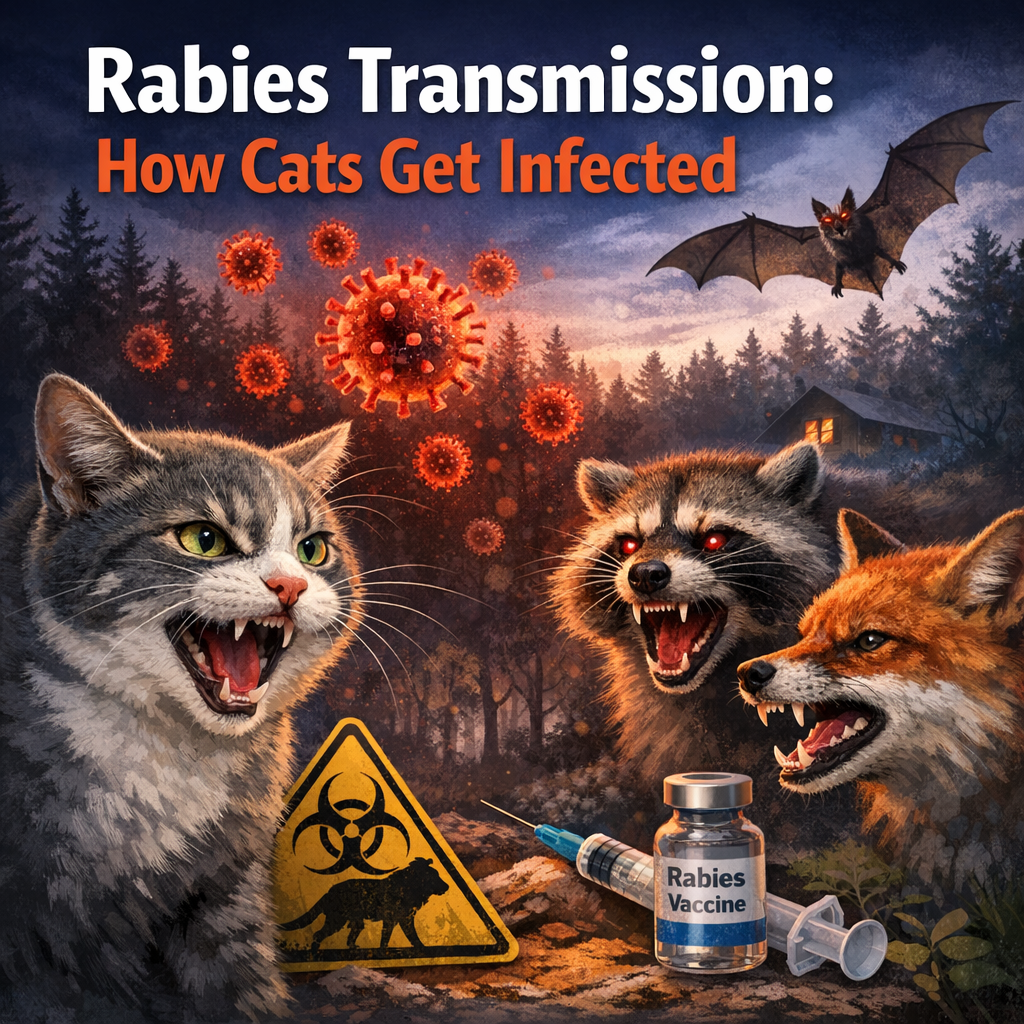
- Transmission & Risks: Rabies is a fatal zoonotic virus spread primarily through the saliva of infected wildlife like raccoons and bats; cats are now the most frequent domestic carriers in the U.S. due to their hunting instincts and lower vaccination rates.
- Progression: The virus travels through the nervous system rather than the blood, with an incubation period typically lasting 4 to 8 weeks, during which the cat appears healthy but the infection is quietly moving toward the brain.
- Symptoms: Once it reaches the brain, the disease is terminal and manifests in stages, ranging from subtle behavior changes (prodromal) to extreme aggression (furious) or paralysis, making early detection extremely difficult.
- Prevention is Key: There is no cure or reliable test for living animals once symptoms appear; consistent vaccination is the only effective way to protect pets, even for strictly indoor cats who may encounter intruding wildlife.
Table of Contents
- Rabies Transmission: How Cats Get Infected
- The Infection Pathway of the Rabies Virus
- The Incubation Period for Rabies in Cats
- Species Most Responsible for Rabies Spread
- Recognizing the Signs of Rabies Transmission
- Signs and Stages of Rabies Exposure
- Advanced Considerations of Viral Shedding
- Geographic Variables and Domestic Vulnerability
- Common Carriers and Risk Levels
- Feline Rabies Vaccination and Prevention
- The Public Health Impact of Feline Rabies
- Frequently Asked Questions About Feline Rabies
Rabies Transmission: How Cats Get Infected
Rabies is a lethal virus targeting the feline nervous system, carrying a near-certain mortality rate once symptoms emerge. Understanding how this transmissible disease spreads is essential for protection, particularly because the virus is zoonotic, meaning it can jump from pets to their owners. While the threat is significant, proactive knowledge regarding wildlife interactions remains your best defense against infection.
This guide explores the specific biological mechanics of the virus, the timeline of its progression, and why consistent veterinary care is vital for long-term health in high-risk environments.
The Infection Pathway of the Rabies Virus
Once the virus has successfully breached the skin, it begins a sophisticated journey through the feline body known as retrograde axonal transport. Rather than traveling through the bloodstream like many other infections, rabies “hitchhikes” along the peripheral nerves. This unique pathway allows the virus to remain hidden from the cat’s immune system, which explains why infected animals often appear perfectly healthy during the early stages of the disease.
The virus moves at a relatively steady pace toward the central nervous system. According to the Merck Veterinary Manual, once the infection reaches the spinal cord and subsequently the brain, it triggers a rapid inflammatory response known as encephalomyelitis. It is only after this cerebral invasion that the virus moves outward to the salivary glands, at which point the cat becomes capable of spreading the infection to others through its own saliva.
The Incubation Period for Rabies in Cats
The time it takes for this neurological journey to complete is known as the incubation period, which typically spans four to eight weeks in felines. This window is highly variable, influenced heavily by the viral load and the proximity of the entry point to the head. For instance, a wound on a hind paw requires a much longer transit time for the virus to reach the brain than a bite delivered to the neck or muzzle.
During this silent phase, the animal remains asymptomatic and is not yet contagious. However, because the transition from the incubation period to the “shedding” phase is sudden, any cat with an unknown bite wound must be strictly isolated. This period of observation is the only way to ensure the virus hasn’t reached the brain, as there is currently no reliable way to test a living animal for rabies before clinical signs appear.
Species Most Responsible for Rabies Spread
Wild animals such as raccoons, bats, and skunks serve as the primary reservoirs for the virus, maintaining its presence in the ecosystem. Statistics from the CDC indicate that domestic cats are diagnosed with rabies significantly more often than dogs in the United States, a trend largely attributed to lower vaccination compliance and the predatory nature of outdoor felines. Because cats often hunt small mammals that may be carrying the virus, they act as a high-risk bridge between wildlife and human households.
Recognizing the Signs of Rabies Transmission
While these wildlife encounters are the catalyst, the resulting infection manifests in distinct neurological phases. Once the virus completes its incubation, a cat enters the prodromal stage, characterized by subtle behavioral shifts like sudden irritability or uncharacteristic clinginess. As the disease progresses, some animals enter the “furious” phase, exhibiting extreme agitation and pica, the consumption of non-food items, before the final paralytic stage leads to motor failure and the inability to swallow. Because these symptoms signal an irreversible decline, clinical management focuses entirely on palliative care and public safety.
Signs and Stages of Rabies Exposure
Following this quiet incubation, the disease manifests in three distinct phases, beginning with the prodromal stage where a cat’s fundamental personality may flip, an independent cat might become uncharacteristically clingy, while a friendly pet may grow irritable. As the virus attacks the brain, the “furious” or “dumb” stages follow, characterized by disorientation, seizures, and the classic hydrophobia caused by painful throat spasms. Because there is no antemortem test or cure once these clinical signs emerge, strict adherence to local vaccine mandates is the only way to prevent a tragic outcome for both the pet and the household.
Expert Insight
“Rabies in cats doesn’t always begin with aggression. In some cases, quiet, withdrawn, excessively calm, or timid behavior may be the first signs, making the disease extremely difficult to detect in its early stages.” (Veterinary Health Specialist)
Advanced Considerations of Viral Shedding
The final stage of this biological journey involves the “centrifugal” spread, where the virus moves from the brain back out to the highly innervated tissues of the head. The most significant destination is the submandibular salivary glands, where the virus accumulates in high concentrations just before the onset of aggressive symptoms. This evolutionary timing ensures that the cat is most infectious exactly when its behavior becomes most erratic. It is important to note that while the virus is present in the saliva, it is extremely fragile outside the host; it cannot survive for long on dry surfaces, meaning transmission almost exclusively requires direct fluid-to-blood contact or mucosal exposure.
Geographic Variables and Domestic Vulnerability
While wildlife interactions drive the majority of cases, the risk level fluctuates based on regional ecology and the specific hunting habits of the cat. Interestingly, cats have surpassed dogs as the most frequently reported rabid domestic animal in the United States, largely due to lower vaccination compliance and their tendency to roam. Even strictly indoor cats are not immune; a disoriented bat entering through a chimney or an open window can trigger a cat’s predatory instinct, leading to a high-risk confrontation. Understanding that the virus targets the brain to cause irreversible neurological decay underscores the importance of a safe environment minimizes risks and encourages exploration, such as securing trash bins and repairing window screens to minimize potential contact with nocturnal carriers.
Common Carriers and Risk Levels
To better manage these risks, owners should be aware of which species pose the greatest threat in their specific environment. While the virus eventually reaches the brain to manifest as behavioral changes or paralysis, the initial source is almost always a bite from a high-risk carrier. The following table outlines the primary vectors and their typical interaction styles with domestic felines.
| Animal | Risk Level | Common Transmission Scenario |
|---|---|---|
| Raccoons/Bats | High | Direct bites during hunting or home intrusion |
| Skunks/Foxes | Moderate | Territorial disputes in suburban or rural yards |
Primary Modes of Rabies Transmission to Cats
Transmission is not limited to deep muscle punctures; it occurs whenever infected saliva makes contact with open wounds or mucous membranes, such as the eyes or mouth. Cats often encounter these fluids while defending their territory or investigating a sick, lethargic animal. Once the virus infiltrates the local muscle tissue, it hitches a ride on the peripheral nervous system, effectively hijacking the body’s internal communication lines to navigate toward the spinal cord.
The Incubation Period for Rabies in Cats
As the infection nears its final stage, the window for effective treatment closes entirely. While the aforementioned four-to-eight-week timeline is standard, some documented cases have seen incubation periods lasting several months depending on the viral load. Once clinical signs, such as extreme aggression, pica (eating non-food items), or “dumb” rabies (characterized by profound lethargy and drooping jaws), become visible, the disease has reached the brain and is terminal. This makes the post-exposure period the only viable timeframe for life-saving veterinary action.
Expert Insight
“Once clinical signs appear, the disease is nearly always fatal. Nothing can save a cat once it shows signs related to rabies; the virus is only transmissible during the 10 days prior to death, making vaccination before symptoms emerge the only way to prevent a tragic outcome.” (Expert Veterinary Consensus)
Feline Rabies Vaccination and Prevention
Given the unpredictability of these incubation timelines, proactive immunization serves as the only biological barrier against the virus. Modern veterinary protocols utilize highly refined vaccines that trigger a robust antibody response, neutralizing the pathogen before it can latch onto nerve endings. Maintaining an up-to-date schedule is not merely a health recommendation but a legal safeguard in many jurisdictions, designed to create a “herd immunity” buffer between wandering wildlife and human domestic spaces.
Expert Insight
“A vaccinated cat acts as a dead-end host for the virus. By prioritizing regular boosters, you are effectively cutting off the transmission chain that could otherwise bring a fatal wilderness pathogen directly into your living room.” (Feline Health Specialist)
The Public Health Impact of Feline Rabies
The necessity of these rigorous protocols stems from the fact that cats have surpassed dogs as the most common domestic carriers of rabies in many regions. Because cats are skilled hunters of high-risk vectors like bats and small rodents, they are uniquely positioned to bridge the gap between the wild and the suburban. Beyond vaccination, homeowners should focus on environmental mitigation, such as securing trash bins and sealing attic entries, to minimize the chance of a physical encounter. Managing the feline population through “trap-neuter-return” programs that include rabies shots also plays a critical role in reducing the overall viral reservoir in the community.
Frequently Asked Questions About Feline Rabies
Can a cat survive rabies?
No, rabies is fatal once symptoms appear. Prevention through vaccination is the only solution.
Can indoor cats get rabies?
Yes; wildlife like bats can enter homes, posing a risk to unvaccinated pets.
How is rabies diagnosed?
Diagnosis requires brain tissue analysis post-mortem, as no reliable test exists for living cats.