TL;DR (Too Long; Didn’t Read)
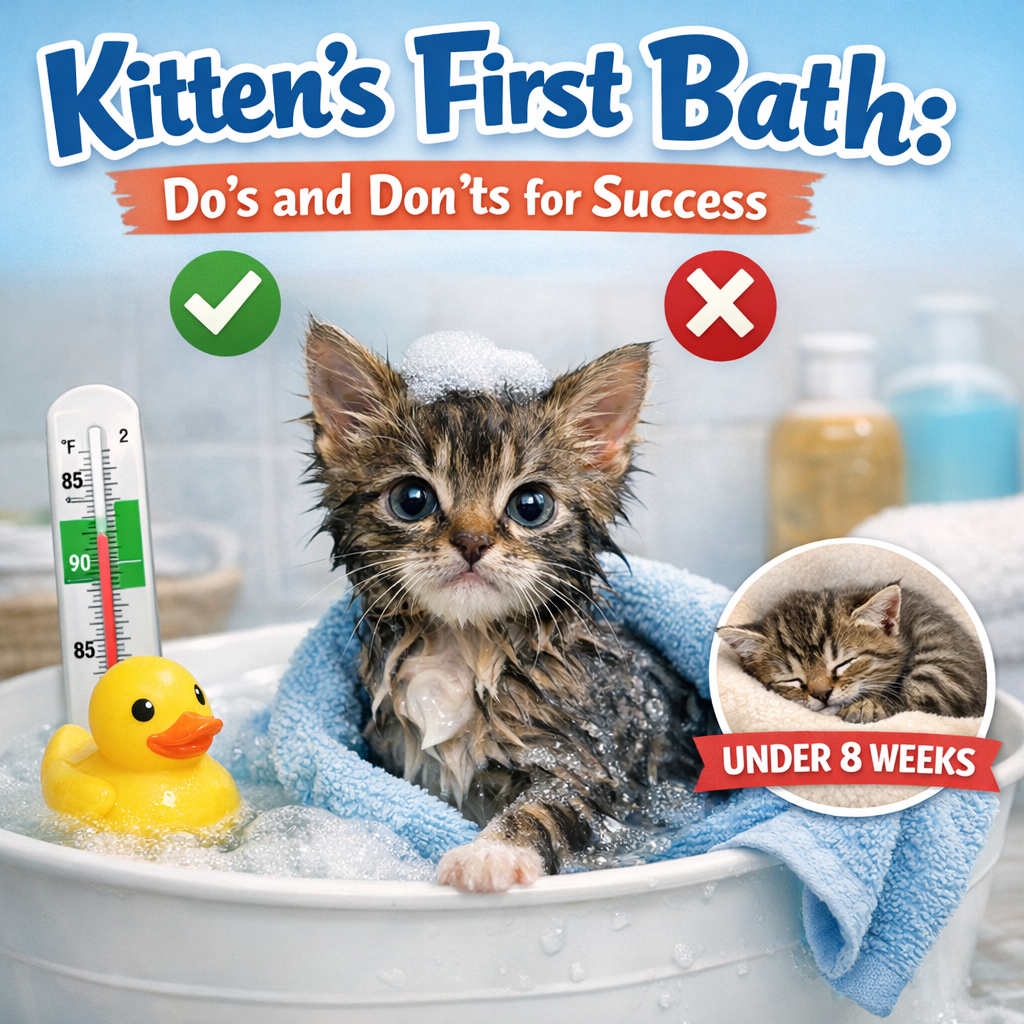
- Wait for the Right Age: Avoid full baths for kittens under 8 weeks old as they cannot regulate their body temperature; start water introduction at 9 weeks for better safety and socialization.
- Use Proper Products: Only use fragrance-free, kitten-specific shampoos to protect their delicate pH balance and prevent skin infections like pyoderma; never use human or harsh adult soaps.
- Prioritize Safety & Comfort: Prepare all supplies in advance, use lukewarm water in a shallow basin, and employ gentle handling or light scruffing to keep the kitten calm and secure.
- Post-Bath Care: Immediately wrap the kitten in a warm towel and keep them away from drafts until completely dry to prevent chills, rewarding them afterward to build positive associations with grooming.
Table of Contents
Kitten’s First Bath: Do’s and Don’ts for Success
Bathing a kitten can feel like preparing for a tiny, furry whirlwind. Most feline friends are famous for their dislike of water, but sometimes a bath is unavoidable. Whether they are messy kitten eaters or little explorers, knowing the right kitten bath tips is vital for a stress-free experience.
At Bella Gatti US Shop, we love seeing your cats look their best in our graphic tees, but they need to be clean underneath those threads first! Let’s dive into the world of kitten hygiene and grooming to ensure your pet stays healthy and happy.
Why Kitten Hygiene Matters for Long-Term Health
Maintaining proper kitten hygiene is about more than just a fresh scent. Dirt, bacteria, and leftover food residue can lead to serious skin infections like pyoderma in kittens. This bacterial infection often requires veterinary consultation and medicated treatments to resolve.
Regular kitten health care routines help prevent these issues before they start. By keeping your kitten clean, you are protecting their delicate skin barrier and ensuring they do not develop painful skin infections or persistent allergies that could affect them into adulthood.
When Should You Start Bathing a Kitten?
Timing is everything when introducing water to your feline friend. Most experts, including those at the Animal Humane Society, recommend waiting until a 9 week old kitten is ready. Before 8 weeks, kittens struggle with body temperature regulation and can easily become chilled.
Bathing a kitten is usually only necessary if they have gotten into sticky substances, mud, or have litterbox training accidents. If your kitten is under the age limit but needs a quick touch-up, consider using hypoallergenic wet wipes or a damp cloth for spot cleaning instead of a full soak.
Essential Preparation Steps for a Stress-Free Bath
Success starts with the right kitten care resources and a calm environment. Before you even turn on the tap, gather your supplies: a fragrance-free shampoo, several soft towels, a gentle brush, and a small cup for rinsing. Ensure the room is warm to help with their kitten body temperature after the soak.
Create a safe space by using a shallow sink or basin. Check your tech settings on your iPhone or Samsung device to play some calming music via YouTube or a pet behavior library. Having everything within reach prevents you from leaving a wet kitten unattended, which is a major safety rule for any pet caregiver.
Choosing the Right Kitten Safe Shampoo and Products
Never reach for your own hair products or harsh dish soaps. Human products and many adult soaps are far too acidic for feline skin. You must use a specific kitten safe shampoo or a fragrance-free shampoo formulated for pets to avoid stripping natural oils.
In some cases, a mild baby shampoo might be recommended by a vet, but a dedicated kitten grooming product is always the safest bet. If your kitten has existing skin issues, consult a professional at a clinic like the Stanley Veterinary Clinic in Overland Park for a veterinary-prescribed wash to treat pyoderma or other conditions.
Step-by-Step Guide to Bathing a Kitten
Start by filling the basin with just a few inches of warm bath water. Test the temperature with your elbow to ensure it is lukewarm, not hot. Gently lower your kitten into the water, speaking in a soothing voice to keep their stress low during this new experience.
Apply a small amount of shampoo and massage it into their fur, being careful to avoid the eyes and ear canal. Rinse thoroughly using a cup or a very low-pressure spray. It is crucial to remove all soap residue ingestion risks, as kittens will lick themselves immediately after the bath.
Proper Handling and the Scruffing Technique
Handling a slippery, wiggly kitten requires a gentle yet firm touch. If your kitten becomes overly agitated, you can use a gentle scruffing technique to calm them. Always remember to support the kitten’s bottom while scruffing to prevent any injury or unnecessary strain on their neck.
This method mimics how a mother cat moves her young and can provide a natural calming effect. However, use it sparingly. The goal of pet behavior training is to make the bath a positive association, so keep your movements slow and provide plenty of reassurance throughout the process.
Drying Your Kitten and Post-Bath Care
Once the rinsing is done, immediately wrap your kitten in a warm towel. Gently pat them dry rather than rubbing vigorously. Because kittens lose heat quickly, keeping them away from drafts is essential until their fur is completely dry. You can use a blow dryer on the lowest, coolest setting if the noise does not scare them.
Check their ears for any trapped moisture and give them a quick brush to prevent tangles. Reward your brave little explorer with a treat or some extra playtime. This positive reinforcement helps build a foundation for future grooming sessions as they grow into an adult cat.
How Often Should You Bathe Your Cat?
While humans might shower daily, kittens do not need frequent baths. Feline grooming is largely a self-sufficient process. Most experts suggest a bath every 4 to 6 weeks at most. Overbathing can lead to dry, itchy skin and may actually increase the risk of skin infections by damaging the skin’s natural defenses.
If your cat stays indoors and manages their own hygiene well, you might only need to intervene during those occasional “messy kitten” moments. For more tips on pet care and lifestyle, you can follow professional grooming preparation guides on Facebook or search for expert advice using browsers like Chrome, Firefox, or Edge.
Importance of Keeping a Kitten Clean for Health
Maintaining kitten hygiene is about more than just keeping your furniture pristine. It is a vital health priority. Young kittens have delicate immune systems, making them prone to skin infections when dirt and bacteria linger on their bodies.
Leftover food residue or litterbox training accidents can lead to a condition called pyoderma. This bacterial skin infection causes significant discomfort, redness, and irritation. Keeping your pet clean prevents these issues before they require a trip to the Stanley Veterinary Clinic in Overland Park.
A clean kitten is a healthy kitten. Regular kitten grooming sessions allow you to spot skin infections or parasites early on. It is the essential first step in proactive kitten health care and overall feline grooming.
Signs and Situations When Bathing a Kitten Is Necessary
Most cats are self cleaning machines, but messy kitten eaters often need a helping hand. You should consider bathing a kitten if they have ventured into sticky substances, mud, or had a run in with motor oil in the garage.
Bathing is also necessary for kittens suffering from specific skin conditions or allergies. In these cases, a veterinarian might prescribe medicated treatments that must be applied through a soak. Always check kitten care resources if you are unsure if a bath is needed.
If your kitten has minor dirt, you might opt for hypoallergenic wet wipes. However, for a full body mess, a gentle bath with warm bath water is the most effective way to ensure kitten hygiene remains top notch.
Age Considerations for Bathing Kittens
Timing is everything when introducing water to your furry friend. Experts at the Animal Humane Society recommend avoiding full baths for any kitten under 8 weeks old. At this tender age, they struggle with kitten body temperature regulation and can become dangerously chilled.
Once you have a 9 week old kitten, bathing becomes much safer. Their bodies are better at maintaining heat, though you must still be extremely gentle. Always keep the room warm and have a fluffy towel ready to go immediately after the dip.
If a very young kitten gets dirty, stick to spot cleaning with a warm cloth. Waiting until they are old enough ensures that their first experience with kitten bath water is a positive one rather than a health risk.
Preparation Steps for a Successful Kitten Bath
Preparation is the key to preventing a feline fiasco. Before you even turn on the tap, gather your supplies: fragrance-free shampoo, a shallow basin, a small cup for rinsing, and several dry towels. Having everything within reach prevents you from needing to leave a wet kitten unattended.
Create a calm environment by closing the door to minimize noise. You can even search for soothing sounds on YouTube or Facebook via your iPhone or Samsung device to set a relaxing mood. A calm pet caregiver leads to a calm kitten.
Before the water starts flowing, give your kitten a quick brush. This removes loose fur and tangles, making the cleaning process much smoother. Check the Animal Humane Society pet behavior library for more pet behavior training tips to make this a bonding moment.
Choosing the Right Shampoo and Products
Never reach for your own hair products. Human shampoos are far too harsh and can strip the natural oils from a kitten’s coat. Instead, always use a dedicated kitten safe shampoo or a fragrance-free shampoo formulated specifically for felines.
If your kitten has sensitive skin, look for a hypoallergenic wet wipes option for face cleaning. Avoid any products with heavy scents or chemicals that could lead to soap residue ingestion during their post bath grooming session.
While some old school tips suggest baby shampoo, it is best to stick to veterinary-prescribed products if your cat has a history of skin infections. Using the right tools ensures your kitten stays soft, healthy, and ready to model their favorite Bella Gatti apparel.
Signs and Situations When Bathing a Kitten is Necessary
You might wonder if your 9 week old kitten really needs a soak or if they can handle the grime themselves. Most cats are excellent at feline grooming, but even the most diligent fluffball has their limits. Sometimes, those natural habits need a serious human assist to keep their kitten hygiene on track.
Bathing a kitten becomes a priority if they venture into sticky territory like spilled syrup or muddy garden puddles. Messy kitten eaters are also prime candidates for a dip, as they often end up with faces caked in wet food that their tiny tongues simply cannot reach. If left alone, this residue can lead to skin infections like pyoderma.
Beyond simple dirt, litterbox training accidents often require more than just hypoallergenic wet wipes. If your kitten is covered in waste, a gentle kitten bath is the best way to ensure they stay healthy and smell fresh. For more complex issues like a flea infestation, a veterinary consultation is your best move.
Health issues or specific skin conditions might require a medicated approach. In these cases, your vet at a place like Stanley Veterinary Clinic might prescribe a specialized bath to treat allergies or persistent skin infections. Always follow professional advice to ensure you are using a fragrance-free shampoo that is safe for their age.
If you are looking for pet behavior training tips or kitten care resources, checking out the Animal Humane Society or searching YouTube and Google on your iPhone or Samsung can provide great visual guides. Whether you use Chrome, Firefox, or Edge, staying informed helps you manage body temperature regulation and stress during the process.
Age Considerations for Bathing Kittens
Timing is everything when introducing water to a young cat. Before you grab the soap, you must be mindful of their body temperature regulation abilities.
Very young kittens are quite fragile and cannot maintain their internal heat like adult cats can. This makes early baths a risky business for their health.
Experts from the Animal Humane Society and Stanley Veterinary Clinic in Overland Park recommend avoiding full baths for kittens under 8 weeks old.
At this tender age, a kitten body temperature can plummet quickly if they get wet. This puts them at risk for chills or even respiratory issues.
If your tiny friend is under the 8 week mark, stick to hypoallergenic wet wipes or a warm, damp cloth for spot cleaning. It keeps them fresh without the danger.
Once they pass the two month milestone, a gentle bath becomes much safer. This is the perfect window to start water desensitization and pet behavior training.
Bathing a 9 week old kitten helps them get used to the sensation early on. Just like picking out a cool graphic tee at Bella Gatti US Shop, starting early sets the style for life.
Always check with kitten care resources or a veterinary consultation if you are unsure about your kitten’s development. Safety always comes first in kitten hygiene.
Whether you are browsing tips on Google or watching tutorials on YouTube and Facebook, remember that every kitten grows at their own pace.
Keep your Chrome or Firefox browser open to reliable guides from the Animal Humane Society to ensure you are following the best kitten health care standards.
Expert Insight
“Kittens should ideally be at least 8 weeks old before home bathing to ensure adequate body temperature regulation, as early baths can cause hypothermia or stress, until then, a warm, damp towel is best for spot cleaning.”, NancyH, Expert in Cat Behavior and Health Care
Preparation Steps for a Kitten Bath
Preparation is the secret to a stress-free experience. You do not want to be searching for a towel while holding a wet, wiggly kitten! Gather your kitten care resources before you even turn on the tap.
Just like picking out the perfect graphic tee from Bella Gatti US Shop, getting the details right matters. Start by clipping their claws to minimize accidental scratches during the splash zone session. Brush their fur thoroughly to remove any tangles, as water acts like glue on mats and makes them much harder to manage.
Ensure the room is warm to assist with kitten body temperature regulation. You can even use your iPhone or Samsung device to play some calming music or find a quick tutorial on YouTube or Facebook via Chrome, Firefox, or Edge to set a relaxing mood.
You will need these essential kitten grooming supplies:
- Kitten safe shampoo: Always choose a fragrance-free shampoo or a hypoallergenic formula. Human products are too harsh for feline skin.
- A shallow basin or sink: A smaller space helps the kitten feel secure.
- Rinsing tools: Use a soft washcloth and a pouring cup to avoid splashing the face.
- Multiple dry, warm towels: You will need more than you think to prevent shivering.
- A helper: Having a second pair of hands provides gentle support and keeps the kitten steady.
Proper kitten hygiene prevents skin infections like pyoderma, which can occur when dirt and bacteria sit on the skin too long. Setting up your environment properly is the first step in expert kitten health care.
If you are nervous, check the pet behavior library at the Animal Humane Society or consult with experts at the Stanley Veterinary Clinic in Overland Park. They offer great pet caregiver tips for introducing water to a 9 week old kitten for the first time.
Step-by-Step Bathing Process
Now that you are prepped, it is time for the main event. Start by filling your sink or a small basin with just an inch or two of warm bath water. You want that kitten bath water to be cozy, similar to a baby bath, but never hot to the touch.
Introduce your kitten to the water slowly to help with water desensitization. Wet their body using a cup or your hand while carefully avoiding the ear canal and eyes. This gentle approach prevents the panic often seen in viral YouTube or Facebook videos.
Apply a small amount of fragrance-free shampoo or a kitten safe shampoo and massage it in gently. This is the perfect moment for a quick kitten health care check. Feel for any unusual bumps or signs of skin infections like pyoderma, which can affect young cats.
Rinse thoroughly with lukewarm water to ensure no soap residue ingestion occurs later when they begin their natural feline grooming. Any leftover suds can irritate their skin or cause an upset stomach during their post-bath lick-down.
Once the suds are gone, wrap your tiny friend immediately in a warm towel. Pat them dry gently rather than rubbing vigorously, as rough friction can cause painful fur mats or skin irritation. Keeping them warm is vital for body temperature regulation.
Proper Handling and Scruffing Techniques
If your 9 week old kitten becomes a bit too wiggly, you might need to use a gentle scruffing technique. This mimics how a mother cat moves her young and can have a natural calming effect during a stressful kitten grooming session.
Always support the kitten’s bottom with your other hand when scruffing to ensure they feel secure and to prevent any injury. According to resources from the Animal Humane Society and Stanley Veterinary Clinic in Overland Park, support is key to safety.
The goal is to be a calm pet caregiver. If you stay relaxed, your kitten is less likely to view the bath as a traumatic event. Think of it as professional grooming preparation for their future as a stylish adult cat.
Using the Right Kitten Hygiene Products
Choosing the right supplies is just as important as the technique. Always reach for a fragrance-free shampoo or a specialized kitten bath product. Human products or even some baby shampoo brands can be far too harsh for a kitten’s delicate pH balance.
For quick messes like kitten litterbox habits gone wrong or messy kitten eaters, you might not need a full dunk. Hypoallergenic wet wipes are excellent for spot cleaning and maintaining kitten hygiene between full baths.
If you are unsure about a product, a quick search on Google using Chrome, Firefox, or your iPhone can help you find pet behavior library tips. When in doubt, a veterinary consultation is the best way to choose products for sensitive skin.
Proper Handling Techniques and Safety
Safety and comfort go hand in hand when you are navigating the waters of kitten hygiene. Using a scruffing technique can help calm a panicked kitten, but it must be done with extreme care.
When scruffing a kitten, you must always support the kitten’s bottom with your other hand. This prevents injury and ensures their weight is distributed safely, much like the advice shared by the Animal Humane Society.
Never leave your kitten unattended in the water, even for a split second. Use a calm, soothing voice throughout the process to assist with water desensitization, making future grooming sessions much easier for your feline friend.
Importance of Keeping a Kitten Clean for Health
Maintaining proper kitten health care is about more than just a fluffy coat. Dirt, bacteria, and leftover food residue can lead to a skin infection known as pyoderma in young kittens.
Studies indicate that consistent kitten grooming is crucial for preventing these skin infections. Keeping their skin clear of irritants helps regulate their body temperature and ensures they stay healthy as they grow.
At Bella Gatti US Shop, we know you want your pet to feel as good as they look. Proper feline grooming prevents the buildup of oils and debris that can irritate their delicate skin underneath those stylish cat tees.
Signs and Situations When Bathing a Kitten is Necessary
While cats are generally self-cleaning, certain situations require a cat bath guide approach. If your pet gets into sticky substances, mud, or has litterbox training accidents, a full bath is required.
Bathing is also necessary for kittens suffering from specific skin conditions or allergies. In these cases, veterinary consultation at a clinic like the Stanley Veterinary Clinic in Overland Park might be recommended for medicated treatments.
Whether they are messy kitten eaters or adventurous explorers, some messes are too big for a tongue to handle. In these moments, cleaning kittens becomes a priority for the pet caregiver to prevent skin infections.
Age Considerations for Bathing Kittens
Timing is everything when it comes to introducing water. Most experts recommend avoiding full baths for any kitten under 8 weeks old because they struggle with body temperature regulation.
For a 9 week old kitten, a gentle bath is generally safe. If you have a younger kitten that needs a quick cleanup, consider using hypoallergenic wet wipes or a damp cloth instead of a full soak.
Always ensure the room is warm and draft-free. Building a positive pet behavior library of experiences at this age will help your cat remain calm during grooming for years to come.
Frequency of Bathing Kittens
You might be wondering how often you should reach for the kitten safe shampoo. Generally, a bath every 4 to 6 weeks is plenty for most indoor cats.
Overbathing can be counterproductive. It often leads to skin dryness or irritation by stripping away natural oils, especially if your kitten does not have underlying health issues.
If your kitten stays relatively clean, stick to brushing and the occasional use of fragrance-free shampoo only when needed. This keeps their kitten hygiene in check without stressing them out.
Choosing the Right Shampoo and Products
Never reach for your own bottle in the shower. Human products and even some baby shampoo can be far too harsh for a kitten’s delicate pH balance.
Always use a fragrance-free shampoo specifically formulated for kittens or veterinary-prescribed products. This prevents soap residue ingestion when they lick themselves later.
For quick cleanups between deep washes, hypoallergenic wet wipes are excellent kitten care resources. You can find plenty of demonstrations on YouTube or Facebook using your iPhone or Samsung device to see these products in action.
Final Tips for Success
Gentle handling builds trust. If your kitten becomes too stressed, stop the bath and try again another day. The goal is pet behavior training that ends with a purr.
Check out more kitten bath tips on Google using browsers like Chrome, Firefox, or Edge to stay updated on the best professional grooming preparation techniques.
Frequency of Bathing Kittens
How often should you reach for the shampoo? For most kittens, less is more. Overbathing can strip the natural oils from their skin, leading to dryness and irritation that ruins their sleek look.
A general rule of thumb is every 4 to 6 weeks. Of course, messy kitten eaters or litterbox training accidents might require more frequent spot cleaning to keep them fresh.
Always prioritize their skin health over a strict schedule. Maintaining kitten hygiene is crucial because dirt and bacteria can lead to skin infections like pyoderma in kittens if left unchecked.
Kitten Age and Bathing Frequency Guide
| Kitten Age |
Bathing Method |
Frequency |
| Under 8 Weeks |
Spot clean with hypoallergenic wet wipes |
As needed only |
| 8 to 16 Weeks |
Full gentle bath with warm bath water |
Every 4 to 6 weeks |
| Adult Cats |
Self grooming and occasional bath |
Rarely or every 2 months |
For a 9 week old kitten, introducing water gradually is the best way to build a positive pet behavior library. You want them to feel as comfortable in the tub as you do browsing on your iPhone or Samsung device.
If you are unsure about your kitten health care routine, a veterinary consultation at a place like Stanley Veterinary Clinic in Overland Park can provide personalized advice. You can also find great video tutorials on YouTube or Facebook using Chrome, Firefox, or Edge.
Experts from the Animal Humane Society suggest that while cats are masters of feline grooming, humans must step in when they get into sticky situations. Just remember to use a fragrance free shampoo to protect their delicate skin.
Monitoring kitten body temperature is vital during this process. Because young cats struggle with body temperature regulation, always ensure the room is warm and they are dried immediately with a plush towel.
Choosing the Right Shampoo and Products
Your own hair products are a total no-go for your feline friend. Human shampoo is way too acidic and harsh for delicate feline grooming needs. Using the wrong soap can strip away protective oils and lead to skin infections like pyoderma.
You must use a kitten safe shampoo specifically formulated for cats. Look for a fragrance-free shampoo that is labeled as gentle. These products help maintain the natural balance of their coat without causing the dreaded skin irritation that makes kittens grumpy.
If you are dealing with a 9 week old kitten who just has a small smudge, hypoallergenic wet wipes are a great alternative. These wipes are perfect for spot cleaning messy kitten eaters after a particularly enthusiastic meal or for managing minor litterbox training accidents.
Always avoid products with heavy perfumes or essential oils. If you are browsing for advice on Chrome, Firefox, or Safari, you will find that experts at the Animal Humane Society and Stanley Veterinary Clinic in Overland Park agree: kitten health care starts with non-toxic ingredients.
Before you start the kitten bath, check the label of your baby shampoo or cat-specific wash. If it is not vet-approved, it might cause more harm than good. When in doubt, search for a pet behavior library or check out a tutorial on YouTube or Facebook to see the products in action.
“Using the wrong soap can lead to severe skin irritation. Always consult your vet if you are unsure about a product’s safety.”, Stanley Veterinary Clinic
Whether you are using an iPhone, Samsung, or Edge browser to look up ingredients, remember that kitten hygiene is about safety first. Proper feline grooming ensures your pet stays healthy and ready to lounge around in style.
Pros and Cons of Early Bathing for Your 9 Week Old Kitten
Introducing your 9 week old kitten to water is a strategic move for any pet caregiver. While most cats aren’t exactly lining up for a pool party, early water desensitization makes future feline grooming much easier for you and your vet.
One of the biggest pros is the prevention of pyoderma and other nasty skin infections. Since kittens are often messy eaters or still mastering their litterbox habits, keeping them clean is vital for kitten health care and hygiene.
However, you must be careful with their delicate systems. A major con is the risk to their body temperature regulation. If a kitten isn’t dried quickly and thoroughly, they can become dangerously chilled in a matter of minutes.
High stress is another potential drawback if the introduction to water is too fast. To keep things positive, many experts in the pet behavior library recommend using a calm approach rather than forceful methods like improper scruffing.
If a full bath feels too intense, you can always opt for hypoallergenic wet wipes or a fragrance-free shampoo spot clean. This helps maintain the natural balance of their coat without the drama of a full soak.
Organizations like the Animal Humane Society and the Stanley Veterinary Clinic in Overland Park often share resources on social media platforms like Facebook and YouTube. You can easily search for their kitten care resources using Chrome, Firefox, or Edge on your iPhone or Samsung device.
Remember, the goal is to make the experience as seamless as possible. Whether you are browsing Google for kitten bath tips or watching tutorials on your phone, focus on gentle handling to ensure your tiny friend grows up to be a relaxed, clean adult cat.
Frequently Asked Questions about Kitten Hygiene
Can I use a blow dryer on my 9 week old kitten?
You can, but proceed with extreme caution. Most kittens find the loud noise of a blow dryer terrifying, which can ruin your hard work in pet behavior training.
If you must use one, select the lowest and coolest setting. It is vital to monitor their kitten body temperature closely to avoid overheating or chills.
For a stress-free experience, many pet caregivers prefer using multiple warm towels. This keeps the environment calm and helps prevent a fearful association with the bathroom.
What if my kitten hates the kitten bath water?
If your feline friend is resisting, try introducing water gradually. Start by using a damp washcloth or hypoallergenic wet wipes to clean their fur without a full soak.
Use positive reinforcement by offering treats or praise. This helps create a positive association, much like the resources found in a pet behavior library or the Animal Humane Society tips.
Never force a panicked kitten into a deep tub. Slow water desensitization is the best way to ensure future feline grooming sessions are a success for both of you.
Do I need to clean their ears during the bath?
Yes, ear care is a part of total kitten health care, but you must be very gentle. Use a damp cotton ball to wipe only the visible, outer part of the ear.
Never stick a cotton swab or any object into the ear canal. Doing so can cause serious damage, painful infections, or permanent hearing loss.
If you notice a foul smell or excessive discharge, skip the DIY cleaning and schedule a veterinary consultation at a clinic like the Stanley Veterinary Clinic in Overland Park.
Is it okay to use dish soap or baby shampoo?
While some sources suggest a tiny amount of fragrance-free dish soap for fleas, it is not ideal for regular kitten grooming. It can strip natural oils and cause skin dryness.
Human baby shampoo is also not recommended because the pH level is wrong for a cat’s skin. It is always better to use a dedicated kitten safe shampoo or a fragrance-free shampoo.
Using the wrong products can lead to skin infections like pyoderma. Always choose products specifically formulated for feline pH to keep their coat soft and healthy.
How often should I be cleaning kittens?
Most healthy cats are expert self-groomers and rarely need a full scrub. Generally, a bath every 4 to 6 weeks is plenty for a 9 week old kitten.
Overbathing can lead to irritation and dry skin. However, you should step in if they have a litterbox training accident or if they are messy kitten eaters with food stuck in their fur.
For quick clean-ups between baths, hypoallergenic wet wipes are a great tool. They remove surface dirt without the stress of a full dip in the sink.
What is the best way to handle a wiggly kitten in the tub?
Preparation is key to safety. Have your kitten safe shampoo and warm towels ready before you even pick up your pet. This prevents frantic searching while holding a wet cat.
If they try to bolt, you can use a gentle scruffing technique. This mimics how a mother cat carries them and can have a natural calming effect on the kitten.
Always support the kitten’s bottom when scruffing to prevent injury. Keeping one hand under their hindquarters ensures they feel secure and reduces the risk of scratches.
Where can I find more kitten care resources?
If you are looking for more pet caregiver tips, check out reputable organizations like the Animal Humane Society. They offer great guides on kitten litterbox habits and behavior.
You can also find helpful video tutorials on YouTube or join feline communities on Facebook to share advice with other owners. Many clinics, such as the Stanley Veterinary Clinic, post updates on their social pages.
Whether you are browsing on Chrome, Firefox, or your iPhone, there is a wealth of information online to help you master the art of the kitten bath.
Final Thoughts on Kitten Grooming and Health
Bathing your kitten is a major milestone in your journey as a dedicated pet caregiver. By staying calm and prepared, you turn a potentially scary event into a vital bonding moment. Remember to keep the kitten bath water warm, the soap gentle, and the towels plentiful.
Maintaining proper kitten hygiene is about more than just a soft coat. Regular cleaning prevents dirt, bacteria, and food residue from leading to skin infections like pyoderma in kittens. If you notice redness or irritation, a veterinary consultation at a trusted clinic like Stanley Veterinary Clinic in Overland Park can provide peace of mind.
For those days when a full bath isn’t necessary, consider using hypoallergenic wet wipes or a damp cloth for spot cleaning. These kitten care resources are perfect for messy kitten eaters or those still mastering their kitten litterbox habits. Introducing water gradually ensures your feline friend remains comfortable and stress-free.
Once your 9 week old kitten is clean and dry, they will be ready to tackle the world again. Perhaps they might even be ready for a stylish new Unisex Soft Cotton Tee from Bella Gatti US Shop to celebrate their bravery! Whether you are browsing on Chrome, Firefox, or Edge, or checking our latest designs on your iPhone or Samsung, we have the perfect gear for cat lovers.
Don’t forget to share your success stories with the community! You can find more pet behavior training tips and adorable videos on our Facebook, YouTube, and Google pages. Following the guidelines from the Animal Humane Society will help you raise a happy, healthy, and clean companion.