


-
-
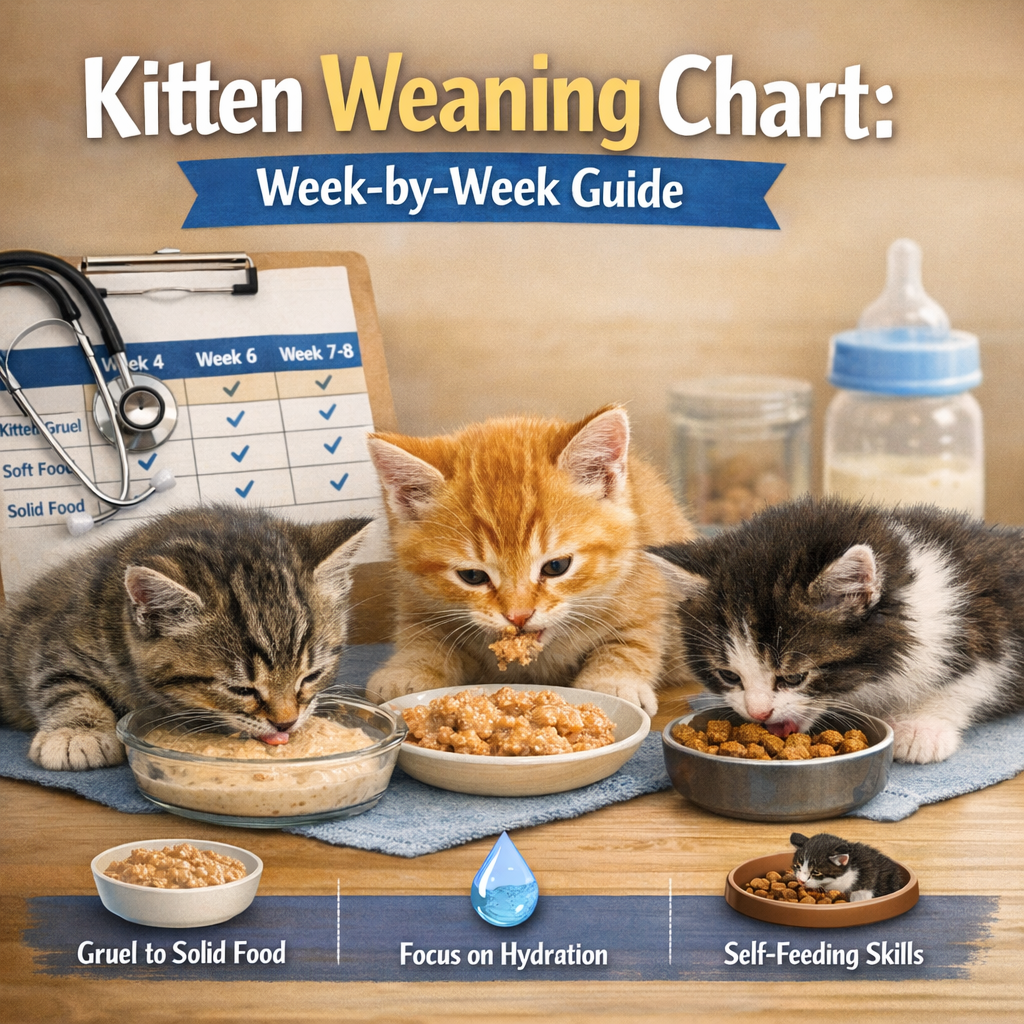
- The guide provides a week-by-week, veterinary-guided plan for weaning kittens from week 4 to week 8, progressing from gruel to solid foods while emphasizing texture, hydration, and self-feeding.
- Key readiness signs include new teeth, curiosity about food, and stable health/weight; pause weaning if dehydration or illness occurs and consult a vet.
- Week-by-week milestones cover texture progression, feeding methods, hydration, litter box training, and social/behavioral development, with a practical feeding schedule and portion guidance for weeks 4-8.
-
Table of Contents
-
-
- Introduction
- 1. Assessing Readiness: Signs Your Kitten Is Ready to Wean
- 2. Week 4: Beginning Weaning with Gruel or Wet Food
- 3. Week 5: Introducing Solid Food and Gradual Transition
- 4. Week 6: Increasing Solid Food Intake
- 5. Week 7: Solid Food Independence Begins
- 6. Week 8: Weaning Milestone and First Litter Box Training
- 7. Feeding Schedule and Portion Guide Across Weeks 4-8
- FAQ
- Conclusion
-
Introduction
Purpose of the guide
This week by week guide supports you through the weaning process with practical steps grounded in veterinary guidance. It emphasizes healthy kitten development and clear feeding milestones you can follow at home.
Overview of weaning milestones
Expect to begin with a gruel or wet food texture around week 4, progress to more solid foods by week 5, and achieve full weaning by week 8. The transition unfolds gradually, with texture, feeding method, and appetite adapting over time.
How to use this chart with your kitten
Treat the milestones as a flexible framework and adjust to your kitten’s pace. Monitor weight, hydration, and activity daily, and consult a veterinarian if you notice persistent stress or poor growth.
Expert Insight
“Perinatal mortality in cats is remarkably high; therefore, adequate neonatal evaluation and assistance at birth, careful monitoring of kittens in the vulnerable period until weaning begins, assessment of maternal factors and well-informed management of orphans are crucial in helping to reduce kitten losses.” , Feline Neonatology Expert
1. Assessing Readiness: Signs Your Kitten Is Ready to Wean
Teeth development indicators
Observe the mouth for new chew capable teeth. Premolars beginning to emerge suggest the kitten can handle more texture. If teeth are visible but the kitten still latches to the nipple, ease into textures gradually and watch chewing behavior for readiness cues.
Mobility and curiosity around solid food
Notable interest in bowls, pawing at dishes, and sniffing or licking unfamiliar textures signal readiness. If the kitten approaches feeding areas calmly and investigates without stress, you’re likely near a suitable transition window.
Health and weight considerations
Track steady weight gain and a healthy coat. If dehydration, lethargy, or ongoing diarrhea occur, pause weaning and consult a veterinarian for guidance.
2. Week 4: Beginning Weaning with Gruel or Wet Food
Texture and consistency guidance
Start with a thin slurry of kitten formula blended into wet kitten food. Aim for a smooth, spoonable texture that clings to the spoon and flows easily. Avoid solid chunks at this stage to reduce frustration.
Over the next several days, gradually thicken the mixture as the kitten’s jaw muscles strengthen and they become more comfortable with textures. Use a shallow, low lip dish to encourage easy lapping and minimize spills.
First feeding methods
Present the mixture in a shallow dish or transition from bottle feeding to dish feeding based on the kitten’s preference. A kitten-specific bottle can remain as continuity, but the dish supports developing self feeding.
Look for acceptance cues such as licking the dish, purring during meals, or calm behavior around the feeding area. If the kitten refuses, pause briefly and retry later in the day.
Estimated caloric needs and portioning
Offer small, frequent meals to support energy needs during the transition. Begin with modest portions and increase frequency to avoid overloading the stomach.
Adjust portions based on appetite, weight trends, and activity. Always provide fresh water alongside the gruel or wet food to support hydration.
3. Week 5: Introducing Solid Food and Gradual Transition
Shifts from bottle to dish feeding
By week 5, many kittens are ready to start focusing on dish feeding. Offer a shallow kitten dish alongside continued bottle feeding to support a smooth transition. Observe which method your kitten prefers and adjust accordingly.
Establish a nursing transition routine you can follow daily. Alternate between bottle feeds and meals in a dish to prevent stress and ensure steady nutrition. Keep sessions short and positive to encourage exploration of new textures.
Mixing formula with food ratios
Begin pairing formula with wet kitten food to create a thicker slurry that still resembles a meal. Gradually decrease the formula proportion over several days as solid food uptake improves.
-
-
- Week 5 target texture: soft slurry with small food particles.
- Monitor for gagging or coughing and adjust thickness as needed.
- Progressively increase solid content while maintaining hydration.
-
Keep a backup bottle on hand in case appetite dips or if a kitten seems hesitant to eat from a dish.
Hydration and water availability
Always provide fresh water within reach during this transition. Some kittens drink more when offered a wide, shallow dish and a clean bowl design.
Offer water before or after meals to support digestion and encourage consistent intake as solid foods become the main energy source.
4. Week 6: Increasing Solid Food Intake
Dropping bottle dependency
By week six, many kittens rely less on bottle feeds as they eat more from bowls. Monitor for self feeding becoming the primary method and use bottle feeds only to supplement on picky days or growth spurts.
Texture progression to slurry and soft chunks
Continue advancing textures. Move from soft slurry toward small soft chunks of wet kitten food. Offer gruel on days when appetite dips and gradually reduce formula ratio as chewing confidence grows.
Feeding frequency and routines
Establish a regular schedule with multiple small meals throughout the day. Consistency supports digestion and makes it easier to track appetite. Keep a shallow kitten dish available between feeds and note responses to each texture change.
Expert Insight
“As kittens transition from bottle feeding to solid foods, maintain a regular, small-meal schedule and progressively guide textures, from slurry to soft chunks, so digestion stays consistent and growth stays on track.” , Industry Analyst
5. Week 7: Solid Food Independence Begins
Encouraging self-feeding
Progress toward independence continues with increased self feeding. Provide multiple low, accessible dish options to reduce crowding and invite exploration. Plan several short practice sessions daily to build confidence and autonomy.
Transitioning to wet or mixed wet/dry foods
Offer a blend of wet kitten food with small amounts of dry kibble to encourage chewing and hydration. Keep portions modest and observe texture preferences to tailor future meals. Aim for a gradual integration rather than a sudden switch.
Monitoring stool health and hydration
Observe stool consistency and color as textures evolve. Ensure easy access to fresh water, using a wide shallow dish. Regularly weigh the kitten to track progress and catch issues early.
6. Week 8: Weaning Milestone and First Litter Box Training
Fully weaned status indicators
By week eight, your kitten should rely mainly on solid meals. Expect consistent bowl eating without prompting and little dependence on bottle feeds. Weight should stabilize as solid foods become the primary energy source.
Introducing basic litter box habits
Place a small, low-entry litter box in a quiet area. After meals and naps, guide the kitten to the box to establish elimination there. Use unscented litter and keep the box clean to encourage positive litter box behavior.
Behavioral socialization and play patterns
Week eight is a prime time for socialization. Schedule short, frequent play sessions to build confidence and reduce stress. Include gentle handling, light grooming, and positive reinforcement during meals and cuddle times to support healthy social development.
7. Feeding Schedule and Portion Guide Across Weeks 4-8
Sample daily schedules by week
Maintain a steady routine that aligns with your kitten’s growing appetite. Short, frequent meals support digestion and the transition.
-
-
- Week 4: 4-5 small meals, alternating gruel and wet kitten food.
- Week 5: 4-5 meals, mix formula with food to create a soft slurry between bottle feeds.
- Week 6: 4-5 meals, increase solid content and gradually reduce formula proportion.
- Week 7: 4-6 meals, prioritize self-feeding with a mix of wet food and small kibble.
- Week 8: 4-5 meals, solid meals predominate with limited bottle use as needed.
-
Portion size ranges by weight
| Weight (oz / g) | Daily portion range | Notes |
|---|---|---|
| 2-3 oz (56-85 g) | 0.6-1.2 oz (17-34 g) per meal | Small kittens require frequent, small portions |
| 3-4 oz (85-113 g) | 1.2-1.8 oz (34-51 g) per meal | Aim for 4-5 meals daily |
| 4-6 oz (113-170 g) | 1.5-2.5 oz (43-71 g) per meal | Solid foods become primary energy source |
Hydration reminders and water access
Always provide fresh water within reach. Use a wide, shallow dish to encourage drinking during transitions.
-
-
- Offer water before and after meals to support digestion.
- Monitor water intake and adjust bowl placement to reduce spillage.
- Consider a second water source if the kitten favors one location.
-
FAQ
Is it better to wean on wet or dry food?
Wet kitten food provides moisture and can ease the early transition, while dry kibble supports long term feeding habits and dental development. Many owners use a blended approach, starting with a soft, wet texture and gradually introducing kibble as chewing strength grows.
What if my kitten is underweight or overweight?
Underweight kittens benefit from more frequent, energy-dense meals to support growth. Overweight kittens require portion control and a careful balance of nutrients while continuing the weaning process. Regular weight checks help you adjust feeding plans appropriately.
How long should the weaning process take?
Weaning typically spans several weeks with progressive texture and feeding method changes. Prioritize hydration, calories, and independent eating, and consult a veterinarian promptly if appetite or weight concerns arise.
Conclusion
Recap of week-by-week milestones
Weaning is a step by step process that aligns with your kitten’s growth. By Week 4 you begin gruel and wet food to ease the nursing transition, followed by Week 5 with a shift toward solid foods and a mix of feeding methods. Week 6 focuses on increasing solid intake, while Week 7 emphasizes growing independence in self feeding. By Week 8, solid meals predominate and litter box habits are being established. The progression supports teeth development, appetite normalization, and steady digestion.
When to seek veterinary advice
If you observe persistent weight loss, signs of dehydration, ongoing diarrhea or vomiting, or if the kitten struggles to move toward self feeding, contact a veterinarian promptly. Any concerns about dental development, tolerance of new textures, or overall growth deserve professional guidance.
Tips for ongoing kitten nutrition after weaning
-
- Maintain a consistent feeding schedule to support stability and continued growth.
- Offer a mix of textures to encourage continued chewing and dental health.
- Provide fresh water and monitor hydration as meals transition fully to solid foods.
- Gradually introduce kitten kibble that suits their developing needs to support long-term nutrition.