




- Prioritize a Slow Introduction: Rushing interactions causes long-term aggression; use a phased approach involving separate rooms, scent swapping, and visual barriers (like screen doors) over several weeks or months.
- Use Positive Reinforcement: Associate the new kitten’s scent and presence with high-value rewards like Churu treats to trigger a dopamine release and build positive associations for the resident cat.
- Avoid Punitive Techniques: Never use spray bottles or loud noises to discipline cats, as fear-based punishment increases stress and makes the cats associate each other with negative experiences.
- Manage the Environment: Ensure territory management by providing separate litter boxes, food stations, and safe zones, and consider using pheromone diffusers (Feliway) or vet-prescribed calming aids (Gabapentin) to reduce tension.
Table of Contents
- The Slow Introduction Process: Patience is a Virtue
- Mastering Scent Swapping and Positive Reinforcement
- Say No to Cat Discipline and Spray Bottles
- Providing Safe Zones and Separate Spaces
- Using Feliway and Calming Supplements
- The Slow and Gradual Introduction Process
- Mastering Scent Swapping and Positive Reinforcement
- Why You Must Avoid the Cat Spraying Bottle
- Creating Safe Zones and Using Barriers
- Patience is the Secret to Success
- Use Scent Swapping and Positive Reinforcement
- Avoidance of Punitive Techniques and Cat Discipline
- Providing Safe Separate Spaces
- The Importance of a Slow and Gradual Introduction Process
- Mastering Scent Swapping and Positive Reinforcement
- Patience and Time for Adjustment
- Tools for a Peaceful Transition
- Managing Interactions and Body Language
- The Importance of a Slow and Gradual Introduction Process
- Mastering Scent Swapping and Positive Reinforcement
- Why You Must Avoid Punitive Techniques
- Providing Safe Separate Spaces for Every Cat
- Patience and Time for Feline Adjustments
- Pros and Cons of Your Integration Strategy
- Frequently Asked Questions About Cat Aggression and New Kittens
So, you brought home a tiny ball of fluff, and your resident cat is acting like a tiny, furry gladiator. It is stressful. You wanted snuggles, but you got cat hissing and cat fighting instead.
Don’t panic. At Bella Gatti US Shop, we know that territory management is everything. Whether you are wearing your favorite Unisex Soft Cotton Tee or just trying to survive the morning coffee, we have the guide to fix this feline feud.
The Slow Introduction Process: Patience is a Virtue
Introducing cats too quickly is the fastest way to trigger cat aggression. Top contributors in the CatTraining Community on Reddit, such as Cheap_Courage_2659 and Obvious-Release-5605, emphasize that a slow introduction is vital.
This process can take several weeks or even months. Rushing the timeline leads to cat stress and inter-cat aggression. By moving slowly, you allow the resident cat to process the change without feeling their hierarchical dominance is threatened.
Mastering Scent Swapping and Positive Reinforcement
Before they ever lock eyes, focus on feline scent swapping. Swap blankets, beds, and toys between the two cats for at least 2 to 3 weeks. This helps each cat associate the other’s scent with safety and home.
Combine this with positive reinforcement training. Use high-value treats like Churus to create a dopamine release in pets when they smell the other cat. When the new kitten is nearby, the resident cat should get the best snacks available.
Say No to Cat Discipline and Spray Bottles
Stop using a cat spraying bottle or loud noises to punish cat behavior. These punitive techniques are harmful and cause the cats to associate each other with negative experiences and fear.
Instead of a cat discipline approach, focus on redirected play therapy. If you see cat hissing, use wand toys to distract them. This builds a positive environment rather than one rooted in cat stress and punishment.
Providing Safe Zones and Separate Spaces
Your new kitten needs a designated safe room equipped with their own litter box, food, and toys. This prevents litter box aversion and reduces the resident cat‘s urge for territorial behavior or cat spraying.
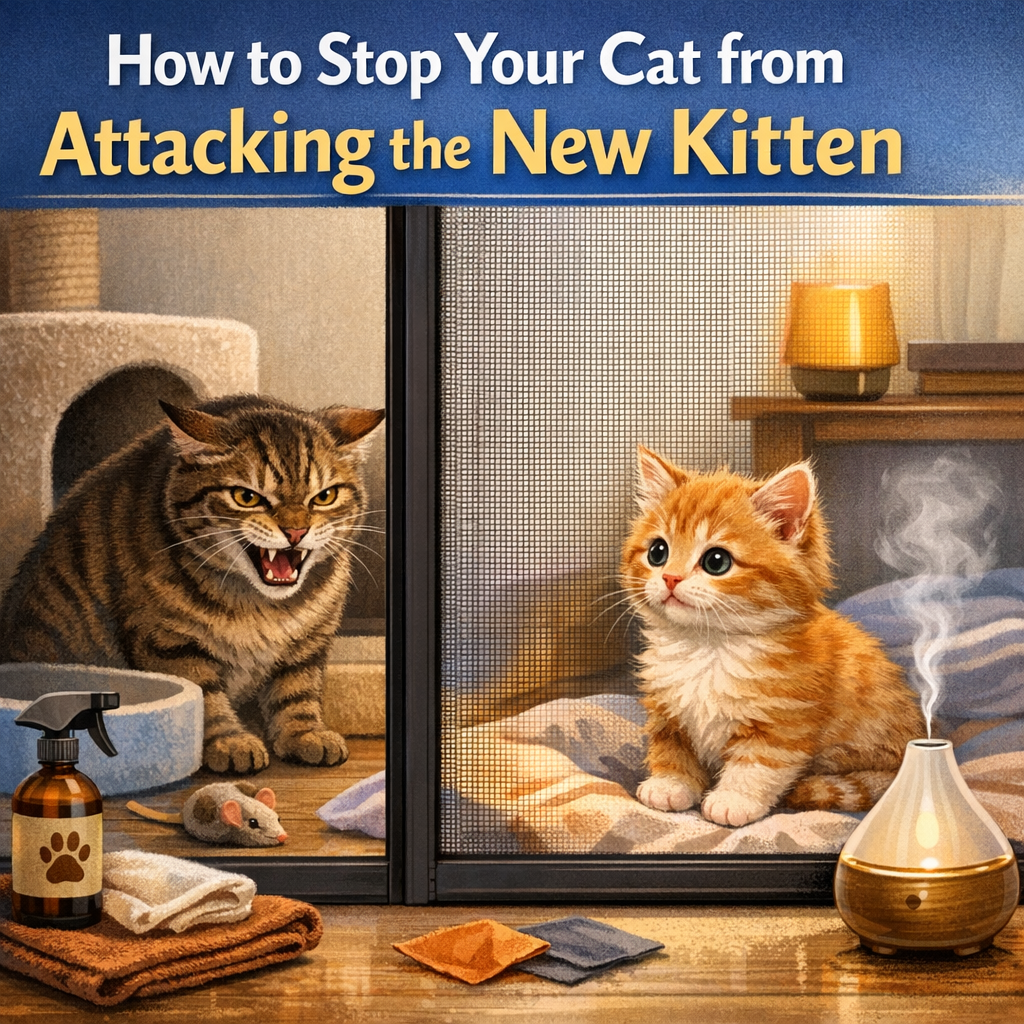
Allowing each cat to have a secure “home base” prevents the resident cat from feeling invaded. Use barriers and screen doors to let them see each other safely before any supervised cat interaction takes place.
Using Feliway and Calming Supplements
If the cat fighting persists, consider pheromone diffusers like Feliway. These mimic natural calming signals to reduce cat aggression. Cat calming supplements can also help lower the tension during the slow introduction process.
In more severe cases of inter-cat aggression, a veterinarian might prescribe Gabapentin for cats. This medication helps manage extreme cat stress, making the site swapping and supervised interaction phases much smoother for everyone involved.
The Slow and Gradual Introduction Process
The biggest mistake most owners make is rushing the meet and greet. Many experts on Reddit in the CatTraining Community, including users like Cheap_Courage_2659 and Obvious-Release-5605, report that introducing cats too quickly leads to long term inter-cat aggression.
A slow introduction process is not just a suggestion: it is a requirement. It can take several weeks or even months for cats to coexist. Studies show that a phased approach reduces cat stress and prevents the resident cat from feeling invaded.
Keeping them separated is the golden rule. Let them hear each other through a door before they ever see each other. This builds curiosity rather than conflict, allowing for kitten socialization without the threat of a cat hunting kitten scenario.
Mastering Scent Swapping and Positive Reinforcement
Before the first face to face meeting, you must master feline scent swapping. Swap blankets, beds, and toys between your resident cat and the new kitten for at least two to three weeks.
This method helps cats associate the other’s scent with safety. Use positive reinforcement training by offering high-value food rewards like Churus whenever they sniff an item belonging to the other cat. This triggers a dopamine release in pets, linking the new scent to a delicious treat.
You can also try site swapping, where you let the kitten explore the living room while the older cat spends time in the kitten’s home base. This allows both to navigate territorial behavior without a physical confrontation.
Why You Must Avoid the Cat Spraying Bottle
It might be tempting to reach for a cat spraying bottle when cat hissing starts, but punitive techniques are a major mistake. Loud noises and water sprays are harmful and counterproductive.
Cat discipline based on fear makes your pets associate each other with negative experiences. This increases cat stress and can lead to litter box aversion or redirected play therapy needs later on.
Instead of punishing cat aggression, focus on cat behavior modification. Use wand toys to redirect energy or separate them calmly if things get too heated. Your goal is a stress-free environment, not a splash zone.
Creating Safe Zones and Using Barriers
Providing safe, separate spaces is vital for territory management. Your new kitten needs a designated area with its own litter, food, and cat boundaries to feel secure while acclimating.
The screen door method or using barriers and screen doors allows for supervised interaction where they can see each other without physical contact. This visual stage is a huge step in the slow introduction phase.
To help soothe frayed nerves, consider pheromone diffusers like Feliway or cat calming supplements. In extreme cases of inter-cat aggression, a vet might even suggest Gabapentin to manage severe anxiety during the transition.
Patience is the Secret to Success
Success requires extreme patience. It can take anywhere from a few weeks to over a year for cats to fully adjust to a hierarchical dominance shift in the home.
Never rush the supervised cat interaction. If you see cat fighting, go back a step. Consistent patience and avoiding shortcuts are the only ways to ensure your resident cat and new kitten become lifelong buddies.
At Bella Gatti US Shop, we believe a happy home starts with a relaxed cat. While you wait for the peace treaty to be signed, you might as well look stylish in a soft cotton tee that celebrates your love for these complex, furry roommates.
Use Scent Swapping and Positive Reinforcement
Cats live in a world of smells, and your resident cat currently thinks the new kitten smells like an intruder. Feline scent swapping is the secret weapon for a peaceful home. It helps your cat get used to the newcomer without a face to face confrontation.
Start by swapping their blankets and beds. You can also use a clean sock to gently rub one cat’s cheeks and then place it near the other cat. This allows them to investigate the new pheromones while feeling safe in their own territory management zones.
Experts in the CatTraining Community on Reddit suggest you should continue this process for at least 2 to 3 weeks. Consistency is key here. You want to blanket the house in a mix of both scents so the “new” smell becomes part of the daily furniture.
Combine this with positive reinforcement training to speed up the friendship. When your resident cat sniffs the kitten’s scent and stays calm, it is time for a reward. Use high-value treats like Churus to create a positive association.
You want them to link that specific kitten smell with the best snacks in the world. This creates a dopamine release in pets that tells their brain the kitten equals “good things.” High-value food rewards are much more effective than forcing a meeting.
While you are working on scent, consider adding Feliway diffusers to the rooms. These pheromone diffusers mimic natural calming signals and can significantly reduce cat stress and territorial behavior during the slow introduction process.
If your resident cat is particularly anxious, some owners discuss using cat calming supplements or even Gabapentin for cats after consulting a vet. Keeping the environment low stress prevents inter-cat aggression from boiling over into a fight.
Avoid the temptation to rush. If you see signs of cat hissing or cat fighting, you are moving too fast. Go back to scent swapping and site swapping until both cats are relaxed and ready for the next step of supervised interaction.
Avoidance of Punitive Techniques and Cat Discipline
Put the cat spraying bottle away and step back from the water trigger. Experts in the CatTraining Community on Reddit, including users like Obvious-Release-5605, emphasize that punishment always backfires. When you spray your resident cat for hissing, they do not learn to be nice.
Instead, your cat learns that the new kitten is a magical bringer of bad vibes and wet fur. This creates a negative association that fuels inter-cat aggression. If your cat thinks the kitten causes them to get squirted, they will only want that kitten gone even more.
Loud noises, yelling, and physical cat discipline only increase cat stress and fear. High cortisol levels make it impossible for your pets to bond. Punishment creates fear, and fear creates more fighting. It is a cycle that ruins the slow introduction process.
Focus on positive reinforcement instead of punishment. If you see cat hunting kitten behavior, do not scream. Use wand toys to provide redirected play therapy. This shifts their focus from the kitten to a “prey” object, triggering a healthy dopamine release in pets.
Reward your resident cat with high-value treats like Churus when they remain calm near the kitten. You want them to think that the kitten is a lucky charm that makes delicious snacks appear. This builds a foundation of trust rather than a household ruled by the fear of the spray bottle.
If the tension remains high, consult your vet about cat calming supplements or gabapentin for cats. These can help lower the threshold for cat aggression during the early stages. Remember, your goal is a peaceful home where you can relax in your favorite unisex soft cotton tee without refereeing a feline wrestling match.
Providing Safe Separate Spaces
Your new kitten needs a sanctuary where they can feel like the boss of their own tiny kingdom. This is usually a spare bedroom or bathroom equipped with their own litter box, food, and water. Setting up this home base is essential for territory management and prevents issues like litter box aversion.
Kittens feel safer when they have a designated zone to retreat to when things get overwhelming. It also allows the resident cat to maintain their usual routine without feeling like their entire world has been stolen by a tiny intruder. Proper territory management is the foundation of a happy multi-cat home.
Never force your cats to share resources early on. Even if they seem okay through a door, keep their home bases separate for the first month to avoid cat aggression. Providing separate spaces ensures that both the resident cat and the new kitten have a sense of security while they adjust to each other’s presence.
Experts in the CatTraining Community on Reddit often suggest using pheromone diffusers like Feliway in these separate rooms. These tools help lower cat stress and manage territorial behavior during the slow introduction process. It gives everyone a chance to breathe without the pressure of a face to face confrontation.
The Importance of a Slow and Gradual Introduction Process
Patience is more than a virtue when introducing cats; it is a requirement. Rushing the process is the fastest way to trigger inter-cat aggression. Studies and seasoned owners like Cheap_Courage_2659 emphasize that a slow introduction process can take several weeks or even months.
Start by keeping them in completely separate rooms where they can only hear and smell each other. This gradual approach reduces the risk of cat fighting and allows their natural curiosity to outweigh their fear. If you move too fast, you might end up dealing with a cat hunting kitten scenario that is hard to reverse.
Think of it like a slow burn romance rather than a blind date. By using barriers and screen doors, you can facilitate supervised interaction without the risk of a physical spat. Taking the time now prevents long term cat behavior issues and ensures a peaceful household for years to come.
Mastering Scent Swapping and Positive Reinforcement
Feline scent swapping is your secret weapon for building a friendship. Before they ever meet eye to eye, swap their blankets, beds, and toys. This method helps each cat associate the other’s scent with the safety of their own space, reducing cat hissing when they eventually meet.
Combine this with positive reinforcement training to create “good vibes” only. When your resident cat sniffs the kitten’s toy without growling, shower them with high-value treats like Churus. These high-value food rewards create a dopamine release in pets that links the new kitten’s scent to a delicious snack.
Continue this scent swapping for at least two to three weeks. You can even try site swapping, where the cats trade rooms for an hour to explore each other’s territory safely. This builds familiarity and confidence, making the eventual supervised cat interaction much smoother and less stressful for everyone involved.
Patience and Time for Adjustment
Integration is a marathon, not a sprint. While some cats become best friends in a few weeks, others might take over a year to reach a state of hierarchical dominance peace. You cannot rush biology, and you certainly cannot rush a moody resident cat.
According to users in the CatTraining Community on Reddit, like Cheap_Courage_2659, consistency is your best friend. If the introduction hits a snag, do not be afraid to hit the reset button. Going back to square one often works better than pushing through a tense situation that could lead to long term cat stress.
Many experts suggest that the slow introduction process is the only way to ensure a peaceful multi cat household. If you see signs of cat aggression or cat fighting, it means you are moving faster than your pets are ready for. Slow down and let them find their rhythm naturally.
The Slow and Gradual Introduction Process
Introducing cats too quickly is the number one reason for ongoing inter-cat aggression. Competitors and behaviorists emphasize that a slow and gradual introduction process reduces conflict by allowing the resident cat to process the change without feeling threatened.
Studies suggest that this phased approach, which includes supervised cat interaction and the screen door method, helps manage territorial behavior. By using barriers and screen doors, you allow the cats to see and smell each other without the risk of a physical altercation.
This phase can take several weeks to months. During this time, your goal is to prevent the cat hunting kitten dynamic from forming. If the resident cat is hissing or the kitten is hiding, you need to maintain separate zones until their body language softens.
Use of Scent Swapping and Positive Reinforcement
Scent is the primary language of felines. Scent swapping involves exchanging blankets, beds, or toys between the resident cat and the new kitten for at least 2 to 3 weeks. This technique helps both animals associate the other’s scent with the safety of their own territory.
Combine these scent exchanges with positive reinforcement training. Use high value food rewards and high value treats like Churus to build positive associations. When your resident cat smells the kitten and receives a treat, their brain begins to link that scent with a reward.
This method triggers a dopamine release in pets, making them feel more relaxed in each other’s presence. Site swapping, where the cats trade rooms for an hour, is another great way to encourage feline scent swapping without direct confrontation.
Avoidance of Punitive Techniques
It is tempting to reach for a cat spraying bottle when you see cat hissing, but experts advise stopping these methods immediately. Punitive techniques like spray bottles, loud noises, or cat discipline through fear only increase cat stress and make the aggression worse.
When you punish a cat for reacting to a kitten, they associate that negative experience with the kitten’s presence. This creates a cycle of redirected play therapy gone wrong and can lead to permanent litter box aversion or territorial spraying.
Instead of punishment, focus on redirection using wand toys or calming aids. If things get heated, simply place a physical barrier between them. Your goal is to be a calm leader, perhaps while wearing your favorite Bella Gatti graphic tee, rather than a source of fear.
Providing Safe Separate Spaces
Kittens feel safer when they have a designated sanctuary equipped with their own litter box, food, and water. This home base is essential for territory management and prevents the resident cat from feeling like their entire kingdom has been invaded.
Allowing each cat to have safe zones reduces the likelihood of cat fighting. If the kitten socialization process becomes overwhelming, they need a place to retreat where the resident cat cannot follow. This prevents the kitten from becoming traumatized during the early stages of the move.
To further lower the tension, many owners use Feliway diffusers or pheromone diffusers in these separate spaces. These tools mimic natural feline messages of security, helping to manage inter-cat aggression and making the slow introduction process much smoother for everyone involved.
Monitoring and Supplements
As you move toward supervised interaction, keep a close eye on body language. If the resident cat remains overly aggressive, consult a vet about cat calming supplements or medications like Gabapentin for cats. Users like Obvious-Release-5605 have noted that Gabapentin can help take the edge off a highly territorial resident cat.
Patience is the ultimate tool in your kit. Whether it takes three weeks or three months, your cats will eventually find their rhythm. Just keep the Churus handy, stay consistent with positive reinforcement, and remember that a peaceful home is worth the wait.
Tools for a Peaceful Transition
Sometimes you need a little help from science. There are several products designed to lower the temperature in a high-stress household and manage cat behavior effectively.
At Bella Gatti US Shop, we believe that a calm home is a happy home. Whether you are rocking one of our Funny Slogan T-shirts or a cozy cat-themed tee, you will feel much better if your feline friends are not reenacting a wrestling match.
| Tool | Purpose | Effectiveness |
|---|---|---|
| Feliway Diffusers | Mimics calming pheromones | High for general cat stress |
| Screen Door Method | Visual access without contact | Excellent for safe viewing |
| Gabapentin | Prescription sedative | Great for extreme cat aggression |
| Cat Calming Supplements | Natural relaxation | Moderate for mild stress |
| High-Value Food Rewards | Positive reinforcement training | Essential for building bonds |
Managing Inter-cat Aggression with Pheromones and Medication
If your resident cat is showing signs of territorial behavior or redirected play therapy is not enough, Feliway diffusers are a lifesaver. These pheromone diffusers mimic the natural messages cats leave to mark an area as safe.
For more intense cases of inter-cat aggression, your vet might suggest Gabapentin. This prescription medication is often used to manage cat stress during the slow introduction process, especially when a cat is prone to hissing or fighting.
Cat calming supplements can also play a role in kitten socialization. These over the counter options often use L-theanine or tryptophan to encourage a gentle dopamine release in pets, helping them stay relaxed while they learn cat boundaries.
Barriers and Screen Doors for Supervised Interaction
The screen door method is a favorite recommendation within the CatTraining Community on Reddit. It allows for supervised cat interaction where the cats can see each other without the risk of a physical altercation.
Using barriers and screen doors helps prevent the cat hunting kitten dynamic. It allows you to practice positive reinforcement by offering high-value treats, like Churus, on both sides of the door to create a pleasant association.
While the cats are separated, you should continue feline scent swapping. Trade their bedding or use a sock to rub one cat’s cheeks and place it near the other. This ensures that when they finally meet, the scent is familiar and non-threatening.
Avoiding Cat Discipline and Punitive Techniques
One rule is absolute: stop using a cat spraying bottle or loud noises. Experts and users like Obvious-Release-5605 agree that these punitive techniques only increase cat stress and make the resident cat associate the new kitten with negative experiences.
Instead of a spray bottle, use wand toys to redirect energy. If you notice your cat hissing or preparing to pounce, use play to distract them. This shifts their focus from territorial defense to a healthy hunting instinct directed at a toy.
Focus on rewarding the behavior you want to see. When they sit near each other without growling, shower them with Churus and praise. This positive reinforcement training is the fastest way to achieve hierarchical dominance peace without damaging your bond with either pet.
Managing Interactions and Body Language
To keep the peace, you must become an expert in cat behavior. Watch for cat hissing, dilated pupils, and a swishing tail. These are clear warnings that your resident cat is feeling territorial.
If you see a direct stare, your resident cat is likely about to pounce. At Bella Gatti US Shop, we suggest keeping your eyes on the cats and your hands on your favorite Funny Slogan T-shirt. Never put your hands in the middle of a cat fight.
Use supervised cat interaction only when both cats are calm. If the resident cat begins hunting the kitten, use redirected play therapy. Grab some wand toys and move the focus away from the kitten and onto the toy to trigger a healthy dopamine release.
The Importance of a Slow and Gradual Introduction Process
The biggest mistake most owners make is rushing the process. Introducing cats too quickly can lead to permanent cat aggression and inter-cat aggression. It often takes several weeks to months for cats to coexist peacefully.
A slow introduction process is essential for long term harmony. Start by keeping them in separate rooms and gradually introducing their scents before they ever lock eyes. This patient approach reduces cat stress and prevents a lifelong rivalry.
According to the CatTraining Community on Reddit, users like Cheap_Courage_2659 and Obvious-Release-5605 emphasize that rushing the “face to face” stage often results in setbacks. Patience is your best tool for successful kitten socialization.
Mastering Scent Swapping and Positive Reinforcement
Feline scent swapping is a game changer for territory management. Swap blankets, beds, and toys between the resident cat and the new kitten for at least 2 to 3 weeks before they meet.
Combine this with positive reinforcement training. Use high-value food rewards and high value treats like Churus to help both cats associate the other’s scent with a delicious snack. This builds a positive association rather than a defensive one.
By using scent swapping and site swapping, you allow the cats to explore each other’s territory without the threat of a physical confrontation. This method is highly recommended by feline behaviorists to lower the temperature in the home.
Why You Must Avoid Punitive Techniques
If things get heated, stop using a cat spraying bottle or making loud noises. Experts and Reddit communities alike advise stopping these methods immediately because they are harmful to the bond you are trying to build.
Punitive techniques cause cats to associate the other feline with negative experiences and fear. This increases cat stress and can lead to litter box aversion or increased cat fighting. Stick to positive reinforcement and distraction instead.
Instead of a spray bottle, use a screen door method or physical barriers to keep them safe while they watch each other. This allows for supervised interaction without the risk of a physical altercation or the need for discipline.
Providing Safe Separate Spaces for Every Cat
Kittens often feel vulnerable in a new home. Providing safe, separate spaces for the kitten and the resident cat is vital. Each cat needs its own designated area with a private litter box, food, and water bowls.
Allowing each cat to have their own safe zones prevents territorial behavior and reduces the urge for cat spraying. When the kitten feels secure in their own space, they are less likely to trigger the resident cat’s hunting instincts.
For high-stress households, you might consider Feliway diffusers or other pheromone diffusers to create a calming atmosphere. In extreme cases of cat aggression, consult a vet about cat calming supplements or medications like Gabapentin for cats.
Patience and Time for Feline Adjustments
It is important to remember that it can take anywhere from several weeks to over a year for cats to fully acclimate to one another. Every cat has a unique personality and a different sense of hierarchical dominance.
Consistency is key. Do not skip steps in the introduction process just because one day went well. Continue using Churus and wand toys to reinforce good behavior and keep the environment predictable.
The goal is not necessarily for them to be best friends immediately, but to respect each other’s cat boundaries and personal space. With time, your resident cat will realize the new kitten is a friend, not a foe.
Pros and Cons of Your Integration Strategy
Choosing the right method for introducing cats is like picking the right Graphic T-shirt. You want the perfect fit for your lifestyle and your cat’s unique personality. Whether you are rocking a Nature T-shirt or a Funny Slogan T-shirt, your approach to territory management will determine the peace level in your home.
The slow introduction process is widely considered the gold standard in the CatTraining Community on Reddit. Users like Cheap_Courage_2659 and Obvious-Release-5605 often emphasize that rushing this stage is the number one cause of long term cat aggression. While it takes several weeks or even months, it ensures the highest success rate for a harmonious household.
Scent swapping and site swapping are essential for reducing territorial guarding. By moving blankets or using Feline scent swapping techniques, you help your resident cat and new kitten get used to each other without a face to face confrontation. This reduces cat stress and prevents the resident cat from feeling like their kingdom is under siege.
Feeding near each other is a classic move to build a positive association. When you offer high value food rewards like Churus or other lickable treats on opposite sides of a door, you trigger a dopamine release in pets. This teaches them that the presence of the other cat equals delicious snacks and happy vibes.
- Slow Introduction:
- Pros: Highest success rate and minimizes the risk of a cat fighting incident.
- Cons: Requires extreme patience and can take a long time to complete.
- Site Swapping and Scent Swapping:
- Pros: Reduces territorial behavior and allows for kitten socialization in a safe way.
- Cons: Can be a bit messy moving litter boxes and cat gear between rooms.
- Feeding Near Each Other:
- Pros: Uses positive reinforcement training to create a bond over food.
- Cons: Risk of food aggression if the cats are moved too close together too quickly.
- Visual Barriers and Screen Doors:
- Pros: Allows for supervised cat interaction without the risk of physical injury.
- Cons: Requires some setup or purchasing a temporary screen door.
Many experts suggest using cat calming supplements or pheromone diffusers like Feliway during these transitions. In cases of extreme cat stress, a vet might even suggest Gabapentin for cats to help them stay relaxed. Remember to avoid a cat spraying bottle or loud noises, as these punitive techniques only increase inter-cat aggression and damage your bond.
Patience is your best friend here. It can take anywhere from a few weeks to over a year for cats to fully acclimate to their new hierarchical dominance structure. Keep your eyes on their body language and your heart in your favorite Bella Gatti US Shop tee, and you will get through this transition together.
Expert Insight
“Intros must be slow and positive. Don’t overwhelm the newcomer or your resident cats. Keep in mind that everyone feels threatened and concerned for the safety of their resources.”, Pam Johnson-Bennett, Certified Cat Behavior Consultant
Frequently Asked Questions About Cat Aggression and New Kittens
Managing a household with a grumpy resident cat and a high-energy new kitten requires the patience of a saint and the wardrobe of a cat lover. Whether you are lounging in one of our Cat T-shirts or a Funny Slogan T-shirt, these answers will help you navigate the chaos.
How long does it take for a resident cat to accept a new kitten?
Patience is your best friend here. While you might see basic tolerance in 2 to 4 weeks, a full slow introduction process can take anywhere from 6 months to a year. Every cat behavior profile is unique, so do not rush the process.
According to experts in the CatTraining Community on Reddit, rushing the face to face meetings too early is the number one cause of long-term inter-cat aggression. Give them time to adjust to the change in their environment.
Should I let them fight it out to establish a hierarchy?
Absolutely not. This is dangerous advice that can lead to permanent psychological trauma and physical injury. Letting them fight can ruin any chance of a peaceful coexistence and may result in redirected play therapy being needed later.
If you see signs of a cat hunting kitten or intense cat hissing, separate them immediately. Supervised cat interaction is the only way to ensure safety. Use positive reinforcement training with high-value food rewards like Churus to reward calm behavior.
What if my resident cat starts cat spraying or stops using the litter box?
Litter box aversion and cat spraying are major red flags for cat stress. This often happens when territory management fails and the resident cat feels their home is being invaded. Ensure you have one more litter box than you have cats.
Check your territory management strategy. Are the resources spread out? Using Feliway diffusers or pheromone diffusers can help lower the tension. If the behavior persists, consult a vet to rule out medical issues caused by stress.
Can I use cat calming supplements or medications like Gabapentin?
Yes, medications like Gabapentin for cats can be a literal lifesaver for an overly reactive resident cat. It helps lower the anxiety threshold, making the slow introduction process much smoother for everyone involved.
Always use these under strict veterinary supervision. Many users like Cheap_Courage_2659 and Obvious-Release-5605 on Reddit have shared success stories using Gabapentin alongside scent swapping and the screen door method to manage territorial behavior.
Why is my cat acting aggressive even with a screen door?
If cat aggression persists even with barriers and screen doors, you may need to go back a step to feline scent swapping. Your cat might be overwhelmed by the visual stimulus of the new kitten.
Try site swapping, where the cats switch rooms without seeing each other. This allows them to explore the other’s scent safely. Pair these moments with wand toys and high value treats to create a positive association with the new sibling’s smell.
References
- My resident cat won’t stop attacking new kitten over 1 month! – Reddit
- Older Cat Hates New Kitten? Here’s What To Do – Rover.com
- What do I do when our cat is being aggressive with a new kitten?
- Cat Aggression Toward Other Cats: Causes and Prevention
- Help! My cat is being aggressive to my new kitten! – Pet Forums