TL;DR (Too Long; Didn’t Read)
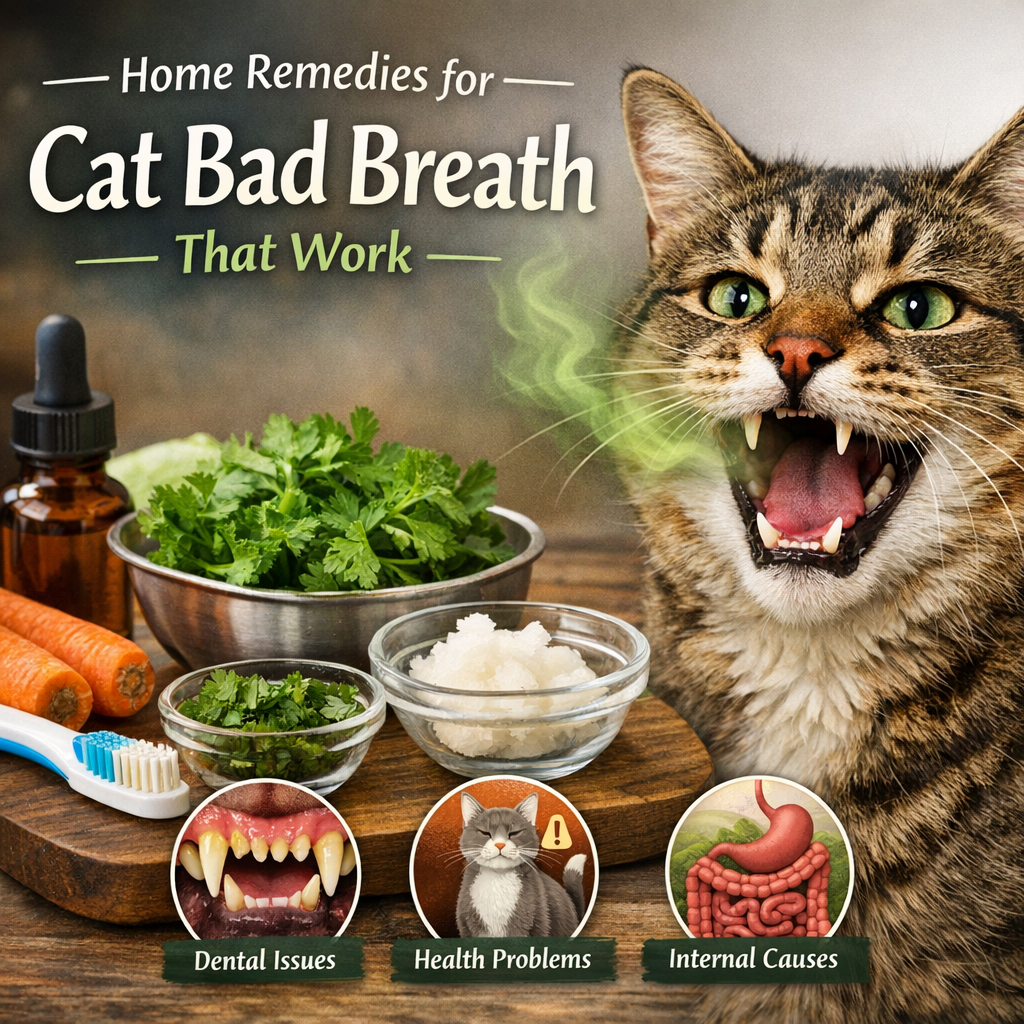
- Root Causes: Most feline bad breath (halitosis) is caused by dental diseases like plaque buildup, gingivitis, and periodontitis, but it can also signal systemic issues such as kidney disease, liver disease, or diabetes.
- Home Remedies: Prevention is key through daily brushing with cat-specific toothpaste, using water additives (like ProDen PlaqueOff), offering dental treats for mechanical cleaning, or using natural antibacterial agents like coconut oil.
- Professional Care: Cats should receive a veterinary oral examination every 6–12 months; severe cases may require professional ultrasonic scaling under anesthesia or tooth extractions to remove sources of infection.
- Warning Signs: Seek immediate veterinary attention if your cat shows symptoms beyond bad breath, such as bleeding gums, excessive drooling, difficulty eating, or a breath odor that smells like urine or fruit.
Table of Contents
You love your feline friend, but sometimes their breath smells like a seafood market left out in the sun. Stinky breath, or halitosis in felines, is more than just a social hurdle during cuddle time.
In short: it is often a cry for help from their mouth or body. Foul smell is caused by bacteria releasing sulfur compounds as tissues break down inside the oral cavity.
At Bella Gatti US Shop, we know you want the best for your pet. While we specialize in a Unisex Soft Cotton Tee that celebrates cat culture, we also care about the health of the cats wearing them (metaphorically). Let us dive into how to fix that feline funk.
Understanding the Causes of Cat Bad Breath
Dental disease accounts for the majority of bad breath cases in our feline companions. This usually starts with plaque accumulation, which hardens into dental tartar buildup over time.
When plaque and tartar are left unchecked, they lead to gingivitis in cats and painful inflammation. Beyond the mouth, cat bad breath can signal systemic issues like kidney disease, liver disease, or mouth ulcers.
In some cases, a sweet or fruity scent might indicate cat diabetes and ketosis, while a urine like smell could point toward uremic ulcers. Always monitor your cat for oral tumors or feline calicivirus, which also contribute to halitosis.
Oral Health and Feline Dental Disease
Statistics from organizations like PetMD show that 70 percent of cats experience some form of dental disease by age 3. This makes feline dental disease a top priority for every pet parent.
Feline dental disease often progresses silently. Without a regular dental health checkup, minor plaque can turn into severe periodontal disease, leading to gum recession and bone loss.
Veterinary experts at LakeCross Veterinary Hospital in Huntersville, Mecklenburg County, emphasize that regular dental care is vital. A recent dental checkup with a vet is recommended at least once a year to keep these issues at bay.
Common Symptoms of Dental Disease and Bad Breath
Stinky breath is rarely an isolated issue. You might notice bleeding gums, red or sore gums, or excessive drooling when your cat is suffering from dental distress.
Watch for behavioral changes such as pawing at the mouth or difficulty eating. If your cat drops food or tilted their head while chewing, they may be dealing with tooth decay or oral ulcers.
Other warning signs include visible plaque and tartar on the teeth and persistent inflammation known as stomatitis. These symptoms often require a professional oral examination to determine the severity of the condition.
Veterinary Diagnosis of Cat Halitosis
If home remedies do not clear the air, it is time for a professional oral examination. Vets typically conduct these exams under sedation if the cat is in pain or uncooperative.
During the visit, your vet will look for signs of gum recession and abscess and infection. If no obvious dental cause is found, they may perform blood work to rule out kidney disease or liver disease.
Clinical resources like Veterinary Secrets suggest that jaw movements and appetite levels are important clues. A thorough diagnosis ensures the bad breath treatment addresses the root cause rather than just masking the odor.
Professional Treatment Options for Felines
When halitosis becomes severe, professional dental prophylaxis is necessary. This involves a deep dental cleaning with ultrasonic scalers to remove buildup from under the gum line.
Veterinary dental care often includes polishing the teeth to prevent future plaque buildup. If a tooth is too damaged to save, a tooth extraction may be performed to eliminate the source of infection.
Anesthesia is almost always used for these dental cleanings to ensure a thorough and pain free process. Afterward, your vet might prescribe antibiotics or pain meds to help your cat recover from any tooth extractions. Additionally, daily brushing is ideal for optimal Feline Dental Hygiene.
Home Oral Care for Cats to Prevent Bad Breath
Preventing feline oral healthcare issues starts at home. Establishing daily brushing routines is the gold standard for reducing plaque and preventing halitosis.
Using cat specific toothpaste and a cat toothbrush can significantly slow down the development of tartar. Never use human toothpaste, as it contains ingredients that are toxic to felines.
You can also supplement their routine with water additives or food additives like ProDen PlaqueOff. These products work to break down biofilm and keep the mouth fresh between professional cleanings.
Simple Steps for Brushing Your Cat’s Teeth
Start early to get your cat used to the process. Begin by using finger brushes or a small piece of gauze to gently rub their gums and teeth.
Gradually build up to brushing multiple times weekly, focusing primarily on the outer teeth surfaces where tartar tends to collect. You can find helpful tutorials on Google or YouTube to master the technique.
Avoid inner side brushing initially, as most cats find this invasive. The goal is to make feline dental hygiene a positive experience, perhaps following up with a few dental treats as a reward.
The Importance of Preventive Veterinary Exams
Regular vet visits every six to twelve months enable early detection of dental issues. These preventive measures are much easier on your cat (and your wallet) than emergency surgery.
Routine dental exams allow your vet to catch gingivitis in cats before it turns into full blown periodontal disease. They can also monitor for signs of systemic illness through breath odors.
By combining home care with professional oversight, you ensure your feline friend stays healthy and kissable. After all, a healthy cat is a happy cat, and that is something every owner can celebrate.
Common Causes of Cat Bad Breath
While we love those tiny sandpaper kisses, a face full of stinky breath is a major mood killer. In the feline world, halitosis in felines is rarely just a case of morning breath. It is usually a sign that something is brewing beneath the surface.
Feline dental disease is the most frequent culprit, affecting roughly 70 percent of cats by the time they reach age three. When your cat eats, bacteria form a sticky film called plaque accumulation on their teeth. If you do not brush it away, it hardens into dental tartar buildup.
This tartar is a playground for bacteria that release foul smelling sulfur compounds as they break down oral tissues. This process leads to gingivitis in cats, characterized by red, swollen, or bleeding gums. Without intervention, it progresses to periodontal disease and painful gum recession.
Oral Health and Dental Disease in Cats
Dental health is not just about a sparkling smile, it is about systemic wellness. Chronic inflammation from plaque and tartar can allow bacteria to enter the bloodstream, potentially damaging the heart and kidneys. This is why regular feline oral healthcare is so vital.
Beyond standard decay, some cats suffer from stomatitis, a severe and painful inflammation of the entire mouth. Others may deal with feline calicivirus, which can cause painful oral ulcers. If you notice your cat struggling with jaw movements or avoiding their kibble, they need a dental health checkup immediately.
Veterinary Secrets often points out that cats are masters at hiding pain. By the time you notice bad breath treatment is needed, your kitty might already be suffering from a hidden abscess and infection or even loose teeth that require tooth extraction.
Symptoms of Dental Disease and Bad Breath in Cats
How do you know if that cat breath smell is a serious cat health symptoms alert? Look for more than just the odor. Check for red or sore gums, excessive drooling, or a sudden change in eating habits. If they paw at their mouth or tilt their head while chewing, they are likely in pain.
Foul smell is just the tip of the iceberg. As tissues break down, you might see bleeding gums or yellow brown crusts on the teeth. These are classic signs of dental tartar buildup that an oral examination at the vet can confirm.
If you see these signs, do not wait for your annual visit. Early detection of gingivitis in cats can prevent the need for more invasive procedures like tooth extractions later on. A quick peek in their mouth today could save them from a lot of discomfort tomorrow.
Other Health Conditions Causing Bad Breath
Sometimes, the problem is not in the mouth at all. According to resources like PetMD, cat bad breath can be a window into their internal organs. If your cat’s breath has a metallic or urine like scent, it may indicate kidney disease and uremic ulcers.
A sweet, fruity, or acetone like smell is a major red flag for cat diabetes. This happens during ketosis in diabetes, where the body breaks down fat for fuel. If the breath smells like a literal sewer, it could point to liver disease or a serious gastrointestinal blockage.
Oral tumors and mouth ulcers can also create pockets where bacteria thrive, leading to a localized foul smell. Because these conditions are serious, any persistent stinky breath should be evaluated through a professional oral examination and possibly blood work to rule out organ failure.
Veterinary Diagnosis of Cat Halitosis
When you take your kitty to a place like LakeCross Veterinary Hospital in Huntersville, Mecklenburg County, the vet will start with a thorough oral examination. They will look for signs of gum recession, inflammation, and broken teeth.
Since cats are not always cooperative patients, a vet might recommend a dental prophylaxis under sedation. This allows them to see the back of the throat and under the gumline where the real trouble hides. They may also look for feline calicivirus or other viral triggers.
If the teeth look surprisingly clean but the breath is still offensive, your vet will likely suggest diagnostic tests. This could include blood panels to check for kidney disease or liver disease, ensuring that the stink is not coming from a deeper metabolic issue.
Oral Health and Dental Disease in Cats
Did you know that 70 percent of cats experience some form of feline dental disease by age 3? This is a staggering statistic from sources like PetMD that highlights why oral hygiene is so vital for your furry roommate.
Without a regular dental health checkup, bacteria from plaque and tartar can enter the bloodstream. This systemic spread can eventually lead to heart or kidney disease. Keeping those pearly whites clean is about more than just a fresh scent: it is about longevity and feline oral healthcare.
When you notice a stinky breath smell, it is often due to bacteria releasing sulfur compounds as oral tissues break down. This process is a hallmark of halitosis in felines and suggests that a veterinary oral examination is overdue to check for hidden infections.
Common Feline Dental Conditions
Understanding specific cat dental conditions helps you spot trouble early. If your cat is acting grumpy, it might not be their personality: it might be one of these painful issues brewing in their mouth.
- Gingivitis in cats: You will see red, swollen gums that may show signs of bleeding gums during play or eating.
- Periodontal Disease: This involves deep damage to the structures supporting the teeth, often requiring dental prophylaxis or tooth extraction to resolve.
- Stomatitis: A severe and painful inflammation of the entire mouth often linked to feline calicivirus or immune system overreactions.
- Tooth Resorption: A mysterious condition where the body starts breaking down the tooth structure from the inside out, causing immense sensitivity.
Symptoms of Dental Disease and Bad Breath in Cats
Beyond the foul cat breath smell, you should watch for physical cues. Common cat health symptoms include drooling, pawing at the face, or a sudden change in eating habits. Some cats may even show uremic ulcers if the issue has progressed to affect their internal organs.
If you notice gum recession or oral ulcers, these are red flags that go beyond simple plaque accumulation. Veterinary Secrets and other experts suggest that a foul odor is the most immediate warning sign of active decay or dental tartar buildup that requires professional intervention.
The Link to Systemic Health: Kidney and Liver Disease
Oral health is a window into the rest of the body. Chronic dental infections put a constant strain on the immune system. This can lead to serious complications like liver disease or kidney disease as the organs struggle to filter out constant bacterial shedding.
In some cases, specific smells point to non dental issues. For example, a fruity or sweet smell might indicate ketosis in diabetes, while a breath that smells like urine could be a sign of advanced renal failure. Regular dental cleanings and exams help catch these metabolic shifts early.
Symptoms of Dental Disease and Bad Breath in Cats
You should keep an eye out for more than just a bad smell during your morning snuggles. While stinky breath is the most obvious sign, feline dental disease often hides beneath the surface of the gums.
Common cat health symptoms include bleeding gums, red or sore gums, and excessive drooling. You might also notice your cat pawing at their face or acting hesitant to eat their favorite kibble.
Foul cat breath smell is often caused by bacteria releasing volatile sulfur compounds as oral tissues break down. This process is frequently linked to gingivitis in cats and advanced periodontal disease.
If your feline friend is dropping food while trying to chew or showing signs of gum recession, a professional dental health checkup is mandatory. These behavioral changes often signal hidden pain.
In some cases, you may see visible plaque accumulation or heavy dental tartar buildup. You might even spot oral ulcers or uremic ulcers on the tongue, which can indicate serious issues like kidney disease.
Other red flags include a bright red line along the gum margin, known as gingivitis, or more severe inflammation like stomatitis. Sometimes, these symptoms are aggravated by viral infections such as feline calicivirus.
If you notice a fruity or sweet odor, it could be a sign of ketosis in diabetes. Conversely, a breath that smells like urine may point toward liver disease or kidney failure.
Whether it is a simple case of plaque and tartar or a more complex issue like an abscess and infection, early detection is key. A veterinary oral examination can determine if your cat needs tooth extraction or professional dental prophylaxis.
At Bella Gatti US Shop, we want your cat to feel as good as you look in our Unisex Soft Cotton Tee. Do not ignore the funk. Schedule a dental health checkup to ensure those feline kisses stay fresh and healthy.
Home Oral Care for Cats to Prevent Bad Breath
The best bad breath treatment is proactive prevention. Establishing a daily oral hygiene routine can significantly reduce plaque and tartar, ensuring halitosis in felines does not take over your living room.
Since nearly 70 percent of cats experience feline dental disease by age three, your home care efforts are the first line of defense. Consistency is key to keeping those kitty kisses from smelling like a dumpster fire.
Using water or food additives like ProDen PlaqueOff can help break down existing plaque accumulation. These products use enzymes to neutralize bacteria in the mouth before they harden into stubborn dental tartar buildup.
Additionally, giving specific dental treats designed to scrub the teeth can be a helpful supplement to their diet. These treats provide mechanical scraping during chewing, which helps manage gum recession and gingivitis in cats.
Coconut oil is another playful home remedy. It acts as a natural antibacterial and anti inflammatory agent, making it easier to manage minor oral ulcers or red gums while providing a taste most cats actually enjoy.
| Remedy Type |
How It Works |
Ease of Use |
| Daily Brushing |
Physically removes plaque and tartar. |
Difficult |
| Water Additives |
Enzymes break down bacteria in the bowl. |
Very Easy |
| Coconut Oil |
Natural antibacterial and anti inflammatory. |
Easy |
| Dental Treats |
Mechanical scraping during chewing. |
Very Easy |
Steps for Brushing Cats’ Teeth
Brushing cat teeth might sound like a mission impossible, but it is the gold standard for feline oral healthcare. You should start early by letting your cat lick cat specific toothpaste off your finger.
Once they are comfortable, introduce a cat toothbrush or a soft finger brush. Focus strictly on the outer surfaces of the teeth where plaque and tartar usually gather, as most cats will not tolerate inner side brushing initially.
Gradually build up to brushing multiple times weekly. This routine helps prevent the need for more invasive procedures like tooth extractions or professional dental prophylaxis under anesthesia later in life.
Preventive Veterinary Exams and Professional Care
Even with great home care, regular dental health checkup visits are essential. You should schedule a veterinary oral examination at least once every six to twelve months to catch issues early.
During these visits, a vet might recommend professional dental cleanings using ultrasonic scalers. This process removes the hardened tartar that a toothbrush simply cannot touch, especially beneath the gum line.
If your cat has developed advanced periodontal disease or stomatitis, a vet may need to perform a tooth extraction. Early detection during routine cat dental exams can save your pet from chronic pain and systemic infections.
For more expert tips on feline health, many owners turn to resources like PetMD, Veterinary Secrets, or educational videos on YouTube and Google. Staying informed helps you spot cat health symptoms before they become emergencies.
Steps for Brushing Cats’ Teeth
Brushing cat teeth is the gold standard for feline oral healthcare and the most effective way to combat stinky breath. While it might seem daunting, your cat can learn to tolerate or even enjoy the process with a little patience and the right tools.
Start by selecting a cat toothbrush or a finger brush designed for small mouths. You can find helpful tutorials on YouTube or Google from sources like PetMD or Veterinary Secrets to see the proper technique in action.
Begin the process by letting your cat lick cat specific toothpaste off your finger. Never use human toothpaste, as it contains ingredients like xylitol or fluoride that are toxic to felines. Many pet pastes come in flavors like poultry or seafood to make the experience more enticing.
Gradually build up to brushing multiple times weekly to prevent dental tartar buildup and plaque accumulation. Focus your efforts on the outer teeth surfaces where the most debris tends to hide and cause problems like gingivitis in cats.
Avoid inner side brushing initially until your cat is completely comfortable with you touching their mouth. Patience is key here because you want this to be a positive bonding experience rather than a stressful wrestling match.
If you notice signs of gum recession or bleeding gums during your sessions, stop immediately. These are symptoms of advanced periodontal disease or stomatitis that require professional veterinary dental care rather than home brushing.
Consistent home care can prevent the need for frequent tooth extractions or intensive dental prophylaxis. Think of it as a daily investment in your cat’s long term health that keeps their kisses smelling as fresh as a new Unisex Soft Cotton Tee from Bella Gatti US Shop.
Natural Remedies and Supplements for Feline Oral Healthcare
If your cat treats a toothbrush like a mortal enemy, do not panic. While brushing cat teeth is the gold standard, you have other clever ways to fight plaque and tartar naturally.
Many pet parents at Bella Gatti US Shop swear by coconut oil as a secret weapon. It is safe, antibacterial, and most cats actually enjoy the taste of this tropical treat.
Simply rub a small dab on their gum line to help fight the bacteria that cause sulfur compounds. It is a gentle way to manage cat bad breath without the drama of a dental battle.
You can also look into specialized probiotics designed for cats. These supplements balance the bacteria in the mouth, much like they do for the gut, to prevent plaque accumulation.
Alternative Bad Breath Treatment Options
If you are dealing with stubborn cat breath smell, consider water additives or dental treats. These products work to break down biofilm before it turns into rock hard dental tartar buildup.
Managing feline dental disease often requires a multi pronged approach. Natural enzymes found in certain gels can help dissolve plaque and tartar without requiring a scrub brush.
Keep an eye out for symptoms of dental disease like bleeding gums or gum recession. If you notice these, a natural remedy might not be enough to stop the progression of gingivitis in cats.
While home oral care for cats is great, remember that natural remedies cannot replace a professional dental prophylaxis. If your cat has deep oral ulcers or uremic ulcers, see a vet immediately.
For more expert tips on feline oral healthcare, you can search for Veterinary Secrets or PetMD on Google. They offer great tutorials that complement your home routine perfectly.
Veterinary Diagnosis of Cat Halitosis
Sometimes your favorite feline needs more than just a coconut oil massage or a crunchy snack. If that stinky breath persists, a professional dental health checkup is the next step. Veterinary dental care is essential because nearly 70 percent of cats show signs of feline dental disease by age three.
During a veterinary oral examination, your vet will look for telltale signs of trouble like gum recession, bleeding gums, or oral ulcers. If your kitty is a bit fractious or nervous, the vet might perform this check under sedation to ensure a thorough look at the back molars and tongue.
A foul smell is often caused by bacteria releasing volatile sulfur compounds as oral tissues break down. This can lead to painful conditions like gingivitis in cats, stomatitis, or periodontal disease. In some cases, feline calicivirus may also be the culprit behind those nasty mouth sores.
If the oral hygiene looks surprisingly good but the cat breath smell is still off, your vet may perform blood work. This helps rule out systemic cat health symptoms related to kidney disease, liver disease, or cat diabetes. For instance, uremic ulcers are common with kidney issues, while ketosis in diabetes can create a fruity but unpleasant odor.
Keep a close eye on your pet for behavioral changes. Signs like a poor appetite, drooling, or strange jaw movements are important clues for your vet. These symptoms often point toward a need for dental prophylaxis, tooth extraction, or a professional cleaning using ultrasonic scalers to remove stubborn plaque and tartar.
Whether you are researching on Google, watching Veterinary Secrets on YouTube, or visiting a local clinic like LakeCross Veterinary Hospital in Huntersville, Mecklenburg County, early detection is key. Regular dental exams every six to twelve months are the best way to catch dental tartar buildup before it requires major surgery.
Professional Treatment Options for Feline Dental Disease
When the plaque accumulation turns into a concrete like wall of dental tartar buildup, your kitchen remedies need to take a backseat. At this stage, professional dental cleanings are the only way to save your cat from the discomfort of feline dental disease.
A professional veterinary oral examination often reveals hidden issues like gingivitis in cats or even stomatitis. To fix this, vets use ultrasonic scalers to vibrate away hardened tartar from both above and below the gum line where bacteria hide.
During this bad breath treatment, your vet will perform a full dental prophylaxis. This process includes polishing the teeth to smooth out the enamel, making it much harder for new plaque and tartar to stick around in the future.
Because cats are not known for sitting still and saying ah, anesthesia is a mandatory part of the process. It ensures the safety of your pet and allows the vet to check for gum recession or oral ulcers without causing any stress or pain.
In cases where periodontal disease has caused too much damage, tooth extractions may be necessary. Removing rotten or loose teeth prevents the spread of infection and stops the release of foul sulfur compounds that make your cat breath smell so pungent.
If your vet suspects that the stinky breath is not just a mouth issue, they may look for signs of feline calicivirus or systemic problems. Issues like kidney disease, liver disease, or cat diabetes can often manifest as secondary halitosis in felines.
For example, uremic ulcers are common in cats with kidney disease, while ketosis in diabetes can create a distinct, sickly sweet odor. A thorough dental health checkup at a clinic like LakeCross Veterinary Hospital in Huntersville, Mecklenburg County, ensures these conditions are caught early.
Following the procedure, your vet might prescribe antibiotics or pain meds to help with healing. Once the professional cleaning is complete, you can go back to being the hero of your household with a fresh smelling feline and a stylish Unisex Soft Cotton Tee from Bella Gatti US Shop.
The Importance of Preventive Veterinary Exams
Regular vet visits every six to twelve months are your best defense against the dreaded stinky breath. These checkups enable early detection of issues like Gingivitis in cats before they spiral into a full blown crisis.
Think of a dental health checkup as an investment in your sanity and your wallet. A yearly oral examination is much cheaper than emergency tooth extractions or treating advanced periodontal disease down the road.
During these visits, your vet can perform a thorough dental prophylaxis. This professional veterinary dental care involves cleaning above and below the gum line to stop gum recession and bone loss in its tracks.
What Happens During a Veterinary Oral Examination
Your vet will look for specific cat health symptoms like bleeding gums, oral ulcers, or a foul cat breath smell. They check for dental tartar buildup and plaque accumulation that a standard cat toothbrush simply cannot reach at home.
If your cat has a particularly stubborn case of halitosis in felines, the vet may use YouTube resources or PetMD guides to show you proper brushing techniques. They might even reference clinical standards from LakeCross Veterinary Hospital or Veterinary Secrets to explain the severity of the situation.
In some cases, the vet may recommend blood work to rule out systemic issues. Stinky breath is not always about the teeth, it can be a sign of kidney disease, liver disease, or even cat diabetes.
Advanced Diagnostic Steps for Feline Oral Healthcare
In regions like Huntersville or broader Mecklenburg County, top clinics often use sedation for a more detailed oral examination. This allows them to check for Feline calicivirus or Stomatitis without stressing your pet.
If the vet identifies a high risk of infection, they may perform a tooth extraction to remove the source of the rot. This prevents the spread of bacteria that can lead to an abscess and infection in the jawbone.
Ultimately, these exams are the only way to catch silent killers like Uremic ulcers from kidney failure or Ketosis in diabetes. Keep those appointments consistent to ensure your cat stays as fresh as a new Unisex Soft Cotton Tee from Bella Gatti US Shop.
Frequently Asked Questions About Cat Bad Breath
Is it normal for a cat breath smell to be a little fishy?
While you might expect a hint of tuna, a mild fishy scent is generally normal. However, a strong, foul odor is usually a red flag for feline dental disease or other underlying cat health symptoms.
If the smell becomes unbearable, it often indicates that bacteria are releasing sulfur compounds as oral tissues break down. This is why a regular dental health checkup is vital for your peace of mind.
Can I use human toothpaste on my cat?
Absolutely not. Human toothpaste contains fluoride and xylitol, both of which are toxic to felines. Swallowing these ingredients can lead to serious complications or poisoning.
Always use a vet approved feline toothpaste. These come in flavors like poultry or beef, making the process of brushing cat teeth much easier for both you and your pet.
How often should I brush my cat’s teeth?
Ideally, you should aim for a daily routine to prevent plaque accumulation. If your schedule is tight, brushing at least three times a week still provides significant benefits for their oral hygiene.
Using a specialized cat toothbrush or a finger brush helps remove soft plaque before it hardens into dental tartar buildup, which eventually requires professional dental cleanings under anesthesia.
Do dental treats actually work for feline oral healthcare?
Dental treats can help by mechanically scraping plaque from the tooth surface as your cat chews. They are a great supplemental tool but are not a total replacement for brushing.
For the best results, use treats alongside water additives or ProDen PlaqueOff. This multi layered approach helps fight gum recession and prevents the need for future tooth extractions.
What are the signs that my cat needs an urgent oral examination?
Beyond the stinky breath, look for bleeding gums, red or sore tissue, and excessive drooling. If your cat is pawing at their mouth or struggling to eat, they may have a painful abscess or infection.
Conditions like stomatitis or feline calicivirus can cause severe oral ulcers. If you notice these symptoms, visit a clinic like LakeCross Veterinary Hospital in Huntersville or your local vet in Mecklenburg County immediately.
Can bad breath indicate issues beyond the mouth?
Yes, halitosis in felines can be a symptom of systemic problems. Breath that smells like urine may indicate kidney disease, while a fruity or sweet scent is a classic sign of ketosis in diabetes.
Liver disease can also cause a very musty odor. If a veterinary oral examination shows a clean mouth but the smell persists, your vet may recommend blood work to check internal organ function.