TL;DR (Too Long; Didn’t Read)
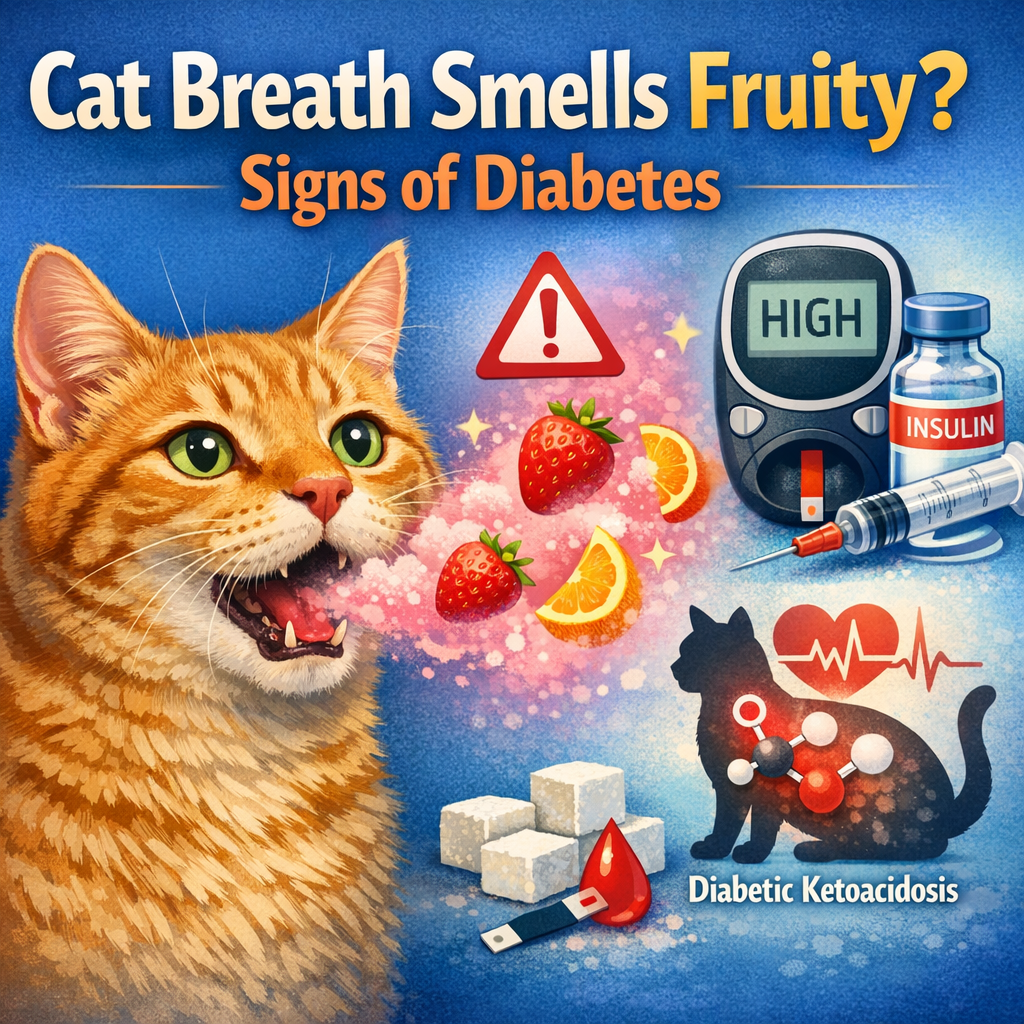
- Fruity or Sweet Breath: Unlike typical “fishy” breath, a sweet or acetone-like scent is a major red flag for feline diabetes and life-threatening Diabetic Ketoacidosis (DKA).
- Key Warning Signs: Watch for the “clinical triad” of increased thirst, frequent urination, and unexplained weight loss, especially in overweight or sedentary cats.
- Medical Emergency: If fruity breath is paired with lethargy or vomiting, seek immediate veterinary care to treat bloodstream poisoning caused by a buildup of ketones.
- Proactive Management: While dental disease is the most common cause of bad breath, metabolic issues require long-term insulin therapy, diet control, and regular glucose monitoring.
Table of Contents
You love those feline headbutts, but lately, your cat’s breath smells a bit like a fruit basket. It is not the usual fishy aroma you expect from your favorite predator.
While sweet breath sounds pleasant, it is actually a major red flag for Feline Diabetes Mellitus. This scent is often the first clue that something is wrong deep inside their glucose metabolism.
At Bella Gatti US Shop, we care about your cat’s health as much as their style. Let’s dive into why that fruity scent is a cause for concern and what it means for your diabetic cat.
Signs of Feline Diabetes Related to Breath
When a cat develops feline diabetes, their body struggles with glucose processing. This leads to a buildup of ketones in the bloodstream.
As the diabetes worsens, the breath may transition from a mild fruity scent to an odor resembling nail polish remover. This chemical smell is a sign of advanced diabetes and should never be ignored by pet parents.
According to experts at PetMD and search data, this sweet aroma is a byproduct of the body burning fat for energy instead of sugar. It is a clear indicator that the cat’s insulin resistance is reaching a critical point.
Bad Breath as an Indicator of Diabetes
Persistent sweet or fruity breath in cats is a primary clinical sign that requires an immediate vet consultation. While many owners worry about typical cat bad breath, this specific scent points toward internal metabolic failure.
Uncontrolled cases of diabetes lead to serious complications, including organ damage. If you notice your cat has fruity breath along with feline obesity, you must seek veterinary intervention to stabilize their blood glucose monitoring levels.
Early detection is the best way to manage cat health. If your feline friend has shifted from fishy kisses to fruit scented ones, it is time to look closer at their daily habits and physical condition.
Other Causes of Fruity Smelling Breath in Cats
While diabetes is the leading culprit, other internal issues can cause strange odors. Kidney disease and liver issues are known to alter the scent of a cat’s mouth due to toxic acids building up in the system.
Oral trauma and deep seated infections can also change the breath profile. However, if the scent is specifically sweet or like acetone, feline diabetes mellitus remains the most likely diagnosis.
Medical professionals at Yalesville Veterinary Hospital in Yalesville, Connecticut, emphasize that any significant change in breath odor warrants a full diagnostic panel. This helps rule out electrolyte imbalance or clinical pathology issues.
Recognizing Emergency Signs of Diabetic Ketoacidosis
If the fruity breath is accompanied by severe low energy, rapid breathing, or vomiting, your cat may be experiencing Diabetic Ketoacidosis (DKA). This is a life threatening condition where the blood becomes too acidic.
Cats in DKA often show extreme thirst and may become dangerously weak very quickly. This is a medical emergency that requires an immediate trip to an emergency vet or veterinary hospital for stabilization.
In these cases, the bloodstream poisoning is advanced. Urgent veterinary intervention, including fluid therapy and fast acting insulin, is the only way to save a cat in this state.
Early Symptoms of Diabetic Ketoacidosis
Before a full blown emergency, subtle signs of DKA may appear. These include increased thirst (polydipsia) and frequent feline urination (polyuria) as the body tries to flush out excess sugar.
You might also notice a decreased appetite, mild low energy, and slight cat weight loss despite the cat eating normally. These subtle behavior changes are your cue to book a vet consultation immediately.
Catching these symptoms early can prevent the progression to ketonuria, where ketones are found in the urine. Monitoring these early markers is vital for any cat, especially obese cats who are at higher risk.
Managing Diabetic Emergencies Before Vet Visit
If you suspect a diabetic emergency, the most important step is to keep the cat calm and warm. Avoid trying any home remedies or administering insulin without a vet’s direct instruction during a crisis.
You can offer small sips of water only if the cat is alert and not vomiting to help with dehydration management. However, do not force liquids, as this can lead to aspiration.
Contact your emergency vet immediately. Time is of the essence when dealing with glucose metabolism failure and potential diabetic neuropathy.
Preventing Diabetic Complications via Management
The best way to avoid a life threatening condition is through consistent management. This includes maintaining regular insulin therapy and strict blood glucose monitoring as prescribed by your vet.
Cat exercise and a proper diet are essential, as lack of exercise contributes to feline obesity and insulin resistance. Keeping your cat at a healthy weight is the number one preventative measure.
Routine check ups allow for early detection of changes in cat health. Prompt vet visits for even minor signs can prevent the onset of diabetic ketoacidosis and keep your kitty’s breath smelling normal.
Dental Disease and Its Link to Bad Breath
It is important to remember that not all bad breath is internal. Statistics show that 70 to 80 percent of cats develop dental disease by age three, making it the most common cause of oral odors.
While dental disease usually smells foul or rotten rather than fruity, it can complicate a diabetes diagnosis. Chronic inflammation from the mouth can actually make insulin resistance worse.
Regular dental check ups and home care are vital. If your cat’s breath smells less like fruit and more like a swamp, it is likely time for a professional cleaning to prevent further cat skin issues or systemic infections.
Expert Insight
“Feline oral health is a critical component in diabetes management, as chronic inflammation and periodontal disease can impair glycemic control, contribute to systemic inflammation, and reduce insulin effectiveness.” (iCatCare Consensus Guidelines 2025 / Feline Medicine Specialists)
Recognition of Diabetic Warning Signs
Persistent sweet or fruity breath in cats is never normal. It is a biological SOS signal from the body indicating that glucose metabolism has failed, and your cat needs a vet consultation immediately.
When feline diabetes goes uncontrolled, the body enters a state of metabolic crisis known as diabetic ketoacidosis. This is a medical emergency where toxic acids called ketones build up in the bloodstream, leading to bloodstream poisoning.
If you notice this scent, do not wait for it to go away. Early veterinary intervention is the best way to prevent long term damage to your cat’s organs and manage the underlying Feline Diabetes Mellitus before it becomes a life threatening condition.
Expert Insight
“The poster child for a diabetic cat is an overweight, sedentary, middle aged male, but any factor that increases insulin resistance, such as dental disease or a short course of steroids, can push a cat over the threshold where they start to spill glucose.” (Audrey Cook, BVM&S, MSc, MRCVS, DACVIM, DECVIM-CA, DABVP)
Diabetes Risk and Health Comparison
Distinguishing between a simple dental issue and a life threatening metabolic crisis is vital for every cat owner. While dental disease is the most common cause of bad breath, feline diabetes presents a very different set of warning signs that impact the entire body.
| Symptom |
Dental Disease |
Feline Diabetes (DKA) |
| Breath Odor |
Rotten, Fishy, Foul |
Fruity, Sweet, Acetone |
| Weight Change |
Rarely affected |
Rapid weight loss |
| Thirst Levels |
Normal |
Extreme thirst (Polydipsia) |
| Energy Levels |
Normal to slightly low |
Severe lethargy |
| Urination |
Normal |
Excessive (Polyuria) |
Frequently Asked Questions About Feline Diabetes and Fruity Breath
Is fruity breath in cats always an emergency?
Yes, if your cat has a fruity breath smell, it is a medical emergency. This scent usually indicates that the cat is in a state of Diabetic Ketoacidosis.
Can obese cats develop diabetes more easily?
Absolutely. Feline obesity is a primary risk factor for developing Insulin Resistance. When a cat carries excess weight, their body cannot use insulin effectively.
How does a vet diagnose cat diabetes?
A vet will perform clinical pathology tests to confirm the diagnosis. They specifically look for persistent high sugar levels in the blood and the presence of ketones in the urine, known as ketonuria.
Can a diabetic cat live a normal life?
Yes, they can! With consistent insulin therapy and a specialized diet, many diabetic cats live happy lives for many years. You just have to become a pro at blood glucose monitoring.
Expert Insight
“Dental disease in cats is often hidden because they are experts at masking pain; extremely foul breath is not just a hygiene issue, but a warning sign of infections that can spread to vital organs like the heart and kidneys.” (Veterinary Medicine Specialist)