


Table of Contents
- Is Cow Milk Safe for Weaning Kittens?
- 1. Lactose Intolerance in Kittens and Why Cow Milk Is Problematic
- 2. The Role of Kitten Milk Replacer (KMR) and Proper Weaning Nutrition
- 3. Goat Milk, Almond Milk, and Other Alternatives: Are They Helpful or Harmful?
- 4. Emergency Situations: What to Do If a Kitten Drinks Cow Milk
- 5. Expert Recommendations and Veterinary Guidance
- FAQ
- Conclusion
Is Cow Milk Safe for Weaning Kittens?
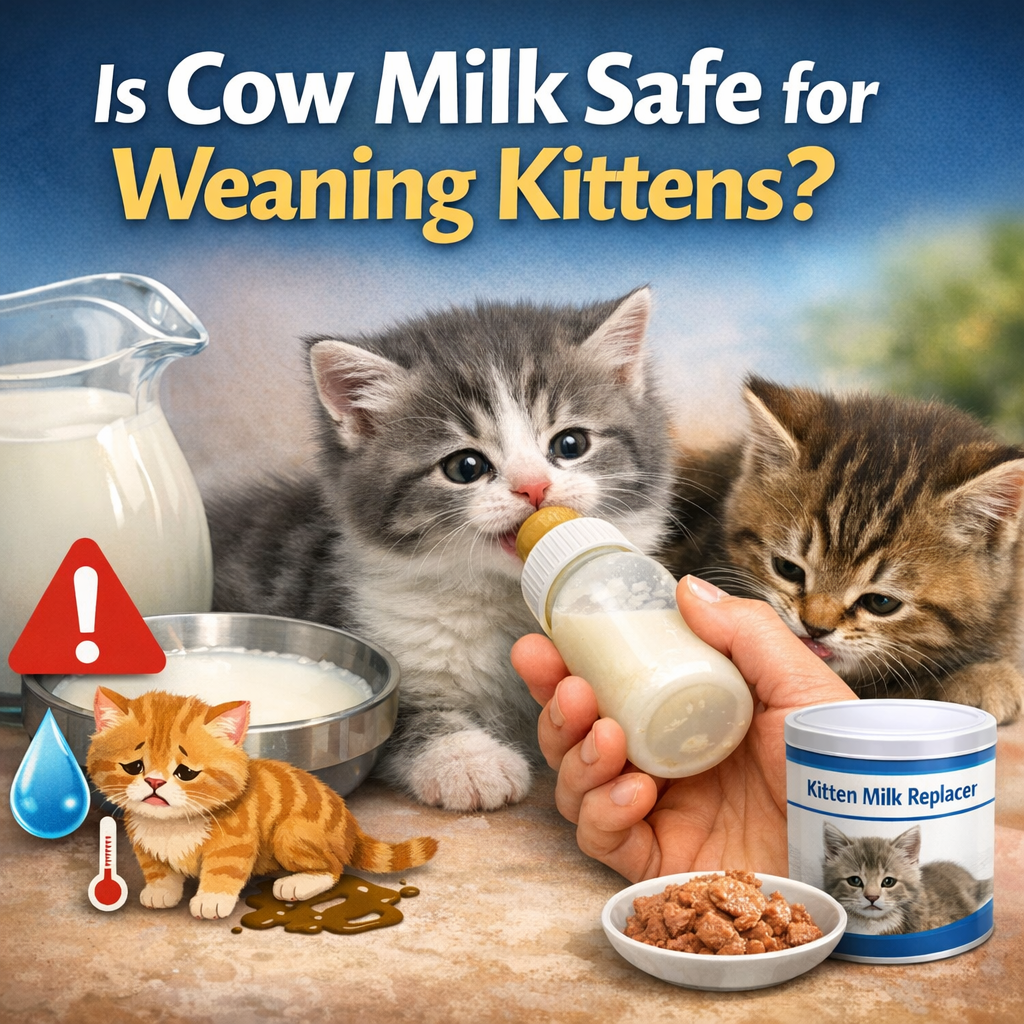
You’re probably wondering if cow milk has a place in a kitten’s early diet. The short answer is no. Cow milk lacks the enzymes kittens need to digest lactose properly, which can lead to tummy trouble fast (and for a broader look at dairy safety, see Can Cats Eat Cheese? Safety Guide for Owners).
Feeding cow milk to very young kittens can cause diarrhea and dehydration. Kittens rely on specialized nutrition from kitten milk replacer during the weaning window, and cow milk simply isn’t balanced for their needs.
For safe, age-appropriate nutrition, many pet parents turn to kitten formula options such as KMR powder or other kitten milk replacer products (see How to Care for an Orphaned Newborn Kitten for detailed feeding tips). These are designed to meet a growing kitten’s amino acids, fats, vitamins, and minerals while they transition away from nursing.
Key milestones to guide weaning include starting at around week 4 and aiming for full solid-food feeding by week 8 (use this kitten weaning chart for a week-by-week guide). If a kitten is underweight, ill, or not thriving, consult a veterinarian to tailor the weaning plan. Avoid cow milk and other substitutes like soy, almond, or goat milk unless advised by a vet, as they often lack the right nutrient balance and can irritate a kitten’s digestion.
Signs a kitten is ready to begin weaning include coordinated suckling declines, interest in solid food, and the ability to eat through a soft slurry. During this transition, using a commercially formulated kitten milk replacer powder or liquid is recommended, paired with kitten-specific wet or dry foods to ensure proper nutrition.
In short, keep cow milk off the menu. Stick with kitten milk replacer and a carefully planned transition to solid food to support healthy growth, digestion, and hydration as your kitten hits those important milestones.
1. Lactose Intolerance in Kittens and Why Cow Milk Is Problematic
What lactose intolerance is
Lactose intolerance arises when a kitten lacks sufficient lactase, the enzyme needed to digest lactose in milk. This tendency grows as kittens begin to wean. Without enough lactase, lactose remains undigested in the gut.
Undigested lactose draws water into the intestines, causing loose stools and dehydration. Even small amounts can trigger noticeable distress in very young kittens.
How cow milk affects a kitten’s digestion and hydration
Cow milk carries high lactose levels and may contain proteins that are harder for kittens to process. Feeding it can lead to diarrhea and stomach upset. Recurrent episodes can quickly cause dehydration and weakness.
During weaning, kittens need a balanced nutrient intake. Introducing cow milk can disrupt digestion and reduce appetite for solid foods, complicating proper nutrition.
- Symptoms to watch for: diarrhea, vomiting, bloating, and lethargy
- Impact on hydration: small kittens can rapidly become dehydrated
- Alternative: use kitten milk replacer designed to match a kitten’s nutritional needs
Expert Insight
“Kittens have some lactase in their systems but not enough to tolerate a saucer of cow’s milk.” , Friend of Feral Felines (attribution synthesized from expert consensus on lactose digestion in kittens)
2. The Role of Kitten Milk Replacer (KMR) and Proper Weaning Nutrition
What KMR is and why it’s recommended
KMR stands for kitten milk replacer. It is a specially formulated product designed to meet a kitten’s unique nutritional needs during weaning. It provides a balanced mix of proteins, fats, vitamins, and minerals that mirrors a mother cat’s milk without the high lactose content found in cow milk.
Using KMR supports steady growth and helps prevent dehydration and malnutrition that can occur when kittens are fed improper substitutes. For orphaned or bottle-fed kittens, KMR is a reliable option that is easier to digest than dairy from cows or humans.
Transitioning from milk to solid foods safely
- Begin with a gradual mix: slowly reduce the liquid portion of KMR while introducing soft, kitten-appropriate moist foods. This smooths the shift from complete milk to a slurry that includes solids.
- Offer small, frequent meals: multiple feedings help kittens adjust without overwhelming their digestive systems.
- Look for readiness cues: interest in solid foods, steady weight gain, and the ability to chew are signs to increase solid content.
- Maintain hydration: always provide fresh water alongside feeding sessions and monitor overall fluid intake.
3. Goat Milk, Almond Milk, and Other Alternatives: Are They Helpful or Harmful?
Goat milk considerations for kittens
Goat milk is not an ideal substitute for kitten milk replacer. It still contains lactose and may not provide a balanced amino acid profile for growing kittens. Some kittens tolerate small amounts, while others may experience digestive upset.
- Potential benefits: may be easier to digest for some kittens due to fat composition
- Risks: lactose content, inconsistent nutrient balance, and variable calcium to phosphorus ratios
- Recommendation: consult a veterinarian before offering goat milk to an orphaned or undernourished kitten
Nut milks and plant-based alternatives for cats
Nut milks and plant-based milks are not formulated for feline nutrition. They often lack essential animal-based proteins and the proper calcium to phosphorus balance. These milks can displace meals and lead to malnutrition over time.
- Common plant milks to avoid: soy, almond, and other nut milks
- Reason: insufficient essential amino acids and micronutrients required for kitten growth
- Safer approach: rely on kitten milk replacer or mother’s milk when available, then transition to a complete kitten formula
4. Emergency Situations: What to Do If a Kitten Drinks Cow Milk
Recognizing signs of distress or dehydration
Watch for sudden changes in behavior such as listlessness, reluctance to nurse, or a drop in activity. Diarrhea and vomiting can appear within hours after a kitten drinks cow milk.
Dehydration signs in a small kitten include dry gums, sunken eyes, skin that tents when gently lifted, and rapid breathing. If you notice any of these symptoms, seek help promptly.
Immediate steps and when to seek veterinary care
- Remove access to cow milk and offer clean water along with any safe kitten formula you have on hand.
- Avoid homemade remedies or human beverages. If you have a kitten milk replacer, use it as directed.
- Provide small, frequent feeds to minimize stress on the digestive system and reduce the risk of vomiting or aspiration.
- Contact a veterinarian right away if there is persistent vomiting, ongoing diarrhea, or signs of dehydration. Very young or underweight kittens may need emergency care.
- Note the time of exposure and any symptoms to share with the clinician for faster assessment.
5. Expert Recommendations and Veterinary Guidance
Common veterinary guidelines on milk feeding
Kittens thrive on kitten milk replacer designed for feline growth. Cow milk is discouraged because it often lacks the enzymes needed to digest lactose, which can trigger diarrhea and dehydration in tiny kittens. For orphaned kittens or those not nursing, a measured weaning plan with a commercial kitten formula supports steady weight gain and proper hydration.
- Choose a product labeled kitten milk replacer or kitten formula, available as liquid or powder formulas such as kitten milk replacer powder.
- Avoid human milk, cow milk, or other animal milks as the primary nutrition source.
- Follow the manufacturer instructions for mixing ratios and feeding frequency to ensure accuracy and safety.
- Monitor weight weekly to confirm healthy growth and catch any issues early.
Long-term feeding plans for healthy growth
Experts advocate a planned transition from bottle feeding to solid foods as the kitten matures. A complete kitten diet provides balanced protein, fats, vitamins, and minerals for development. During this period, watch for readiness cues that signal it is time to start introducing solid foods.
- Introduce high-quality kitten kibble or moist food when the kitten shows readiness cues such as eyeing and exploring solid foods or showing interest during feeding.
- Gradually reduce liquid feeds while increasing solid meals to support digestive adaptation and a smooth weaning process.
- Provide fresh water at all times to support hydration as digestion shifts to solid foods.
- Consult a veterinarian if growth stalls or digestive issues arise during weaning.
Expert Insight
“Kittens begin weaning around 4 weeks of age and should transition to a high-quality kitten food while gradually reducing liquid feeds to support a smooth weaning process.” , Industry Expert
FAQ
You want quick answers to common questions about kitten nutrition and cow milk. If you enjoyed this, you might also like Stop Trying to Share: 5 Human Foods Cats Must Never Eat. For a related guide on timing the switch, check out Signs Your Kitten is Ready for Real Food. Here are concise responses grounded in veterinary guidance.
- Can I give my weaned kitten cow milk? Not as a regular part of the diet. Kittens need a complete kitten formula or milk replacer to meet nutritional needs. Cow milk can trigger lactose intolerance and cause diarrhea, dehydration, and discomfort.
- What is KMR? KMR stands for kitten milk replacer. It is a commercial formula designed to support growth in orphaned or undersupplied kittens. Use a reputable product to ensure balanced nutrition during weaning.
- Can goat milk be used instead? Goat milk can still cause digestive upset in some kittens. It is not a substitute for a complete kitten formula unless advised by a veterinarian. Rely on kitten milk replacer powder or a veterinarian-approved kitten formula.
- Are plant milks safe for kittens? Plant milks, including soy, almond, or other nut milks, are not formulated for feline nutrition and should be avoided as primary nutrition. They do not provide the amino acid balance or calories kittens need and can lead to deficiencies.
- What signs indicate distress after cow milk exposure? Look for diarrhea, vomiting, lethargy, and dehydration signs such as dry gums and sunken eyes. If these appear, remove access to milk and contact a veterinarian promptly.
- What should I do if a kitten drinks cow milk? Remove access to cow milk, offer a kitten milk replacer if available, and contact a veterinarian if symptoms persist or worsen. If you have KMR powder on hand, prepare it according to directions to support recovery.
- How do I transition to solid food? Start with a high quality kitten formula or milk replacer, then gradually introduce solid kitten kibble or wet food as advised by a vet. Typical weaning begins around week 4 and progresses to full solids by week 8, depending on the kitten’s health and development.
Conclusion
Key takeaways for responsible kitten care
Kittens require a balanced, complete diet to support growth. Cow milk can disrupt digestion and hydration, so it should not be part of their regular nutrition. Begin with kitten milk replacer or mother’s milk when needed, and plan a careful transition to solid foods under veterinary guidance. Regular weight monitoring remains a practical check on progress.
Final recommendations for new kitten owners and caretakers
- Stock a reputable kitten milk replacer or kitten formula before bringing a kitten home.
- Avoid cow milk and other non-formula milks as a primary nutrition source.
- Follow the feeding schedule and mixing instructions on the product label.
- Introduce solid foods gradually once readiness cues appear, ensuring access to fresh water for hydration.
- Consult a veterinarian if persistent distress, poor weight gain, or digestive issues arise during weaning.