TL;DR (Too Long; Didn’t Read)
- Optimize Resources & Space: Reduce territorial aggression by following the “N+1” rule—providing one more of every essential (litter boxes, food bowls, beds) than the number of cats you own—and increasing vertical space for safety.
- Utilize Calming Aids & Training: Use clinically proven pheromone diffusers like FELIWAY Friends to lower stress and employ positive reinforcement by rewarding calm behavior with treats to reshape social associations.
- Master Reintroductions: For severe conflicts, reset the relationship through a gradual reintroduction process involving complete separation, scent swapping, and slow visual contact via barriers.
- Rule Out Medical Issues: Sudden behavioral changes or increased irritability, especially in senior cats, should be addressed with a veterinary consultation to rule out underlying pain or illness.
Table of Contents
Is your home feeling more like a boxing ring than a sanctuary? When the fur starts flying, it can be stressful for both you and your feline friends.
At Bella Gatti US Shop, we love the playful side of cats, but real kitty battles are no joke. Whether you have a new kitten or a grumpy senior, these steps will help restore the peace.
In short: patience is your best tool. To get your household back to feline harmony, you need to understand the root of the conflict and act like a pro mediator.
Identify Conflict Causes and Cat Fighting Triggers
Before you can stop cats fighting, you must play detective. Observe your cats closely to find the specific triggers that spark feline aggression.
Common causes include conflicts over high value resources like food, water, or prime nap spots. Sometimes the issue is redirected aggression, where a cat sees a bird through a window and takes its frustration out on a housemate.
Understanding these specific triggers allows for targeted intervention. By identifying if the spat happens during play or mealtime, you can change the environment to prevent the next round of kitty battles.
Manage Territorial Disputes and Resource Competition
Cat territory is a serious business in a multi-cat household. Territorial aggression often stems from resource competition when cats feel there is not enough to go around.
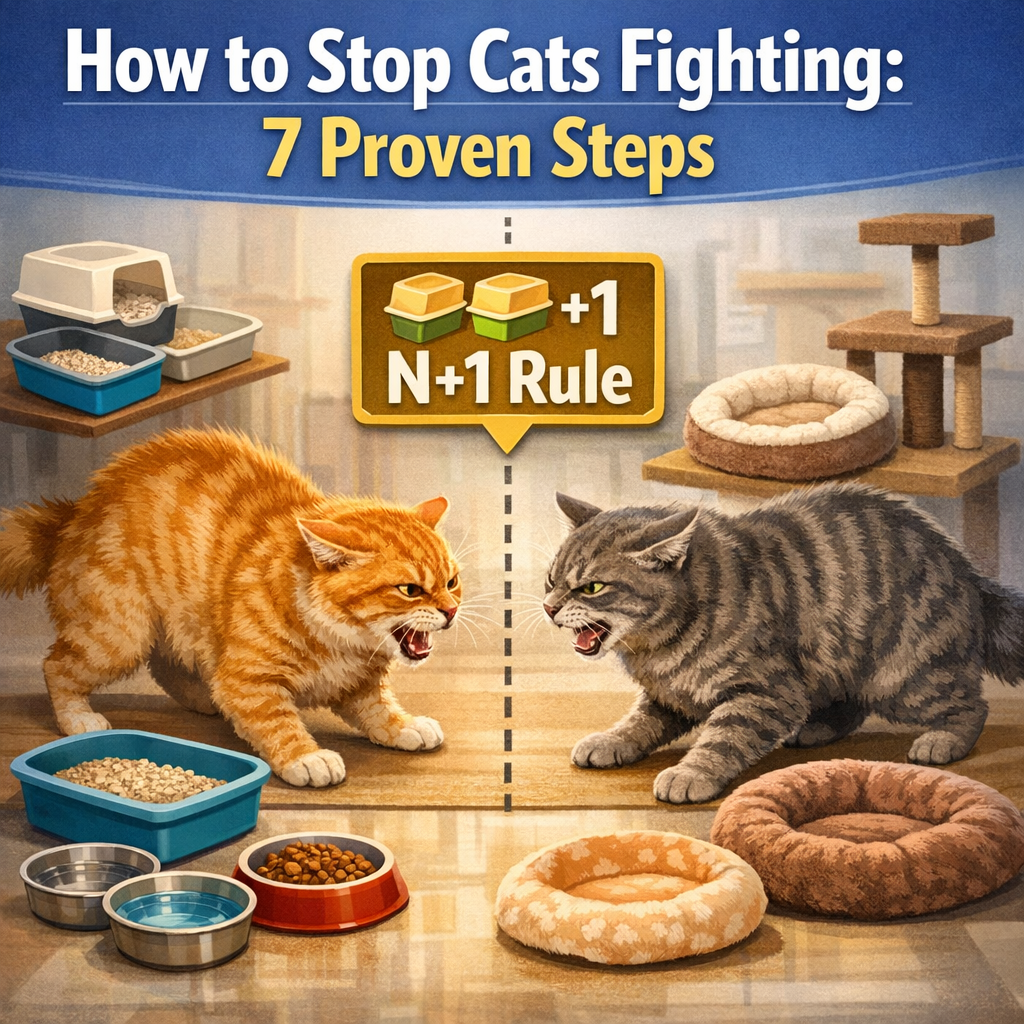
Experts like Jackson Galaxy recommend increasing kitty resources to reduce tension. Follow the N plus one rule: if you have two cats, you should have three cat litter trays and three separate cat food bowls.
Studies show that inadequate resources significantly increase fighting. Spacing these items out across different rooms ensures that one cat cannot guard all the assets at once, promoting long term peace.
Provide Individual Space and Cat Hiding Places
Every cat needs a VIP lounge. Providing each cat with personal space and retreat options reduces stress related conflicts and inter-cat conflict.
Lack of space is a common trigger for fighting. You can expand their world vertically by adding cat scratching posts with perches or high shelves where a cat can observe the room safely.
Ensure there are plenty of cat hiding places, such as cardboard boxes or tunnels. Having a safe exit strategy allows a timid cat to avoid a confrontation before it even starts. Remember, cats instinctively conceal illness, so it’s crucial to provide them with a comfortable environment.
Master the Gradual Introduction and Re-introduction Procedures
If your cats are sworn enemies, you may need a controlled reintroduction. This process involves separating them completely and starting from scratch to reset their social behavior.
Begin with scent swapping by rubbing a cloth on one cat and placing it near the other. Use visual barriers like baby gates or a cracked door to let them see each other without physical contact.
Move to controlled meetings only when both cats are calm. This step by step method requires immense patience, but it is the gold standard for reducing aggression after long term conflicts.
Use Pheromone Diffusers like FELIWAY Friends
Sometimes you need a little scientific help to soothe the savage beast. Veterinary recommended products such as the FELIWAY Friends Diffuser can significantly reduce signs of conflict.
These diffusers release a synthetic version of the feline appeasing pheromone. This scent mimics the natural messages queens send to their kittens to create a sense of safety and bond.
Clinical trials show these products are proven to promote harmony among cats. They are especially effective at stopping subtle bullying behaviors like blocking doorways or intense staring.
Monitor Health with a Veterinary Consultation
Sudden aggression in a normally chill cat may indicate underlying health issues. Pain from dental disease or arthritis can make a cat lash out at its companions.
Consulting a vet helps rule out medical causes for fighting. Senior Cat Wellness is particularly important, as older cats may become irritable if they are feeling unwell or losing their sight.
A professional can also provide expert cat advice on cat behavior modification. If the fighting is severe, they might suggest specific treatments to lower cat stress levels during the transition.
Positive Reinforcement Training and Environmental Enrichment
Reward the behavior you want to see. Use positive reinforcement training by giving treats when your cats are in the same room without hissing or growling.
Feline environmental enrichment is key to managing excess energy. Interactive play sessions with wand toys help burn off steam that might otherwise be directed at a feline sibling.
Keep a consistent routine to provide a sense of security. When cats know exactly when mealtime and playtime occur, their overall anxiety drops, making for a much friendlier multi-cat household.
For more tips on feline life or to find the perfect cat t-shirt to wear while you mediate, check out our latest collections. Whether you are browsing on Chrome, Firefox, Edge, or your mobile device, we have the gear for every cat lover.
Identify Conflict Causes and Feline Aggression Triggers
The first step to fixing the feud is finding the trigger. Cats do not just fight for the sake of it. They usually have a very specific reason for their feline aggression and inter-cat conflict.
Observe your cats throughout the day to spot the root of the problem. Do they hiss when the cat food bowls come out? Do they swat at each other near the cat litter trays? Identifying these cat fighting triggers is essential for a peaceful home.
Common triggers include competition for your attention or over-excitement during play. Sometimes, an underlying health issue makes a cat feel vulnerable and cranky. If the aggressive cat behavior is sudden, a Veterinary Consultation is the best way to rule out pain or illness.
According to experts like Jackson Galaxy, understanding cat body language is the key to managing cat stress. Look for flattened ears, puffed fur, or intense staring. These are clear signs that your kitty battles are about to escalate from play to a real cat conflict.
If you notice redirected aggression, where one cat takes out their frustration on another after seeing a bird or a stray cat outside, it is time to intervene. Managing a multi-cat household requires patience and a keen eye for these subtle behavioral shifts.
For those seeking expert cat advice on mobile devices, you can easily research feline behavior modification on Chrome, Firefox, or Edge. Whether you are using a Samsung or an iPhone, watching a quick video can provide visual cues for identifying territorial aggression.
Territorial Disputes and Resource Competition
Territory and resource competition are the most common reasons for cat fighting. In the wild, cats are solitary hunters. In your home, they often feel they must compete for limited kitty resources like food, water, and prime resting spots.
Studies show that inadequate resources significantly increase fighting. To promote feline harmony, ensure you have one of everything for each cat, plus one extra. This includes cat litter trays, cat scratching posts, and water stations spread throughout the house.
When cats have to share a single resource, it creates a cat hierarchy that can lead to bullying. By increasing individual resources, you reduce the need for territorial disputes. This simple environmental management strategy is a cornerstone of multi-cat household management.
Do not forget the importance of vertical space. Adding cat trees or shelves allows a submissive cat to move upward and away from a confrontation. Providing these extra cat hiding places gives each pet a sense of security and a way to avoid direct cat conflict.
The Power of Pheromone Diffusers and Calming Aids
If your home feels like a war zone, it might be time to try pheromone diffusers. Products like the FELIWAY Friends Diffuser are clinically proven to reduce signs of conflict such as blocking, staring, and chasing.
These diffusers mimic the natural nursing pheromones produced by mother cats. This scent sends a calming message to your feline friends, helping to restore peace and promote feline environmental enrichment in a stressed home.
Veterinary recommended aids like FELIWAY can be a game changer for cat calming tips. While they are not a magic wand, they create a supportive atmosphere that makes positive reinforcement training much more effective during the reintroduction process.
Monitoring Health and Senior Cat Wellness
A sudden change in social behavior often points to a medical issue. Senior cat wellness is particularly important, as older cats may become aggressive if they are experiencing arthritis, dental pain, or declining vision.
A cat in pain is a cat that wants to be left alone. If a housemate tries to play, the pained cat may lash out in self-defense. This is why a Veterinary Consultation is the mandatory first step when dealing with new or worsening feline aggression.
By ruling out physical ailments, you can focus on behavior modification with confidence. Keeping your cats healthy ensures they have the mental capacity to handle the social pressures of a multi-cat environment without resorting to kitty battles.
Expert Insight
“If you have a multicat household and there is tension between any of the cats, this is a behavior that can be easily missed. That is why it is important to have resources spread throughout the home and consider tools like pheromones, which have been shown to significantly reduce aggression within 21 days.” : Pam Johnson-Bennett, Certified Cat Behavior Consultant
Manage Territorial Disputes and Resource Competition
Cats are naturally solitary hunters and are fiercely protective of their cat territory. In a busy multi-cat household, the idea that sharing is caring simply does not apply to feline social behavior.
Territorial aggression often stems from a lack of kitty resources. If you have two cats but only one scratching post, you are essentially inviting a feline wrestling match into your living room.
Expert cat advice from legends like Jackson Galaxy suggests the plus one rule. This means you should provide one more of every essential resource than the total number of cats in your home.
If you have two cats, you need three cat litter trays and three cat food bowls. Spread these items across different rooms so one cat cannot block access to all the resources at once.
| Resource |
Recommended Amount |
Why It Matters |
| Cat Litter Trays |
Number of cats + 1 |
Prevents blocking and territorial spraying. |
| Cat Food Bowls |
Number of cats + 1 |
Reduces mealtime anxiety and competition. |
| Cat Scratching Posts |
One per cat minimum |
Allows scent marking without inter-cat conflict. |
The Role of Individual Space and Hiding Spots
Providing each cat with personal space and retreat options is vital for reducing stress related conflicts. A lack of vertical space or private zones is a common trigger for cat fighting.
Feline environmental enrichment, such as cat trees or window perches, allows cats to navigate the home without crossing paths. This helps maintain a stable cat hierarchy and prevents bullying.
If your cats feel trapped, their feline aggression will spike. Ensure there are plenty of cat hiding places where a stressed kitty can escape the gaze of a more dominant housemate.
Using Pheromones to Reduce Feline Aggression
Veterinary recommended products like the FELIWAY Friends Diffuser can significantly reduce signs of conflict. These tools use synthetic pheromones to mimic the natural messages sent by a mother cat.
Clinical studies show that pheromone diffusers are effective at promoting feline harmony. They help decrease behaviors like staring, chasing, and blocking near cat food bowls or doorways.
For the best results, place a diffuser in the rooms where your cats spend the most time. This simple addition to your multi-cat household management can turn a battleground back into a home.
Consulting a Professional for Persistent Kitty Battles
If you have tried everything and the fur is still flying, it might be time for a veterinary consultation. Sudden aggressive cat behavior can often be a sign of underlying medical issues or pain.
A vet can rule out health problems that cause cat stress. For complex cases, they may recommend cat behavior modification or positive reinforcement training to help repair the feline bond.
You can also find helpful tutorials or join cat owner groups for peer support. Just remember that restoring peace takes time, patience, and the right environment.
Provide Individual Space and Feline Environmental Enrichment
Every cat needs a safe zone where they can escape the gaze of their housemates. Without enough cat hiding places, stress levels skyrocket and feline aggression becomes much more likely.
In a multi-cat household, vertical space is a total game changer. Cat trees, wall shelves, or even the top of a fridge allow a cat to observe the room from a position of safety.
When a cat feels trapped, they are more likely to lash out. By giving them high perches, you satisfy their natural instinct to climb and stay out of reach of perceived intruders.
You can find great inspiration for cat friendly setups online. Many owners use Jackson Galaxy as a guide for cat behavior modification through environmental design.
If you notice your cats staring each other down, try using pheromone diffusers like FELIWAY Friends. These products are clinically proven to reduce inter-cat conflict by mimicking natural calming messages.
Feline environmental enrichment is not just about toys. It is about creating a layout where every cat has an exit route, preventing them from feeling cornered during a cat conflict.
If you have a senior cat, ensure their hiding spots are easy to access. Senior Cat Wellness is a top priority, as older cats may become grumpy if they cannot easily reach their favorite high perch.
For more tips on managing aggressive cat behavior, you can check out expert cat advice on social media groups dedicated to feline harmony. Community support is often a great resource.
Remember that a lack of space is a common trigger for kitty battles. Providing separate areas for rest helps establish a stable cat hierarchy without the need for physical confrontation.
If you are browsing for solutions on Chrome, Firefox, or Edge, you will find that veterinary consultation is always recommended for sudden behavioral changes. A vet can rule out pain as a cause for fighting.
Use Calming Products Like FELIWAY to Restore Feline Harmony
Sometimes the air in your home feels so tense you could practically knit a sweater out of the static. When your cats are locked in a cycle of territorial aggression, you can actually change that vibe using science. It is a brilliant way to manage cat behavior modification without the stress of a chase.
Pheromone diffusers, specifically FELIWAY Friends, are clinically proven to reduce signs of inter-cat conflict. These devices mimic the natural messages cats send to each other to signal safety and security. By releasing these calming signals, you can help lower cat stress and mitigate aggressive cat behavior naturally.
Using these diffusers in the rooms where your cats spend the most time can significantly improve the social climate. It is a simple, non-invasive way to promote feline harmony and reduce resource competition. Think of it as a background track of soothing music for your cats’ frazzled nerves.
While products like FELIWAY are incredibly effective, they work best when paired with environmental enrichment. If the fighting persists despite these calming aids, it may be time for a veterinary consultation. A vet can rule out medical issues or suggest advanced cat behavior advice tailored to your multi-cat household.
If you are searching for more expert cat advice, many owners turn to professional resources and instructional videos. You can easily access these guides on your mobile device or via browsers like Chrome, Firefox, and Edge. Staying informed is the first step to ending those kitty battles for good.
Remember that while pheromones help, they are just one piece of the puzzle. Combining them with positive reinforcement training and controlled reintroduction will yield the best results. At Bella Gatti US Shop, we believe every cat deserves a home that feels like a sanctuary rather than a boxing ring.
Master the Scent Swap and Controlled Reintroduction
If your cats are engaged in a full-blown war, you might need to hit the reset button with a Controlled Reintroduction. This strategy is essential after a Redirected Aggression event, where one cat gets spooked by an outside noise and blames the other kitty nearby.
Start by separating your feline friends completely into different rooms. Feed them on opposite sides of a closed door so they associate the smell of their rival with the joy of their favorite cat food bowls being filled. This creates a positive association with the other cat’s presence.
Scent swapping is your next secret weapon for feline harmony. Use a soft cloth to gently rub one cat’s cheek and then place it near the other cat. This helps them get used to each other’s scent without the threat of a physical fight or staring match.
Managing Territorial Aggression Through Resource Distribution
Inter-cat conflict often stems from resource competition. In a multi-cat household, feline aggression can peak if there are not enough kitty resources to go around. You should follow the N plus one rule for cat litter trays and scratching posts to ensure no one feels cornered.
Feline environmental enrichment is a game changer for cat behavior modification. Providing plenty of cat hiding places and vertical space allows a submissive cat to escape a dominant cat without a chase. This reduces cat stress and helps balance the cat hierarchy naturally.
When you begin the visual stage of introduction, use a baby gate or a screen. This allows them to observe cat body language safely. Reward calm behavior with treats to reinforce positive reinforcement training, making the sight of each other a reason to celebrate.
Expert Cat Advice for Long-Term Peace
If you are struggling to stop cats fighting, look for tutorials from experts like Jackson Galaxy. Many owners use Chrome or Firefox to research specific cat social behavior on sites like Senior Cat Wellness to understand aging-related irritability.
Always monitor for aggressive cat behavior triggers like redirected energy or territorial disputes. If the fighting persists despite your best efforts, a veterinary consultation is vital. A vet can check for underlying pain that might be causing the sudden hostility.
Whether you are using a tablet or a computer browser to track their progress, remember that patience is key. Using pheromone diffusers like FELIWAY Friends alongside these steps is clinically proven to reduce tension and restore the peace in your home.
Use Positive Reinforcement Training and Reward Calm Behavior
Reward the behavior you want to see instead of only reacting to the chaos. Many owners only interact with their pets when the fur is flying, but Positive Reinforcement Training is the secret to feline harmony.
If you see your cats sitting in the same room without hissing or staring, give them a high value treat immediately. This teaches them that being calm around their sibling leads to delicious rewards and pleasant experiences.
That said, never punish a cat for fighting. Using squirt bottles or yelling usually just increases cat stress and fear, which often makes aggressive cat behavior and inter-cat conflict much worse.
Manage Play and Redirect Aggression
When you notice a cat staring or blocking a doorway, use a wand toy to redirect that excess energy before it turns into a kitty battle. This is a key part of Feline Environmental Enrichment.
Jackson Galaxy often recommends play therapy to build confidence and reduce boredom. Engaging your cats in structured play sessions helps burn off the predatory drive that might otherwise be aimed at a housemate.
By rewarding peaceful moments and providing outlets for natural instincts, you can shift the cat hierarchy from one of constant tension to one of mutual respect and social bonding.
Consulting Experts for Complex Feline Aggression
If your efforts at Cat Behavior Modification are not showing progress, it might be time for a Veterinary Consultation. A vet can rule out medical issues that cause sudden irritability, especially in a Senior Cat Wellness context.
For deep-seated behavioral issues, you can search for expert cat advice on major platforms and groups dedicated to multi-cat household management. Many owners find success following professional guides on their mobile devices.
In some cases, a certified animal behaviorist can provide a tailored plan to address specific cat fighting triggers. Remember that patience is your greatest tool when restoring peace to your home sanctuary.
Monitor Cat Body Language to Prevent Inter-cat Conflict
You need to spot a fight before it starts. A cat that is about to pounce looks very different from one that is just playing, and understanding cat body language is the first step toward feline harmony.
At Bella Gatti US Shop, we know that watching your pets is like studying a complex language. While we love a funny slogan t-shirt about cat naps, real-life cat stress requires your full attention.
- Staring: A long, unblinking stare is a major sign of inter-cat conflict. This is often a silent challenge for territory.
- Ears: Flattened ears against the head indicate high cat stress, fear, or impending feline aggression.
- Tail: A twitching, lashing, or puffed-up tail means the cat is agitated and ready for a kitty battle.
If you see these signs, redirect their energy immediately. Use a toy or make a soft noise to break their focus before the first claw is thrown and things escalate into aggressive cat behavior.
Identify Conflict Causes and Territorial Aggression
Expert cat advice suggests that identifying the specific causes of friction is vital. Competitors and behaviorists emphasize observing your cats to find triggers such as conflicts over food, water, play, or physical space.
By understanding these specific causes, you can perform targeted intervention. If the staring happens primarily in the kitchen, it is likely a dispute over resource competition rather than a personal grudge.
Whether you are using Chrome, Firefox, or Edge to research cat behavior modification, you will find that identifying triggers early is the most effective way to stop cats fighting.
Territorial Disputes and Resource Competition
Territorial disputes and resource competition are the most common reasons for cat fighting in a multi-cat household. Cats are naturally protective of their kitty resources and may view a sibling as a threat to their survival.
Experts recommend increasing individual resources to reduce tension. Studies show that inadequate resources, such as sharing a single bowl, significantly increase fighting and cat stress levels.
To promote feline harmony, ensure you have multiple cat food bowls and water stations spread throughout the home. This prevents one cat from guarding or blocking access to essential needs.
Importance of Individual Space and Hiding Spots
Providing each cat with personal space and retreat options is essential for managing cat social behavior. Lack of space is a common trigger for redirected aggression and general feline bullying.
Cat hiding places allow a stressed pet to decompress without feeling cornered. When a cat feels they have an escape route, they are much less likely to resort to aggressive cat behavior or physical kitty battles.
Ensure your home includes vertical space like cat scratching posts and shelving. These feline environmental enrichment tools allow cats to establish a cat hierarchy without needing to fight for the floor space.
Gradual Introduction and Controlled Reintroduction Procedures
If your cats are already in a state of war, a controlled reintroduction is often necessary. This process involves separating the cats and slowly reacquainting them through scent swapping and visual barriers.
Patience is key during this step-by-step method. Start with scent swapping by rubbing a cloth on one cat and placing it near the other. This reduces the shock of a direct encounter and builds positive associations.
Use baby gates or cracked doors for initial visual contact. This gradual introduction helps reduce aggression after long-term conflicts, ensuring that both cats feel safe and secure in their shared environment.
Use of Calming Products Like FELIWAY Friends Diffuser
Veterinary-recommended products such as the FELIWAY Friends Diffuser can significantly reduce signs of conflict like blocking, chasing, or staring. These pheromone diffusers mimic the natural messages sent by mother cats.
These products are clinically proven to promote harmony among cats by creating a calming atmosphere. Many owners find that using FELIWAY alongside positive reinforcement training creates a much faster path to peace.
Whether you are a fan of Jackson Galaxy or follow Senior Cat Wellness for tips, adding pheromones to your multi-cat household management strategy is a highly effective way to lower the overall tension.
Monitoring Health and Checking with a Veterinary Consultation
Sudden aggression may indicate underlying health issues rather than a personality clash. If a normally peaceful cat starts fighting, it is time for a professional veterinary consultation.
Pain or discomfort can cause a cat to lash out at their housemates. A vet can rule out medical causes for fighting, such as dental pain or arthritis, which might be making your cat extra grumpy.
Check out expert videos or join a cat community on social media to see how other owners handle medical-related aggression. Always prioritize health before assuming the behavior is strictly territorial.
Expert Cat Behavior Advice: Frequently Asked Questions
Managing a multi-cat household can feel like a full-time job. When kitty battles break out, you need quick answers to restore feline harmony. At Bella Gatti US Shop, we want your home to be as comfortable as our Unisex Soft Cotton Tees.
Should I let my cats fight it out to settle the cat hierarchy?
No. This is a common myth that can lead to serious feline aggression. Unlike dogs, cats do not have a social hierarchy that is settled through physical combat. Letting them fight only increases cat stress and creates permanent grudges.
Forcing a confrontation usually results in territorial aggression. This can lead to one cat seeking out cat hiding places for days. Instead of letting them scrap, use positive reinforcement training to reward calm behavior and peaceful coexistence.
How long does a controlled reintroduction take?
A successful cat introduction or reintroduction can take anywhere from a few days to several weeks. Every cat is an individual with unique needs. Rushing this process is the most common cause of a major setback in feline environmental enrichment.
You should follow expert cat advice from leaders like Jackson Galaxy. Start with scent swapping and visual barriers. Only move to face-to-face meetings when both cats show relaxed cat body language. Patience is the key to long-term success.
Why is my cat suddenly aggressive to its best friend?
This is often a case of Redirected Aggression. Your cat may have seen a stray through the window and felt threatened. Because they could not reach the intruder, they lashed out at the nearest thing, which happened to be your other cat.
In a multi-cat household management plan, it is vital to identify these cat fighting triggers. Once a fight occurs, the cats may view each other as threats. This requires a veterinary consultation to rule out pain and a fresh start with reintroduction procedures.
How can I reduce resource competition in my home?
Resource competition is a leading cause of inter-cat conflict. To stop cats fighting, you must provide plenty of kitty resources. This means following the plus one rule for cat litter trays and cat food bowls to prevent guarding behavior.
When cats feel they have to compete for cat territory, their stress levels spike. Adding cat scratching posts and vertical space helps everyone feel secure. Ensuring each pet has their own space is a fundamental part of cat behavior modification.
Do pheromone diffusers like FELIWAY Friends really work?
Yes, products like the FELIWAY Friends Diffuser are clinically proven to promote harmony. These diffusers release a synthetic version of the calming pheromone mothers produce. This helps reduce signs of conflict such as staring, chasing, or blocking.
While these tools are excellent for cat calming tips, they work best when combined with environmental management. Use them alongside your Chrome or Firefox browser to research more tips on professional platforms and groups dedicated to Senior Cat Wellness.
When should I seek a veterinary consultation?
If you notice a sudden change in cat social behavior, a trip to the vet is mandatory. Pain or illness can make a normally sweet cat display aggressive cat behavior. A professional can help you determine if the issue is medical or behavioral.
Whether you are using a mobile device or a browser on your PC, you can find local specialists in cat behavior. Addressing health issues early is the best way to ensure your cats return to their playful, happy selves.
Summary of Pro Tips for Feline Harmony
The goal is not always for cats to be best friends. Often, the win is achieving a state of peaceful co-existence where every cat feels safe in their own home.
Managing kitty battles requires a mix of environmental management and patience. At Bella Gatti US Shop, we want your home life to be as smooth and comfortable as the fabric of our Unisex Soft Cotton Tees.
Check your environment, increase your resources, and do not be afraid to consult a professional Cat Behavior Modification expert if things do not improve. Your cats and your ears will thank you for the effort.
Identify Conflict Causes and Cat Fighting Triggers
To stop cats fighting, you must first become a detective. Competitors and experts emphasize observing your cats closely to find specific triggers such as conflicts over food, water, play, or physical space.
Understanding these specific causes allows for a targeted intervention. Use your smartphone or a browser like Chrome, Firefox, or Edge to research specific cat body language cues to better identify the early signs of cat stress.
By identifying whether the issue is redirected aggression or simple resource competition, you can tailor your approach. This initial observation phase is the foundation of any successful plan to restore feline harmony in a multi-cat household.
Managing Territorial Aggression and Resource Competition
Territory and resource conflicts are the most common reasons for kitty battles. Experts highlight that increasing individual resources and space is vital for reducing feline aggression.
A lack of space is a common trigger for fighting. Studies show that inadequate resources directly increase the frequency of cat conflict and territorial disputes.
Ensure you have multiple cat scratching posts, cat litter trays, and cat food bowls spread throughout the house. Providing each cat with their own dedicated station prevents one cat from guarding or blocking access to essentials.
The Importance of Individual Space and Cat Hiding Places
Every cat needs a retreat. Providing each feline with personal space and various cat hiding places significantly reduces stress-related conflicts in a multi-cat household.
Feline environmental enrichment, such as cat trees or window perches, allows cats to utilize vertical space. This is a key strategy recommended by experts like Jackson Galaxy to help cats feel secure.
When a cat feels overwhelmed, having a safe spot to disappear into prevents a minor disagreement from escalating into a full-blown physical confrontation. High-quality hiding spots are essential for long-term cat social behavior management.
Gradual Introduction and Controlled Reintroduction Procedures
If your cats are constantly at odds, a controlled reintroduction is often necessary. This process involves separating the cats and slowly reintroducing them through scent swapping and visual barriers.
Start by keeping them in separate rooms and swapping their bedding to familiarize them with each other’s scent without the threat of physical contact. Use positive reinforcement training by offering treats when they are near the door of the other cat.
Move toward visual contact using a baby gate or a cracked door. This step-by-step method requires immense patience, often taking weeks, but it is the most effective way to repair a damaged feline relationship and reduce inter-cat conflict.
Using Pheromone Diffusers like FELIWAY Friends
Veterinary-recommended products such as the FELIWAY Friends Diffuser can significantly reduce signs of conflict like blocking, staring, or chasing. These pheromone diffusers are clinically proven to promote harmony among cats.
By mimicking the natural calming messages sent by mother cats, these products help lower cat stress levels. This creates a more relaxed atmosphere, making your other behavior modification efforts more effective.
While not a magic wand, using FELIWAY alongside environmental changes provides a comprehensive approach to managing aggressive cat behavior. It is a staple tool for anyone seeking expert cat advice on maintaining a peaceful home.
Monitoring Health and Scheduling a Veterinary Consultation
Sudden aggression in cats is often a red flag for underlying medical issues. If a normally peaceful cat starts fighting, it is time for a professional veterinary consultation.
Pain from dental issues, arthritis, or feline hyperesthesia can cause a cat to lash out at their housemates. Senior Cat Wellness is especially important, as older cats may become more irritable due to age-related discomfort.
Rule out medical causes before assuming the problem is purely behavioral. A healthy cat is a much calmer cat, and addressing physical pain is a critical step in stopping cats fighting for good.