TL;DR (Too Long; Didn’t Read)
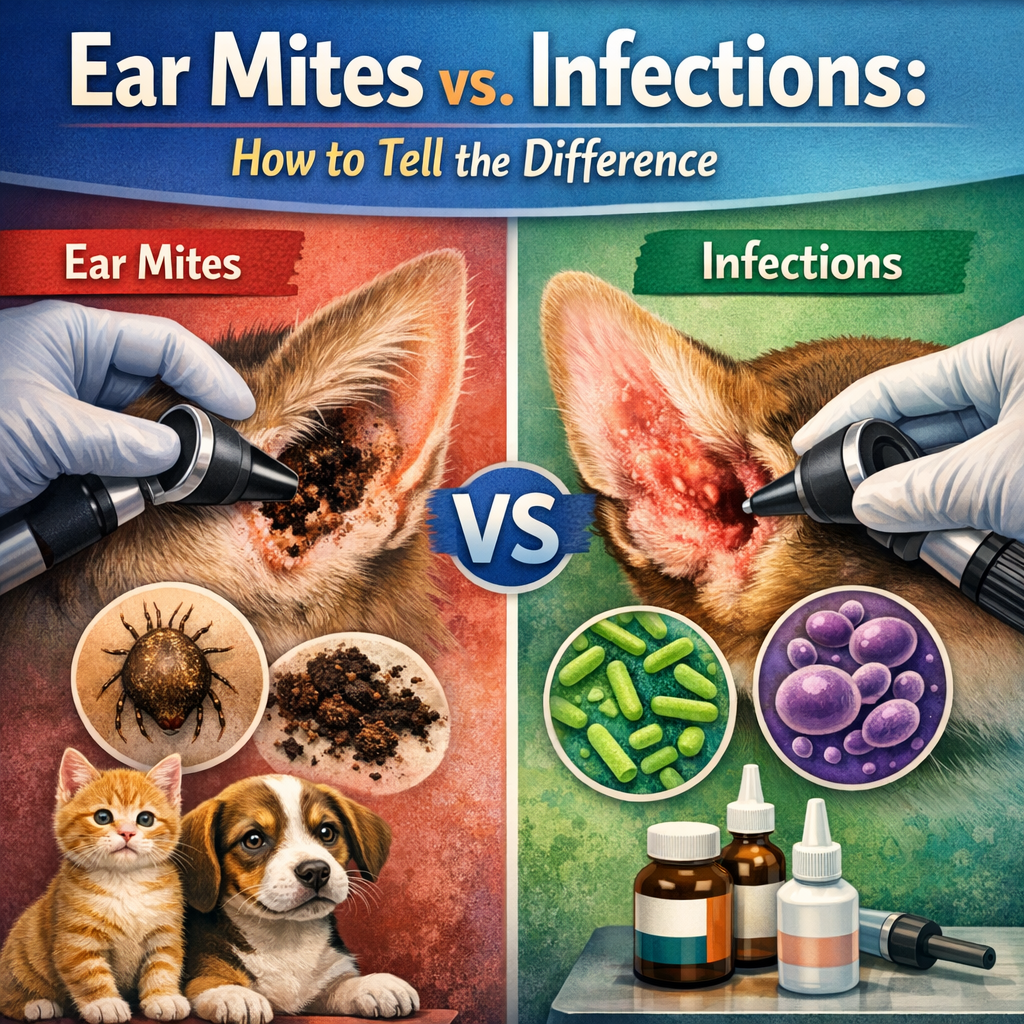
- Mites vs. Infections: Ear mites (parasites) are highly contagious and common in young pets, producing dry “coffee ground” debris. Infections (yeast/bacteria) are typically non-contagious and produce moist, odorous discharge.
- Underlying Causes: While mites are external invaders, chronic ear infections in adult pets are often secondary symptoms of underlying environmental or food allergies.
- Treatment Needs: Mites require household-wide antiparasitic treatment, whereas infections require targeted antibiotics or antifungals and management of the pet’s skin health.
- Professional Diagnosis: Because symptoms like head shaking and scratching overlap, a veterinary microscopic swab is essential to avoid ineffective over-the-counter treatments and prevent permanent ear damage.
Table of Contents
Ear Mites vs. Infections: How to Tell the Difference
Persistent ear scratching or head shaking in pets often signals underlying irritation that requires immediate attention. For many owners, distinguishing between microscopic ear mites and fungal yeast infections is a common challenge because the outward behavioral signs appear nearly identical. While both conditions share frustrating symptoms, their biological causes require vastly different treatment protocols to be effective.
Misdiagnosing these issues leads to wasted expenses on ineffective over-the-counter remedies and prolonged discomfort for your companion. At Bella Gatti, we prioritize feline wellness by helping you identify these triggers early. By understanding the nuances of ear health, you can ensure your cat receives the specific care needed for healthy, itch-free ears before a minor irritation becomes a chronic problem.
The Tiny Culprit: Understanding Otodectes Cynotis
Building on the need for a precise diagnosis, the most common parasitic cause is Otodectes cynotis. These microscopic mites thrive on ear wax and skin oils, living their entire three-week life cycle within the host’s ear canal. These highly contagious pests trigger intense irritation and a signature dark, “coffee ground” discharge. Unlike yeast infections, mites spread rapidly through direct physical contact, posing a significant risk in multi-pet homes where animals groom one another.
Infestations are especially prevalent in puppies and kittens, who represent the highest demographic for parasitic cases. Because their immune systems are still developing, young animals frequently contract these parasites from their mothers or littermates during early social development, making a thorough screening essential for any new addition to your household.
Bacterial Ear Infection and Yeast Overgrowth
While mites represent an external invasion, bacterial and yeast infections are typically internal issues caused by an imbalance in the ear’s natural flora. These microorganisms thrive in the ear canal’s warm, moist environment, often fueled by moisture trapped after bathing or swimming. In adult dogs, especially floppy-eared breeds like Basset Hounds, these infections often stem from underlying pet allergies. Research indicates that approximately 80 percent of dogs with chronic ear issues suffer from allergic otitis, which causes the lining of the ear to become inflamed and susceptible to secondary pathogens.
Unlike the contagious nature of mites, these conditions are unique to the individual pet and cannot be passed to others. However, they require a professional veterinary diagnosis to determine if the culprit is Malassezia (yeast) or a specific bacterial strain. Left untreated, minor inflammation can escalate into deep-tissue middle ear damage or even a permanent ruptured eardrum.
Key Symptoms: Itchy Ears and Head Shaking
Despite the different origins of these ailments, the shared behaviors of head shaking and scratching often lead to confusion. To narrow down the cause, owners should examine the texture and scent of the ear debris. Ear mites typically produce dry, dark, and crumbly debris. Conversely, infections often result in a moist, yellow or brown odorous discharge accompanied by visible redness, swelling, and localized heat around the ear flap.
In advanced cases, the clinical signs may shift from simple itching to neurological indicators. If your pet exhibits a persistent head tilt, circling, or a sudden loss of balance, the issue may have migrated from the external canal to the sensitive inner ear. A professional microscopic swab analysis, where a veterinarian examines the discharge under a lens, is the only definitive way to differentiate between parasites and bacteria, ensuring your pet receives the correct medication to stop the cycle of pain.
Treatment Approaches for Ear Mites
Once the microscopic exam confirms a parasitic presence, the first step in the recovery process is a professional irrigation to clear the “coffee ground” discharge that protects the mites from medication. Veterinarians typically prescribe targeted topical solutions or systemic spot-on treatments, such as selamectin or moxidectin, which are designed to paralyze the parasites’ nervous systems. Because these arachnids are mobile and highly opportunistic, they can easily migrate between hosts during grooming or shared rest.
To ensure the infestation is completely eradicated, every furry member of the household must be treated simultaneously, even if they aren’t currently showing symptoms. This comprehensive approach is paired with environmental sanitation; washing pet bedding in hot water helps eliminate any stray mites that have crawled off the host. While modern medications are highly effective, a follow-up exam three weeks later is often recommended to ensure any newly hatched larvae are neutralized before they can reach reproductive maturity.
The Crucial Link Between Allergies and Ear Health
This persistent vulnerability is often rooted in the fact that the ear canal is lined with skin, making it highly susceptible to the same dermatological triggers that cause paw licking or belly rashes. When a pet suffers from environmental sensitivities to pollen or adverse reactions to specific dietary proteins, the lining of the ear becomes inflamed and produces excess wax. This shift in the local environment provides the perfect nutrient-rich medium for opportunistic yeast and bacteria to flourish, leading to a secondary infection.
For pets caught in a cycle of recurring ear issues, long-term relief shifts from reactive cleaning to proactive immunology. This may involve transition to a hydrolyzed protein diet or the use of monoclonal antibody therapies to dampen the allergic response. By addressing these underlying triggers rather than just treating the resulting discharge, you can stabilize the ear’s ecosystem and ensure your pet remains comfortable and free from the distress of chronic irritation.
Prevalence and Demographic Susceptibility
Understanding which pets are most at risk can help narrow down the likely cause of distress. Ear mites are overwhelmingly found in young animals, particularly kittens and puppies coming from shelters or litters where social distancing is impossible. As a pet matures, their natural immune defenses in the ear canal often become more robust against parasites. Consequently, when an adult dog or an indoor-only cat develops ear issues, the statistical likelihood shifts heavily toward a secondary infection rather than a mite infestation.
Anatomy and Environmental Risks
Physical traits play a massive role in how these conditions persist. Breeds with “pendulous” ears, such as Basset Hounds and Springer Spaniels, essentially have heavy curtains over their ear canals. This creates a dark, humid microclimate where yeast thrives, regardless of the pet’s age. Furthermore, dogs that frequent grooming salons or natural bodies of water are at a higher risk for “swimmer’s ear,” where trapped moisture breaks down the skin’s protective lining, allowing common bacteria like Staphylococcus to take hold and colonize the deep canal.
Treatment Protocols for Ear Infections
In contrast to the parasitic approach, managing bacterial or yeast overgrowth focuses on altering the ear’s chemistry to make it inhospitable for microbes. This process begins with professional irrigation to flush out biofilm and waxy plugs that can shield bacteria from medicine. Once the canal is clear, veterinarians prescribe targeted antifungal ointments or broad-spectrum antibiotics, which are often formulated with potent anti-inflammatories to close the “swelling gap” in the canal. For pets that resist daily ear drops, many clinics now offer long-acting “lanolin-based” medications that stay active in the ear for several weeks, ensuring consistent delivery of the active ingredients.
Addressing Allergies and Chronic Cases
Successful recovery often involves looking beyond the ear itself, as roughly 80 percent of recurrent ear issues are actually secondary symptoms of environmental or food sensitivities. In these chronic cases, simply killing the bacteria is a temporary fix; doctors must address the underlying skin barrier defect to prevent the canal from becoming a breeding ground again. Early intervention is the best defense against end-stage changes, such as the calcification of the ear cartilage or a painful tympanic membrane rupture, which may eventually require surgical correction.
Frequently Asked Questions
Can I use over the counter drops for ear mites?
Prescription treatments like Milbemite are safer and more effective. Using OTC drops on a misdiagnosed bacterial infection can worsen irritation, so professional diagnosis is essential.
How often should I clean my pet’s ears?
Healthy pets usually require monthly cleanings. However, floppy-eared breeds or those prone to allergic otitis may need weekly maintenance using a pet-safe irrigation solution to prevent debris buildup.
Why does my dog’s ear infection keep coming back?
Chronic infections often stem from underlying allergies. Without managing the root inflammation, bacteria and yeast will consistently return, potentially leading to permanent middle ear damage.