




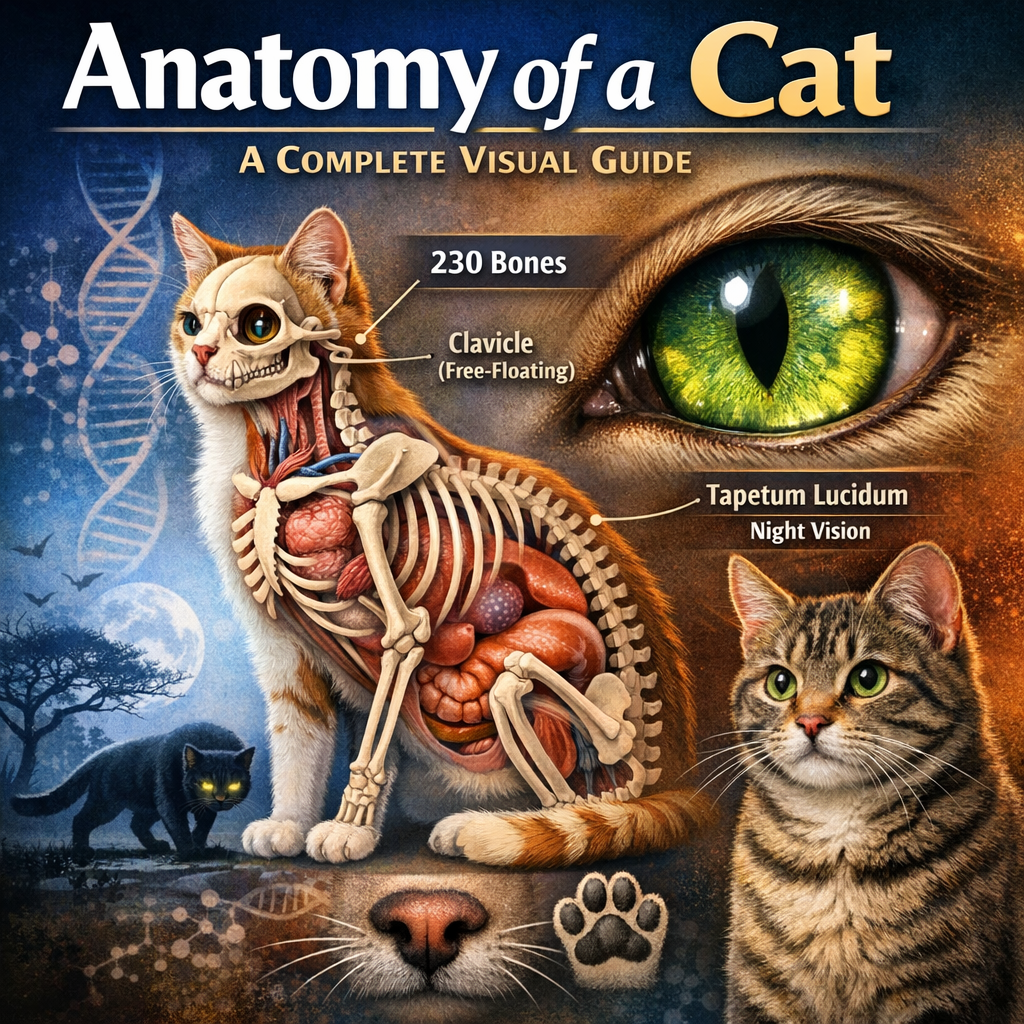
- Advanced Biology: Cats are evolutionary masterpieces with 230 bones (including free-floating collarbones) and specialized sensory organs like the tapetum lucidum for superior night vision.
- Obligate Carnivores: Feline anatomy is strictly designed for animal protein, requiring essential nutrients like taurine for heart health and a high-protein diet to fuel their short, efficient digestive tracts.
- Growth & Health: Kittens undergo rapid development in their first 8 weeks; meanwhile, adult health relies on proper hydration and nutrition to prevent common issues like urogenital disease and cardiomyopathies.
- Clinical Communication: Using anatomical diagrams and visual aids in veterinary practice significantly improves pet owner understanding, treatment compliance, and overall health outcomes.
Table of Contents
- Anatomy of a Cat: A Complete Visual Guide
- Veterinary Anatomical Terminology and Communication
- Early Kitten Development Stages and Growth Phases
- Pet Senses and Communication: The Superpowered Feline
- The Cat Cardiovascular and Circulatory System
- Digestive System Structure and Obligate Carnivore Needs
- Musculoskeletal System in Cats: Strength and Agility
- Respiratory System Function and Temperature Regulation
- Urogenital System and Disease Prevention
- The Framework: Musculoskeletal System in Cats
- The Sensory Powerhouse: Senses and Communication
- Early Kitten Development Stages
- The Internal Engine: Cardiovascular and Circulatory System
- Digestive System Structure and Obligate Carnivore Needs
- Respiratory System Function and Breathing Dynamics
- Urogenital System and Disease Prevention
- The Role of Visual Aids in Veterinary Practice
- Frequently Asked Questions About Cat Anatomy
Anatomy of a Cat: A Complete Visual Guide
Ever wonder why your feline friend can squeeze into a tiny cardboard box or land on their feet with such grace? It is all in the design. A cat is a masterpiece of evolutionary engineering, built for speed, stealth, and survival.
Understanding cat anatomy is more than just a biology lesson: it is about connecting with your pet on a deeper level. Whether you are a dedicated pet owner or a member of a veterinary team, knowing how a cat is built helps you provide better care and improves pet health outcomes.
In this guide, we use anatomical diagrams and visual aids to explore everything from the tapetum lucidum in their eyes to their complex musculoskeletal system. You can even find these sleek designs celebrated on a Unisex Soft Cotton Tee for the ultimate cat lover aesthetic.
Veterinary Anatomical Terminology and Communication
Mastering anatomical terminology is essential for effective client communication within a veterinary practice. Using professional terms like the thorax, patella, or dew claw alongside layman’s terms helps a vet clinician or nurse clinician explain a diagnosis clearly.
Digital visual aids and cat anatomy illustration tools are changing the pet owner experience. By using an iPhone or Google search to show cat images and anatomical diagrams, a veterinary team can increase client compliance rates and improve treatment plans.
Clear pet health information and pet treatment summaries ensure that you understand exactly what is happening during veterinary consultations. This clinical efficiency leads to better fostering kittens guidelines and overall veterinary advancement in modern medicine.
Early Kitten Development Stages and Growth Phases
Kitten growth development phases are rapid and fascinating. Kittens are born into the world both blind and deaf, relying entirely on their mother for survival during the first few days of life.
Their eyes typically begin opening at 2 weeks, and they achieve full sight and hearing by 3 weeks. By the time they reach 8 weeks, they develop a full set of teeth and can transition to solid kitten food, marking the end of major kitten growth phases.
Monitoring these early stages is vital for kitten development and socialization. If you are following fostering kittens guidelines, tracking weight and sensory milestones ensures the best long term pet health outcomes for the little ones.
Pet Senses and Communication: The Superpowered Feline
Cats possess a superior sense of smell and hearing that puts human abilities to shame. They can detect frequencies ranging from 30 to 60,000 Hz, allowing them to hear four to five times farther than we can.
Their night vision is legendary thanks to the tapetum lucidum, a reflective layer behind the retina that amplifies light. This anatomical feature, combined with specialized olfactory cells, makes them incredible cat senses and masters of their environment.
Understanding sensory organ functions helps identify issues like otitis externa or corneal ulceration early. While a YouTube video might show a funny cat reaction, these senses are actually sophisticated tools for survival and marking behavior.
The Cat Cardiovascular and Circulatory System
The feline heart is a powerhouse, featuring a complex structure including the aorta, right and left atria, and ventricles. It works tirelessly to pump blood through the cardiovascular and circulatory system to sustain high energy bursts.
Taurine is an essential amino acid for feline heart health, and most commercial diets are formulated with adequate levels to prevent issues. Without proper nutrition, cats are at risk for serious conditions like cardiomyopathies.
Visuals and digital visual aids are incredibly helpful for understanding heart anatomy and disease progression. A vet clinician often uses these tools to explain how blood flow impacts the rest of the body during a checkup.
Digestive System Structure and Obligate Carnivore Needs
The feline digestive system is specifically designed for a high protein diet. This complex system includes the mouth, teeth, esophagus, stomach, small and large intestines, liver, pancreas, and gall bladder.
A cat’s Tongue is a sandpaper-like marvel covered in tiny hooks called papillae. These barbs are essential for grooming, stripping meat from bones, and lapping up water with clinical precision.
As obligate carnivores, cats require specific nutrients found only in animal tissue. Their teeth structure is built for shearing meat rather than grinding plants, which is why a proper dietary balance is crucial for their survival.
A cat’s Dental anatomy is a toolkit for a true carnivore, featuring 30 permanent teeth including sharp canines for hunting and carnassial teeth for slicing. Keeping these pearly whites clean is essential for preventing periodontal disease and ensuring your kitty stays healthy.
Issues within the digestive tract can often be spotted through changes in appetite or bathroom habits. Understanding the digestion processes helps you make better choices about what goes into your cat’s bowl every day.
Musculoskeletal System in Cats: Strength and Agility
A cat’s musculoskeletal system is a marvel, consisting of approximately 230 bones. This includes distinct skeletal regions such as the spine, skull, ribs, and limbs, all held together by flexible ligaments and powerful muscles.
This unique structure allows for incredible leaps and the ability to right themselves mid air. However, they are still prone to common injuries like fractures, hip dislocation, and cruciate ligament rupture in the stifle joint.
Anatomical diagrams detailing joints like the shoulder and stifle are excellent visual aids for owners. Knowing how the skeleton works can help you spot signs of nuclear sclerosis or mobility issues as your cat ages.
Respiratory System Function and Temperature Regulation
The respiratory system includes the nose, pharynx, larynx, trachea, bronchi, and lungs. Beyond just breathing, cats use panting as a secondary method to regulate their body temperature when they are overheated.
Visual diagrams are essential for understanding internal conditions such as a collapsing trachea or pulmonary edema. These tools allow a veterinary team to show exactly where a blockage or inflammation is occurring.
Maintaining a healthy respiratory system is key to a cat’s active lifestyle. If you notice heavy breathing or coughing, it is a sign that the clinical efficiency of their lungs might be compromised.
Urogenital System and Disease Prevention
The urogenital system includes the kidneys, ureters, bladder, and reproductive organs. Urinary health is a major concern for many owners, as over 50 percent of cats with urinary issues suffer from cystitis.
Prevention is the best medicine for the bladder and kidneys. Experts recommend feeding smaller, frequent meals, providing constant access to fresh water, and choosing diets enriched with Omega 3 fatty acids.
By using patient data capture and regular veterinary consultations, you can stay ahead of potential urogenital diseases. Keeping your cat hydrated and active is the best way to ensure their internal systems stay in peak condition.
The Framework: Musculoskeletal System in Cats
The feline body is a marvel of flexibility and evolutionary engineering. While you only have 206 bones, your cat boasts a staggering 230 bones, giving them a much wider range of motion for those midnight zoomies.
This skeletal structure includes complex regions like the spine, skull, ribs, and limbs. Every part of the cat body diagram works in harmony to create a silent, efficient predator that looks just as good on a Unisex Soft Cotton Tee as it does in the wild.
One of the most fascinating features in cat anatomy is the collar bone. Unlike humans, cats possess free-floating clavicle bones. This allows them to narrow their shoulders and slip through any space their head can fit into, which explains why no cardboard box is safe.
In a professional veterinary practice, understanding this framework is vital for pet health outcomes. Vet clinician and nurse clinician teams often use digital visual aids to explain how the musculoskeletal system supports movement and agility.
This high level of activity does come with specific risks. Common orthopedic conditions seen in veterinary services include fractures and joint issues like hip dislocation or a cruciate ligament rupture.
Visual aids and anatomical diagrams in clinics often detail specific joints like the shoulder and stifle. These tools improve client communication and help owners understand complex treatment plans for their pets.
| Skeletal Region | Key Feature | Benefit to the Cat |
|---|---|---|
| Spinal Column | Highly flexible vertebrae | Allows for the famous arch and powerful springing jumps. |
| Clavicle | Free-floating bone | Enables squeezing through tight, narrow openings and pipes. |
| Tail | Extension of the spine | Acts as a vital counterweight for balance during high-speed turns. |
Using veterinary anatomical terminology helps bridge the gap between pet owner experience and clinical efficiency. When you understand terms like the patella or the thorax, your participation in your cat’s care improves significantly.
Whether you are looking at a cat anatomy illustration for education or just admire the grace of a feline, the skeletal framework is the foundation of their survival. Modern veterinary advancement relies on these details to ensure better pet health information is available to everyone.
To see these structures in action, many owners turn to platforms like YouTube or use an iPhone to record their cat’s movement for a vet check. Seeing the musculoskeletal system move is the best way to appreciate feline biology.
The Sensory Powerhouse: Senses and Communication
Cats experience the world through highly specialized sensory organ functions that turn them into tiny, fluffy superheroes, all orchestrated by their remarkable nervous system. Their hearing is incredible, detecting frequencies from 30 to 60,000 Hz. This means they can hear four to five times farther than you can, making them elite hunters even in total silence, as their finely tuned nervous system processes these sounds with astonishing precision.
Their vision is equally impressive. While they may not see as many colors as you do on your iPhone, they excel in the dark. This is thanks to the tapetum lucidum, a reflective layer at the back of the eye that makes their eyes glow in YouTube videos or flash photos. This anatomical feature is a frequent topic in pet owner communication to explain why cats are so active at twilight.
If you see your cat staring at a blank wall, they are likely hearing a bug or smelling something through the olfactory cells in their nose that you simply cannot perceive. Their sense of smell is essential for marking behavior and navigating their environment. Understanding these sensory organ functions helps a vet clinician improve pet health outcomes by identifying issues like otitis externa or corneal ulceration early on.
Whiskers aren’t just cute facial accessories; they are highly sensitive tactile sensors. These specialized hairs, or vibrissae, are deeply rooted in the nervous system to help cats navigate tight spots and detect subtle air currents.
Early Kitten Development Stages
Kitten growth development phases are rapid and fascinating. Kittens are actually born blind and deaf, relying entirely on their mother for survival. Their eyes usually begin opening at 2 weeks, but they do not achieve full sight and hearing until they are 3 weeks old. This is a critical time for fostering kittens guidelines, as they begin to explore their surroundings.
By 8 weeks, they develop a full set of teeth and can start eating solid kitten food. These major growth phases occur within the first 8 weeks, making this a vital window for socialization. Using digital visual aids during veterinary consultations can help owners track these milestones and improve client compliance rates for early vaccinations and checkups.
Cat Cardiovascular and Circulatory System
The feline heart is the engine of the predator, featuring complex structures like the aorta, right and left atria, and ventricles. In the world of veterinary advancement, we know that taurine is essential for heart health. Most commercial diets contain adequate levels, but visual aids are often used in a veterinary practice to explain how deficiencies can lead to diseases like cardiomyopathies.
A cat body diagram of the cardiovascular and circulatory system helps a nurse clinician explain blood flow and oxygenation to concerned owners. Keeping this system healthy is a cornerstone of pet care, ensuring your cat has the energy for high speed chases and long naps on a comfortable Unisex Soft Cotton Tee.
The feline Cardiovascular system is a high-performance engine, circulating oxygen and nutrients with athletic precision. This vital network of vessels and the heart ensures your kitty has the stamina for those epic 3 a.m. zoomies.
Digestive System Structure and Nutrition
Cats are obligate carnivores, meaning their digestive system structure is built specifically for processing animal protein. This system includes the mouth, teeth, esophagus, stomach, small and large intestines, liver, pancreas, and gall bladder. Proper dietary balance is crucial for long term pet health information and avoiding obesity.
Veterinary anatomical terminology describes their teeth as precision tools for shearing meat rather than grinding plants. Using anatomical diagrams during a pet treatment summary can help owners understand why specific diets are prescribed. A healthy gut leads to better clinical efficiency and happier cats who are ready to show off their sleek physique.
Respiratory System Function and Temperature Control
The respiratory system function in cats includes the nose, pharynx, larynx, trachea, bronchi, and lungs. While dogs are famous for it, cats also use panting to regulate body temperature when they are overheated or stressed. Digital visual aids help a veterinary team explain conditions like a collapsing trachea or pulmonary edema to pet owners.
Understanding these structures is vital for improving pet health outcomes, especially in breeds with flatter faces. Clear communication about respiratory health ensures that your cat breathes easy while they are lounging around the house or playing with their favorite toys.
Urogenital System and Disease Prevention
The urogenital system includes the kidneys, ureters, bladder, and reproductive organs. This is a sensitive area for many felines, as over 50 percent of cats with urinary issues suffer from cystitis. To boost client compliance rates, vets often recommend feeding smaller meals and providing constant access to fresh water.
Diets rich in Omega 3 fatty acids are also recommended for urinary tract health. Using a cat anatomy illustration during a consultation can help you visualize where stones or blockages might occur. Prevention is the best medicine, and staying informed through a veterinary guide ensures your cat stays happy and hydrated for years to come.
Early Kitten Development Stages
Watching kitten growth phases is a fast paced journey that moves quicker than a viral video on your iPhone. When kittens are born, they are completely blind and deaf, resembling tiny fuzzy beans more than apex predators. They rely entirely on their mother for warmth and food during these initial kitten development days.
By 2 weeks, their eyes begin to open, though their vision is blurry and they are still finding their tiny feet. By 3 weeks, full sight and hearing develop, allowing them to start exploring their world. This is a critical time for fostering kittens guidelines, as socialization becomes vital for a positive pet owner experience.
By 8 weeks, these little explorers develop a full set of deciduous teeth. At this stage, they can transition to solid kitten food and start showing off their big cat personalities. Understanding these kitten growth development phases is essential for ensuring long term pet health outcomes and proper feline growth.
For a veterinary team or a vet clinician, using anatomical diagrams and digital visual aids during this stage is a game changer. Clear pet health information helps improve client compliance rates and ensures pet treatment summaries are easy to follow. When you use visual aids for anatomy communication, you bridge the gap between technical veterinary terminology and everyday pet care.
Whether you are looking at Google for tips or watching a YouTube tutorial on kitten care, remember that early development sets the stage for life. High quality veterinary anatomical terminology helps owners understand why their kitten needs specific care. Using a cat anatomy illustration can make veterinary clinical efficiency soar while keeping the pet owner experience fun and educational.
The Internal Engine: Cardiovascular and Circulatory System
The feline heart is a high performance pump that keeps your little predator purring. This vital organ consists of the aorta, the right and left atria, and the ventricles, all working together to power the cardiovascular and circulatory system.
Your cat’s heart beats much faster than yours, typically ranging between 140 and 220 beats per minute. This rate can spike quickly depending on their stress level or if they just spotted a bird through the window on your iPhone camera.
For a vet clinician or nurse clinician, explaining heart health often involves detailed anatomical diagrams. These visual aids are essential for discussing the importance of taurine, an amino acid that is non negotiable for feline heart health.
Most commercial diets today contain adequate taurine levels to prevent serious issues like cardiomyopathies. When a veterinary team uses a cat body diagram to show these structures, it significantly improves the pet owner experience and understanding.
Using digital visual aids during a veterinary practice consultation helps you visualize exactly how blood flows through the body. You might even find helpful videos on YouTube or Google that illustrate these complex biological processes in motion.
Clear communication regarding pet health information leads to much better client compliance rates. When you understand the “why” behind treatment plans, the clinical efficiency of the veterinary services increases, ensuring better pet health outcomes for your cat.
Whether you are reviewing pet treatment summaries or looking at a cat anatomy illustration, knowing the internal engine helps you spot trouble early. This level of pet care is what turns a standard checkup into a masterclass in feline longevity.
Digestive System Structure and Obligate Carnivore Needs
While your favorite Bella Gatti tee celebrates their cute faces, the internal reality of a cat is that of a highly tuned predator. Cats are strictly obligate carnivores, meaning their biology is hardwired to process animal protein rather than plants.
The digestive system structure is a complex highway consisting of the mouth, teeth, esophagus, stomach, small and large intestines, liver, pancreas, and gall bladder. This specialized setup ensures that nutrients are absorbed with clinical efficiency to fuel those midnight zoomies.
A cat’s teeth are built for shearing and tearing meat rather than grinding fibers. Because they lack the flat molars found in humans, they cannot chew vegetables effectively, making a species-appropriate dietary balance a non-negotiable part of your pet care routine.
In the world of veterinary practice, understanding this high-protein requirement is vital for improving pet health outcomes. A vet clinician often uses anatomical diagrams to show how a cat’s short digestive tract processes meals much faster than ours does.
Using digital visual aids during a veterinary team consultation can help illustrate why specific treatment plans or diets are necessary. When pet owners see a cat anatomy illustration, client compliance rates for specialized diets typically increase.
Whether you are researching on Google, watching a tutorial on YouTube, or checking a pet health app on your iPhone, the consensus is clear: feline digestion is fast, acidic, and entirely meat-dependent.
For the modern pet owner, VetCheck tools and anatomical terminology help bridge the gap between “my cat is a picky eater” and “my cat is a biological hunter.” Keeping this system running smoothly is the secret to a long, purr-filled life.
Respiratory System Function and Breathing Dynamics
Just like the high performance engine of a sleek sports car, your cat’s respiratory system is built for speed and efficiency. This complex network includes the nose, pharynx, larynx, trachea, bronchi, and lungs, all working in harmony to fuel those midnight zoomies.
While your favorite Bella Gatti Unisex Soft Cotton Tee might show a cat looking cool and collected, the internal reality involves a sophisticated cooling mechanism. Since cats do not sweat through their skin like humans, they may use panting to regulate body temperature when they are overheated or feeling particularly stressed.
A professional veterinary team often utilizes detailed cat images and anatomical diagrams to help pet owners visualize what is happening inside the chest cavity. These digital visual aids are essential for explaining complex conditions such as a collapsing trachea or pulmonary edema during a standard consultation.
In a fast paced veterinary practice, using an iPhone or tablet to display a cat body diagram can significantly improve the pet owner experience. These visual aids make clinical information easier to digest, which directly boosts client compliance rates and leads to better pet health outcomes.
Proper lung function is vital for the intense bursts of energy cats use when playing or hunting. Any change in breathing patterns, such as labored breaths or excessive panting, should be reported to a vet clinician or nurse clinician immediately to ensure the best pet care.
Modern veterinary advancement has made it easier to share pet treatment summaries and digital visual aids via platforms like Google or YouTube. This transparency helps owners understand the importance of respiratory health as part of a comprehensive treatment plan.
Whether you are looking at anatomical terminology on VetCheck or admiring the graphic design on your new shirt, understanding the respiratory system is key. It ensures your feline friend stays as healthy as they look in their most iconic poses.
Urogenital System and Disease Prevention
The urogenital system is a high stakes network featuring the kidneys, ureters, bladder, and reproductive organs. Just as you want your favorite Bella Gatti Unisex Soft Cotton Tee to stay pristine, you want your cat’s internal plumbing to run without a hitch.
Urinary health is a major concern for many cat owners and a frequent topic during veterinary consultations. In fact, statistics show that over 50 percent of cats with urinary issues suffer from cystitis, making it a priority for any veterinary team.
To improve pet health information and client compliance rates, many vets recommend feeding smaller meals and providing constant access to fresh water. Diets rich in Omega 3 fatty acids also support kidney and bladder health, ensuring better pet health outcomes over time.
Prevention is always better than a cure when managing the urogenital tract. Regular checkups and diligent patient data capture help a vet clinician or nurse clinician catch issues like crystals or infections before they become life threatening emergencies.
In the modern veterinary practice, digital visual aids and anatomical diagrams are becoming essential. Whether you are searching on Google or watching a quick tutorial on YouTube from your iPhone, seeing a cat anatomy illustration helps clarify complex treatment plans.
Using Veterinary anatomical terminology during a pet owner experience can be daunting. That is why tools like VetCheck are so popular, they translate clinical efficiency into clear pet treatment summaries that help you understand exactly how to care for your feline friend.
Proper hydration and high quality nutrition are the ultimate style points for your cat’s internal health. By focusing on these basics, you ensure your pet stays as comfortable and vibrant as the graphic designs on our premium tees.
Spotting common Cat Health Issues early is much easier when you know the map of their body. From dental decay to kidney quirks, staying observant helps you catch small glitches before they turn into major feline malfunctions.
The Role of Visual Aids in Veterinary Practice
In a modern veterinary practice, client communication is the secret sauce to successful pet care. We have all been there: a quick Google search or a random YouTube video leads to a spiral of misinformation that can worry even the most seasoned cat parent.
This is where veterinary anatomical terminology paired with high quality anatomical diagrams becomes a total game changer. Just as a Bella Gatti Unisex Soft Cotton Tee uses a bold design to make a statement, a vet clinician uses cat images to make complex medical truths crystal clear.
Digital visual aids and detailed pet treatment summaries allow a nurse clinician or veterinarian to show you exactly what is happening under the hood. Whether they are explaining the sting of corneal ulceration in the eye or the discomfort of otitis externa in the ear, a cat anatomy illustration on an iPhone or tablet is worth a thousand words.
This veterinary advancement in sharing pet health information does more than just look fancy. It significantly boosts client compliance rates and improves pet health outcomes because you leave the clinic actually understanding the plan.
Using tools like VetCheck to provide anatomical diagrams ensures clinical efficiency is high and the pet owner experience remains positive. When you can visualize the treatment plans, you feel like a confident partner in your cat’s wellness journey rather than just a spectator.
From tracking kitten growth development phases to managing senior veterinary services, visual cat anatomy guides bridge the gap between technical jargon and real world care. It turns a stressful veterinary consultation into an empowering lesson in feline biology.
Frequently Asked Questions About Cat Anatomy
Understanding the inner workings of your feline friend is the best way to improve pet health outcomes. Whether you are curious about kitten development or the complex cardiovascular and circulatory system, these answers provide a clear veterinary guide for every cat lover.
Why do cats’ eyes glow in the dark?
That spooky nighttime glow is caused by the tapetum lucidum. This reflective layer sits behind the retina and bounces light back through the sensory cells, giving cats superior night vision for hunting.
While humans might rely on an iPhone flashlight, cats use this biological mirror to see in nearly total darkness. However, as cats age, they may develop nuclear sclerosis, a cloudy change in the lens that is often confused with cataracts.
Do cats have the same number of bones as humans?
No, the feline musculoskeletal system is much more complex. Cats have approximately 230 bones, while adult humans only have 206. This extra hardware is what makes them so nimble.
Their extra vertebrae in the spine and tail provide signature flexibility. These anatomical diagrams often highlight specific joints like the shoulder and stifle, which are prone to common injuries like a cruciate ligament rupture.
What is a dew claw and why does it matter?
The dew claw is the thumb-like fifth digit located on the inner side of the front paws. While it does not touch the ground during a normal stroll, it is vital for climbing and gripping prey.
In a professional veterinary practice, checking the dew claw is a standard part of a physical exam. Because these claws do not wear down naturally against the pavement, they can become overgrown and cause discomfort or infection.
Why is taurine essential for the cat cardiovascular system?
Taurine is an essential amino acid that cats cannot produce on their own. It is critical for heart muscle function, vision, and reproduction. Without it, cats can develop serious conditions like dilated cardiomyopathy.
Most commercial diets contain adequate levels, but understanding this requirement is a key part of pet owner communication. Visual aids can help a vet clinician explain how taurine supports the atria and ventricles within the heart anatomy.
How can I tell if my cat has a fever?
A cat’s normal temperature is higher than yours, typically between 100.5 and 102.5 degrees Fahrenheit. If your cat is panting, lethargic, or shivering, you should consult a vet immediately.
Panting is a primary way the respiratory system regulates body temperature since cats do not sweat like we do. If you notice heavy breathing, it could indicate anything from overheating to more serious issues like pulmonary edema.
What are the stages of early kitten development?
Kitten growth development phases are rapid and fascinating. Kittens are born both blind and deaf, relying entirely on their mother. Their eyes usually open at 2 weeks, and they gain full sight and hearing by 3 weeks.
By 8 weeks, they develop a full set of deciduous teeth and can transition to solid food. Tracking these kitten growth phases is essential for fostering kittens guidelines and ensures they reach their full potential as healthy adults.
How does the feline digestive system work?
Cats are obligate carnivores, meaning their digestive system structure is designed specifically for protein. This includes the mouth, esophagus, stomach, small and large intestines, liver, pancreas, and gall bladder.
Their teeth are built for shearing meat rather than grinding plants. To maintain clinical efficiency and prevent obesity, pet health information suggests feeding smaller, protein-rich meals and ensuring constant access to fresh water.
How do cats use their senses to communicate?
Cats live in a world of high-frequency sound and complex scents. Their hearing can detect frequencies from 30 to 60,000 Hz, allowing them to hear four to five times farther than humans.
Their sense of smell is powered by specialized olfactory cells and the vomeronasal organ. This sensory organ function is why cats perform the Flehmen response (sneering) to analyze pheromones and marking behavior in their environment.
What should I know about the urogenital system?
The feline urogenital system includes the kidneys, ureters, bladder, and reproductive organs. Disease prevention is vital here, as over 50% of cats with urinary issues suffer from cystitis.
To improve client compliance rates, vets often recommend diets rich in Omega 3 fatty acids. Providing digital visual aids during a consultation can help owners understand how hydration prevents crystals from forming in the bladder.